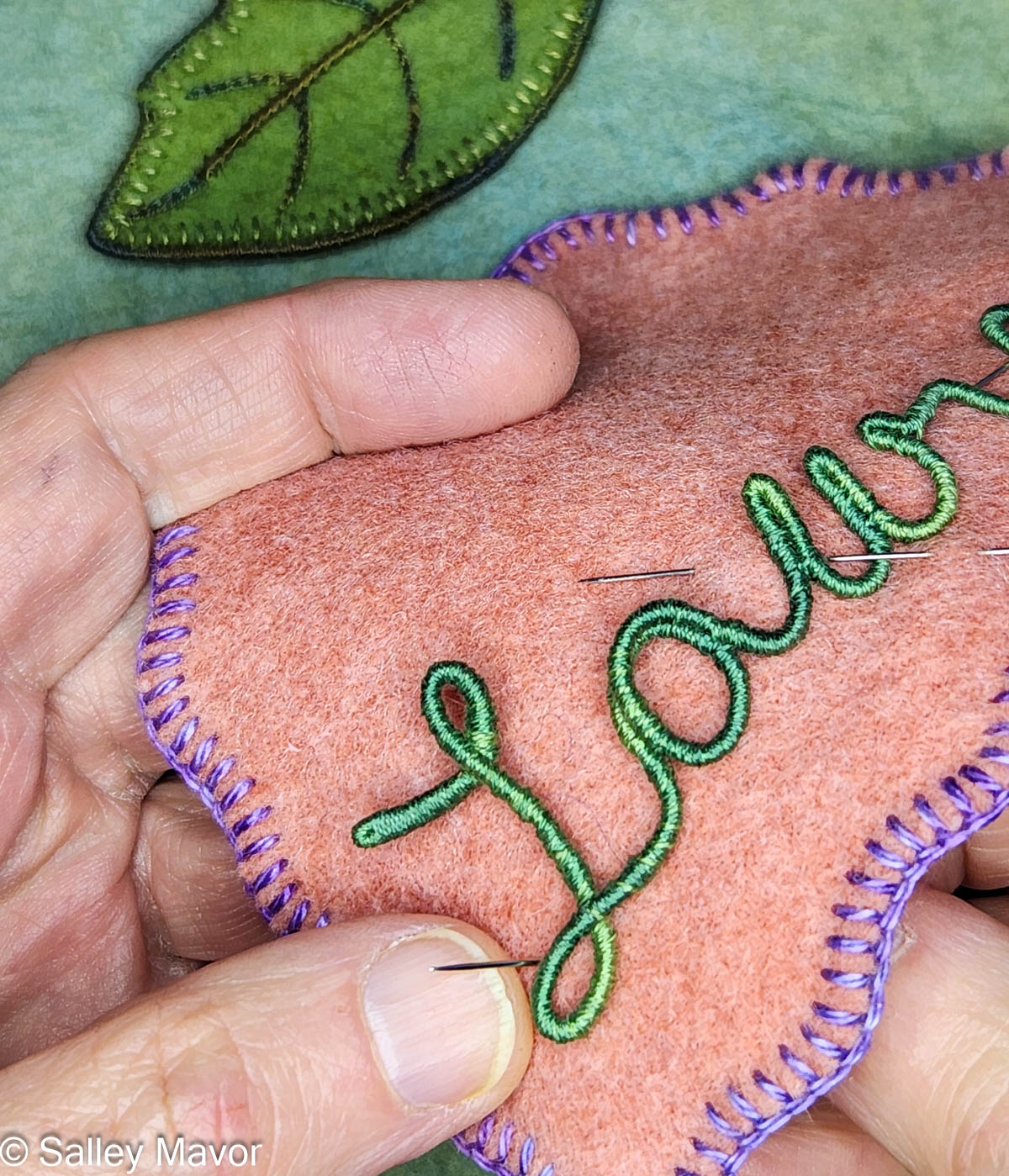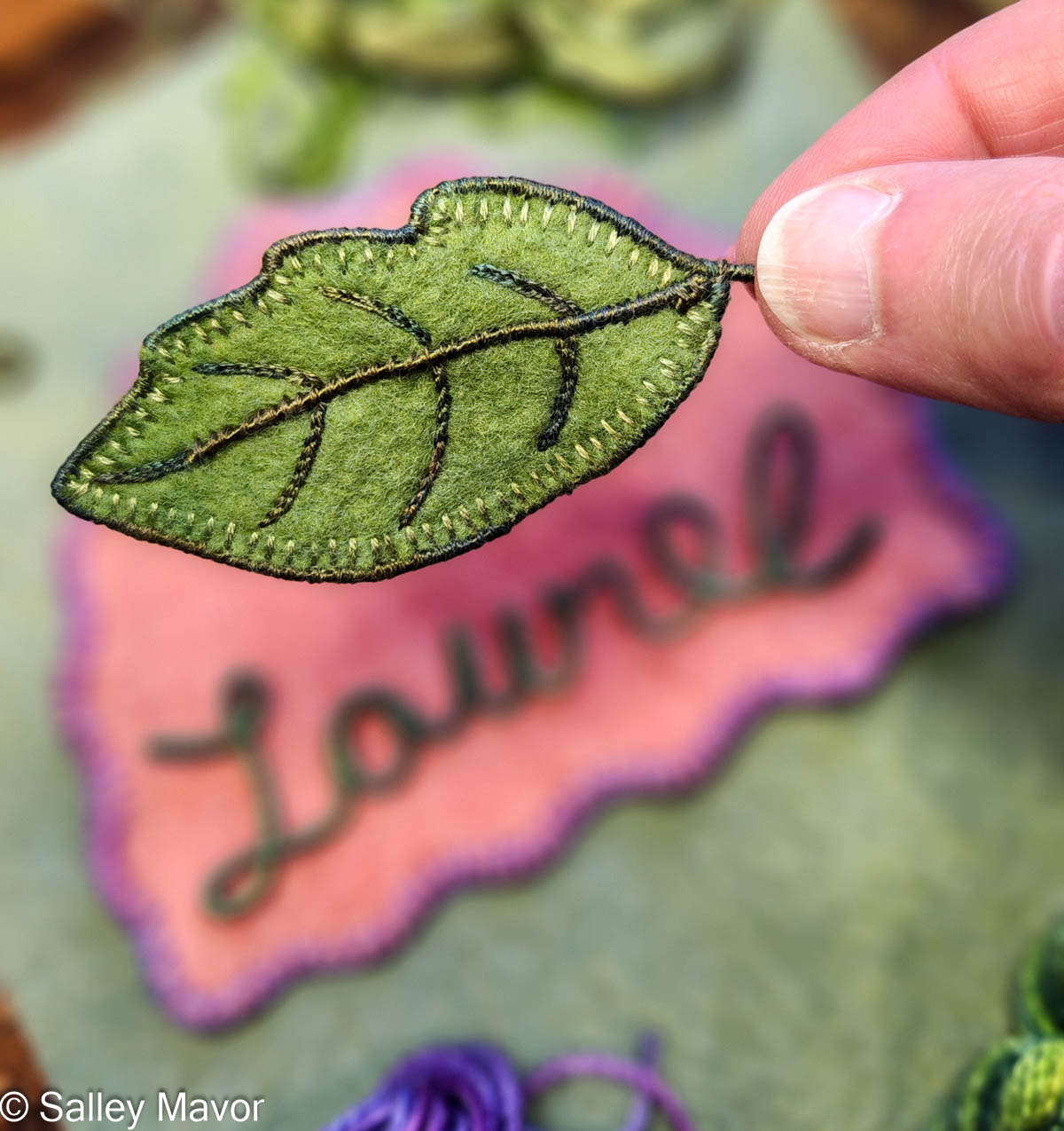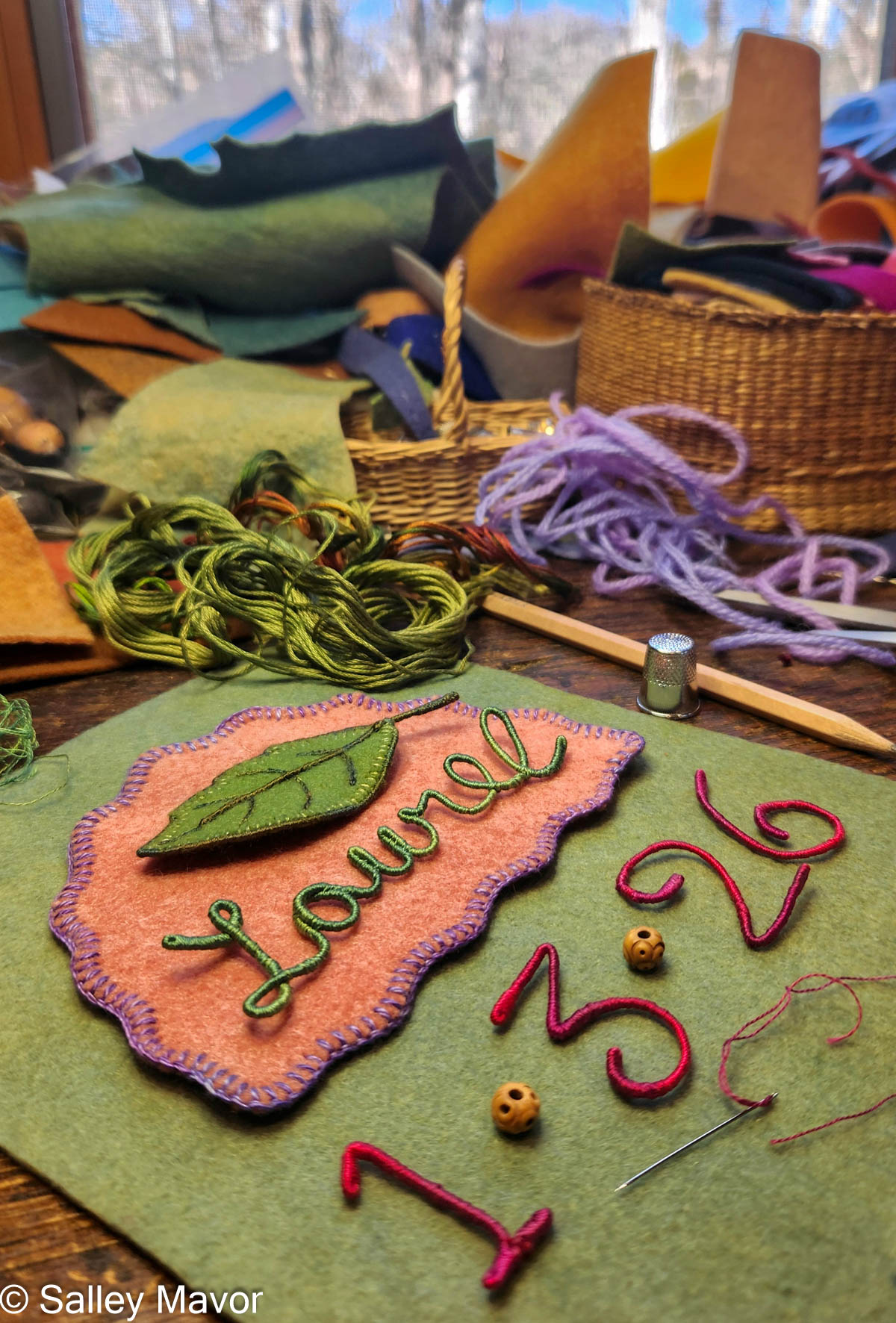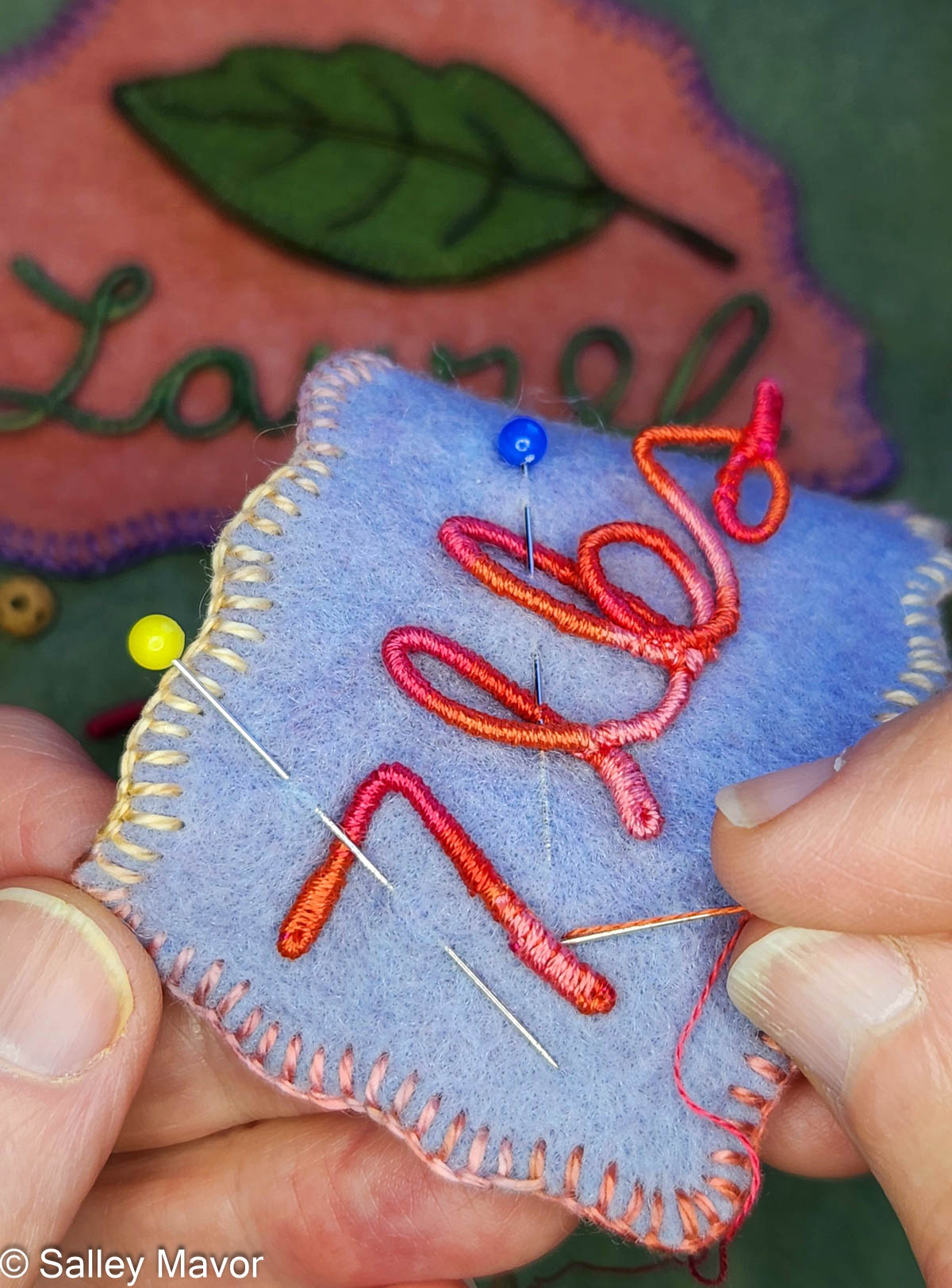
Summertime: Part 6 – rose vine

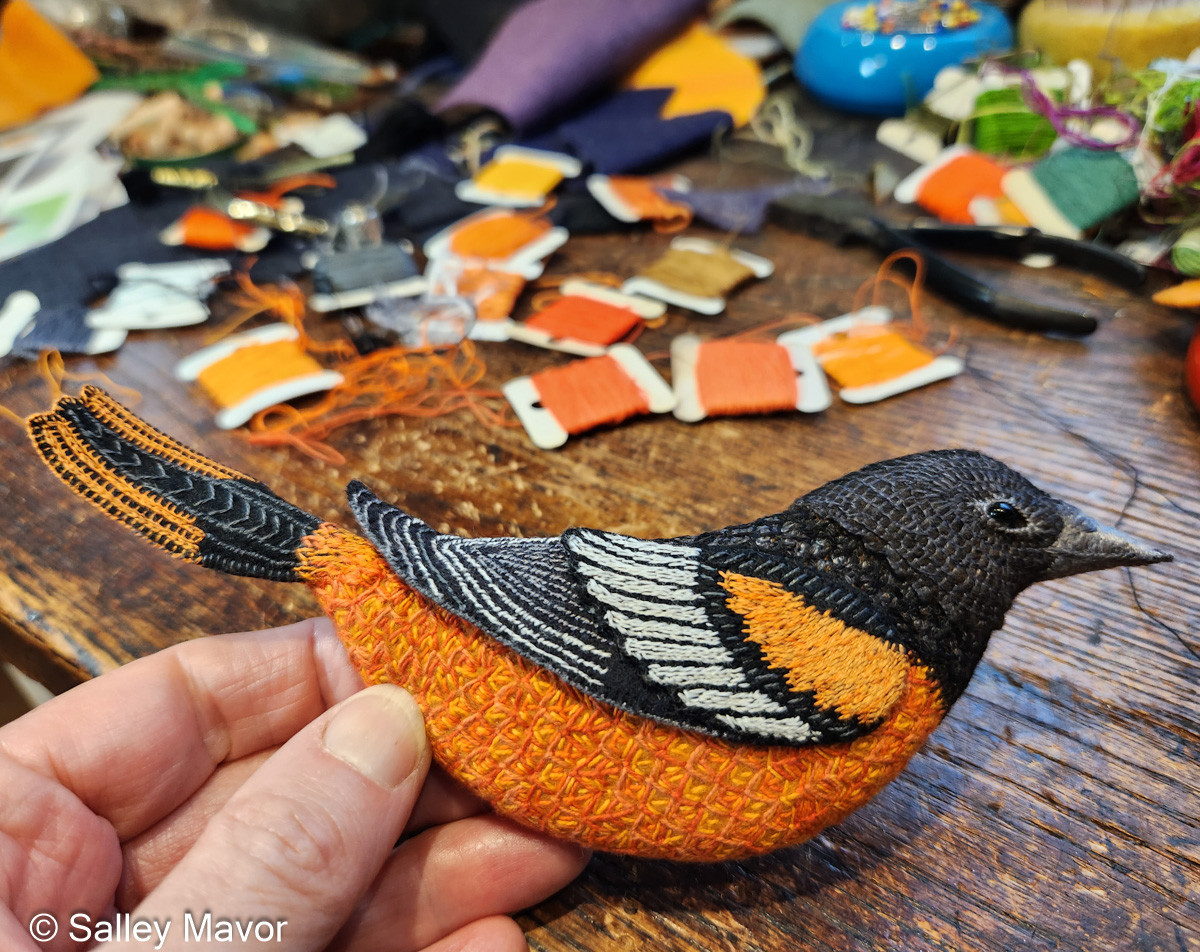
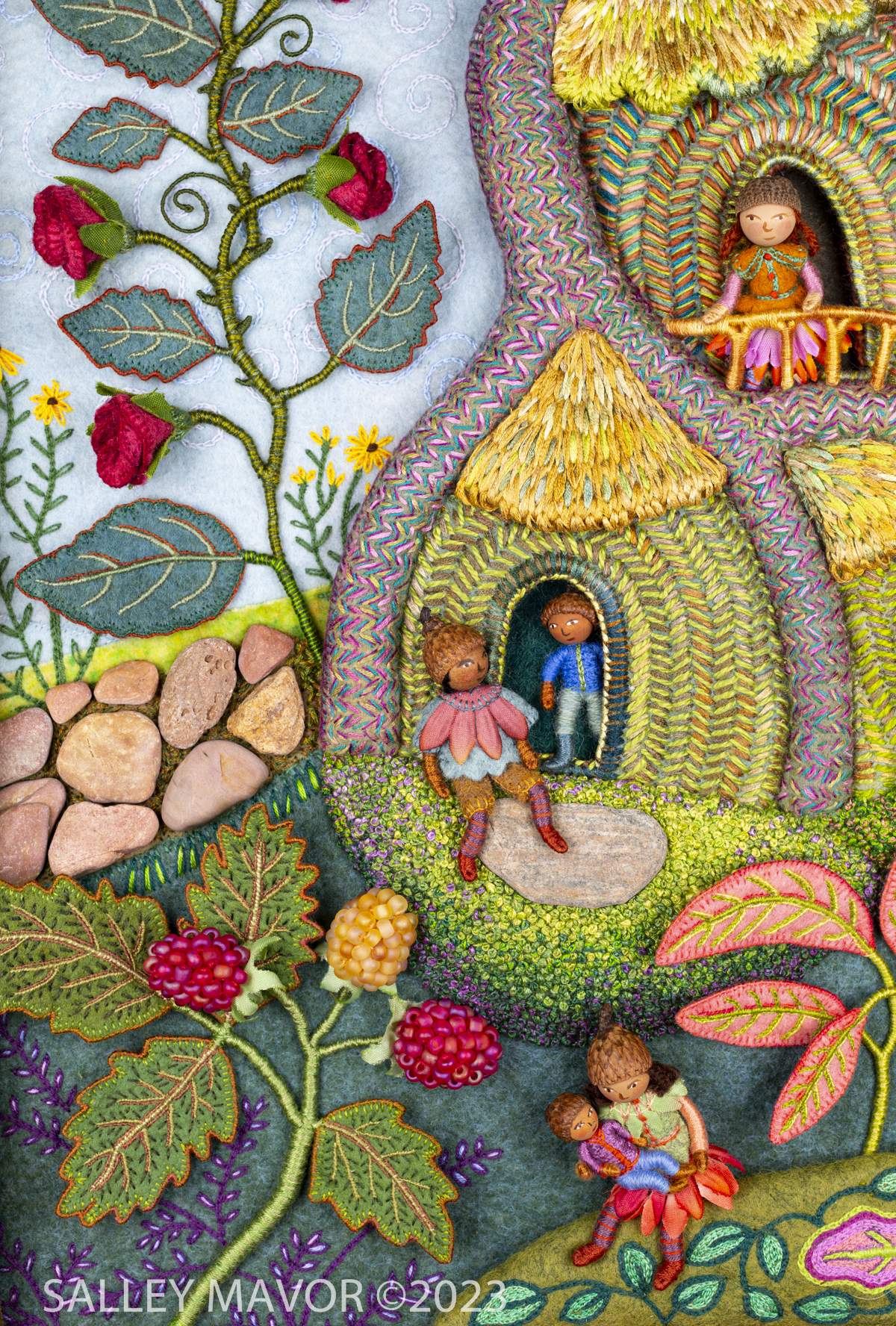
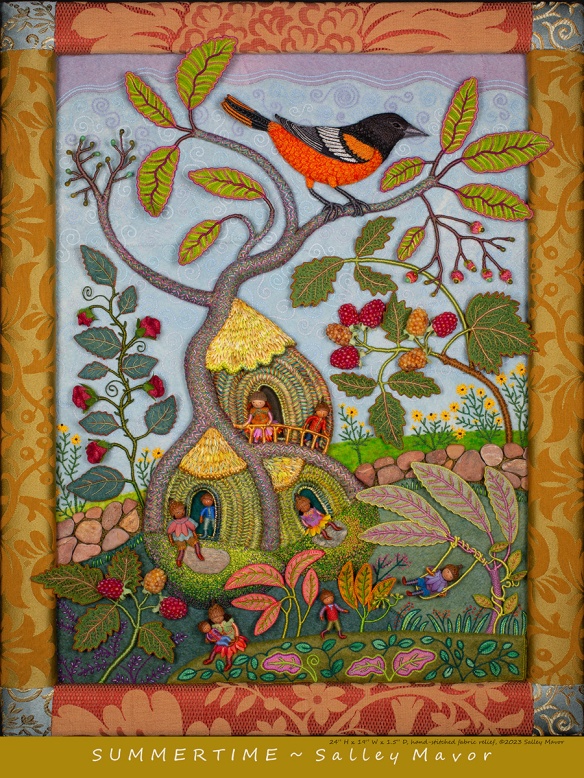
In Part 6 of the series about Summertime, I share photos and videos that document the process of making the rose vine. So far, I’ve written an overview of the piece, Part 1 – Tree Trunks, Part 2 – Tree Houses, Part 3 – leaves, stems & branches, Part 4 – Baltimore Oriole (body), and Part 5 – Baltimore oriole (head and feet). Part 7 – raspberry plants, and Part 8 – stitching flora.

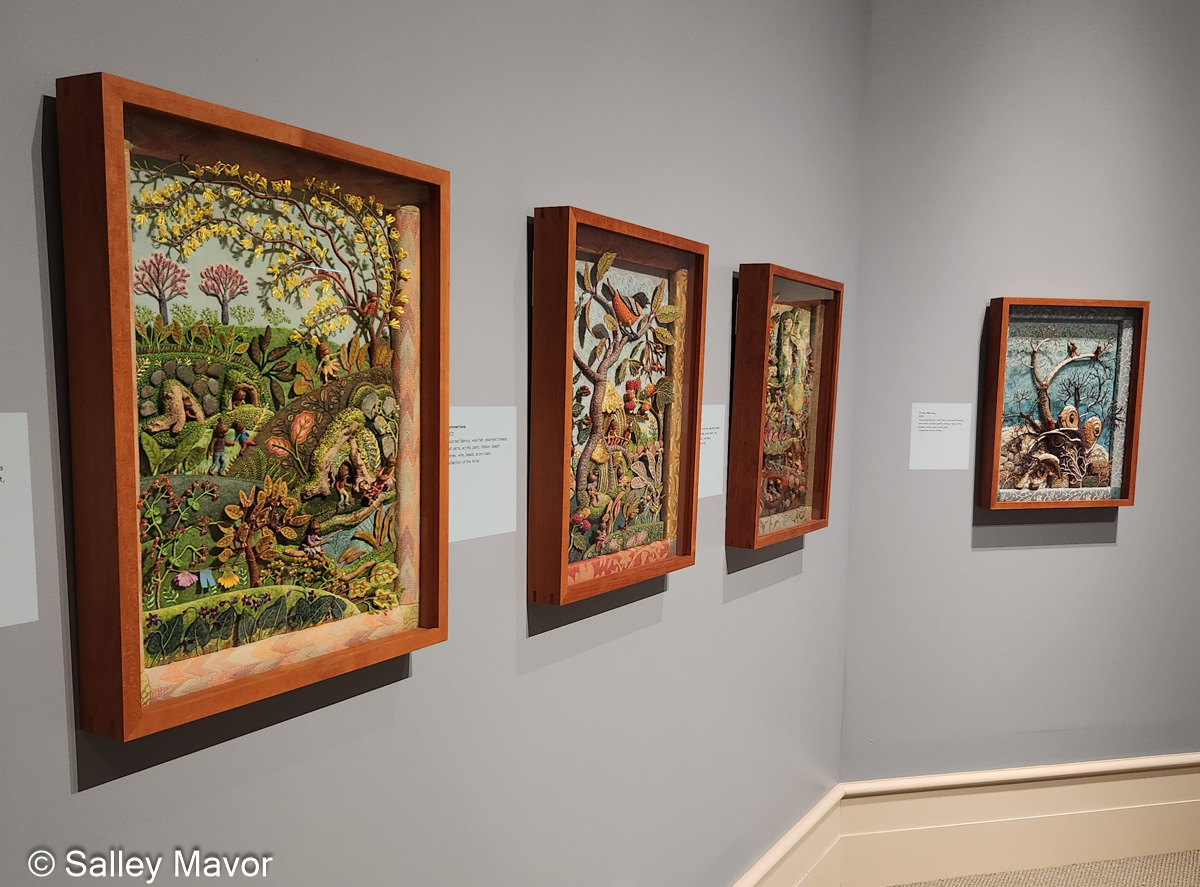
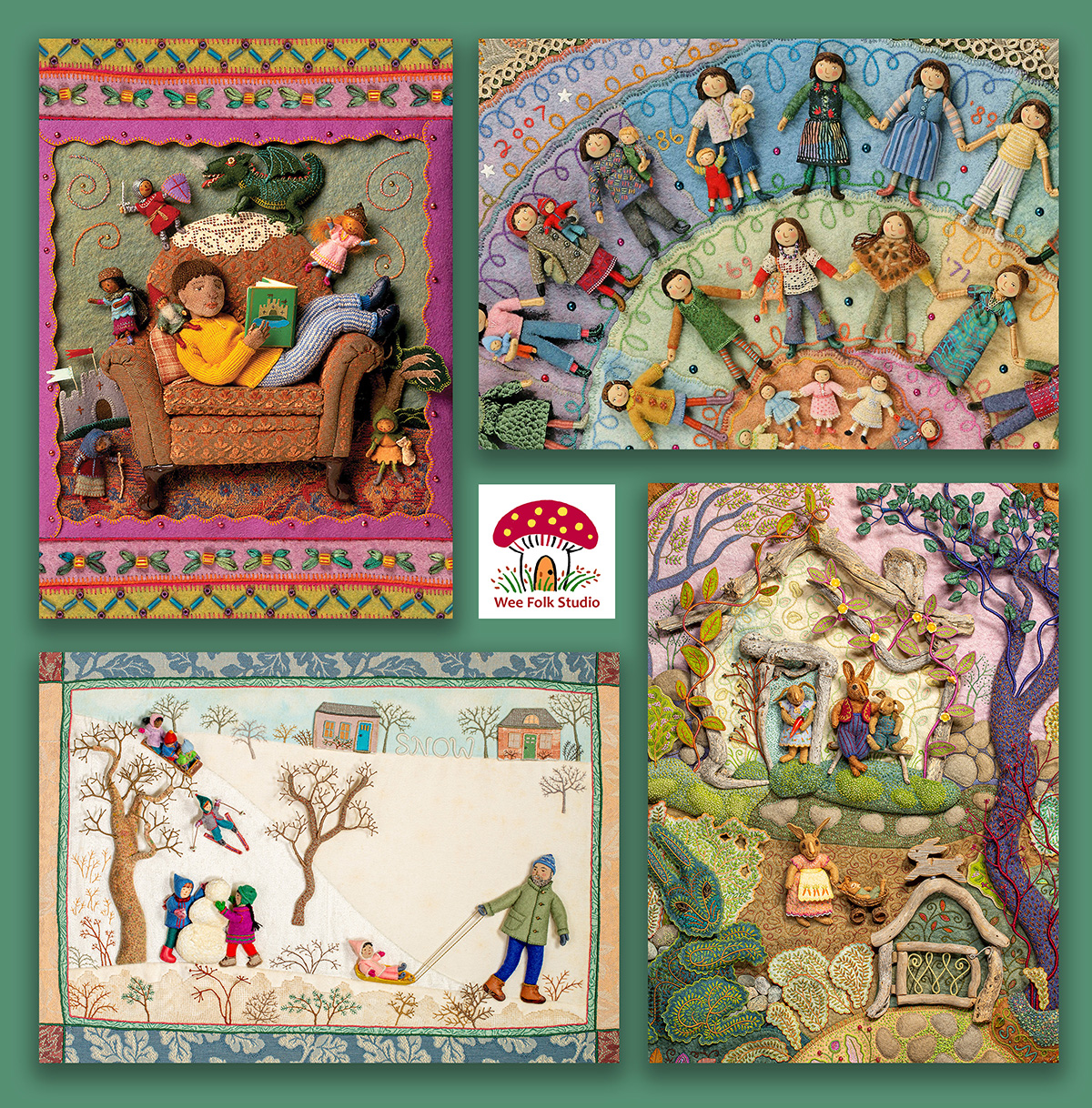
Summertime is the summer scene in a series of four seasonal landscapes that capture the wonder and magic of the natural world. Posters, note cards, prints, bookmarks, and jigsaw puzzles of Summertime and the other scenes in the series (Frosty Morning, Mossy Glen and Harvest Time) are available in my Etsy Shop.

See the Four Seasons Series and dozens of other works in my exhibition, To Every Season: Works by Salley Mavor at the New England Quilt Museum, Sept. 9 – Dec. 31, 2025. The show includes recent work, as well as rarely seen early pieces on loan from private collections.

ROSES
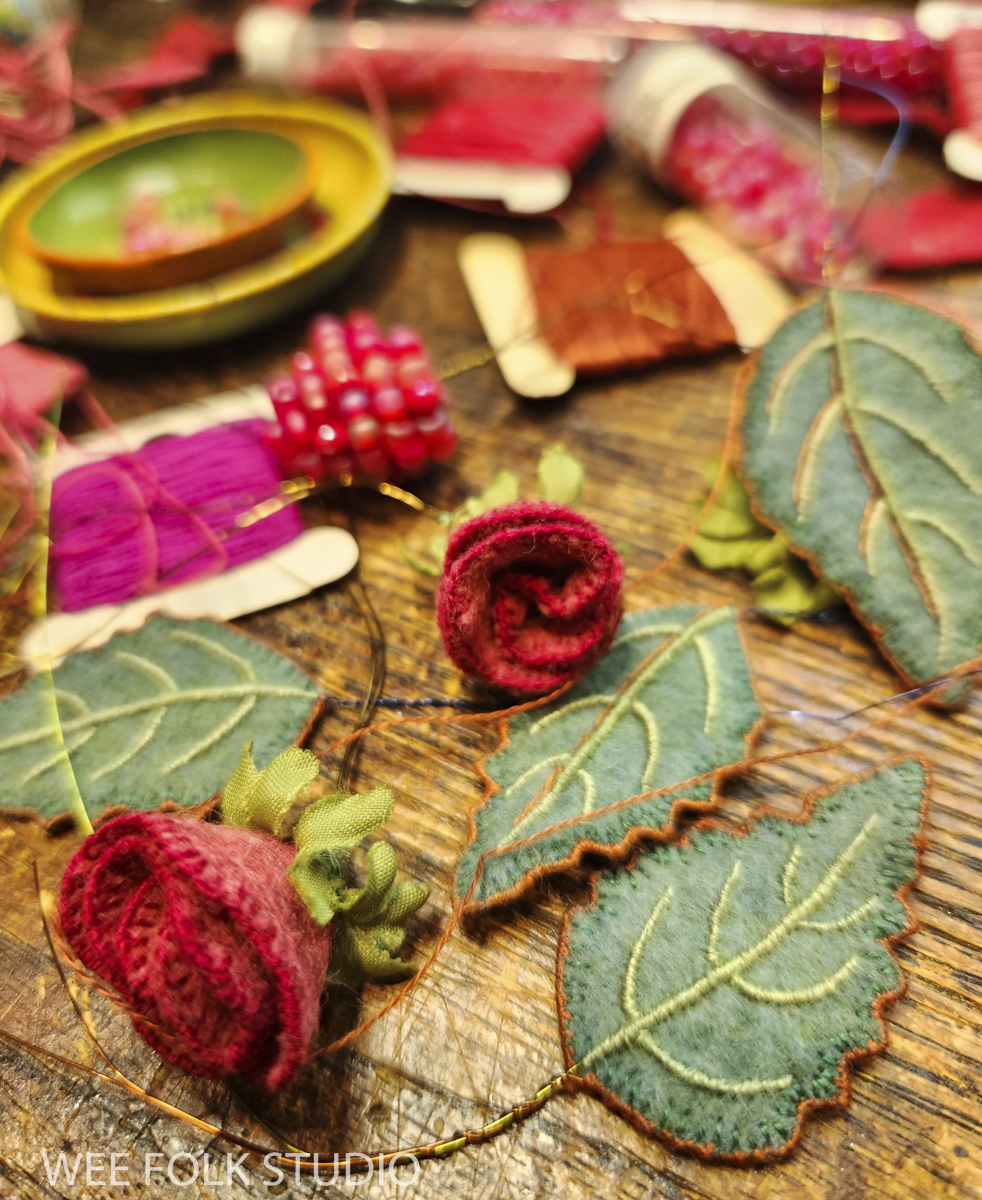
I learned how to make basic felt roses like these years ago from Mimi Kirchner’s blog. Mimi’s tutorial is available here. I love how deceptively simple the process is, starting with a circle of felt and folding it like origami to make a rose shape. Watch the following video to see how I finished off the raw felt edges with blanket stitching and folded the circle to make a rose.

Felt Rose

LEAVES
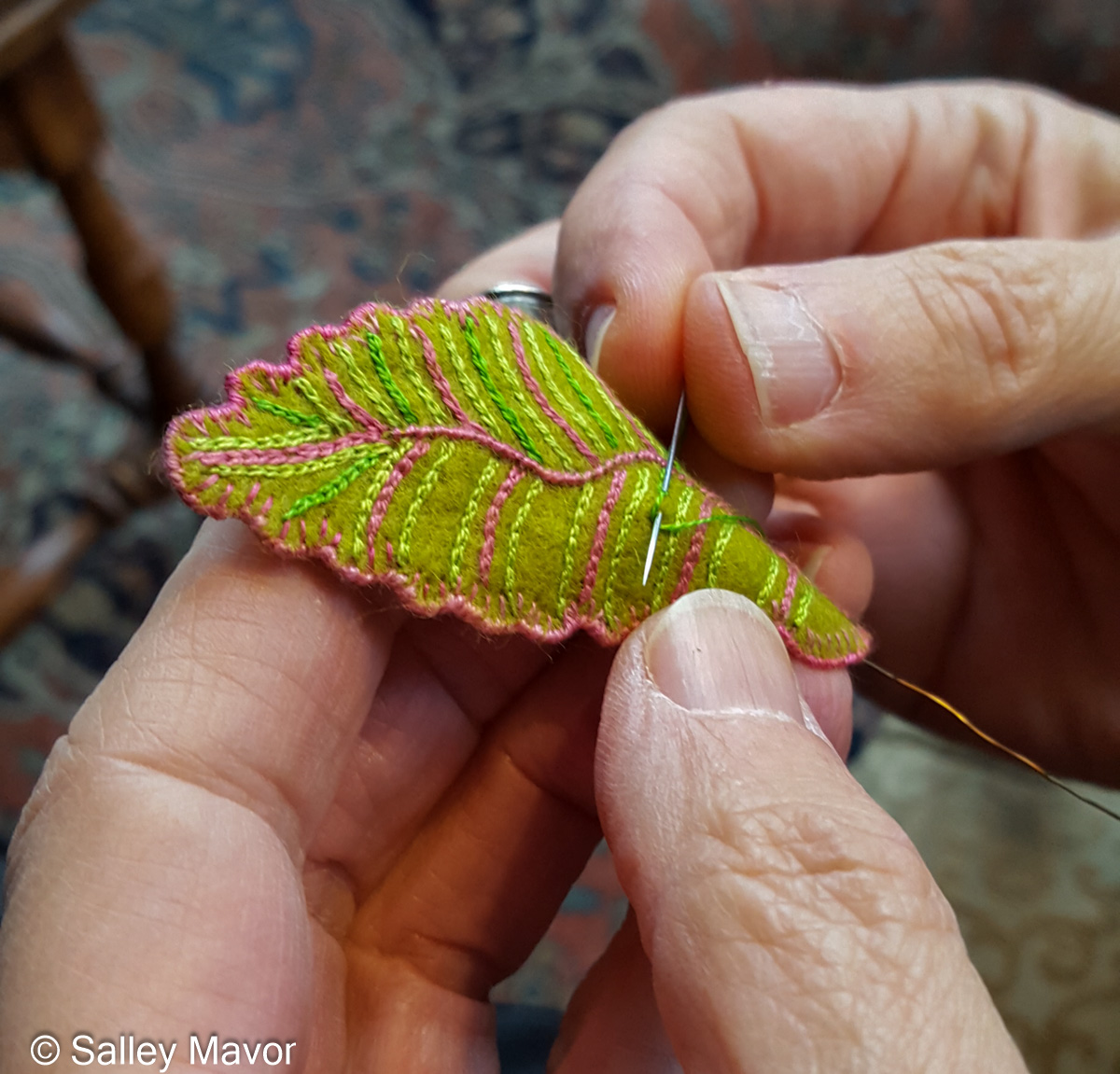
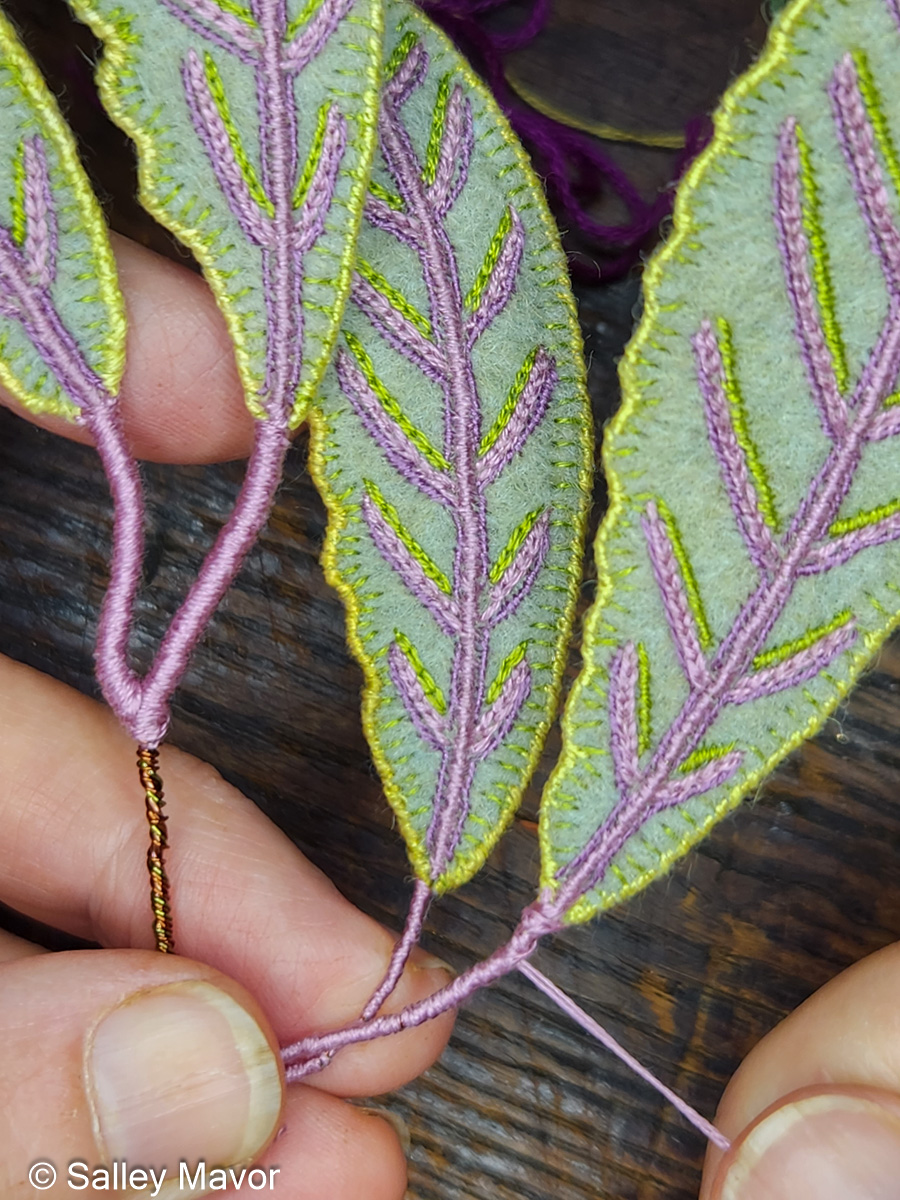
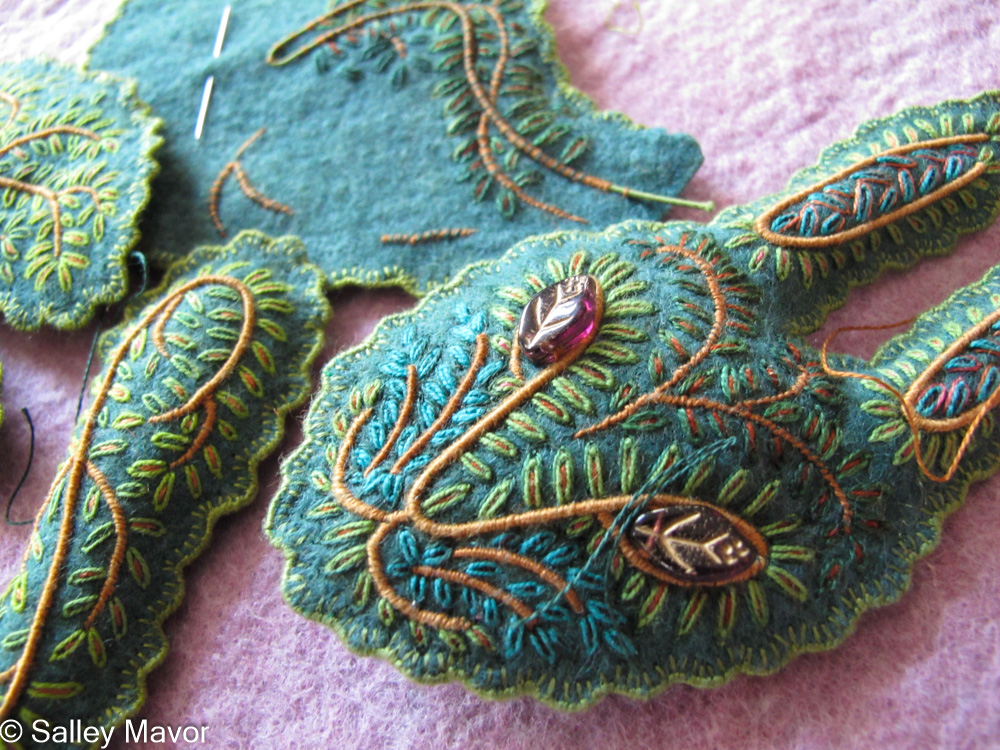
To cut out the sharp-toothed edge around the rose leaves, I used pinking shears. The following video shows how I stitched wire around the outside of a felt leaf and embroidered its stem and veins.

Felt Rose Leaf

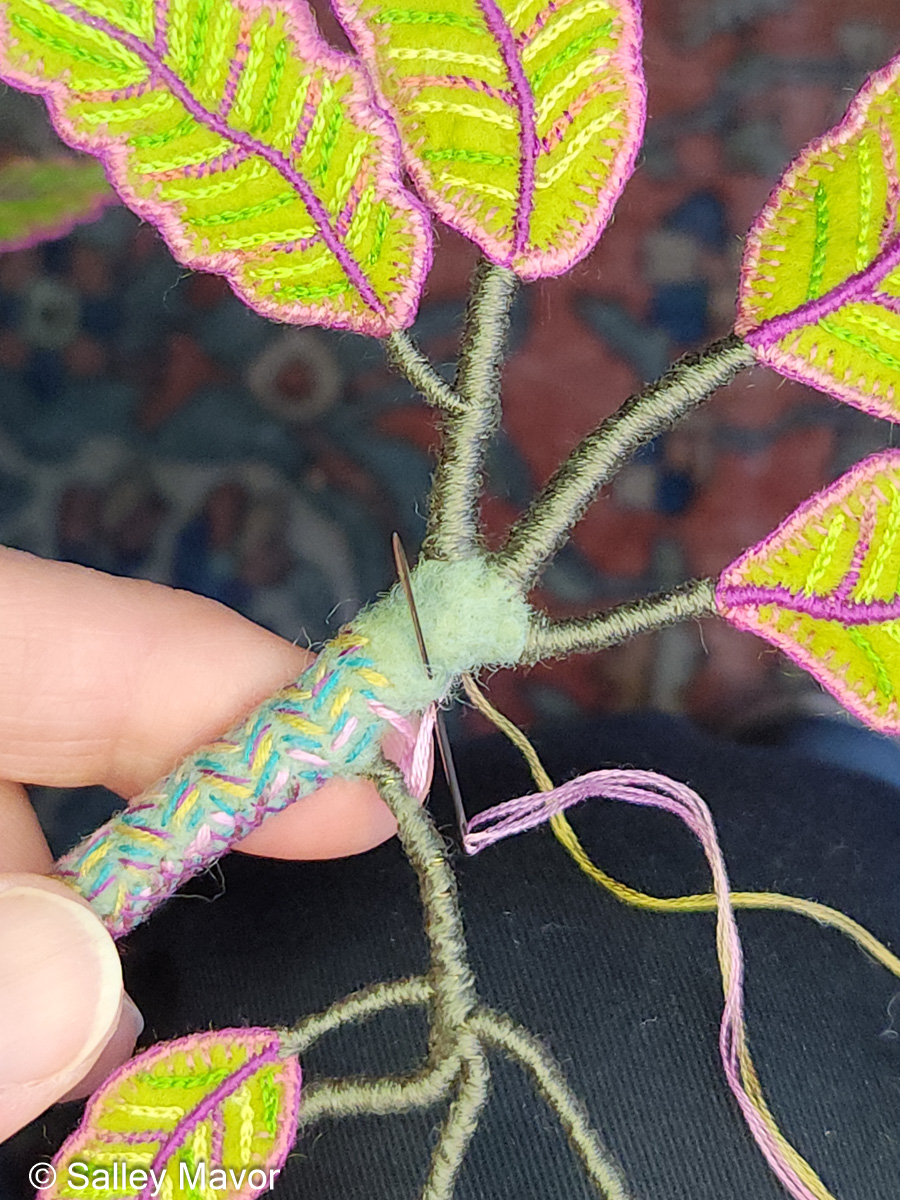
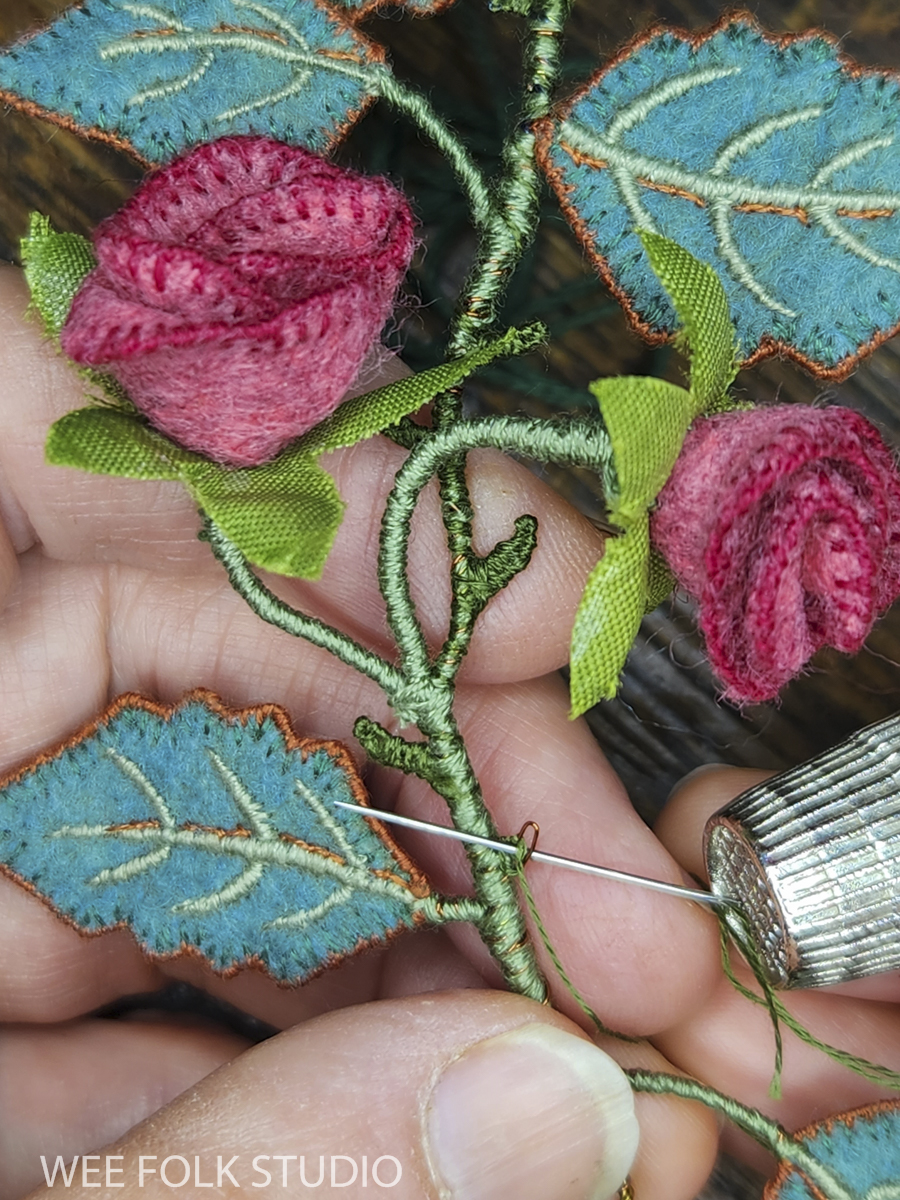
I twisted wire to make a central vine and added the roses, leaves, thorns, and curly tendrils. Besides felt and embroidery floss, the most common material in my artwork is wire. Felt alone is too floppy and needs structural supports. I used Parawire in a range of gauges, from 24 to 32, to build up the thickness and strength I wanted.

The last step was disguising the shiny metallic wire with embroidery floss. Part 3 in this series includes videos of wrapping wire stems and branches on other foliage in the Summertime piece. I wound 1 or 2 strands of floss around and around the stems until the surface was evenly covered. It was a bit tricky to make the thorns look sharp!

Stay tuned for Part 7, where I’ll share photos and videos documenting the process of making the raspberry plants in Summertime. To keep up with new posts, please subscribe to this blog. Your contact info will not be sold or shared. If you’d like to see more frequent photos tracking the projects in my studio, please follow me on Facebook, Instagram and BlueSky.

Summertime: Part 3 – leaves, stems, and branches

As promised, I’m picking up where we left off last year and continuing the series about Summertime, the fourth of my seasonal landscapes. In the coming months, I’ll share photos, videos and commentary about different aspects of the project, from raspberries to wee folk inhabitants to a life size Baltimore Oriole. I went overboard documenting the process, so there’s a ton of material to show. So far, I’ve written an overview of the piece, Part 1 – Tree Trunks, and Part 2 – Tree Houses, Part 4 – Baltimore Oriole (body) , Part 5 – Baltimore Oriole (head and feet), Part 6 – rose vine , Part 7 – raspberry plants, and Part 8 – stitching flora..

Summertime is the summer scene in a series of four seasonal landscapes that capture the wonder and magic of the natural world. Posters, note cards, prints, bookmarks, and jigsaw puzzles of Summertime and the other scenes in the series (Frosty Morning, Mossy Glen and Harvest Time) are available in my Etsy Shop.

See the Four Seasons Series and dozens of other works in my exhibition, To Every Season: Works by Salley Mavor at the New England Quilt Museum, Sept. 9 – Dec. 31, 2025.

Enchanting Threads: The Art of Salley Mavor at the Albany Institute of History and Art

LEAVES
Some of the foliage in this piece are realistic interpretations, like the leaves on the rose vine and raspberry plants (which will be covered in future posts), but others are pure fantasy. I wanted the scene to look believable, without being completely true to life. It’s not biological illustration; I was more interested in creating a unique ecosystem where little people could live alongside birds and berries.

I made the leaves with 3 basic materials – wool felt, wire, and embroidery floss. The following Stitch Minute video demonstrates how to make a simple leaf, edged in wire.

Stitch Minute – leaf

STEMS
Wire is literally the backbone of my work. I use it as a structural framework to keep floppy materials (like felt) firm enough to exist in space, above the background fabric. In this piece, I used copper wire made by Parawire to edge the leaves and form their stems.

The trick is to cover all of the shiny metal with floss. It takes many passes around the wire to make a smooth surface.

This video shows how I wrapped the wire stems on the central tree in the Summertime scene.

For me, making curvy stems and bending them around is like doodling with wire. I’m never sure how a vine is going to grow and climb. This purple bush was calling out for something extra, so I made a curly vine to wrap around its trunk.

In this Stitch Minute video, you can see how I wrapped the curly vine, including its little corkscrew tendril.

BRANCHES
After years of developing ways of making tree branches, my preferred method these days is forming wire armatures and covering them with felt or embroidery floss. I usually embroider a textured “bark” pattern onto the felt before sewing it around the wire. Thicker tree trunks involve a different process, which I wrote about in Part 1.

In the following video, you can see how I stitched felt to cover the section that branches off into 3 separate wire limbs.

Stay tuned for Part 4 in this series, which will be about the Baltimore Oriole. If you want to receive email notices when I publish new posts, please subscribe to this blog using the form below.

To keep up with new posts, please subscribe to this blog. Your contact info will not be sold or shared. If you’d like to see more frequent photos tracking the projects in my studio, please follow me on Facebook, Instagram and BlueSky.

bed book peek – back cover

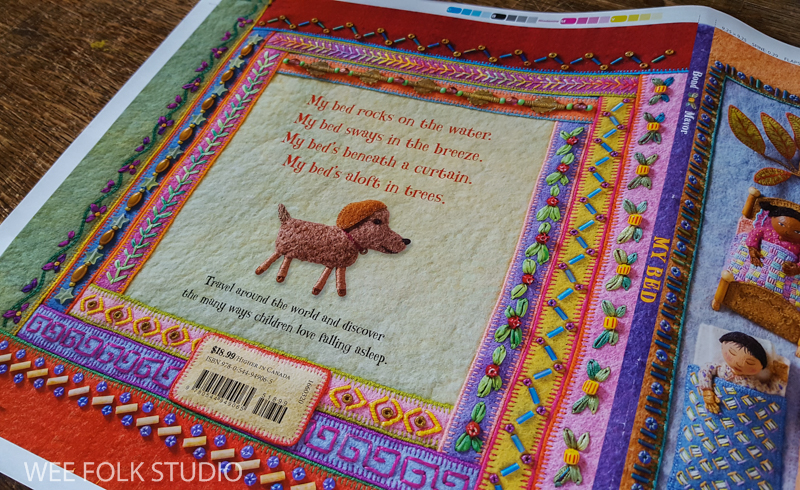
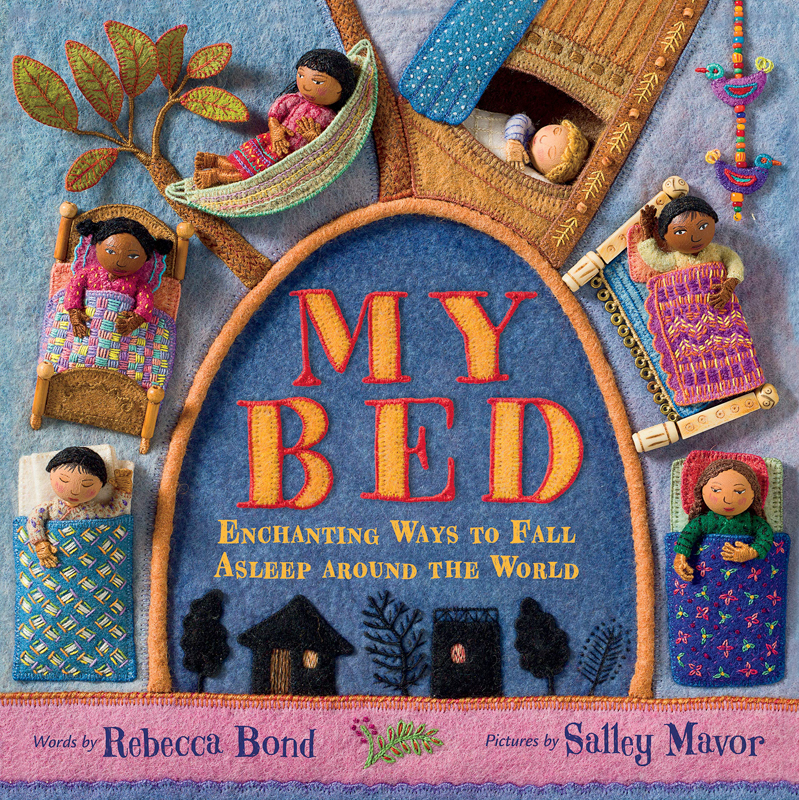
Today, I’d like to share how I made the embellished border strips that are on the back cover of MY BED. While the cover of the book introduces the children in their beds, the back is purely decorative. I wanted it to be a cross-cultural celebration of color, pattern and texture that hopefully will make the person looking at it to want to open the book. There were a couple of practical requirements, too, like a place for the bar code and an open area for the publisher to print promotional copy and add book reviews in future printings.

UPDATE: Personally signed copies of My Bed are available in my shop.
Also, all of the original 3-dimensional embroidered illustrations for the book are included in my current exhibition at the Albany Institute of History and Art in Albany, NY. Enchanting Threads: The Art of Salley Mavor is on view now through Feb. 23, 2025.

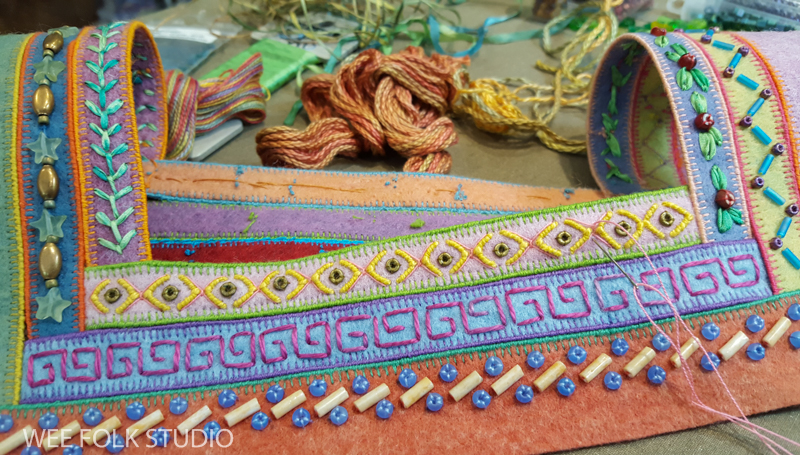
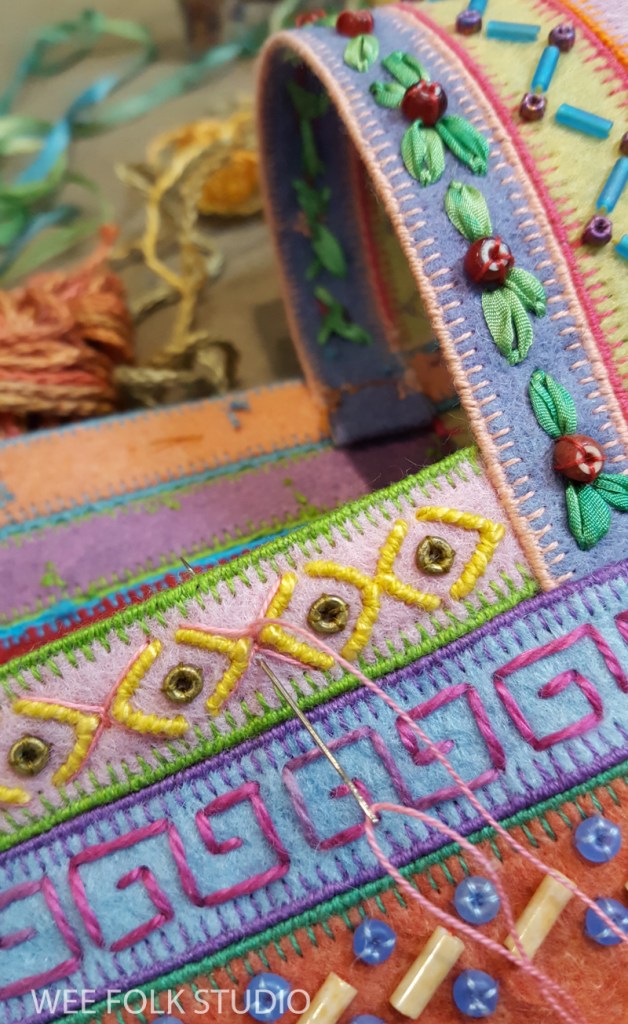
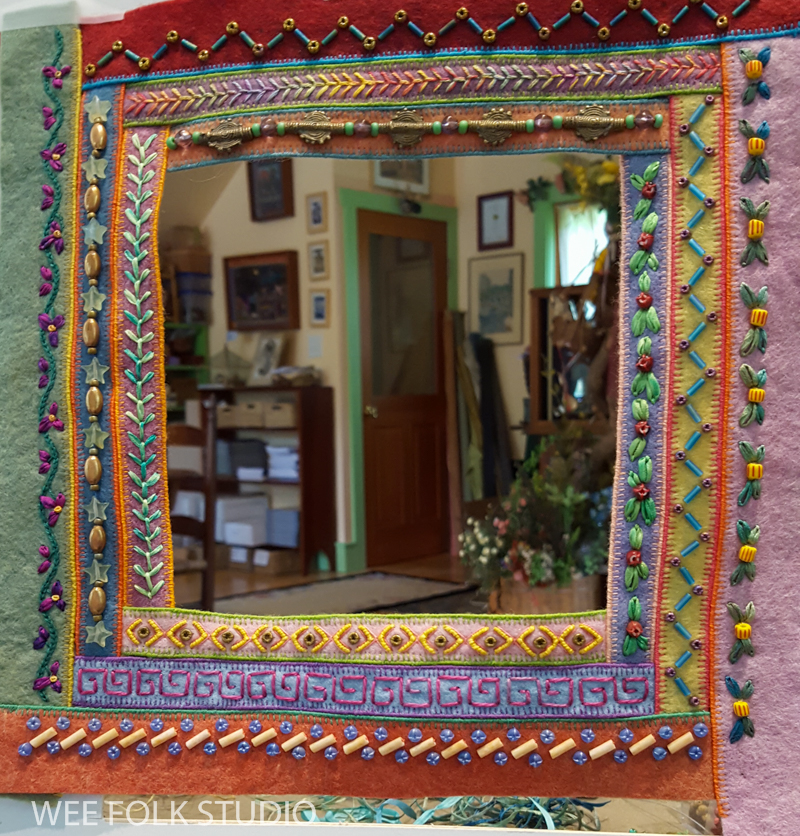
The design on the back cover includes multiple narrow (about 1/2″ wide) lengths of felt that I embroidered and pieced together in the style of a log cabin quilt.

I edged each strip of felt with blanket stitch and then sewed on wire, to make the long sides firm and straight, like bones on a corset. Otherwise, the strips would be too limp and wobbly to work with. You can’t see the wire because it’s wrapped with thread.

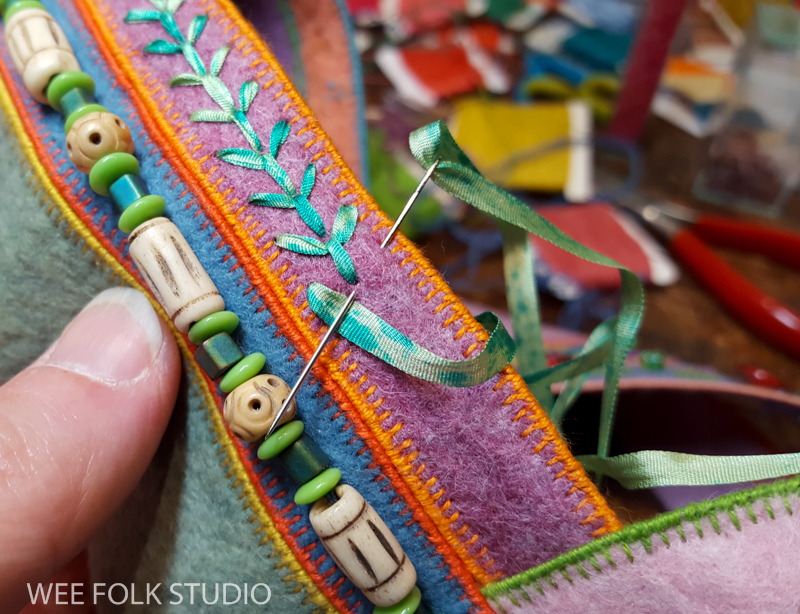
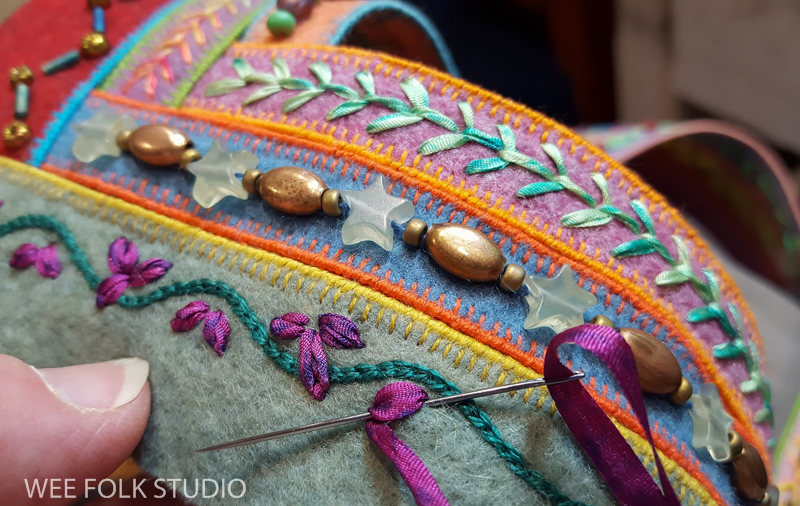
After stitching the strips together, I embellished different motifs on each one with beads, silk ribbon and embroidery stitches.

I combed through my vast collection of beads, which all seemed to be waving their hands wildly, calling out “pick me!”. The hardest part was selecting which ones to use and coming up with a combination that was interesting, but not cluttered looking.

I love embroidering simple stitches with silk ribbon.

I wanted each strip to be distinctive, but also work in harmony with the others.

The border looked like a window when it was finished

The last part involved sewing the border in place on top of a solid felt center piece. Since the book is a perfect square, everything had to line up just right.

Please keep in mind that while this book is technically a children’s book, it’s really for all ages! Over the past few years, I’ve published posts about making several of the different scenes. Here’s a list of the posts I’ve written:

To keep up with new posts, please subscribe to this blog. Your contact info will not be sold or shared. If you’d like to see more frequent photos tracking the projects in my studio, please follow me on Facebook, Instagram and BlueSky.

Eddie’s Baby Banner

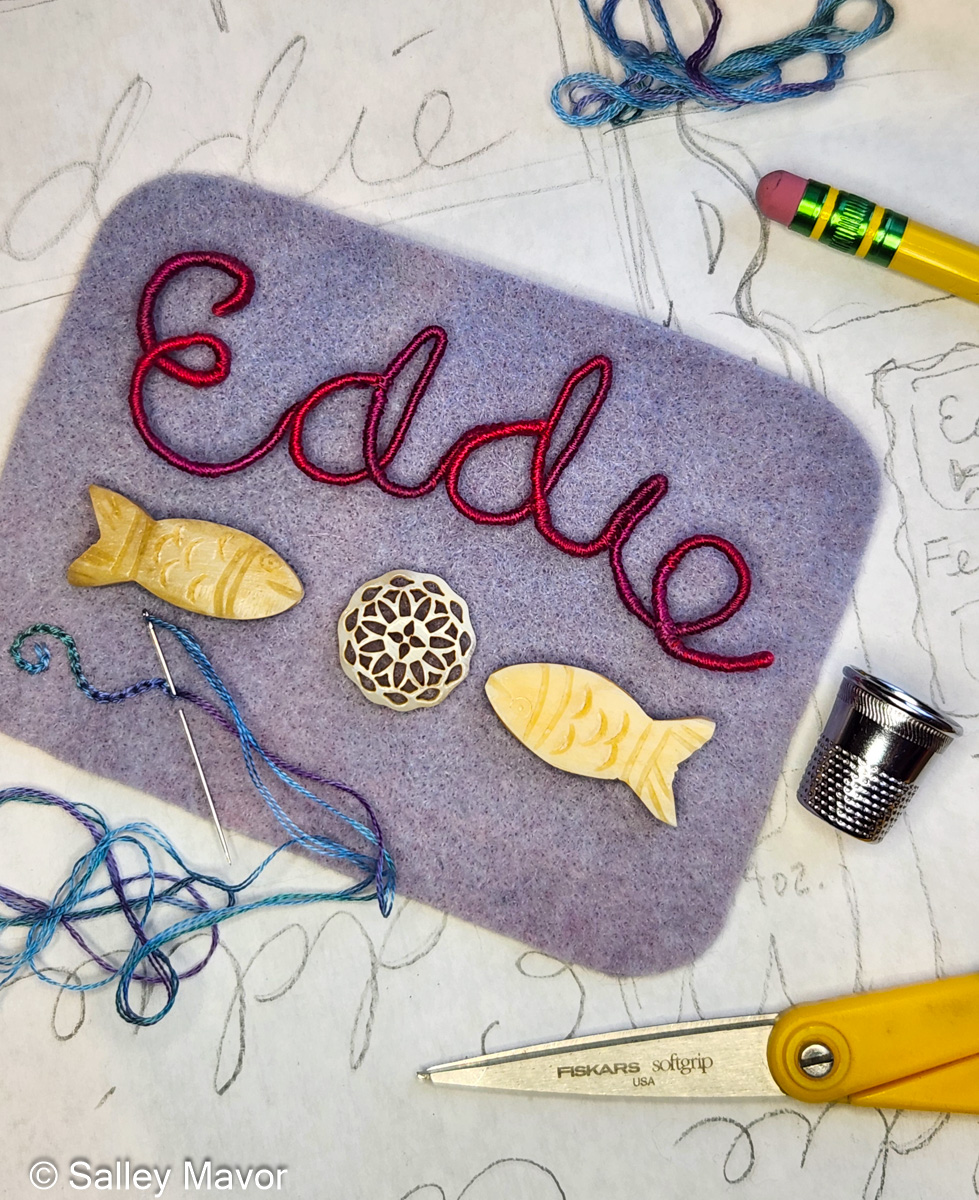
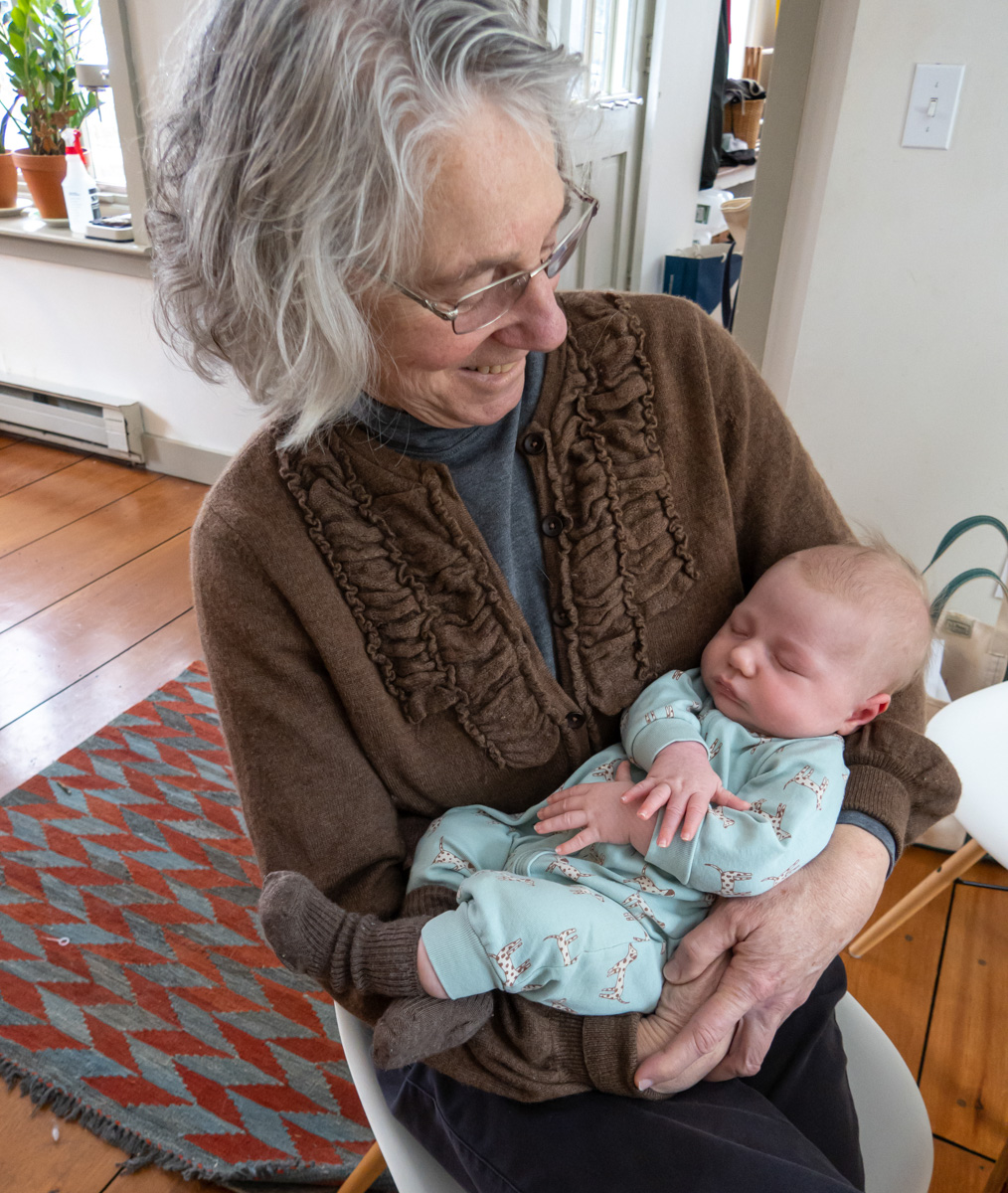
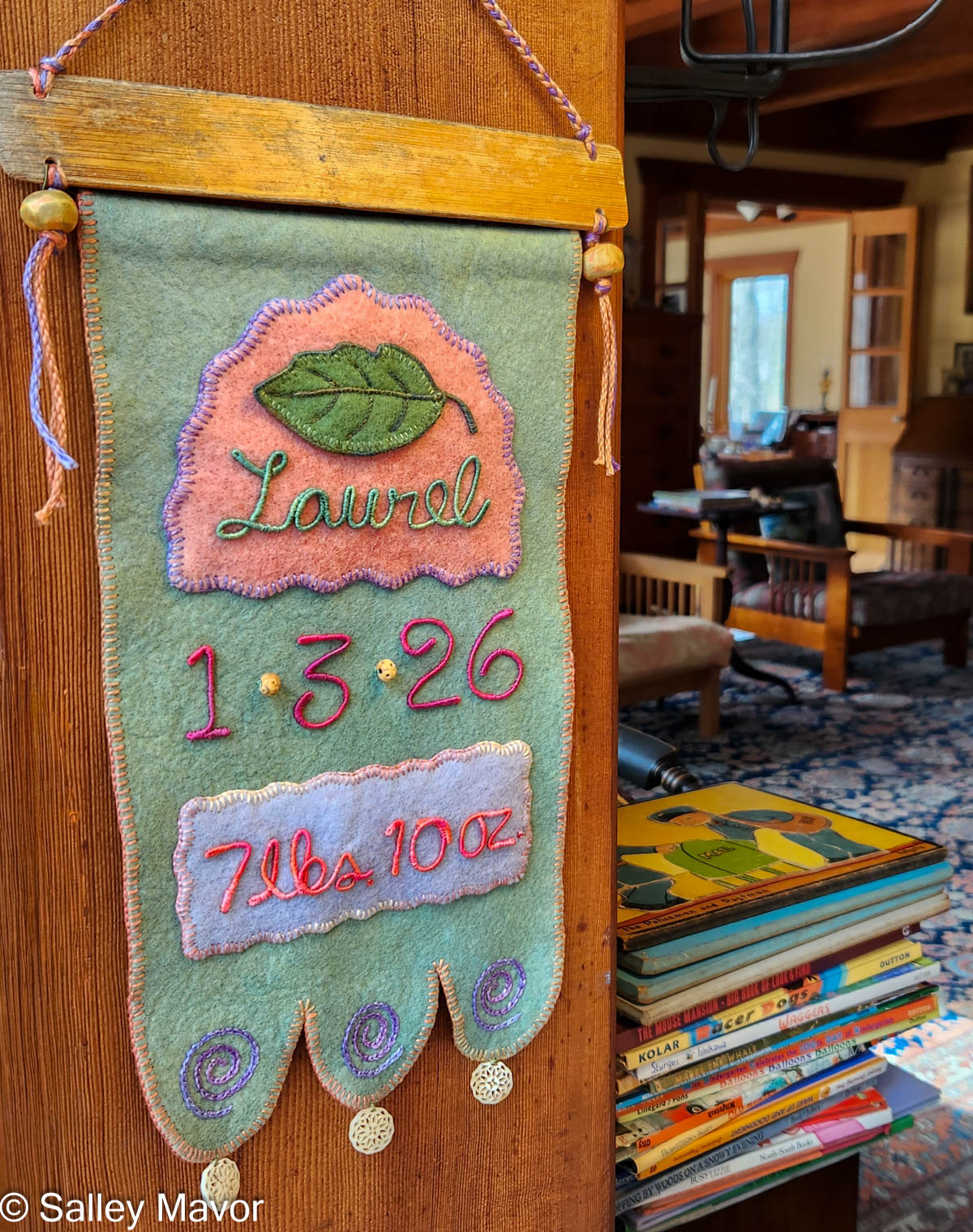
I’m happy to share the news that our new grandchild Eddie was born on Feb. 15th, 2024. He’s named Edward, after his maternal grandfather, but his parents, Mary and our son Peter, call him Eddie. So, that’s the name I put on his baby banner. Our family is growing so fast, I can hardly believe it! Little Eddie and his cousin Elias were born 13 months apart and we hope they become good buddies (see Elias’s banner here).

MAKING THE BANNER
Read ahead to see photos, videos, and commentary about making Eddie’s baby banner. I’ve divided the post into different sections, including wrapping wire letters and embellishing felt borders, which are are some of the more distinguishable features of my banners. To see posts about this and other celebratory banners I’ve made over the years for family and friends, scroll through the archives here.

WRAPPING WIRE LETTERS
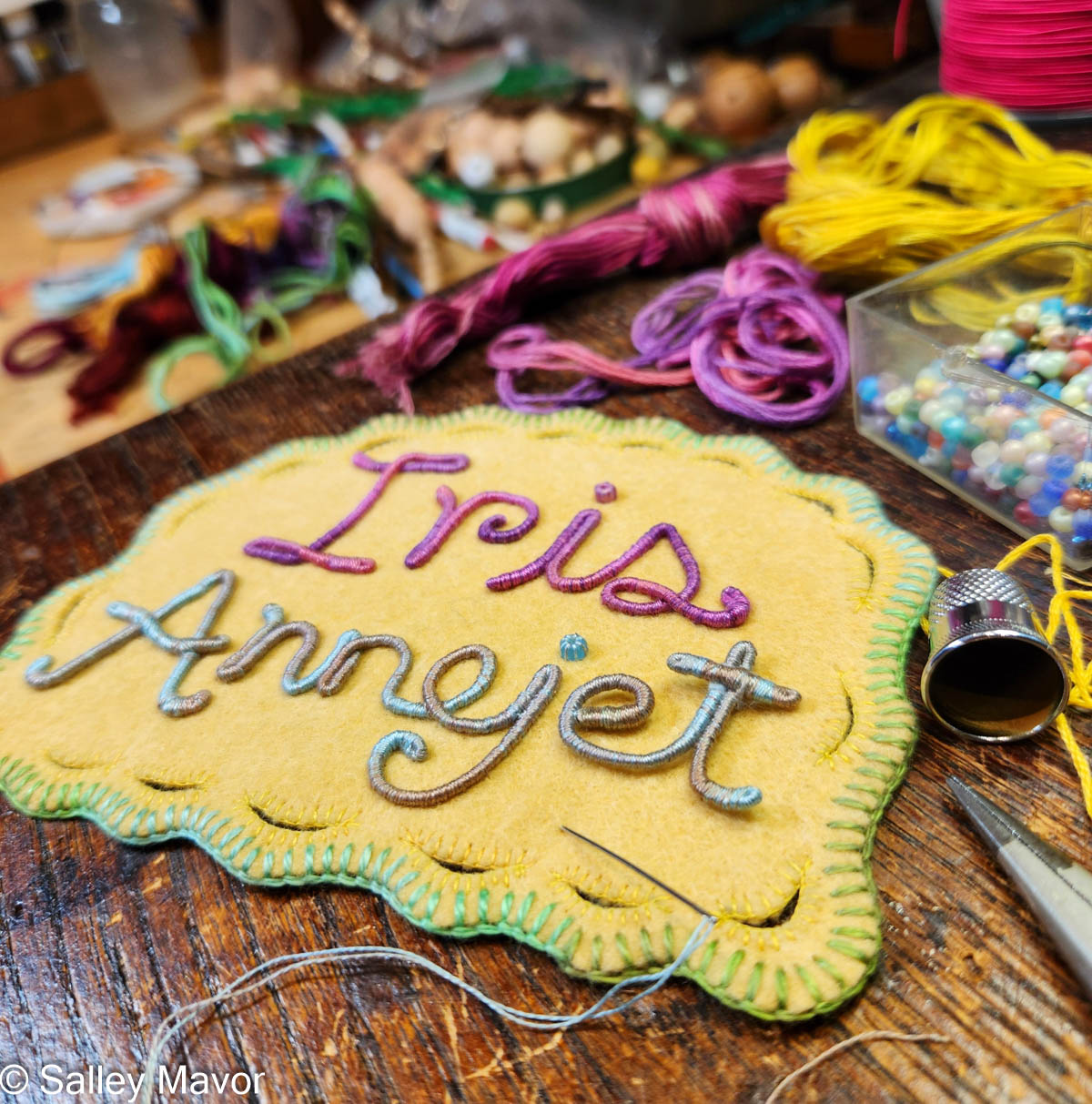
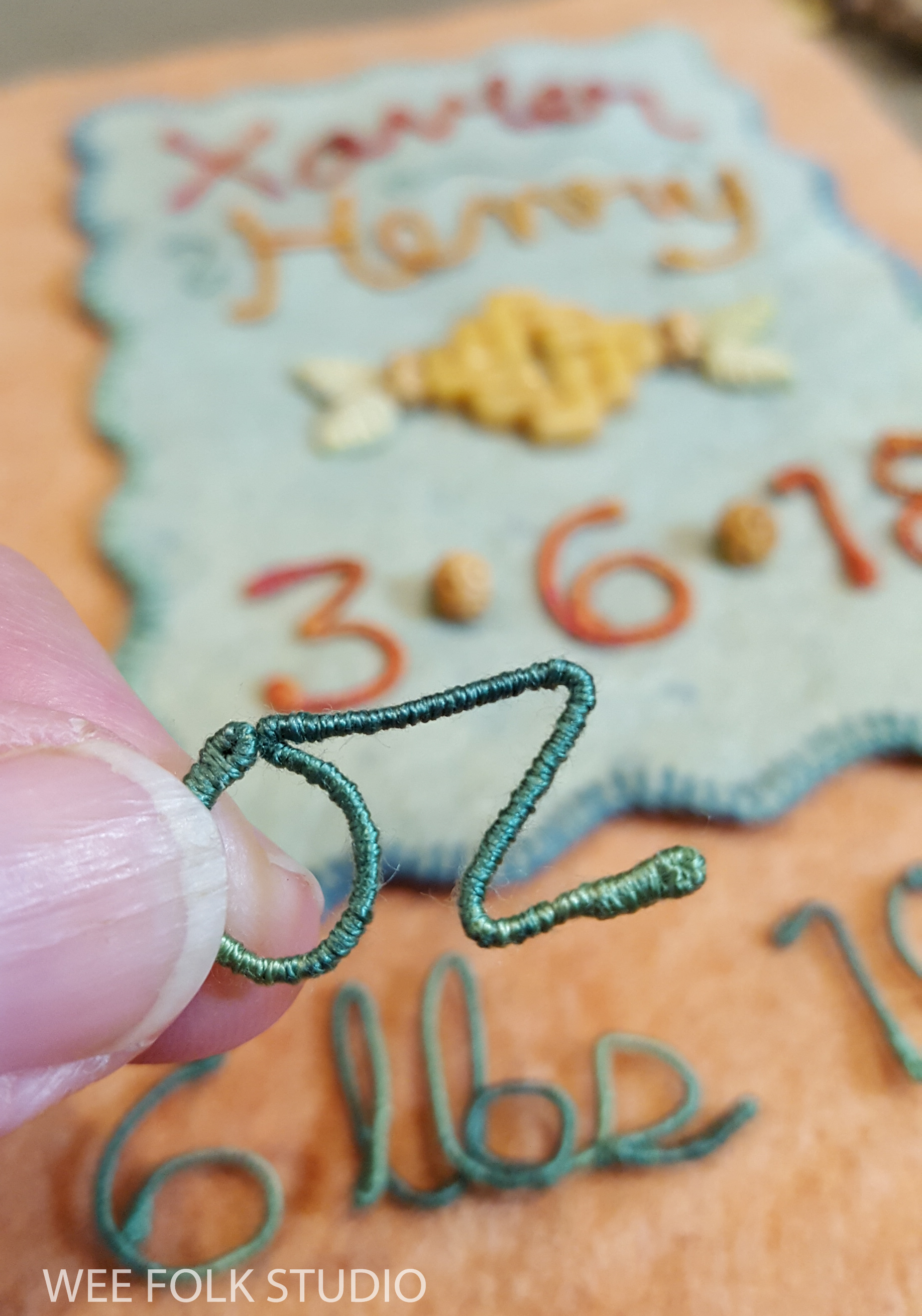
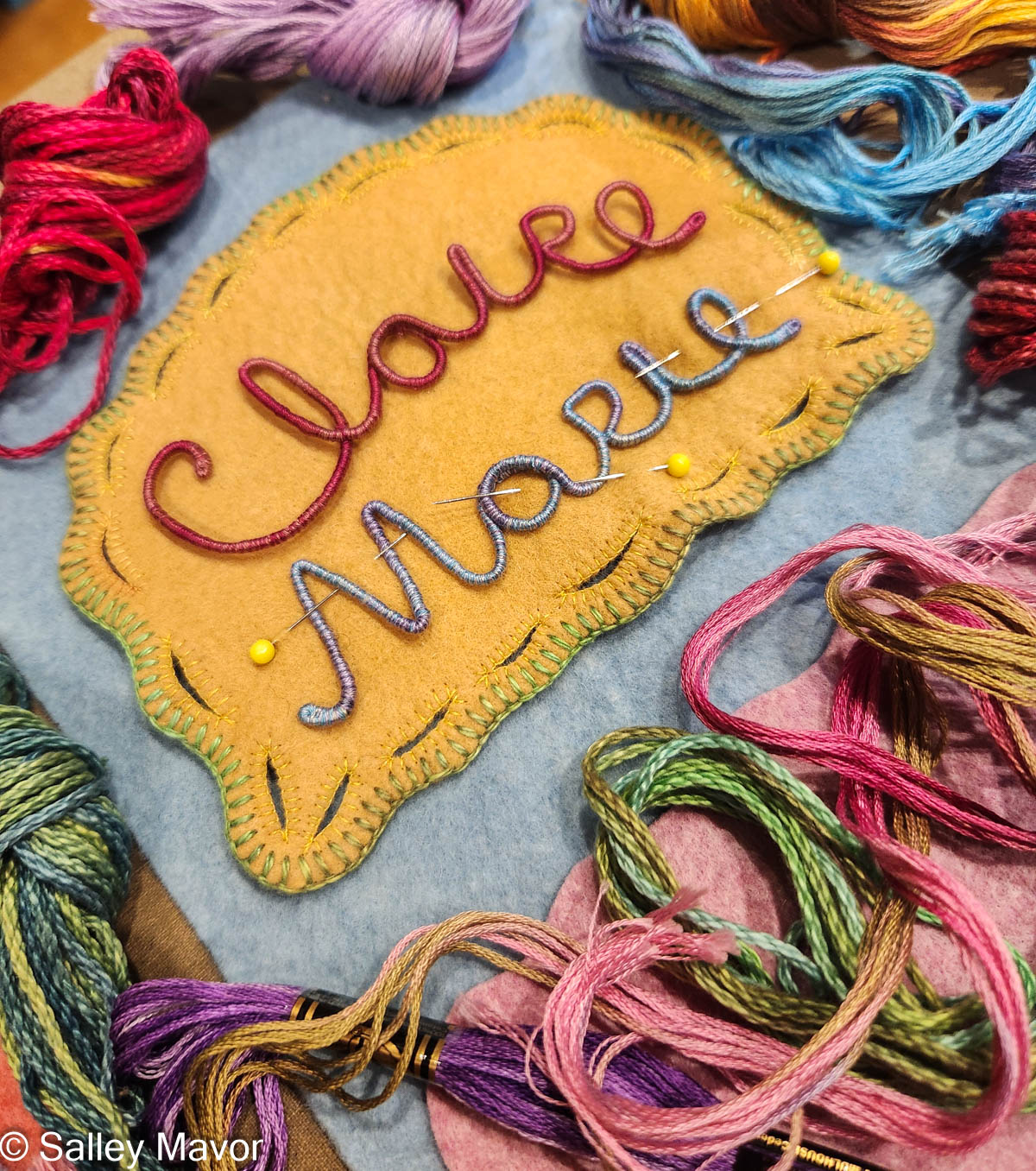
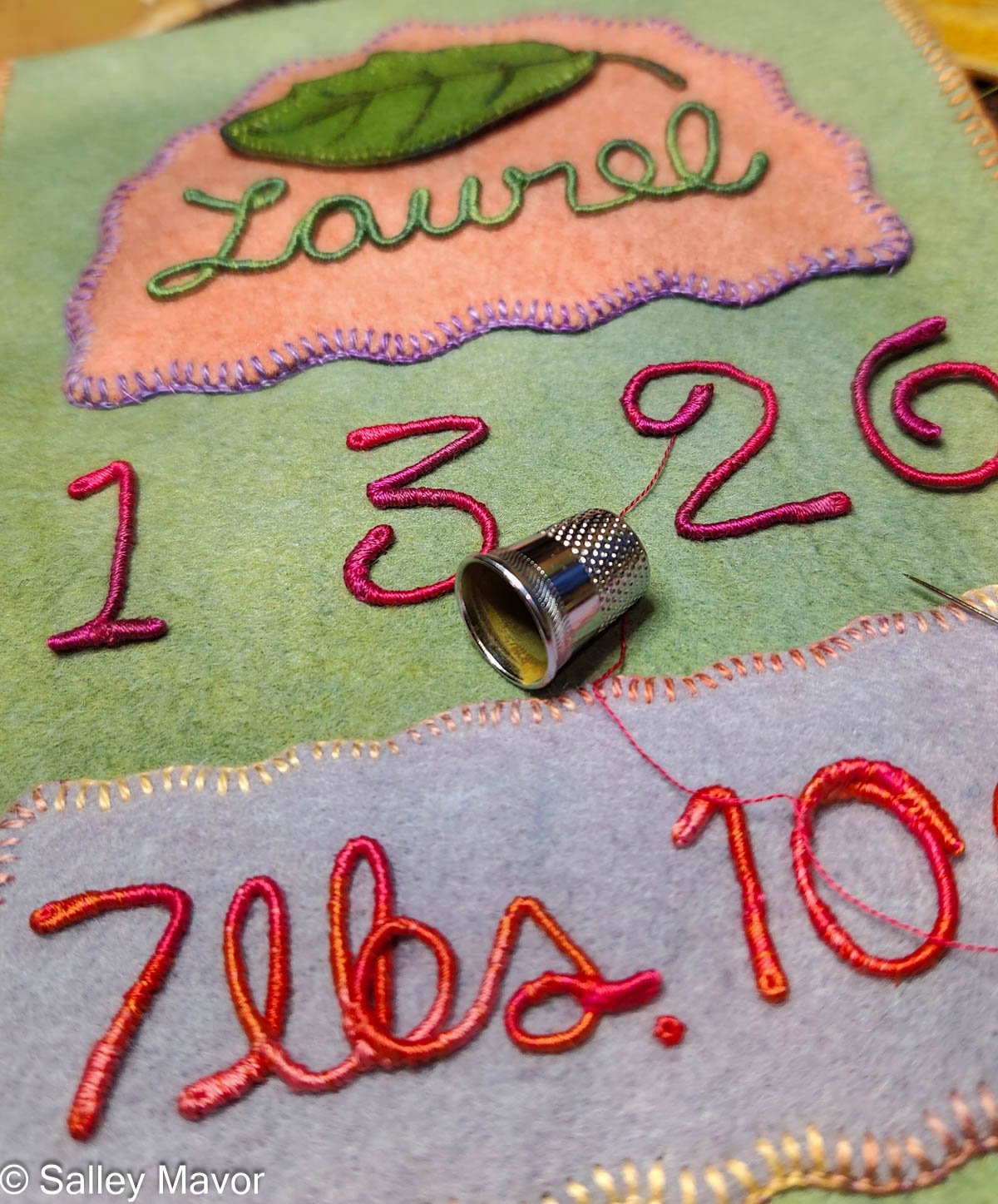
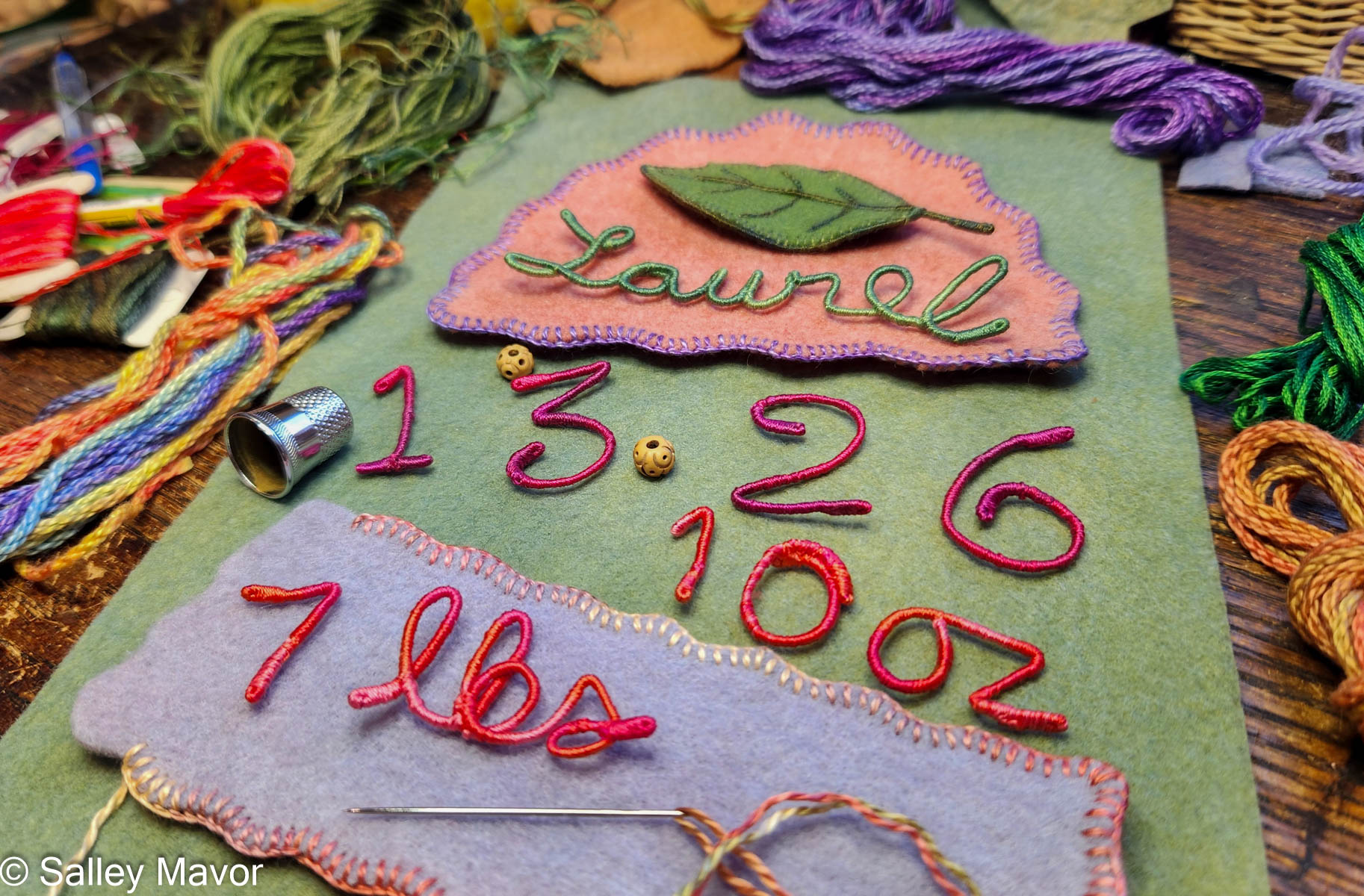
After choosing a color scheme and picking out pieces of felt and thread, I wrote out Eddie’s name in cursive handwriting with a pencil on paper. Fortunately, his name could be written in one continuous line, which doesn’t always happen. I then wrapped a length of DMC memory thread (a kind of wire) with 3 strands of variegated embroidery floss (see video below). Using the drawing as a template, I bent the wire to form his name and stitched the letters together where they touched.
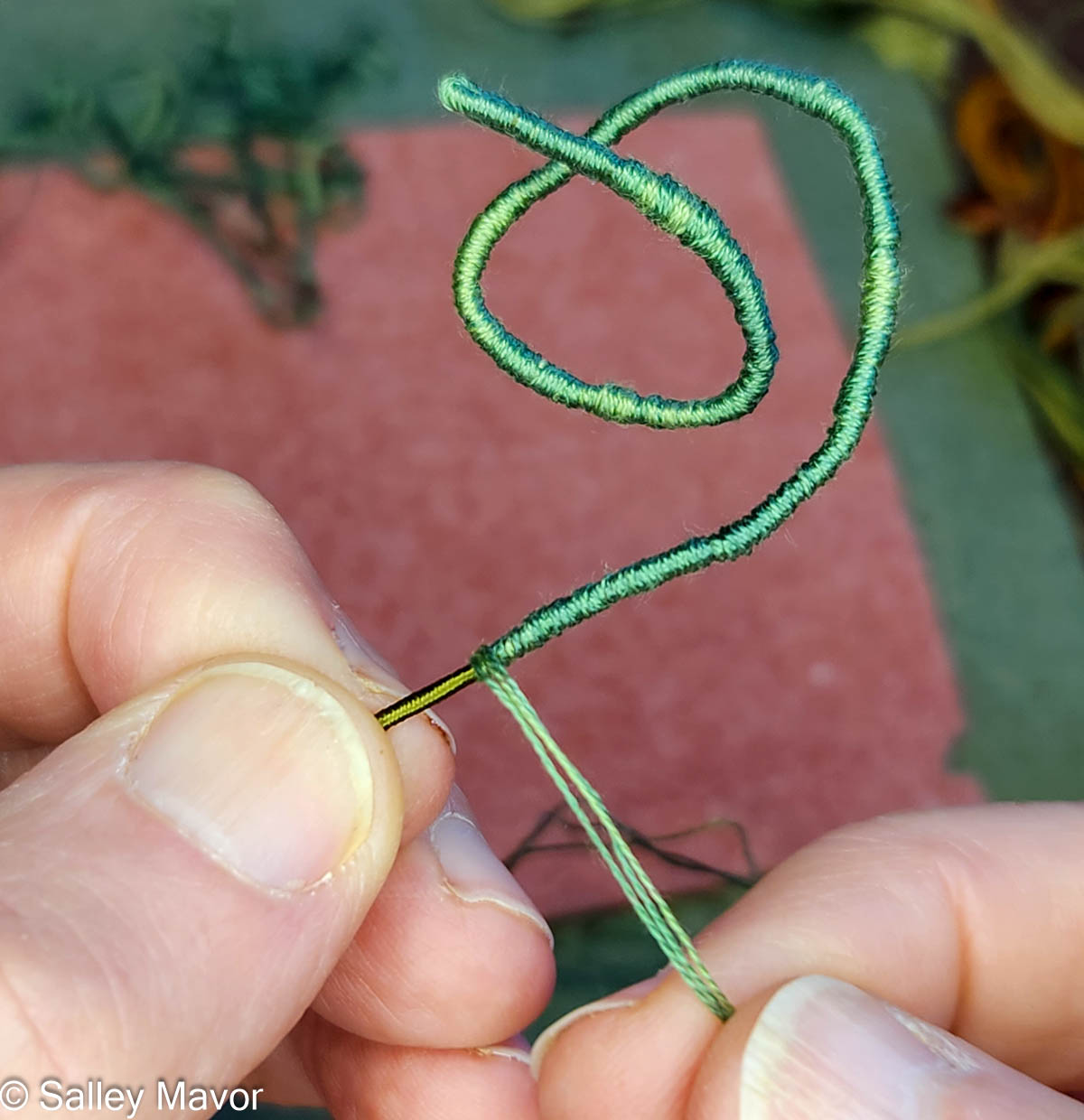
In this video, I demonstrate wrapping DMC memory thread with 3 strands of embroidery floss to create numbers and letters for Eddie’s birth weight. I thought it would be easier to see the process using contrasting wire and thread colors. Of course, using the same color wire and thread is better for hiding gaps and inconsistencies. It takes a lot of practice to get the hang of wrapping the wire. If you’ve learned to wrap arms and legs for the wee folk dolls in my how-to book, Felt Wee Folk, you’ve got a jump start on mastering this technique.

EMBELLISHING FELT BORDERS
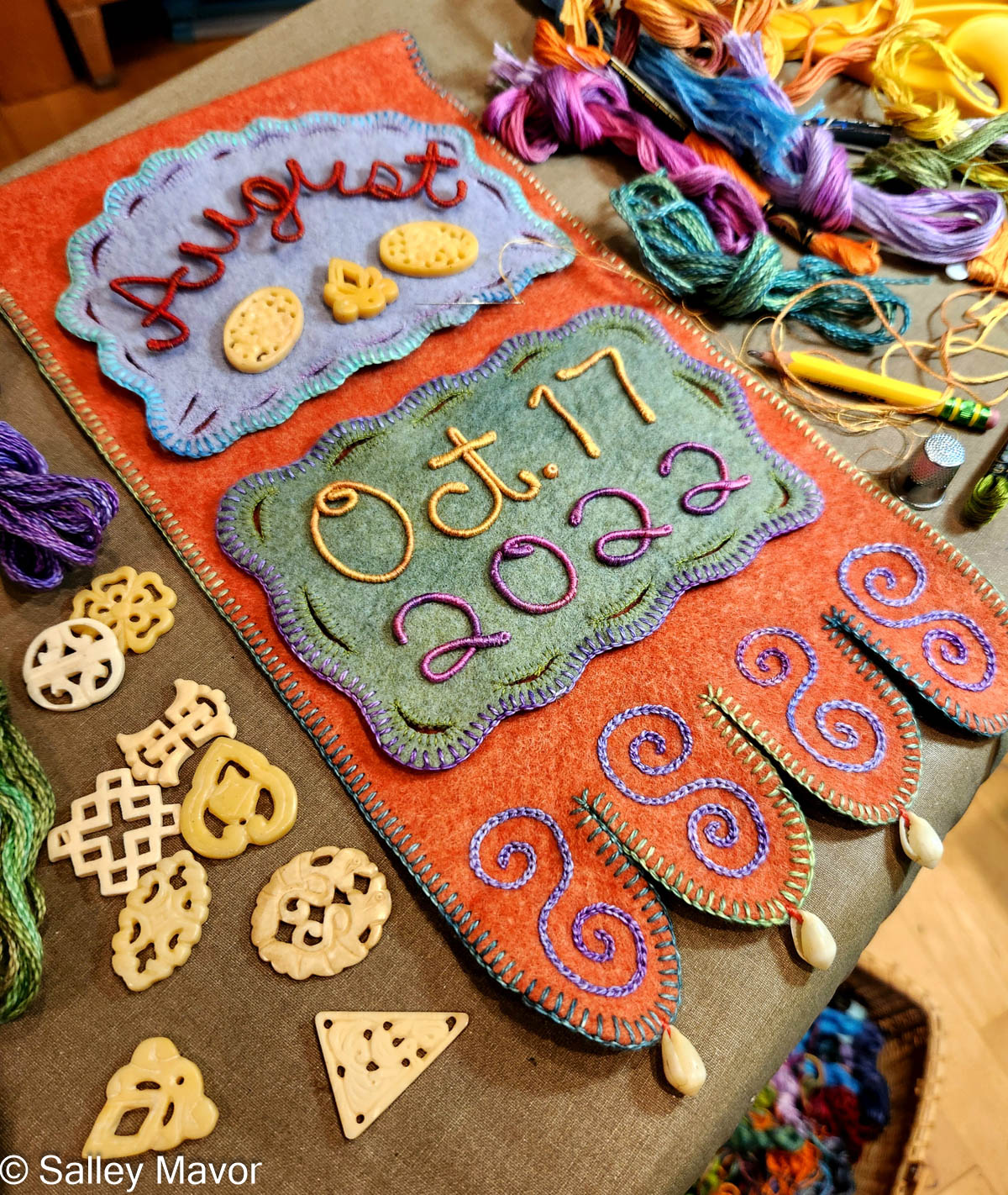
I love embellishing with blanket stitching, especially with variegated thread. It’s a simple, but effective way to create an edge that looks clean and assertive, while also displaying a handmade quality. For me, it’s important to show that a real person made it, not a machine. For this banner, I created layers of felt pieces, which I blanket stitched with pima cotton (Watercolours by Caron).
In this is a video, I demonstrate embellishing borders for the banner.

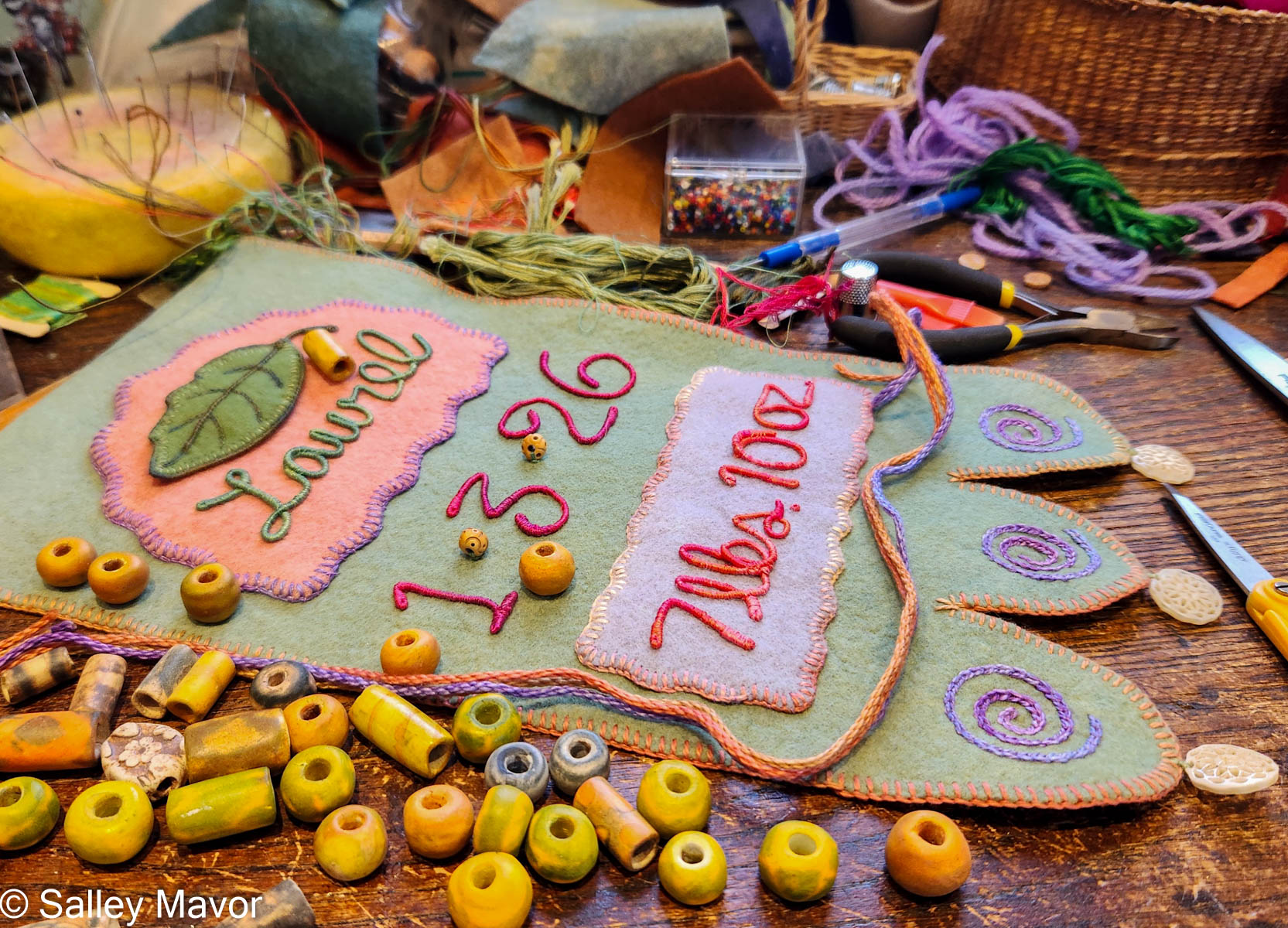
The border around Eddie’s birth date needed perking up, so I added beads.

CANDY CANE STRIPES
When I finished making numbers for the year 2024 and laid them out, they looked kind of plain. So, I decided to wind a single strand of orange embroidery floss around the wire numbers (see video below).

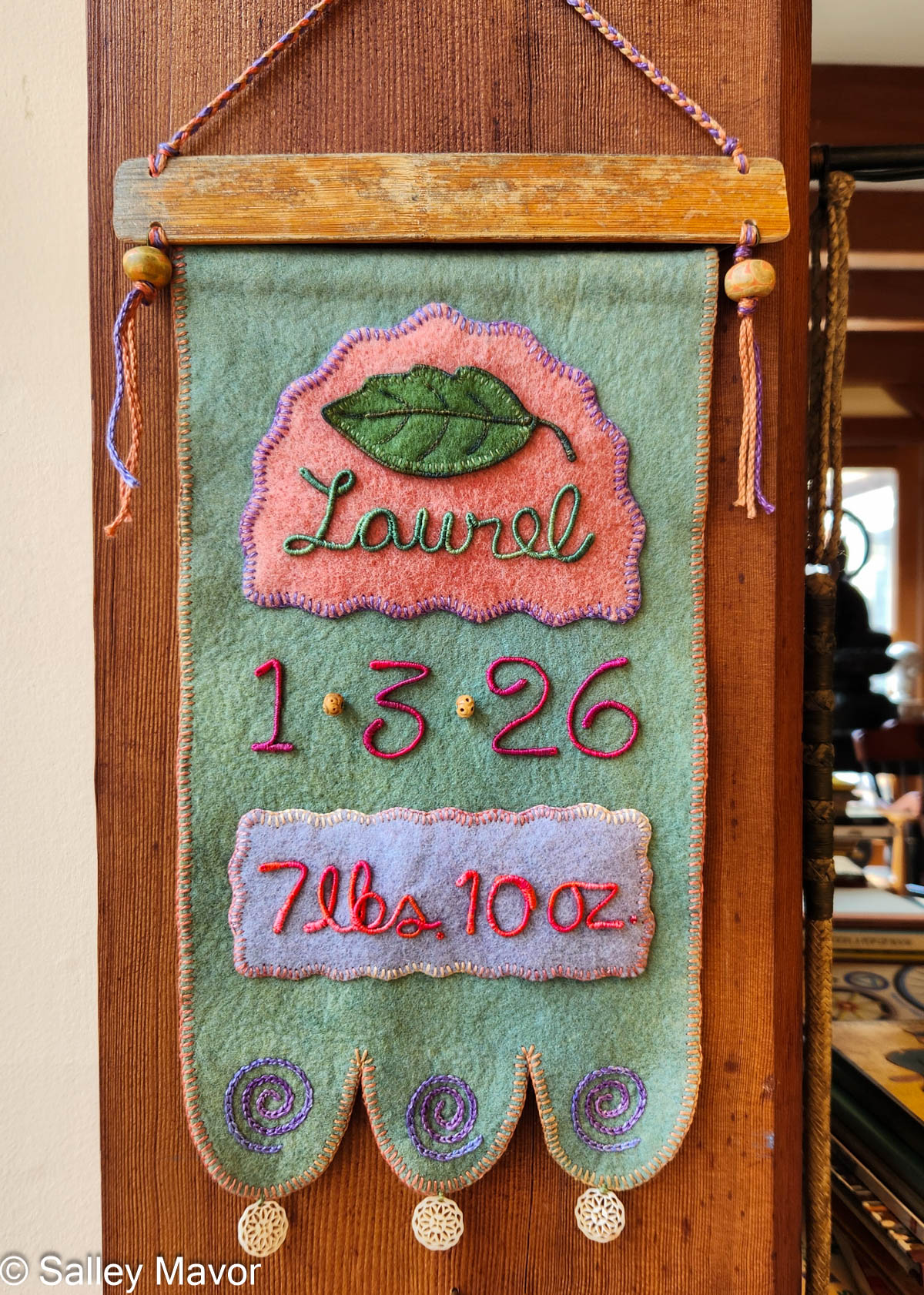
I looked through my driftwood collection and found the right sized stick that would work as a hanging bar. I braided cord to make a strap and drilled holes in the stick big enough to thread cord through.

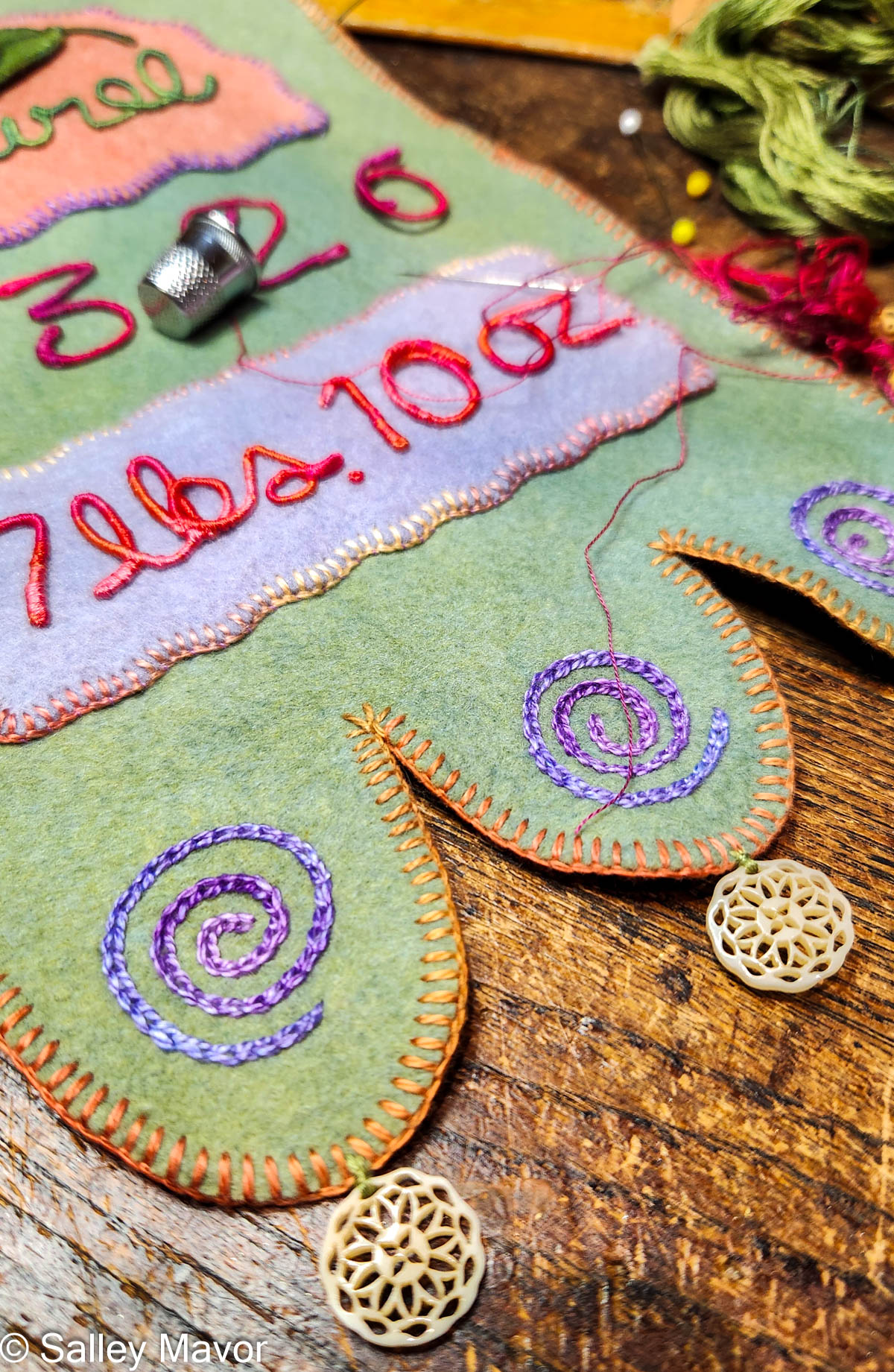
This video shows how I chain stitched spirals on the scalloped flaps at the bottom of the banner.

We’re pleased as punch with little Eddie and look forward to getting to know him as he grows!

To keep up with new posts, please subscribe to this blog. Your contact info will not be sold or shared. If you’d like to see more frequent photos tracking the projects in my studio, please follow me on Facebook, Instagram and BlueSky.
Cover Madness at The Horn Book

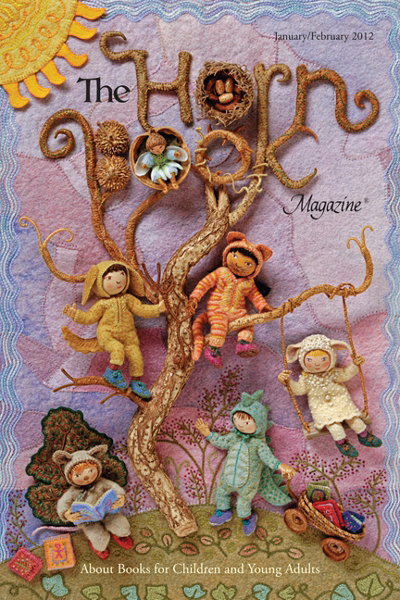
UPDATE: I just received word that my 2012 cover was voted the winner of The Horn Book Magazine’s Cover Madness contest in the January/February category! As part of this year’s centennial celebration of the magazine’s founding, this “very-subjective, not-serious event” will continue with more contests to pick covers from previous issues published in March/Aril, May/June, etc. By the end of Cover Madness, 6 different covers will “emerge as winners”.

What a wonderful surprise this is! Even though the children’s book community has always been very supportive, I sometimes feel like an imposter because of my singular vision and nontraditional illustration medium. So, I’m especially honored to have my work recognized this way. Of all the groups my work is lumped into, from embroidery to doll making, the storytelling genre of children’s books is where I feel most at home. I hope that you enjoy this account from 2012 about how I made the cover!


This is an edited and republished version of a post that was first written in 2012.

The Jan/Feb 2012 issue of The Horn Book Magazine is out, with my illustration on the cover. This issue has many wonderful articles and book reviews, including the 2011 Boston Globe-Horn Book Award speeches, which were delivered at the colloquium on Sept. 30th, 2011.

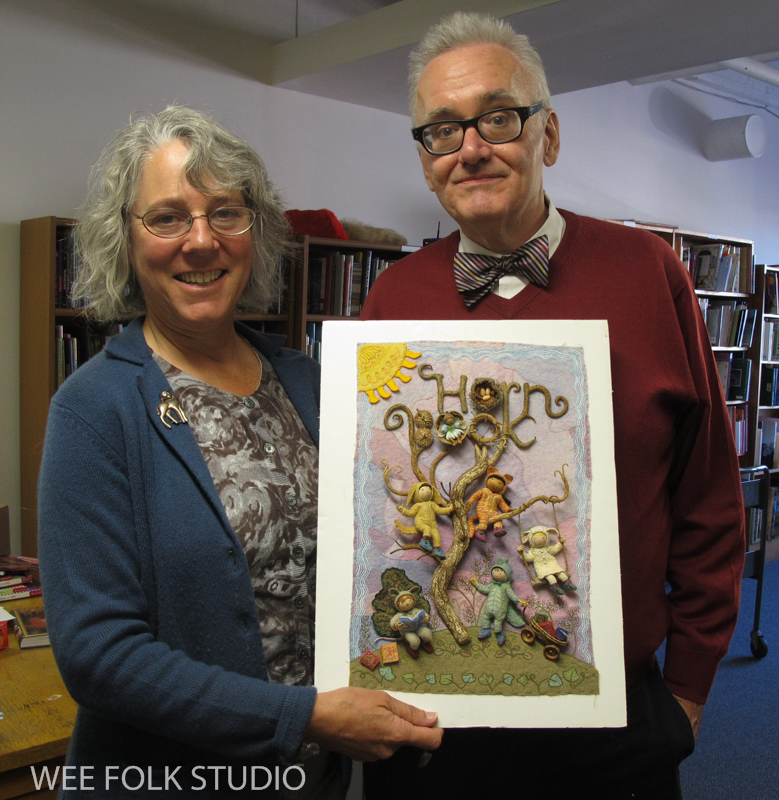
In this post, I share the process of making The Horn Book cover illustration, which I worked on for about 6 weeks this past summer. The original size of the scene is about 12″ wide and 18″ high. The original piece was purchased by an art collector who is connected to the children’s book world.

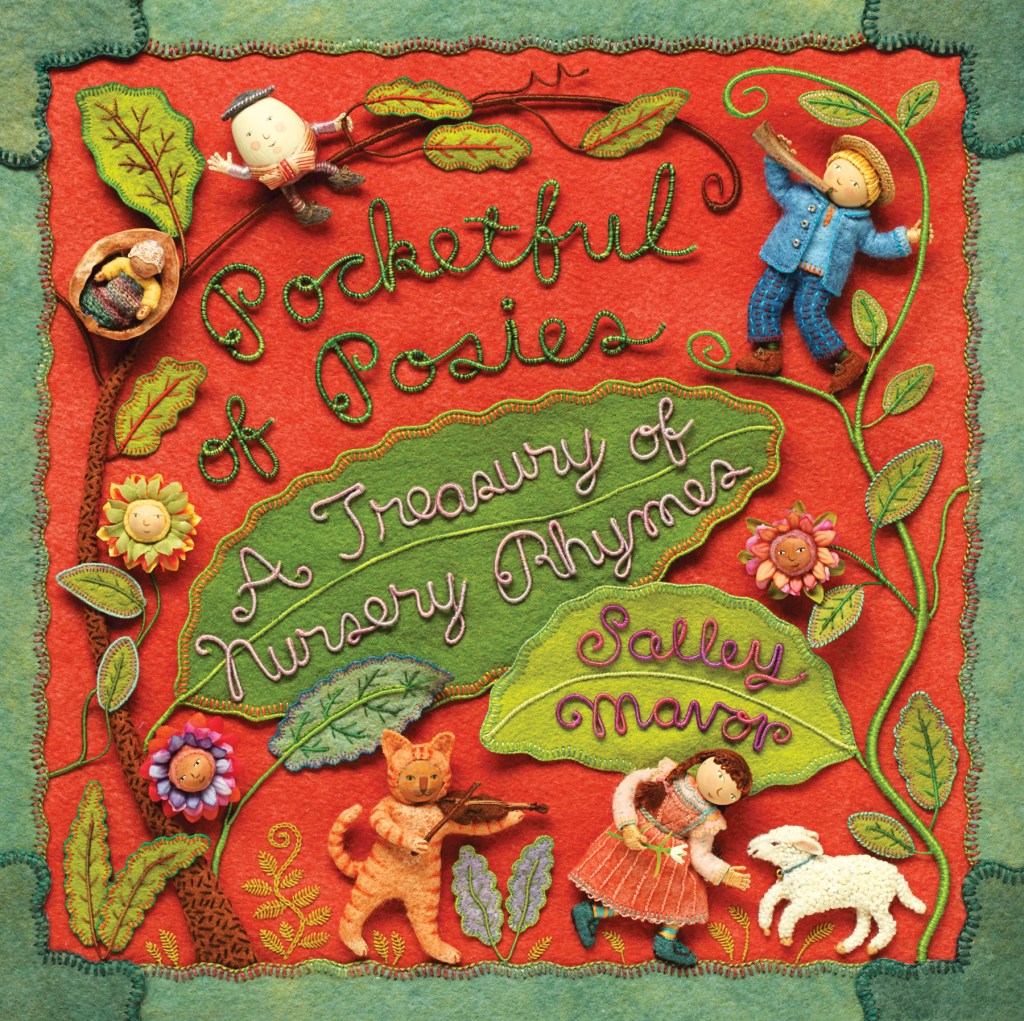
As the Horn Book Award recipient for Pocketful of Posies in 2011, I had the honor of illustrating a cover for the magazine. You can find out more about my award here. Signed copies of the book are available in my Etsy Shop.


THE TREE
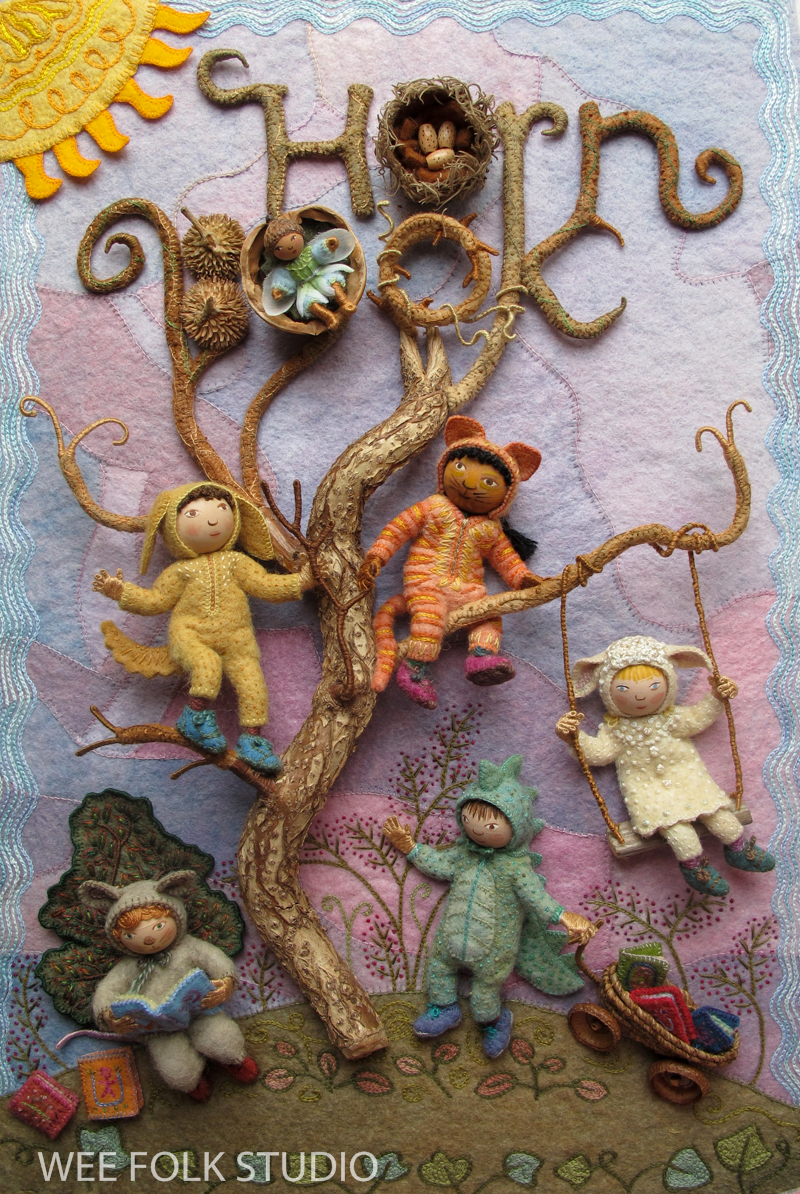
I first found a twisted vine to use as the central tree and made a sketch with the Horn Book logo and child characters. I then drilled holes on the vine where wire branches would go.  

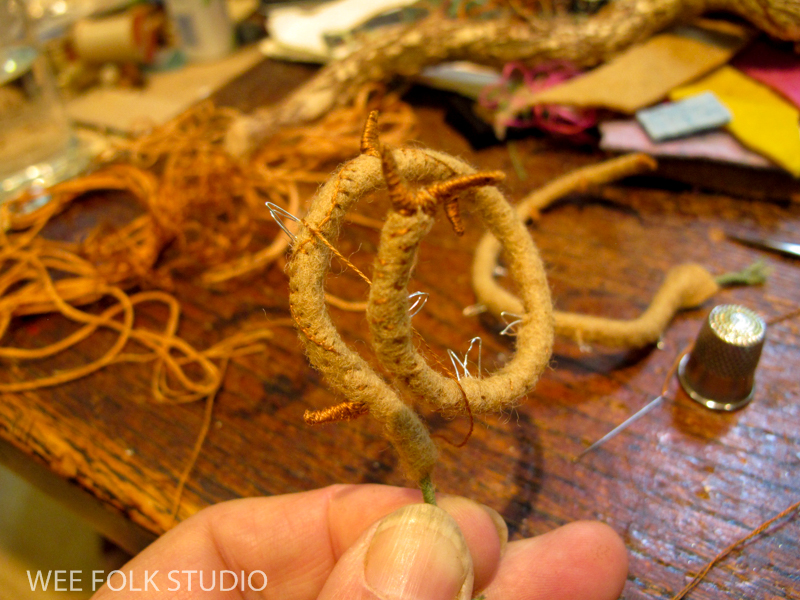
To form the branches, I covered wire with felt and embroidered them to match the real vine/tree trunk. This coiled branch has thread-wrapped wire thorns attached.

The Horn Book logo was rendered in wire branches and found objects. For one of the O’s, I sawed the back of a walnut-shell, so that it would lay flat and not stick out too much.  The O in the word Horn is a nest-like acorn cap from an oak tree in Iowa and the B’s spiky acorn caps are from northern California.

THE FELT BACKGROUND
I thought that a solid color background would looked too plain, so I stitched together scraps of naturally dyed wool felt to make a more interesting field for the action.

I made a little fairy to fit in the walnut-shell.

THE CHILDREN
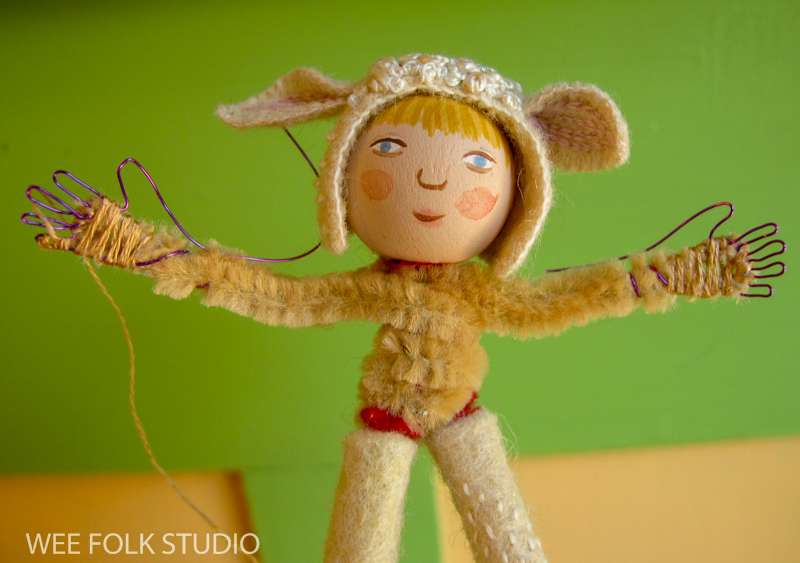
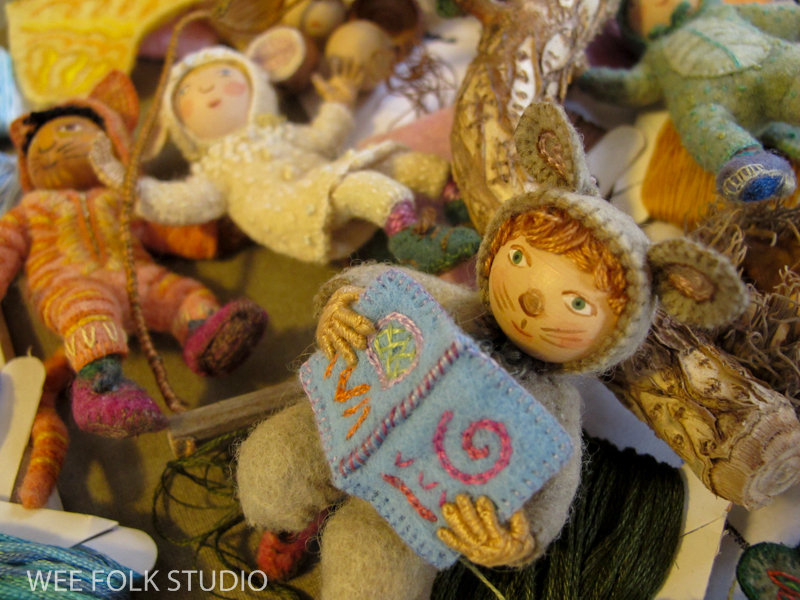
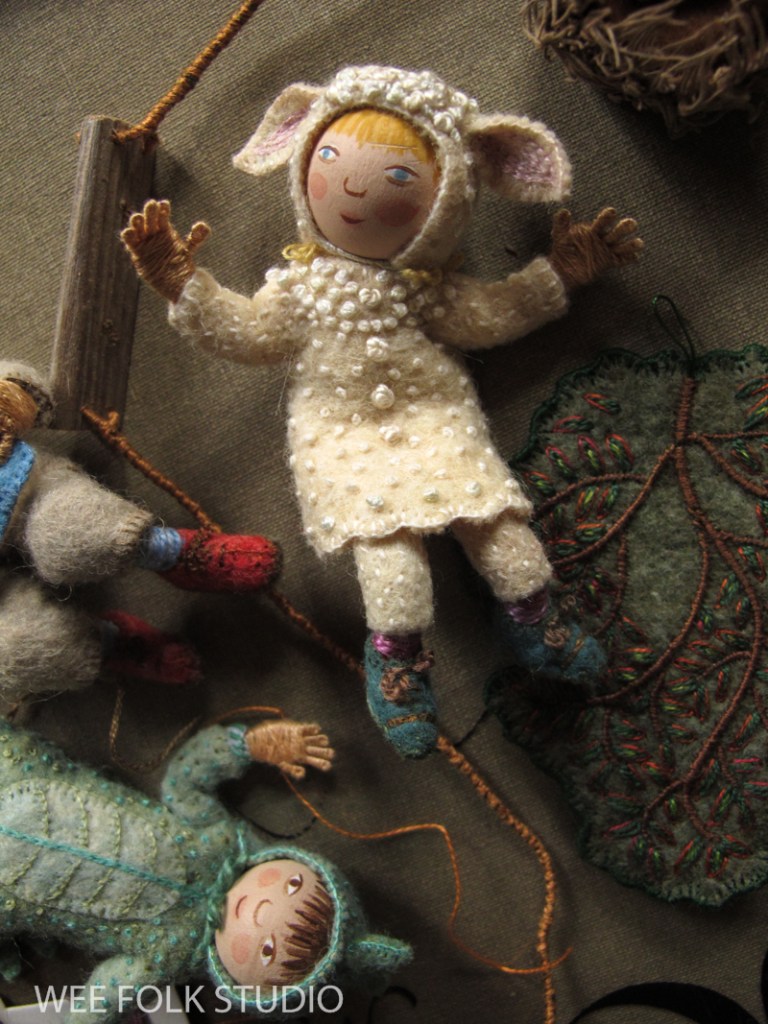
I didn’t want the characters to be animals, but children dressed in animal costumes. So, I made every effort to make them look like children by giving them bangs, ponytails, hands and shoes. These figures are made with similar techniques found in my how-to book, Felt Wee Folk.

During the process, I changed some of the characters in the original sketch and substituted a boy in a dinosaur costume pulling an acorn cap wheeled wagon full of books.

I printed out the words on acetate, so that I’d be sure to leave enough room at the bottom edge. I then embroidered plants and leaves to the felt background.

This little child/mouse is getting red shoes.

The Horn Book staff suggested I include a reading child, so I made a felt book for the face-painted mouse.

All of the parts piled up as I worked. It’s a miracle nothing got lost!

It was really fun thinking up costumes to make for these kids. I wanted to create a scene of children immersed in imaginary play and story.

I added a sun to the upper left corner and embroidered a wavy chain-stitched border. Then, I sewed the felt background to a sheet of foam core board, pulling it flat and straight.

Then, I stitched the tree, characters and other props in place, right through the foam core board. After everything was in place, I took it to the photographer, so he could take its picture. After that, I removed it from the foam core board and remounted the felt background and all of the parts on a cloth-covered stretcher. It is now framed behind glass and was recently bought by a collector. It was a joy to work on this project with Lolly Robinson at the Horn Book Magazine! Having my illustration on the cover will be a great opportunity for many people to discover my work for the first time.

Here I am with Roger Sutton, editor in chief of The Horn Book.

To keep up with new posts, please subscribe to this blog. Your contact info will not be sold or shared. If you’d like to see more frequent photos tracking the projects in my studio, please follow me on Facebook, Instagram and BlueSky.
Rabbitat revisited

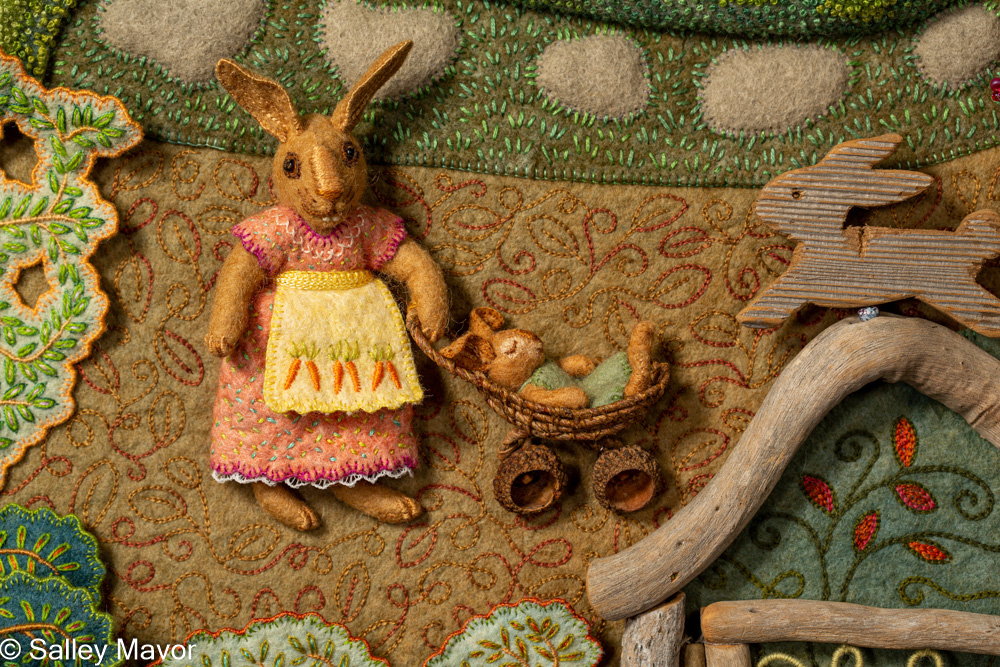
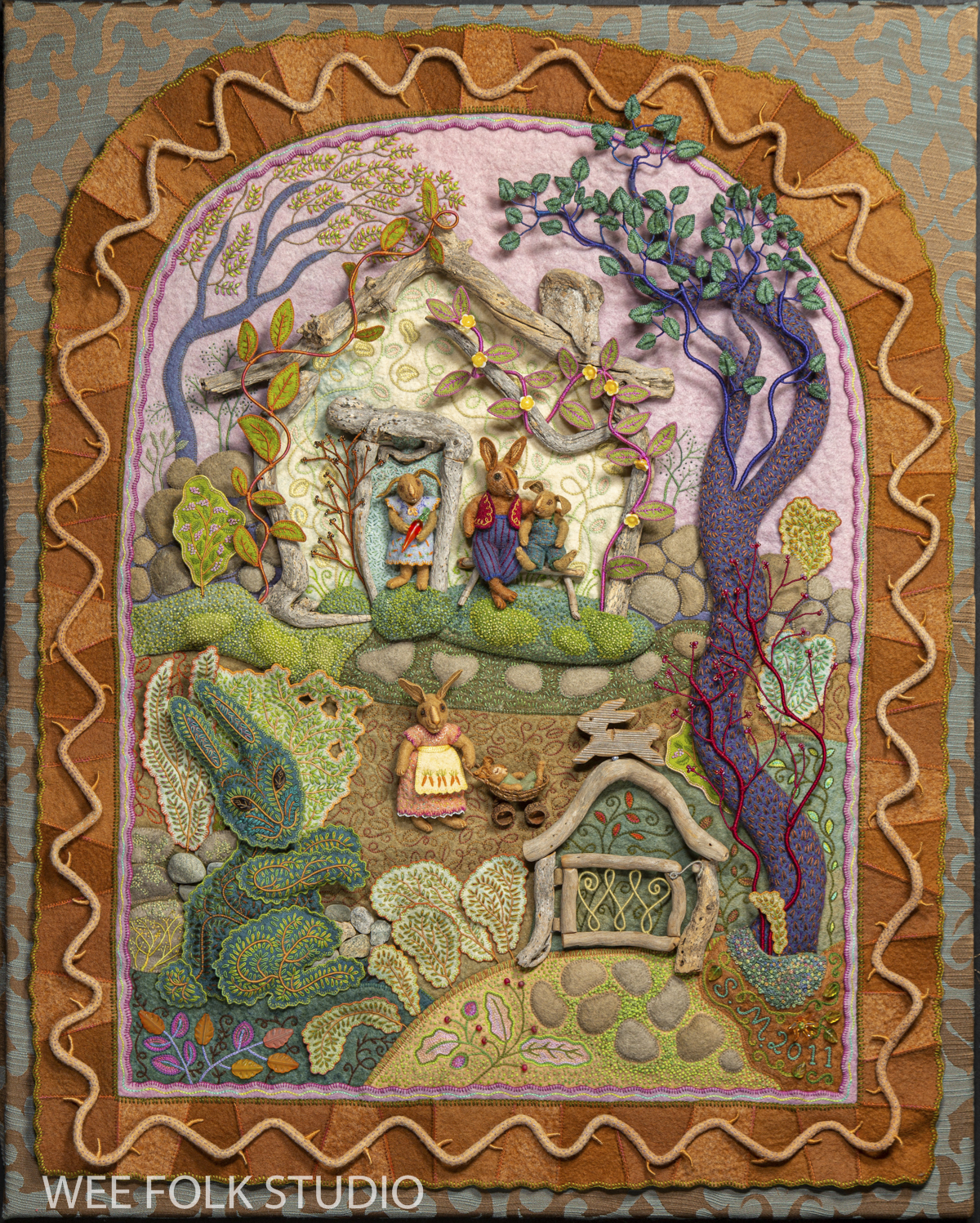
With the coming of spring and Easter, I think it’s a good time to revisit Rabbitat, which I completed 13 years ago. The piece was an experiment of sorts, for the purpose of reintroducing a sense of play into my working process. At the time, I was transitioning from the all-consuming 4-year job of researching, illustrating, and launching Pocketful of Posies and I felt the need to make something that wasn’t restricted by size and textpe placement specifications. I also wanted to be free to change things around as I went along.

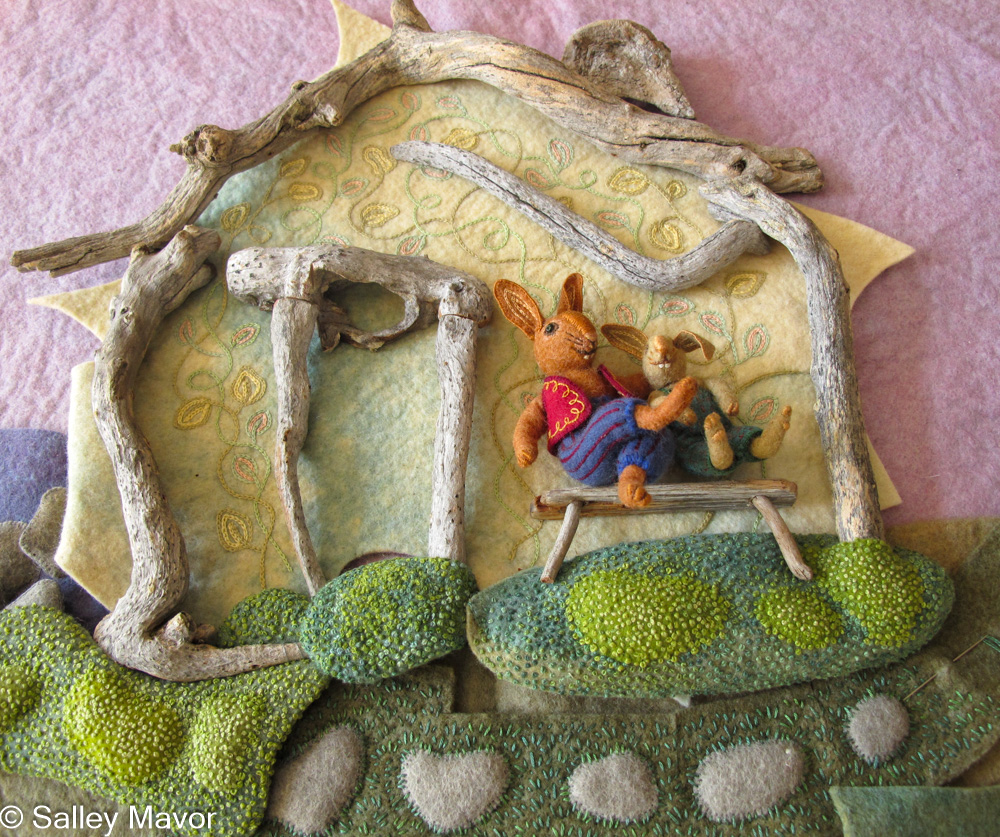
When I set out to make Rabbitat, I had just 2 elements in mind — a driftwood house and a rabbit topiary. I let the landscape evolve as I worked on it, adding rabbit characters and a garden details as the imagined scenario unfolded. I told my husband Rob that I was making a habitat for rabbits and he immediately said, “Oh, it’s a Rabbitat!” The scene is available as a note card and a children’s jigsaw puzzle in my Etsy Shop.

RABBITAT note cards and a children’s jigsaw puzzle are now available in my Etsy Shop.

Homespun Note Card Sampler

In Rabbitat, I wanted to expand the topiary concept that was introduced with the cat and bird in the “Molly, my sister and I” rhyme from Pocketful of Posies.

RABBITS
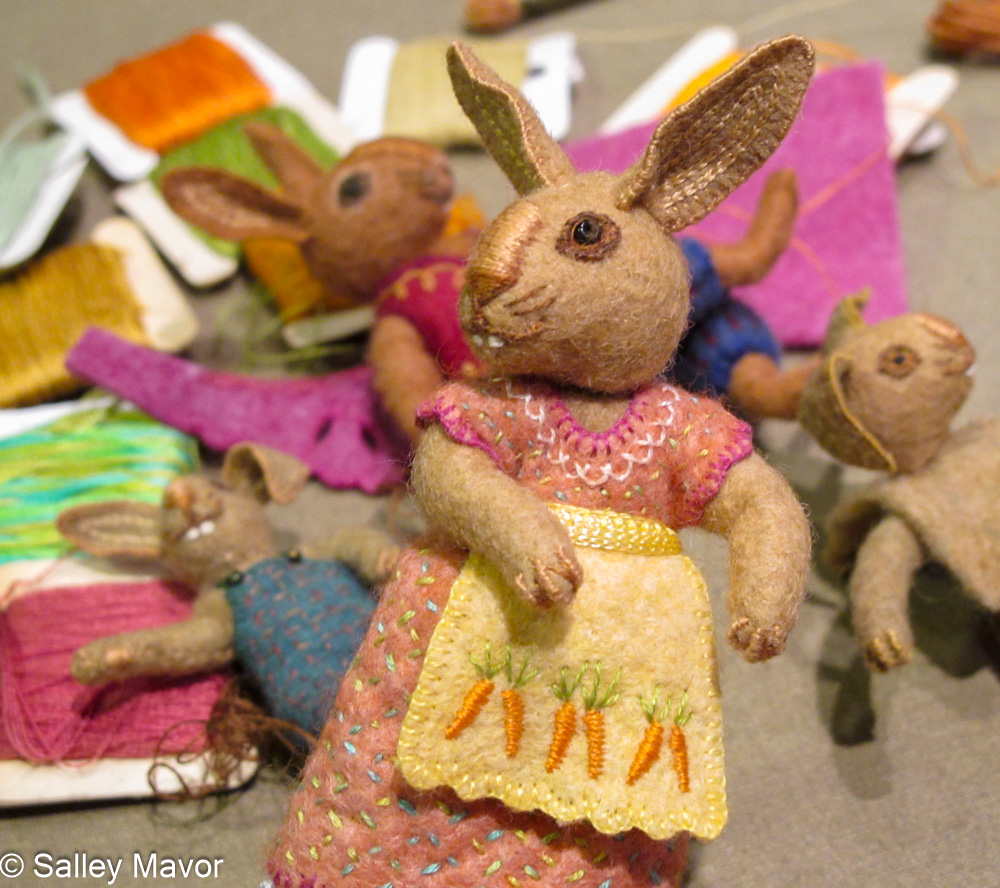
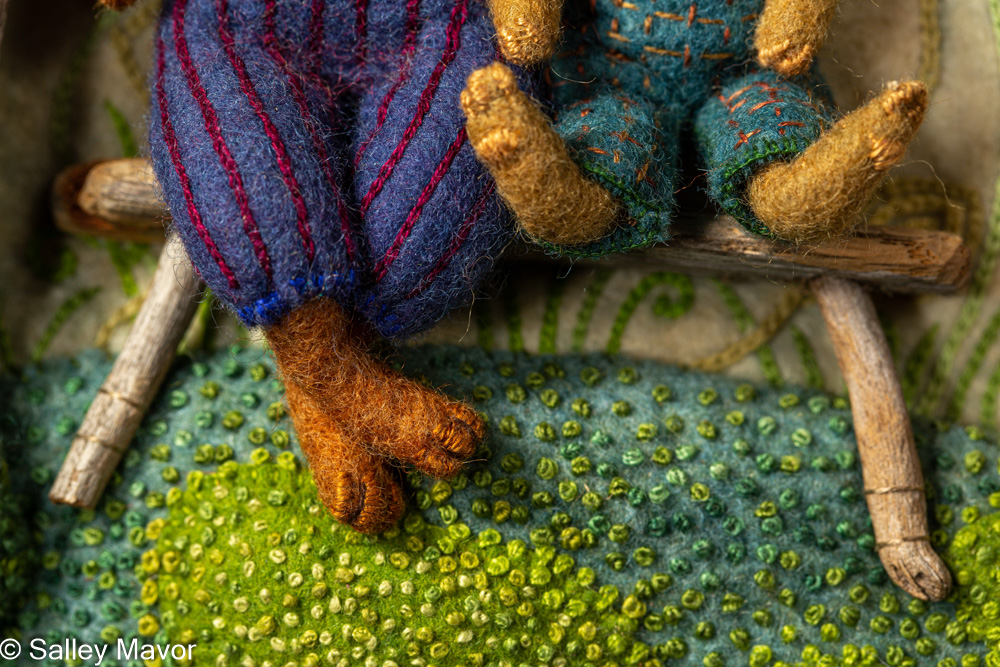
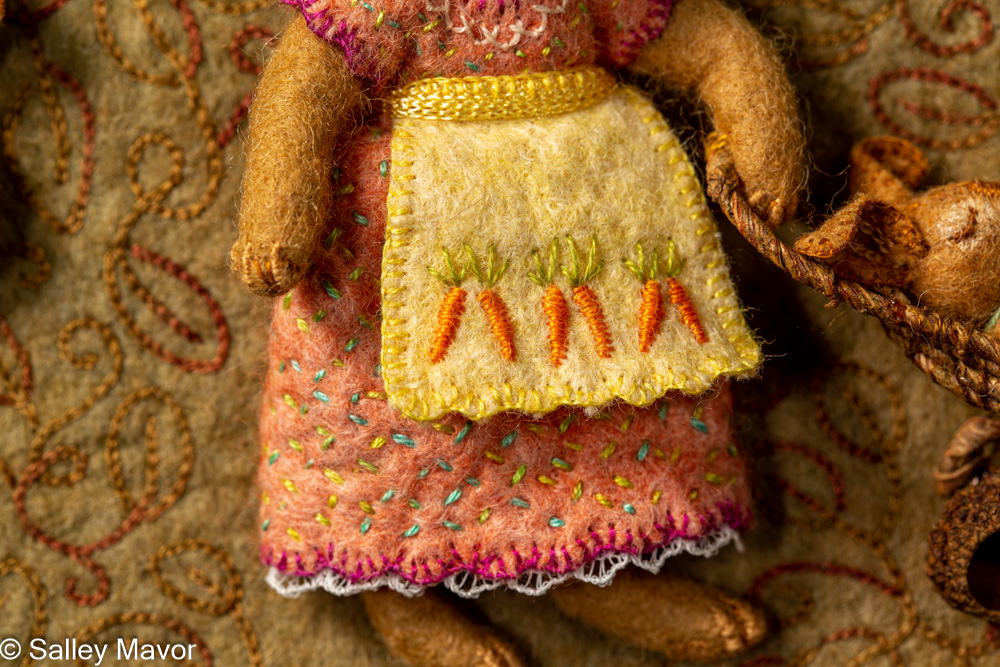
To make the rabbit figures, I used the same methods taught in my how-to book, Felt Wee Folk, with furry adaptations, including long pointy ears sewn on top.

RABBITAT FILM
Before the piece was finished and all of the parts sewn to the background, I asked local cinematographer (and friend of my son Peter), Daniel Cojanu to make a short documentary about how I work (see the Rabbitat film below). We had such fun coming up with different ways of showing my art, from stitching closeups to gathering driftwood to stop-motion animation. In the years since then, Daniel has gone on to build an impressive career producing science and environmental documentary films.

DRIFTWOOD HOUSE
To make the house, I combed through all of my driftwood and selected pieces which I could see as a roof, side beams, and a doorway. I carved them in spots, so that they fit together and lay down as flat as possible.

I decorated the house walls with an embroidered chain-stitched vine pattern on felt. This was the first time that I made mossy patches using lots and lots of French knots.

RABBIT TOPIARY
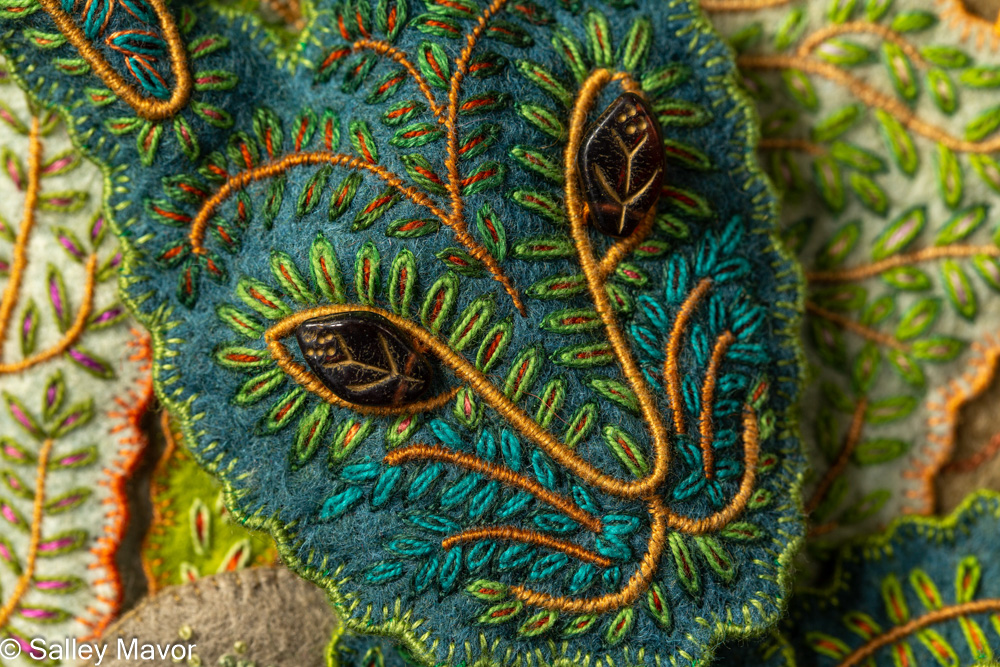
For the rabbit topiary, I cut separate parts out of dark green felt and embroidered branches and leaves. The eyes, nose, mouth and whiskers are wire wrapped with embroidery floss. I also sewed wire along the scalloped outside edge, so that the pieces could be bent and shaped. Two glass leaf beads make the eyes.

The piece is large compared to my book illustrations, measuring 24″ x 30″ , with a depth of 1 1/2″.

SLIDE SHOW
I hope that you enjoy this slide show of details from the piece.

BRIAR BORDER
At some point, I decided to add an arched border with a curved and thorny briar made of felt covered wire.

EXHIBITION
The next opportunity to see the original Rabbitat will be July 27, 2024 – March 2, 2025 at the Albany Institute of History and Art, Albany, NY. Bedtime Stitches and Social Fabric will be displayed together.

To keep up with new posts, please subscribe to this blog. Your contact info will not be sold or shared. If you’d like to see more frequent photos tracking the projects in my studio, please follow me on Facebook, Instagram and BlueSky.
Baby Polar Bear Suit

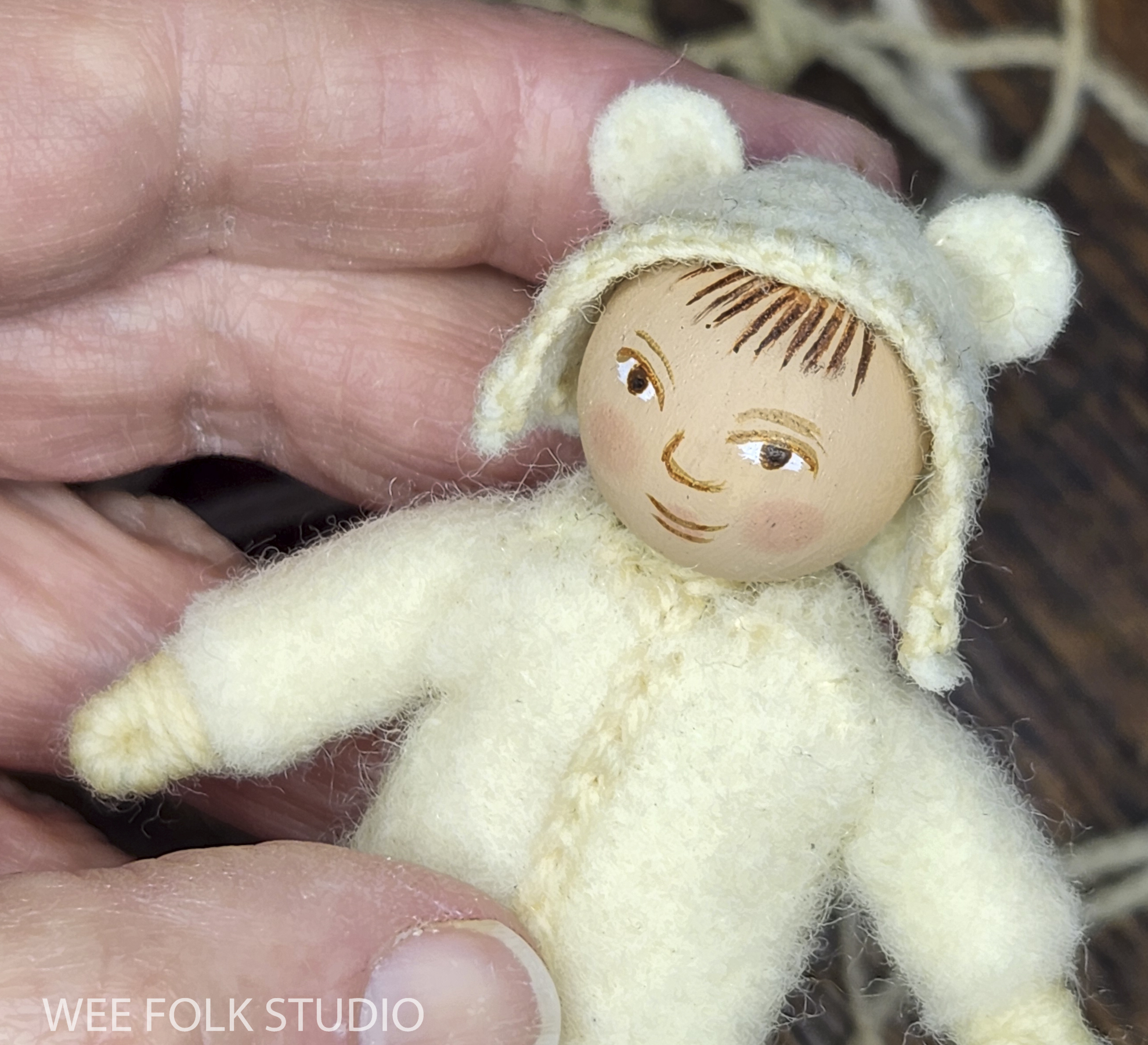
Last December, I made some small gifts, including a little version of my grandson Elias in his polar bear snow suit. I’m looking forward to making more mementos like this and hope it becomes a yearly tradition! These days, it seems that practically every children’s hat and hooded outfit comes with a pair of animal ears on top. That’s fine with me – the more playful, the better!

I also made new Inuit dolls, which I’ll write about in a future post. They are a redo of a project I originally made for my kids and designed for Better Homes and Gardens magazine in 1986.

Baby Polar Bear Doll
The 4″ doll is based on the figures in my how-to book, Felt Wee Folk, only I used wool needlepoint yarn (regular knitting yarn is too bulky) instead of embroidery floss to wrap the hands and feet on the pipe cleaner armature.

As usual, I painted multiple faces on wooden beads and picked out the one I like best. Even after painting thousands of faces, I still mess up sometimes.

The suit is made with some really thick wool felt that I was given years ago. It is probably manufactured for industrial purposes rather than little polar bear suits. The video below shows how I wrapped the feet and hands and sewed on the suit.

In the past year or so, I’ve used a hands-free phone/light stand made by Canvas that makes documenting my process a lot easier. I used to have to bug Rob to stop whatever he was doing and come film different steps with his camera. Now, I can take photos or videos whenever I want to. The downside is that I can’t get into the flow because I’m always thinking about recording some aspect of how I work. And there are times when I’m so engrossed that I skip entire sections of the process. That’s why my demonstration videos aren’t really tutorials. They’re more like peeking over my shoulder while I work. You might not see every detail, but you can get the gist of it.

After sewing on the suit, I made the hood – ears and all. The hood is made from a lighter weight wool felt.

The following video shows how I glued on the head and constructed the hood.

After the doll was finished, I got the idea of chain stitching Elias’s name and the year on the back. Yes, this will definitely be a yearly tradition!

To keep up with new posts, please subscribe to this blog. Your contact info will not be sold or shared. If you’d like to see more frequent photos tracking the projects in my studio, please follow me on Facebook, Instagram and BlueSky.
Baby Bunting Twins

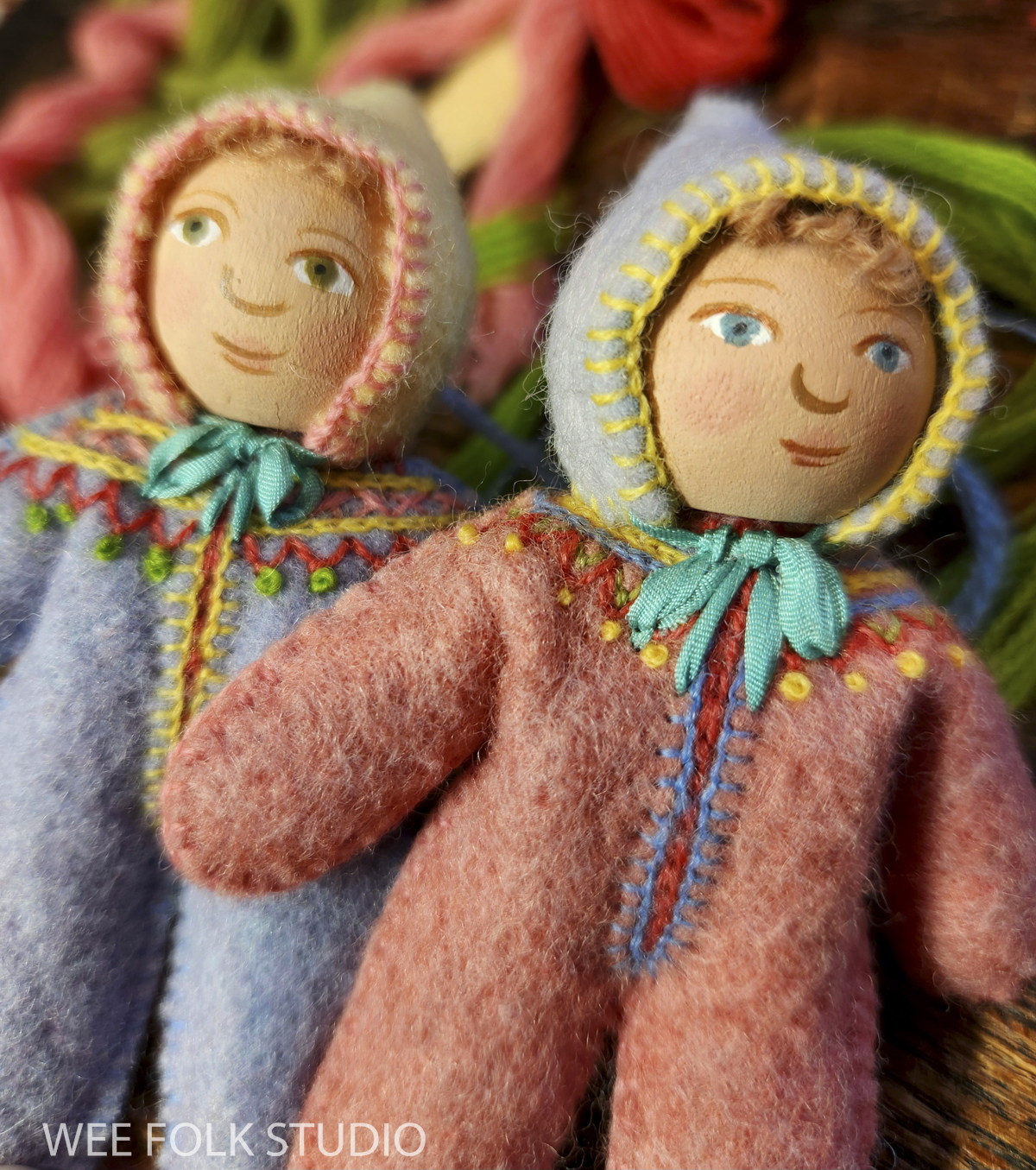
January is reserved for playing and puttering in my studio. I really look forward to this time of hibernation, without outside distractions. 31 days doesn’t seem long enough to make all of the things I’ve been dreaming about! So far, I’ve worked on simple projects that might take a few days, instead of months or seasons. I’ve already made several gifts, including a pair of Baby Buntings for twin 3 year-old girls. This post includes photos and 3 videos that show the process of making them.

The dolls are simpler than the figures with floss-wrapped arms and legs in my how-to book, Felt Wee Folk – New Adventures. The baby’s pipe cleaner body is padded and hidden inside a felt suit. Since the dolls would be played with by real children, I doubled up the pipe cleaners to make them extra sturdy. In the following video, you’ll see me forming the armature and covering it with wool batting.

The suits are made with naturally dyed wool felt and embroidered with fine wool tapestry yarn from my old stash. I’m sad to say that DMC discontinued selling the yarn years ago.

The following video shows me stitching the bunting yoke. To give an honest impression, I left in some clips that reveal snags, instead of editing them out. Maybe someday I’ll string all of the bloopers together!

I was was so engrossed with painting their faces that I forgot to take photos or videos. Their heads are made with 1′ wooden knobs (not beads), which are available here. Beads could be used as well. I just liked the size and flat bottom of the knobs.

The following video demonstrates how I attached the head, stitched the pointed hat, and formed the silk ribbon tie, which is a process I can’t describe in words.

These little dolls were so fun to make! They are now happily living with 3 year-old twins in Vermont. Stay tuned for future stories about more gifts I’ve made this month.

To keep up with new posts, please subscribe to this blog. Your contact info will not be sold or shared. If you’d like to see more frequent photos tracking the projects in my studio, please follow me on Facebook, Instagram and BlueSky.

Harvest Time – Part 7 (wee folk)

In Part 7 in the continuing series about making Harvest Time, I share photos and commentary about the wee folk characters who populate the landscape. In the coming weeks, I will post more stories that focus on different aspects of making the fall scene, including the miniature storage containers and the embroidered trees. So far, I’ve written the following posts:
The overview introduces the Harvest Time piece.
Part 1 features moss making.
Part 2 is about making the turkey tail mushroom.
Part 3 shows the construction of felt leaves.
Part 4 gives a peek at embroidering the plants.
Part 5 is about making the toadstool mushroom.
Part 6 covers the underground tunnels, roots and stones.

Harvest Time is the fall scene in a series of seasonal landscapes that capture the wonder and magic of the natural world, both real and imagined. Note cards and jigsaw puzzles of the this and other scenes in the series (Frosty Morning and Mossy Glen) are available in my Etsy Shop.

Everything I make includes some sort of living being with eyes, be they animal or human. I can’t imagine spending months working on a piece that is purely decorative, abstract or simply a landscape, without a storytelling element. The interplay between characters and their surroundings is what drives me to create. As I paint their faces, form their little bodies and stitch their clothes, I grow to care about them. This emotional connection is what motivates me to spend copious amounts of time creating an imaginary world that is worthy of their existence.

For this scene, I painted more faces than I needed, in different sizes and shades. That way, I could select a cast of characters later. I’m never sure how many figures I’ll need or exactly where they’ll end up. They are like actors in an improvisational skit or a group posed in a tableau.

The little people range in size between 1″ to 2″ tall. They were made the same way as the wee folk dolls in my how-to book, Felt Wee Folk, with slight variations. For instance, I used wire instead of pipe cleaners for their tiny armatures.

In keeping with the harvesting theme, all of the people are bringing produce to the mossy stump, where it will be stored in the cellar.

I’m often asked, “How do you knit their tiny outfits?” There might be someone out there who can knit or crochet a tiny sweater for a 2″ doll, but I challenge them to stuff their arms through the sleeves! Remember, this is make believe. The wee folk never have to bathe or change their clothes. Why knit, when you can embroider a piece of clothing directly onto a body? Rows of chain stitching are pretty convincing, don’t you think? I call it faux knitting.

Please stay tuned for more stories about making Harvest Time, including the storage containers and embroidered trees.
The overview introduces the Harvest Time piece.
Part 1 features moss making.
Part 2 is about making the turkey tail mushroom.
Part 3 shows the construction of felt leaves.
Part 4 gives a peek at embroidering the plants.
Part 5 is about making the toadstool mushroom
Part 6 covers the underground tunnels, roots and stones.

To keep up with new posts, please subscribe to this blog. Your contact info will not be sold or shared. If you’d like to see more frequent photos tracking the projects in my studio, please follow me on Facebook, Instagram and BlueSky.

Baby Banner for Elias

For the past 15 years or so, I’ve made personalized gifts for friends and family that commemorate special events like weddings and births. These embellished felt banners combine two of my favorite things, hand embroidery and handwriting. You can see this and other banners by scrolling through the archives here.

Now, I finally had the opportunity to make a banner celebrating a birth in my immediate family! Last month, our son Ian and his wife Liz became the parents of our first grandchild! Little Elias was born on Jan. 18th, 2023, 100 years to the day after my father.

We are all completely in love with with this little guy! I just love watching my son interacting with his son. As an extra bonus, the new family lives practically across the street, so we get to see Elias all the time. I can already feel my focus shifting into Grandma mode, which is a welcome change. Hopefully, there will be room in my heart and daily schedule for both art and being a Grandma.

Naturally, I quickly got to work making a banner for Elias. After picking out the basic color scheme, I wrote his first and middle names in cursive handwriting on paper. Using that as a template, I made a 3-dimensional copy with memory thread. That way, I knew what length of wire to use.

I wrapped the memory thread (or wire) with 3 strands of embroidery floss.
UPDATE: I misspelled Laszlo, which is the baby’s maternal great-grandfather’s name! Watch this video to see the remake.

Remaking Laszlo

I usually use variegated floss to wrap the wire, which can look like stripes on the 2nd pass. The wire ends are bent over and wrapped, so that no raw ends are hanging out. It’s similar to the technique I use to make doll limbs in my how-to book Felt Wee Folk.

When I finished wrapping Lazslo and positioned it on the felt background, there wasn’t enough contrast, so I gave it a candy stripe to make it pop more.

I use an ironing board as a work surface. Here, you can see what I’m working on in the middle. On either side are printouts of banners I’ve made in the past, which I used for reference.

I had to wrap the numbers a couple of times because the size was off.

I edged the green felt panel with blanket stitches, using variegated pima cotton thread from the Caron Collection,

I wrote out the birth weight in green first and then did it over in yellow to create more contrast, which seemed to be a recurring theme with this banner.

After sewing the lettering onto the green background panel, I chain-stitched a vine to fill the open space between the names.

Out of my stash, I selected bone beads to make a decorative separator between the names and birth date.

I then sewed the green panel to the lavender background felt.

To make the banner rigid at the top, I made a sleeve and inserted a piece of wood.

I looked through my driftwood collection and found the right sized stick that would work as a hanging bar. I drilled holes big enough to thread cord through.

I fed cord through the holes and a metal bead separator, hiding the tail threads on the back.

This banner will soon hang on Elias’s bedroom door. Welcome to the world little one! We look forward to getting to know you!

To keep up with new posts, please subscribe to this blog. Your contact info will not be sold or shared. If you’d like to see more frequent photos tracking the projects in my studio, please follow me on Facebook and/or Instagram.