Summertime: Part 5 – Baltimore Oriole (head and feet)

In this Part 5 of the series about Summertime, I share photos, videos and commentary that document the process of making the Baltimore Oriole’s head and feet. So far, I’ve written an overview of the piece, Part 1 – Tree Trunks, Part 2 – Tree Houses, Part 3 – leaves, stems & branches, and Part 4 – Baltimore Oriole (body), Part 6 – rose vine , Part 7 – raspberry plants, and Part 8 – stitching flora.

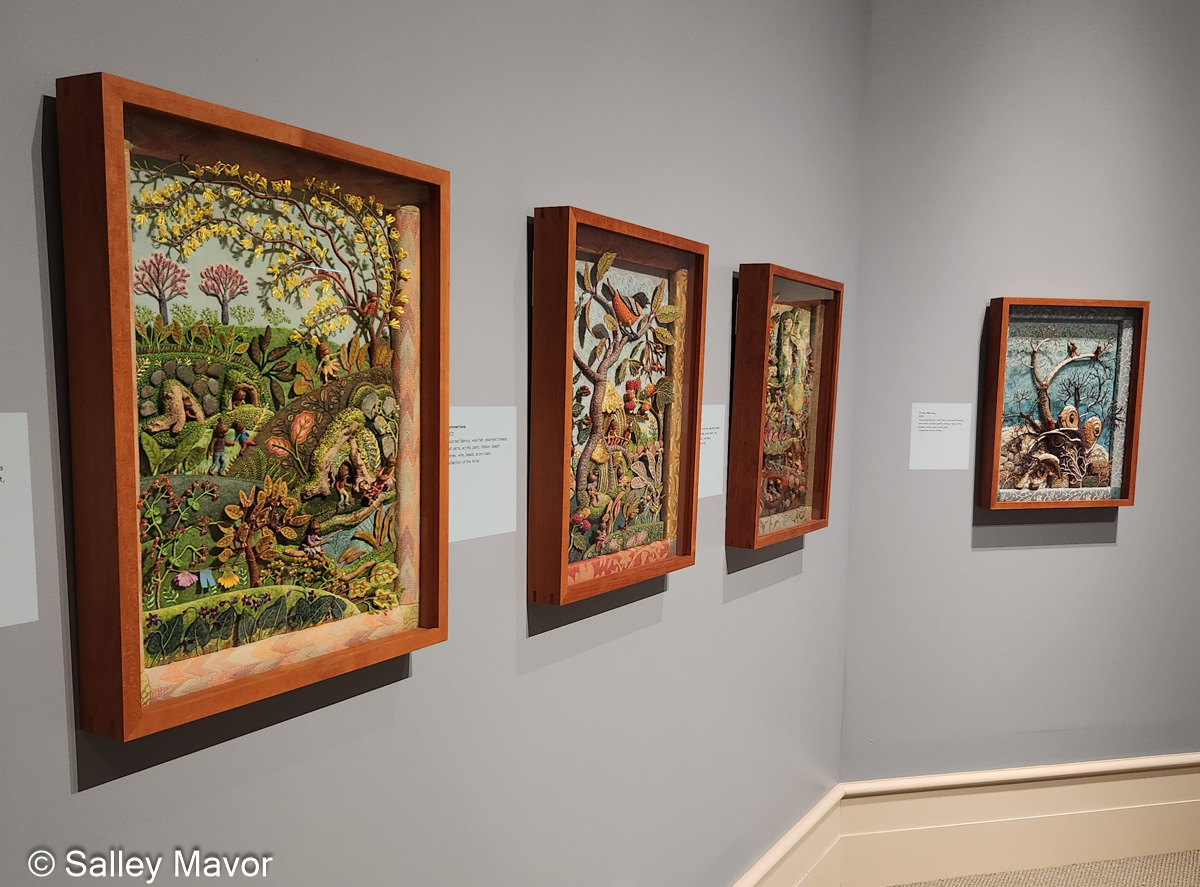
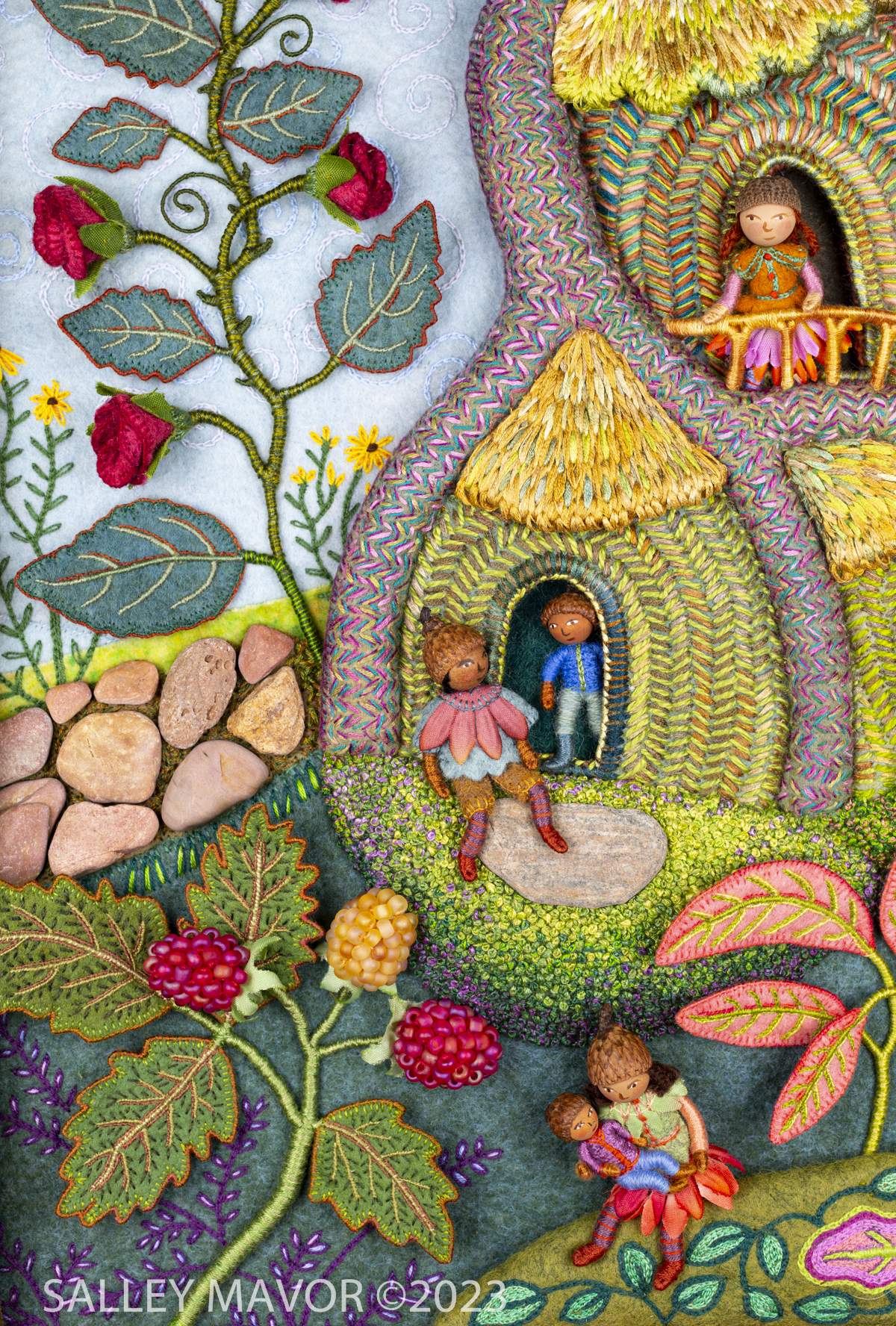
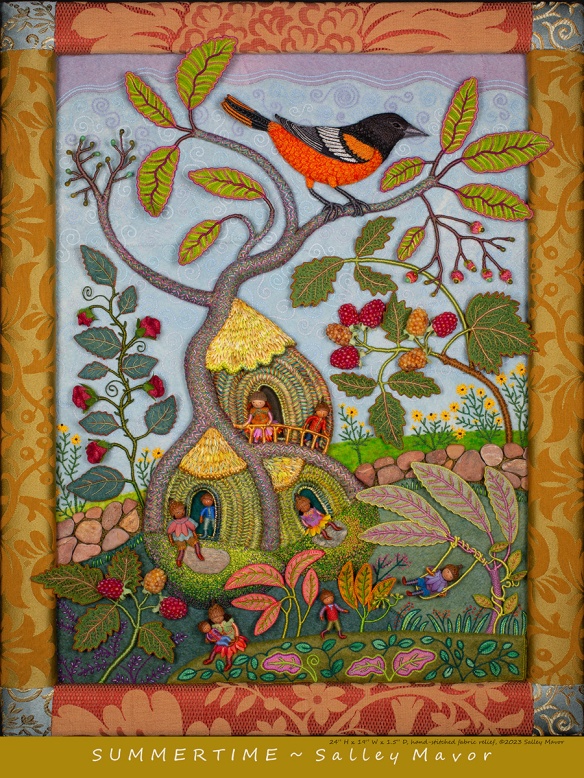
Summertime is the summer scene in a series of four seasonal landscapes that capture the wonder and magic of the natural world. Posters, note cards, prints, bookmarks, and jigsaw puzzles of Summertime and the other scenes in the series (Frosty Morning, Mossy Glen and Harvest Time) are available in my Etsy Shop.

See the Four Seasons Series and dozens of other works in my exhibition, To Every Season: Works by Salley Mavor at the New England Quilt Museum, Sept. 9 – Dec. 31, 2025. The show includes recent work, as well as rarely seen early pieces on loan from private collections.

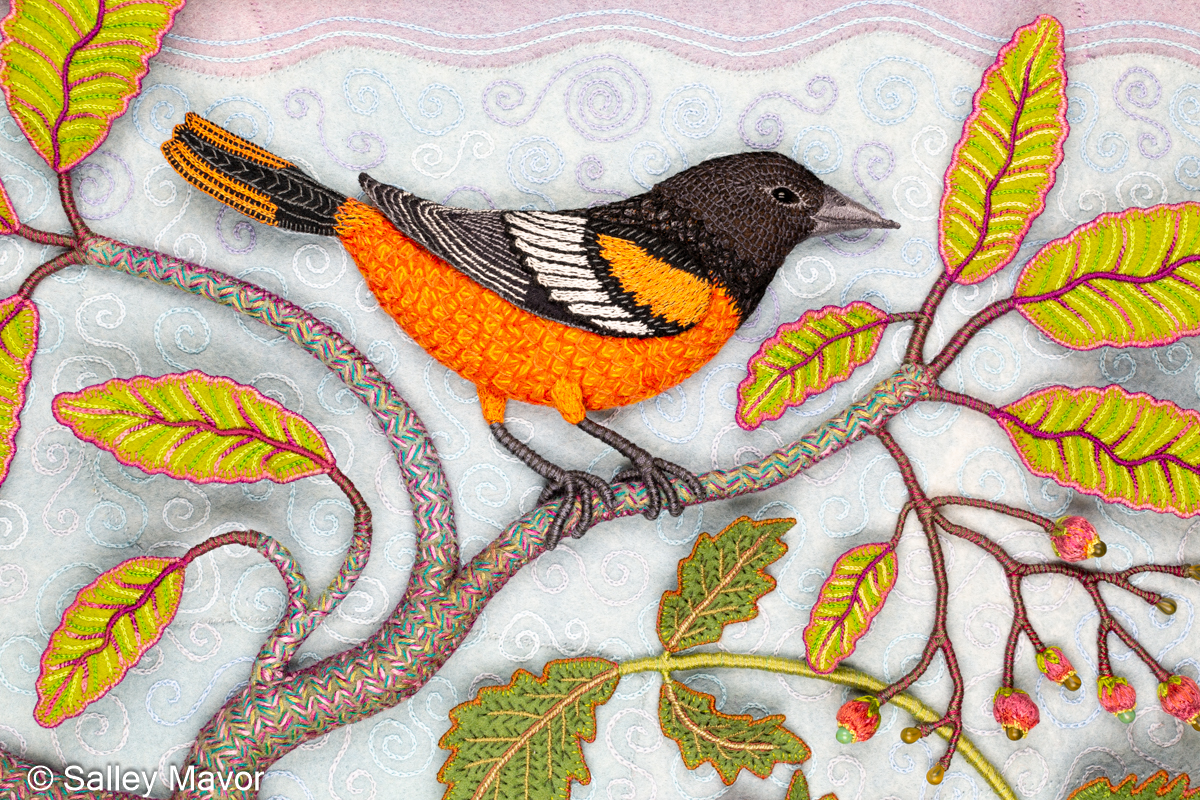
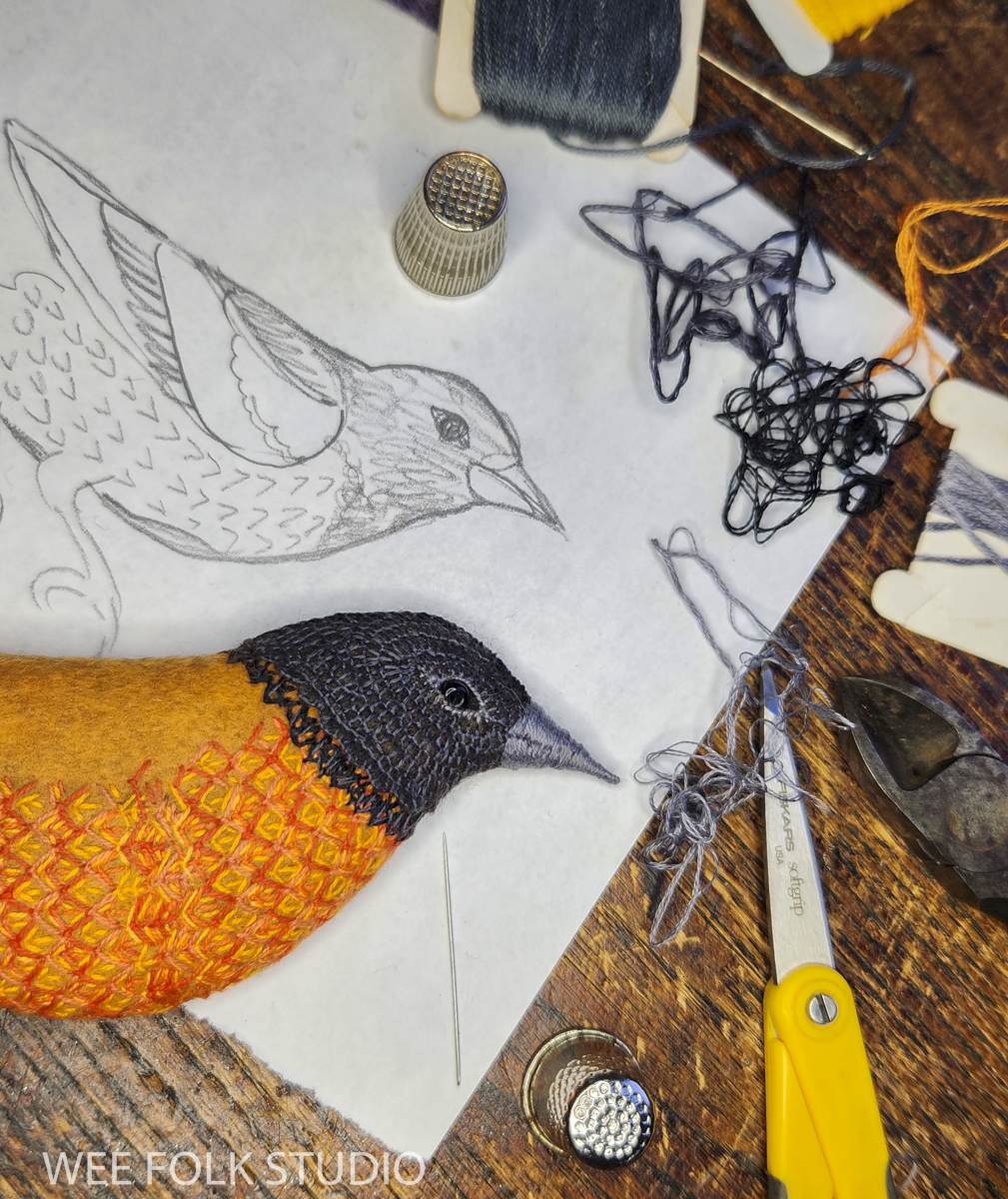
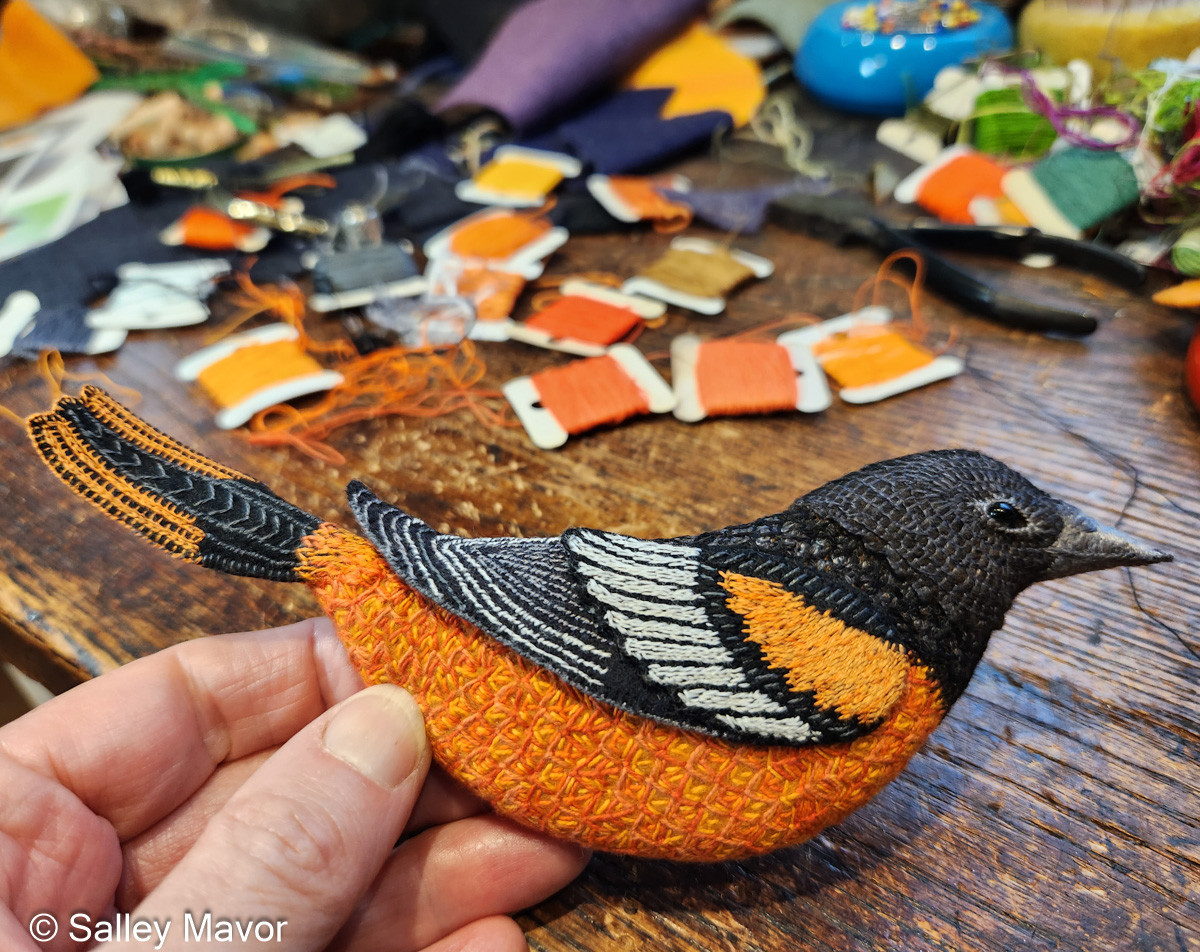
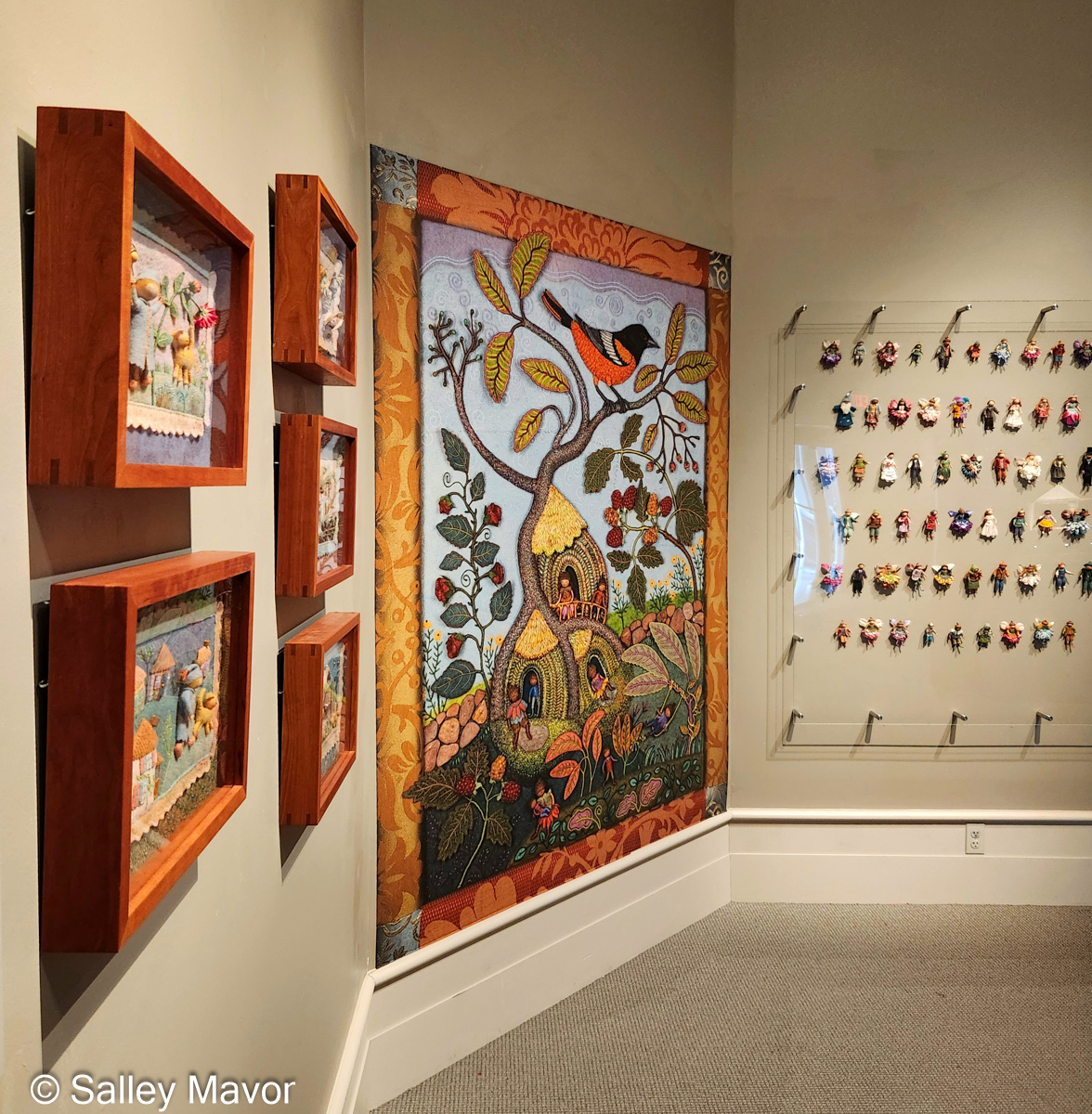
I wouldn’t call myself an avid bird watcher, but I do appreciate the subtle differences that make each species unique. For this piece, the trick was to capture the bird’s distinguishing features without being too scientific. To understand the nuances of an Oriole, I studied photos and made sketches, paying particular attention to the position, size and angle of its head, eyes and beak.

BEAK
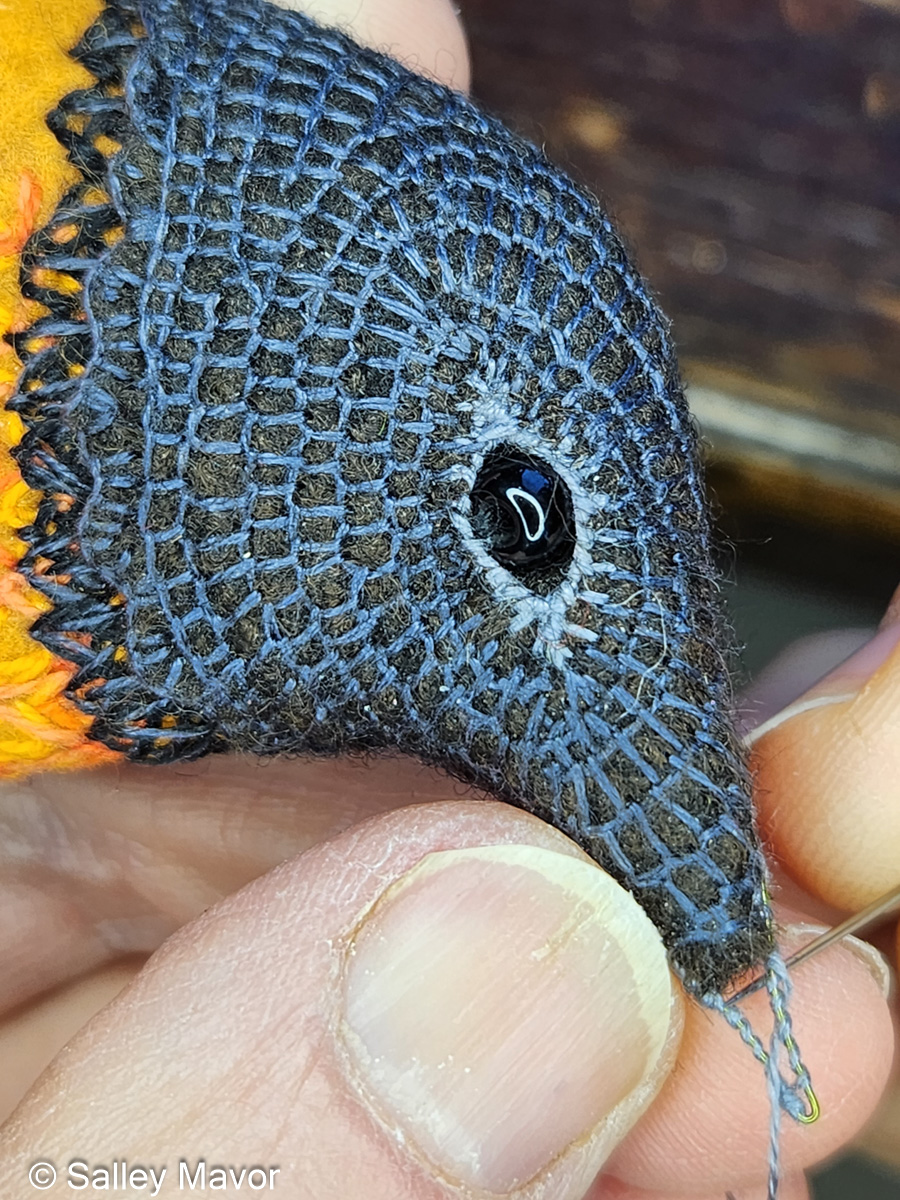
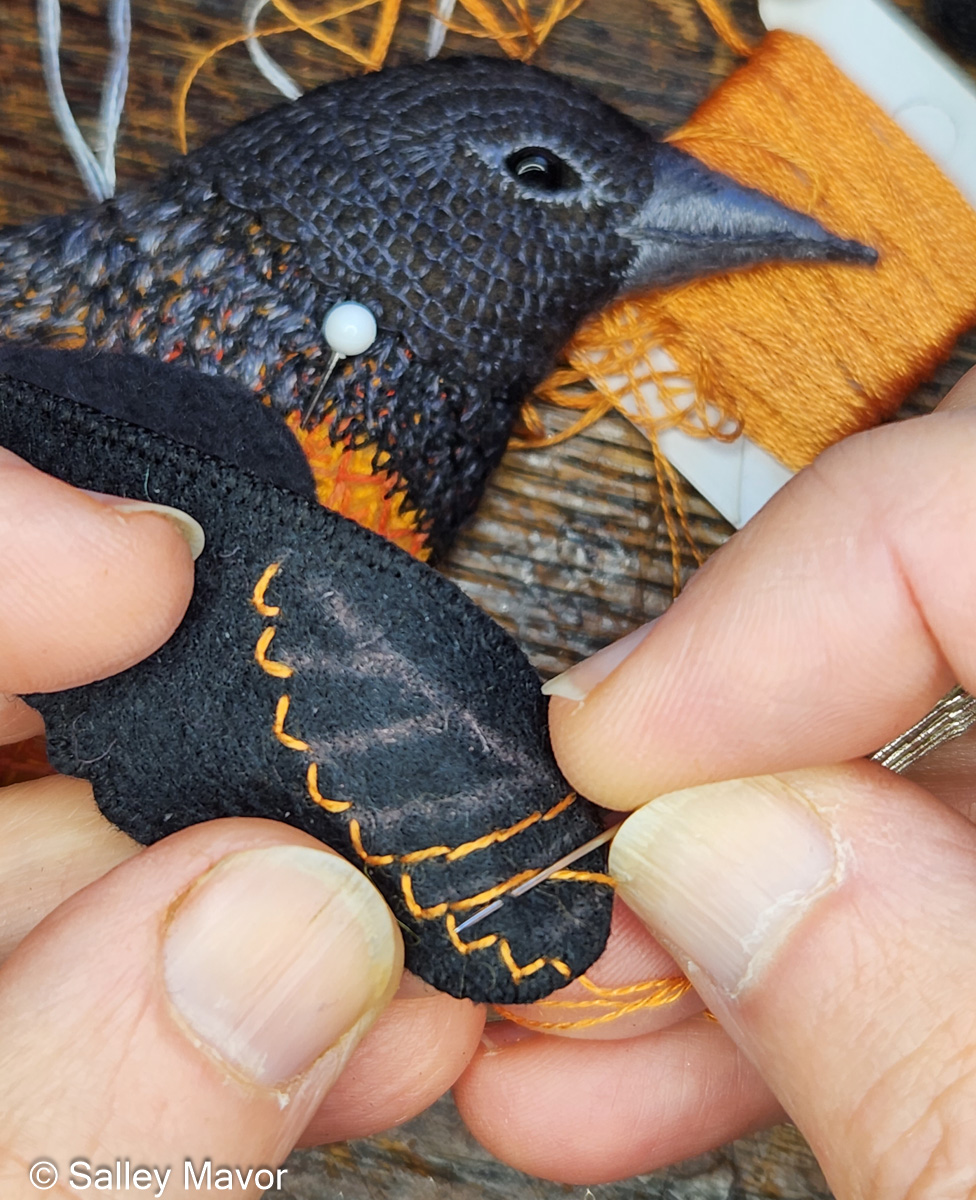
I must have been so focused on making the bird’s hood and eye (it’s a glass bead) that I forgot to take photos of that part. So, let’s skip ahead to the beak. To make it pointy, I formed a wire extension and wrapped it with embroidery floss.

I articulated the shape of the beak with floss, stitching over and around, until it had a smooth and seamless appearance.

Watch this video to see how I stitched the beak. It even shows what the back looks like!

After the beak was finished, I embroidered black feathers with fly stitches on the neck and throat area.

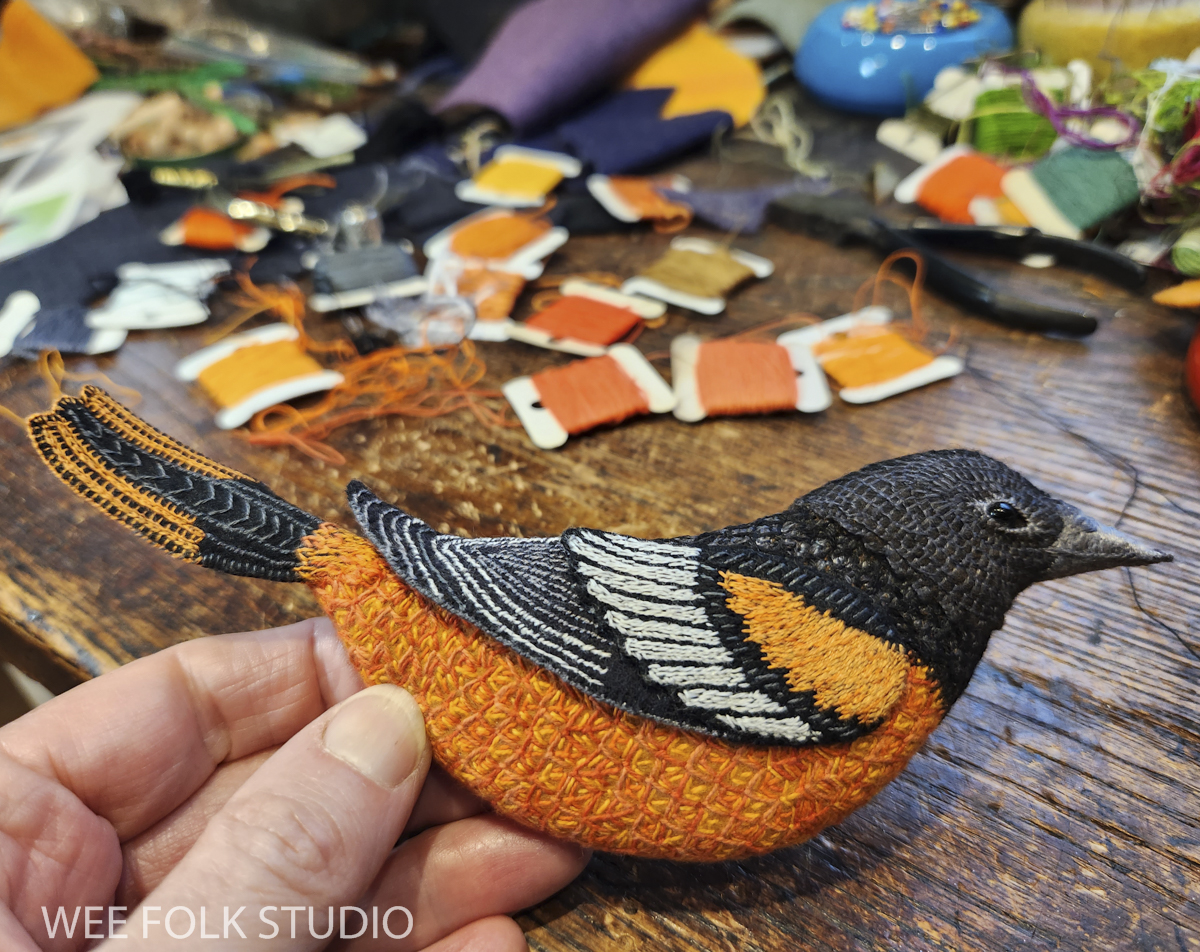
I sewed the wing and tail (see Part 4) in place and got to work on making the Oriole’s feet.

FEET
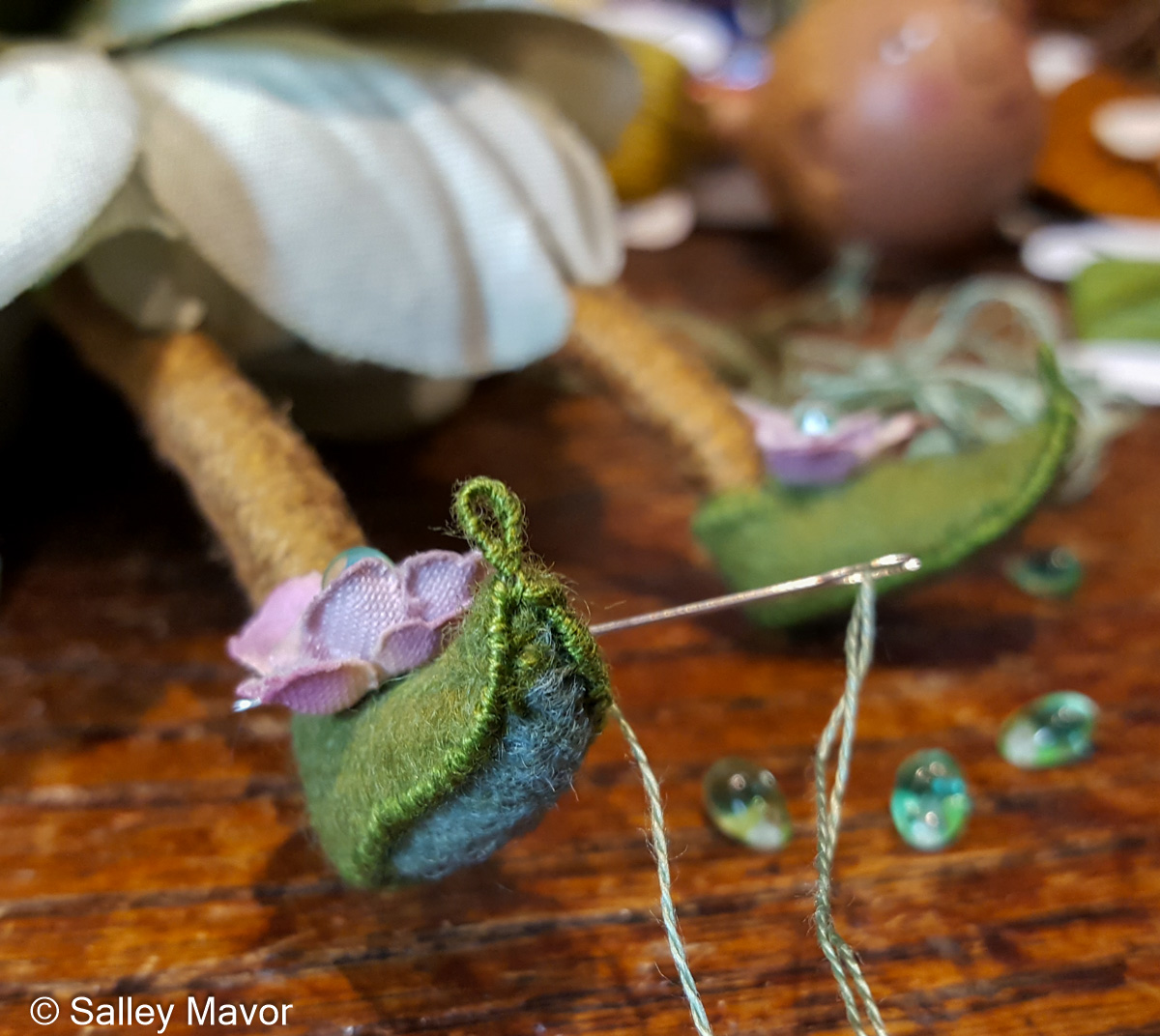
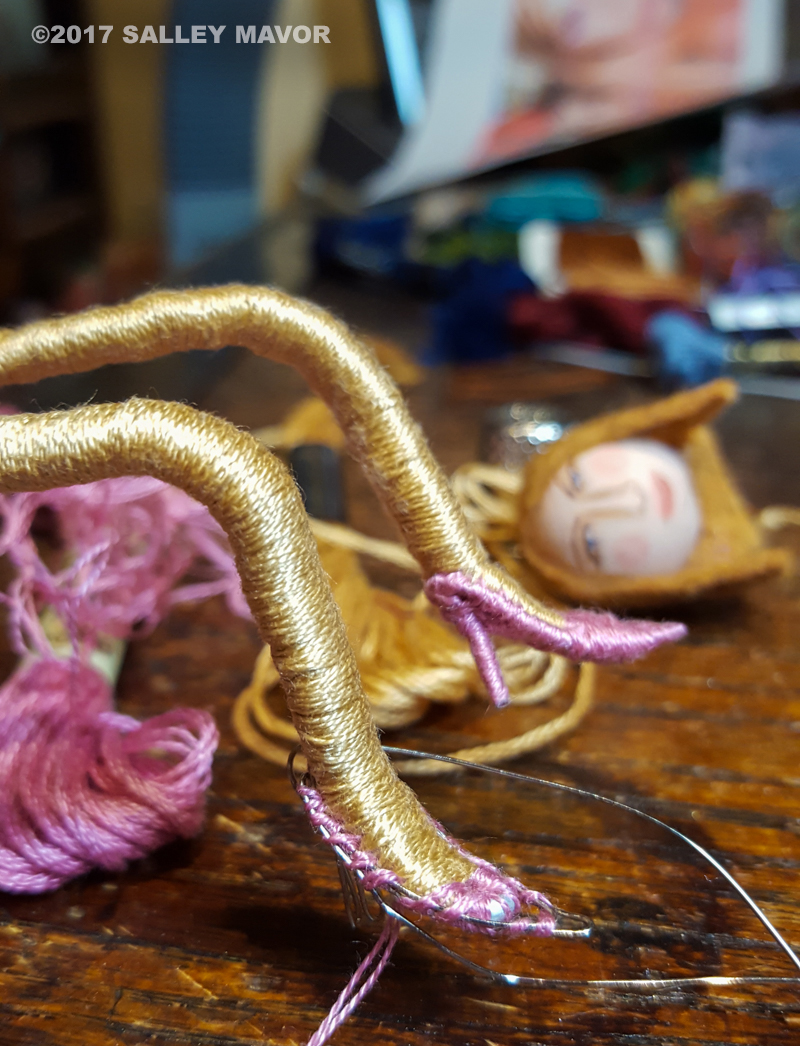
I shaped the bird’s feet and legs with wire, twisting it around to form 4 toes – 1 short and 3 long. Then, I wrapped the wire with embroidery floss, winding the thread up and down until no shiny wire was exposed and the feet were the right thickness.

Watch this video to see how I constructed the legs and feet and attached them to the bird’s body.

Stay tuned for Part 6, where I’ll share photos and videos documenting the process of making the rose vine. If you want to receive email notices when I publish new posts, please subscribe to this blog using the form below.

To keep up with new posts, please subscribe to this blog. Your contact info will not be sold or shared. If you’d like to see more frequent photos tracking the projects in my studio, please follow me on Facebook, Instagram and BlueSky.
Summertime: Part 4 – Baltimore Oriole (body)

In this Part 4 of the series about Summertime, I share photos, videos and commentary that document the process of making the Baltimore Oriole’s body, including its breast, wing and tail. The bird’s head and feet will be featured in Part 5, which is next in line. So far, I’ve written an overview of the piece, Part 1 – Tree Trunks, Part 2 – Tree Houses, and Part 3 – leaves, stems & branches, Part 5 – Baltimore Oriole (head and feet), Part 6 – rose vine , Part 7 – raspberry plants, and Part 8 – stitching flora.

Summertime is the summer scene in a series of four seasonal landscapes that capture the wonder and magic of the natural world. Posters, note cards, prints, bookmarks, and jigsaw puzzles of Summertime and the other scenes in the series (Frosty Morning, Mossy Glen and Harvest Time) are available in my Etsy Shop.

See the Four Seasons Series and dozens of other works in my exhibition, To Every Season: Works by Salley Mavor at the New England Quilt Museum, Sept. 9 – Dec. 31, 2025.

Enchanting Threads: The Art of Salley Mavor at the Albany Institute of History and Art

BALTIMORE ORIOLE
I chose a male Baltimore Oriole for the summer scene mostly because of its flashy appearance. They also epitomize the season for me. Pairs of orioles are frequent visitors to our yard in early summer, when we lure them with orange halves and grape jelly. I hadn’t made a bird this size since Birds of Beebe Woods (2012), which you can get a glimpse of on the wall in the following video. 

First, I looked at photos of orioles and made a simple drawing that showed its size and proper proportions. Then, I cut the basic shape out of acid-free matte board and padded it with thick felt (which is similar to how I made pins early in my career). Throughout the process of making the bird, I referred to photos, especially when selecting colors and stitches for the body, wing, and tail.

I wanted to make the bird realistic enough to be recognized as a species, but patterned and abstracted in a way that made it fun to stitch. It ended up being something between a stylized bird and a biological illustration.

BREAST
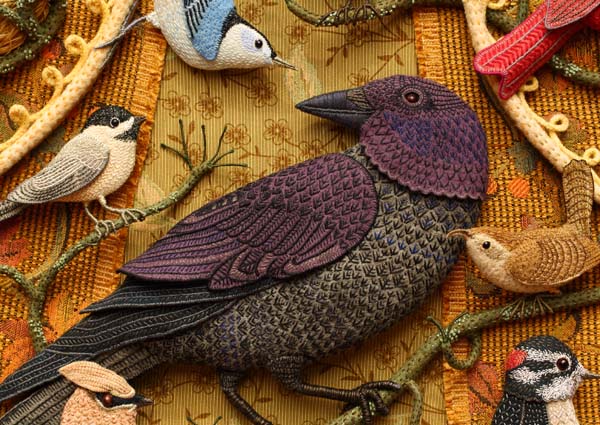
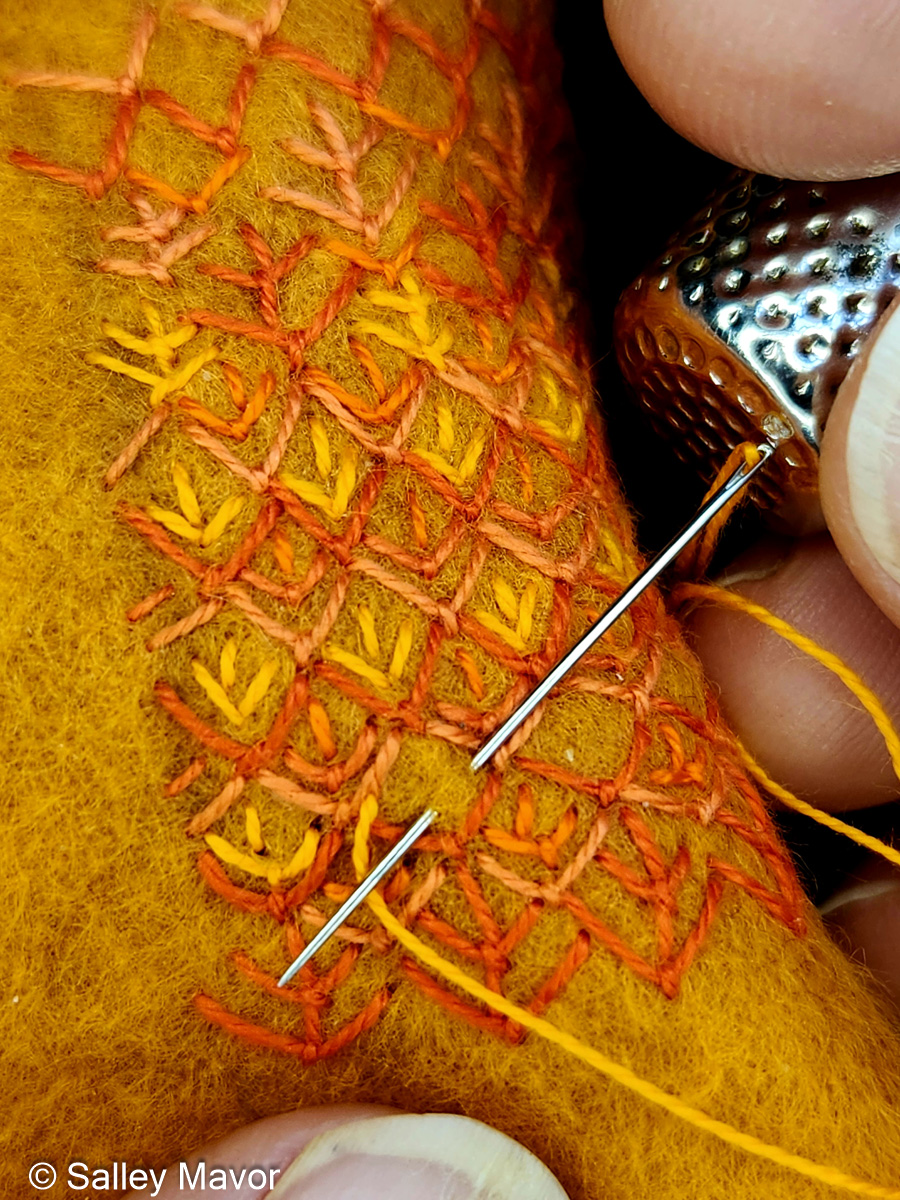
For the oriole’s distinctive orange breast, I embroidered different combinations of fly stitches that are reminiscent of Faire Isle patterns. It brought me back to a dozen years ago, when I stitched the crow’s breast in Birds of Beebe Woods.

detail from “Birds of Beebe Woods”

I used cotton flower thread, which has a matte finish that’s different from the glossy sheen of cotton embroidery floss. DMC flower thread is no longer available, so if you’re interested, Dutch Treat Designs has some of the discontinued thread in stock. 

Watch a Stitch Minute video of embroidering the oriole’s breast with fly stitches.

WING
I usually work freehand without marks, because it’s hard to draw on fuzzy wool felt. In this case, I was able to make chalk pencil lines on the black felt wing.

Watch a Stitch Minute video of embroidering the bird’s wing.

TAIL
So much of a bird’s personality comes through in the angle and pose of its tail. Doing the stitching was the easy part. Positioning the tail and attaching it to the body took more patience and perseverance.

Watch a Stitch Minute video of embroidering and attaching the bird’s tail.

Stay tuned for Part 5, where I’ll share photos and videos documenting the process of making the Baltimore Oriole’s head and feet. If you want to receive email notices when I publish new posts, please subscribe to this blog using the form below.

To keep up with new posts, please subscribe to this blog. Your contact info will not be sold or shared. If you’d like to see more frequent photos tracking the projects in my studio, please follow me on Facebook, Instagram and BlueSky.
Harvest Time – Part 2 (turkey tail mushroom)

In Part 2 in the series about making Harvest Time, I share photos, commentary and a stitch-minute video about creating the turkey tail mushroom overhanging the doorway in the stump. In the coming weeks and months, I will post more stories that focus on different aspects of the process of making the fall scene, including the toad stool mushroom, wee folk figures, tunnels, roots, stones and foliage of all kinds.
The overview introduces the Harvest Time piece.
Part 1 features moss making.
Part 2 is about making the turkey tail mushroom.
Part 3 shows the construction of felt leaves.
Part 4 gives a peek at embroidering the plants.
Part 5 is about making the toadstool mushroom
Part 6 shows the process of making the underground

Harvest Time is the fall scene in a series of seasonal landscapes that capture the wonder and magic of the natural world, both real and imagined. Harvest Time and the other scenes I’ve completed and written about, SummertimeFrosty Morning and Mossy Glen, are available as note cards and jigsaw puzzles in my shop here.

Harvest Time Puzzles are available in my Etsy shop.

Turkey tail mushrooms or shelf fungi are found all over the world. They usually grow on dead hardwood stumps and downed hardwood trunks or branches.

Turkey Tail Mushrooms

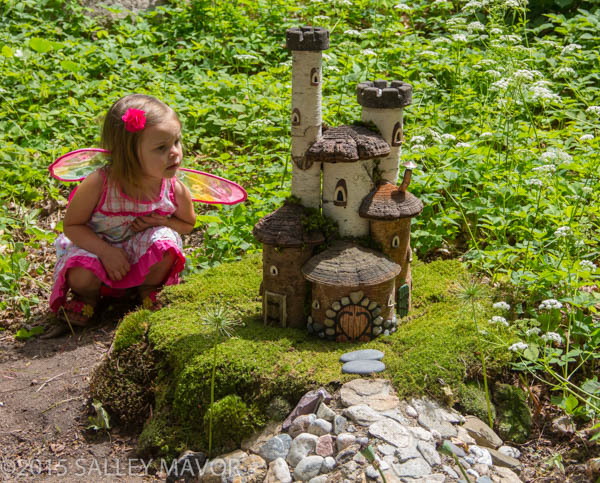
I love how Glen Carliss used shelf fungi for the roofs in “Glendell Towers”, which he made for The Fairy Houses of Highfield Hall, an outdoor exhibition that I curated in 2015. Glen told me that he’d been eyeing the mushrooms growing on trees along his road for years, imaging what to do with them.

Glendell Towers by Glen Carliss

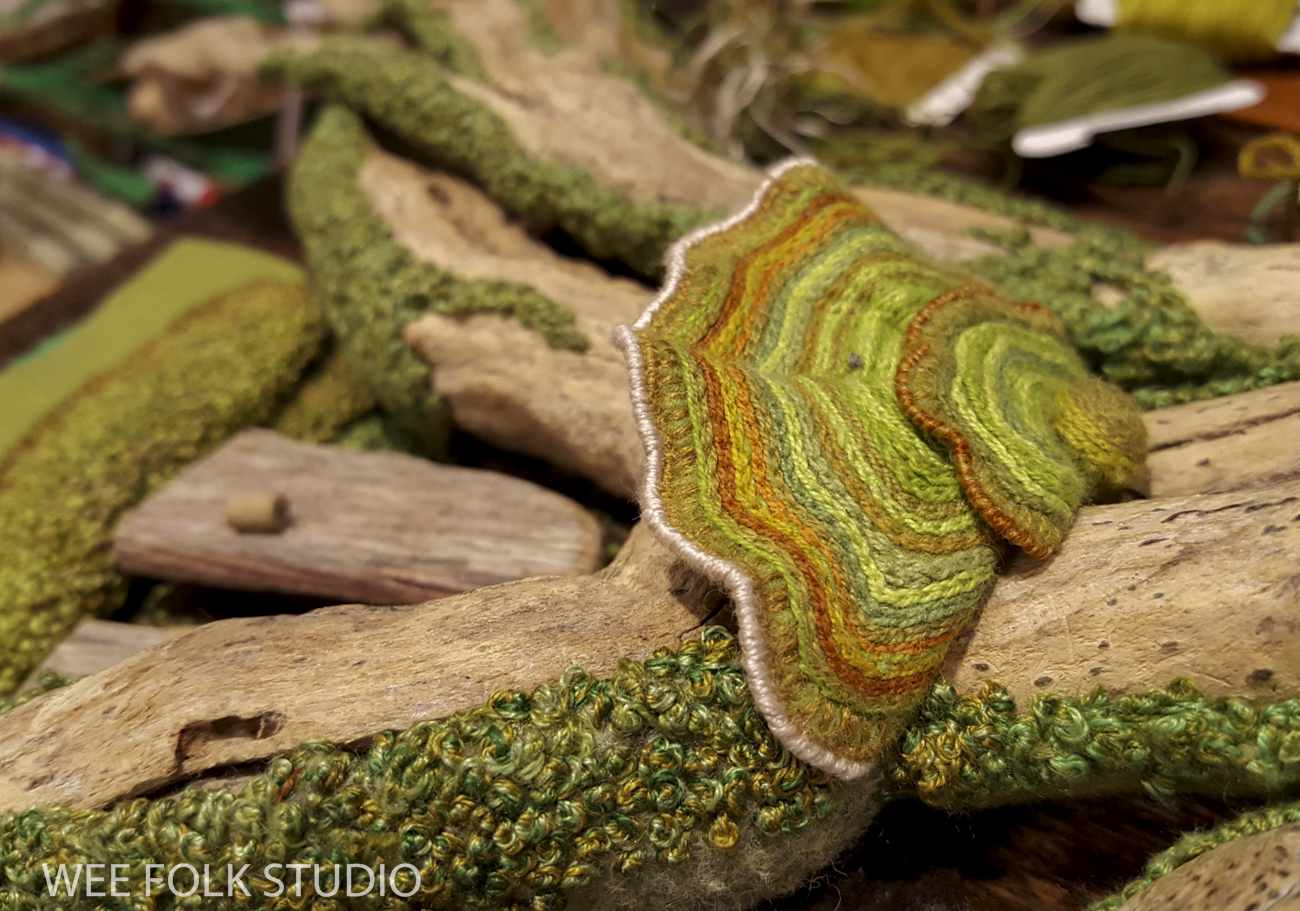
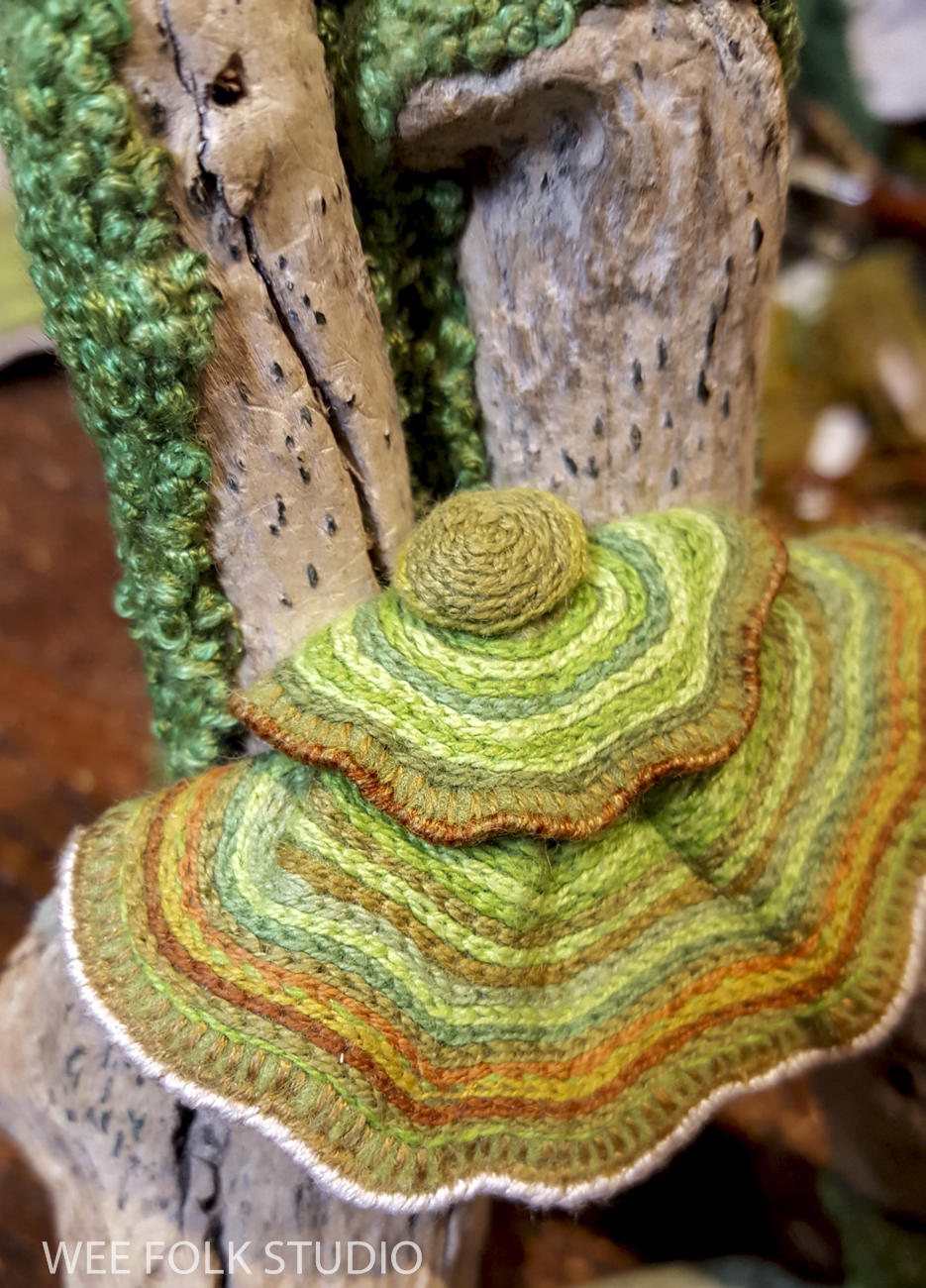
I didn’t use actual mushrooms in Harvest Time, but I was inspired by their fanciful appearance. My photo search came up with multiple color combinations, from earthy hues to shades as garish as 1960’s fashion. I chose a more subdued mixture of fall colors for the mushroom roof.

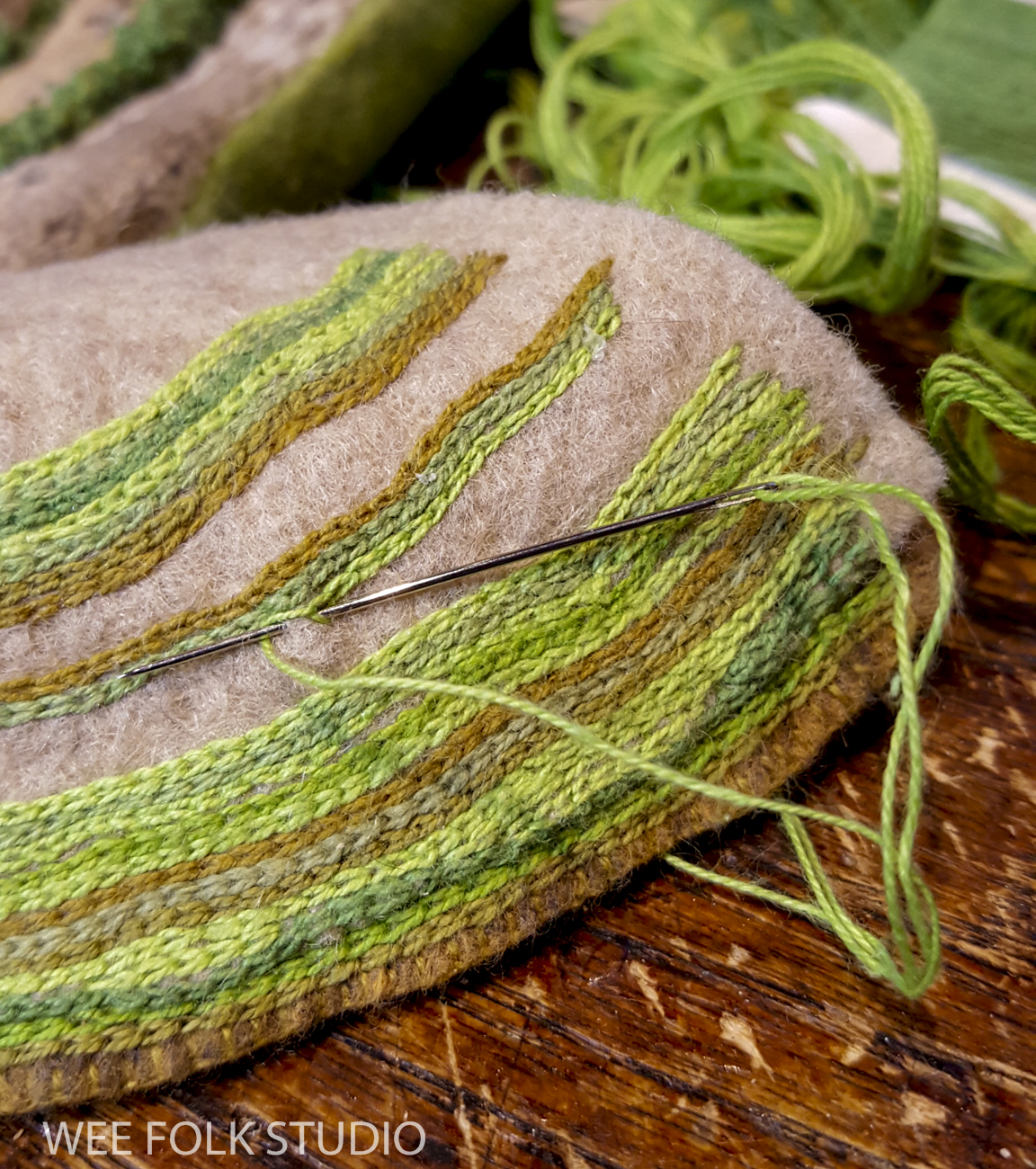
To make the striped concentric pattern, I chain stitched rows and rows of different shades of green and orange DMC cotton flower thread to a piece of felt. It took two tries to get the shape and colors the way I wanted it.

In this Stitch Minute video, I demonstrate chain stitching the stripes and adding wire.

After we filmed it, I wasn’t happy with the overall shape and color combo, so I started over and made a new one that was more curvy and included orange and yellow.

I stitched wire around the outside edge and covered it with white embroidery floss.

Then I made a smaller mushroom and a really little one that looked like a pompom on top of a hat. It’s been a year since I started working on this piece, so my memory is a bit foggy. I can only guess at how I formed the layers into a roof shape and attached it to the driftwood. I do remember that the mushroom wasn’t very cooperative and I had to torture it into shape. Most likely, I glued felt to the wood and then sewed the mushroom to the felt.

During the process, I constantly measured the depth of the trunk to make sure that it would fit behind the glass when the finished piece was framed. After the mushroom roof was added, there was just enough clearance!

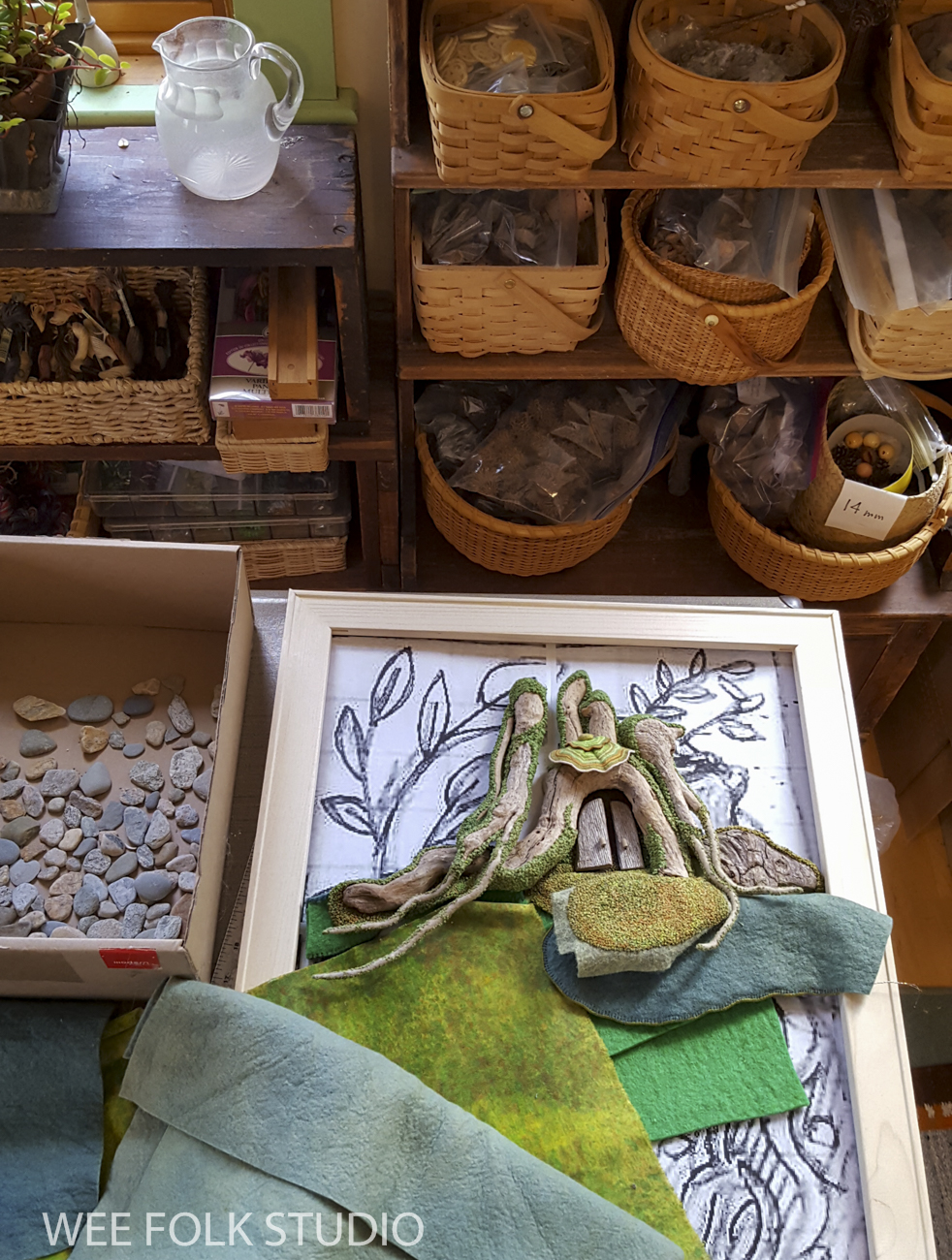
My use of found objects is mostly limited to individual items that are sewn in place and incorporated into embroidered scenes. This trunk was different because it was made up of several driftwood parts that created a fairly large mass that stuck out from the background. Its depth and breadth would determine how I created everything else in the landscape.

Now that the trunk was finished, I could start building the other parts of the scene, including the ground at its base.

Part 3 will show the process of making the felt and stitched foliage growing on the ground at the foot of the tree trunk.

To keep up with new posts, please subscribe to this blog. Your contact info will not be sold or shared. If you’d like to see more frequent photos tracking the projects in my studio, please follow me on Facebook, Instagram and BlueSky.
Summertime: Part 3 – leaves, stems, and branches

As promised, I’m picking up where we left off last year and continuing the series about Summertime, the fourth of my seasonal landscapes. In the coming months, I’ll share photos, videos and commentary about different aspects of the project, from raspberries to wee folk inhabitants to a life size Baltimore Oriole. I went overboard documenting the process, so there’s a ton of material to show. So far, I’ve written an overview of the piece, Part 1 – Tree Trunks, and Part 2 – Tree Houses, Part 4 – Baltimore Oriole (body) , Part 5 – Baltimore Oriole (head and feet), Part 6 – rose vine , Part 7 – raspberry plants, and Part 8 – stitching flora..

Summertime is the summer scene in a series of four seasonal landscapes that capture the wonder and magic of the natural world. Posters, note cards, prints, bookmarks, and jigsaw puzzles of Summertime and the other scenes in the series (Frosty Morning, Mossy Glen and Harvest Time) are available in my Etsy Shop.

See the Four Seasons Series and dozens of other works in my exhibition, To Every Season: Works by Salley Mavor at the New England Quilt Museum, Sept. 9 – Dec. 31, 2025.

Enchanting Threads: The Art of Salley Mavor at the Albany Institute of History and Art

LEAVES
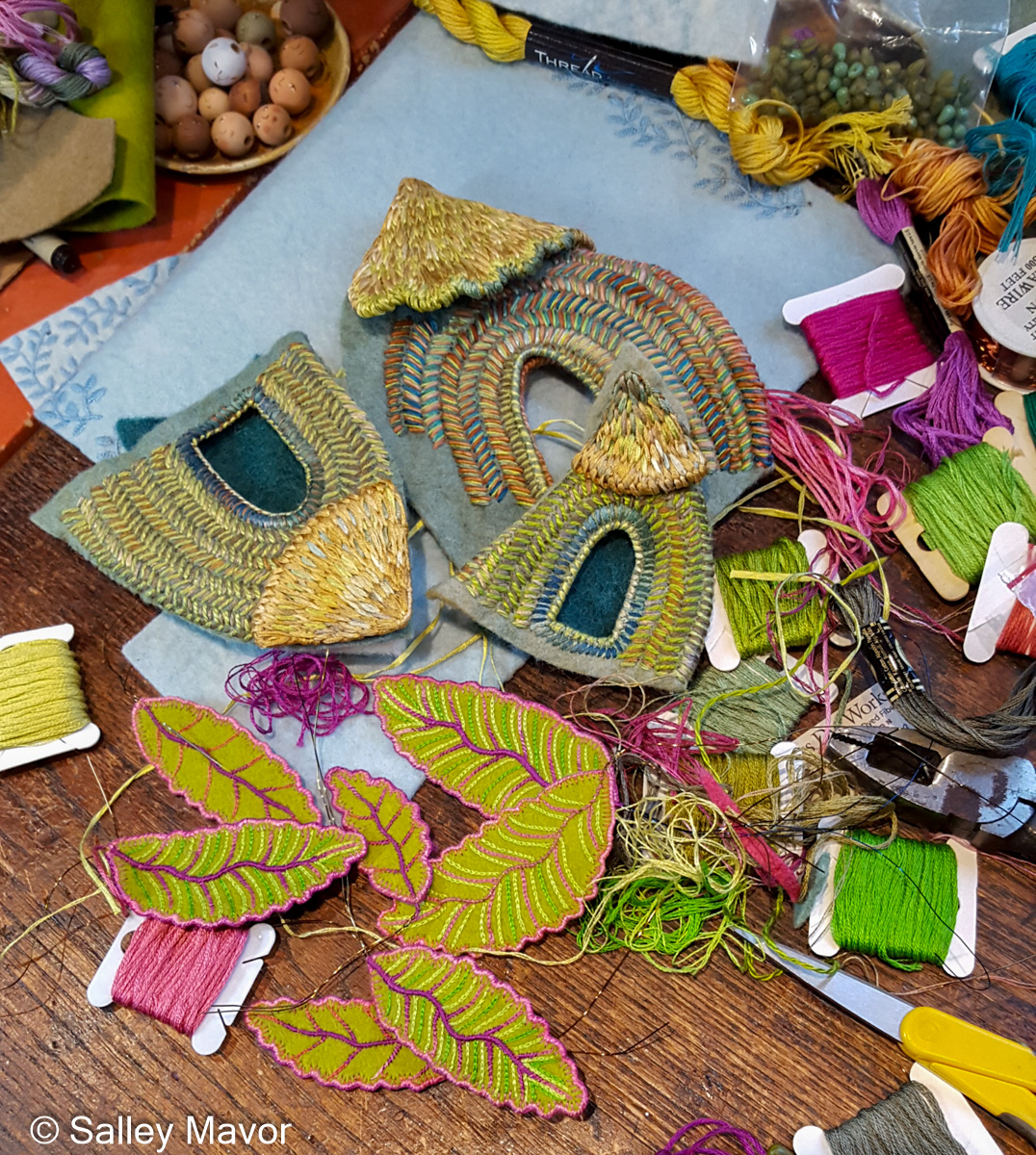
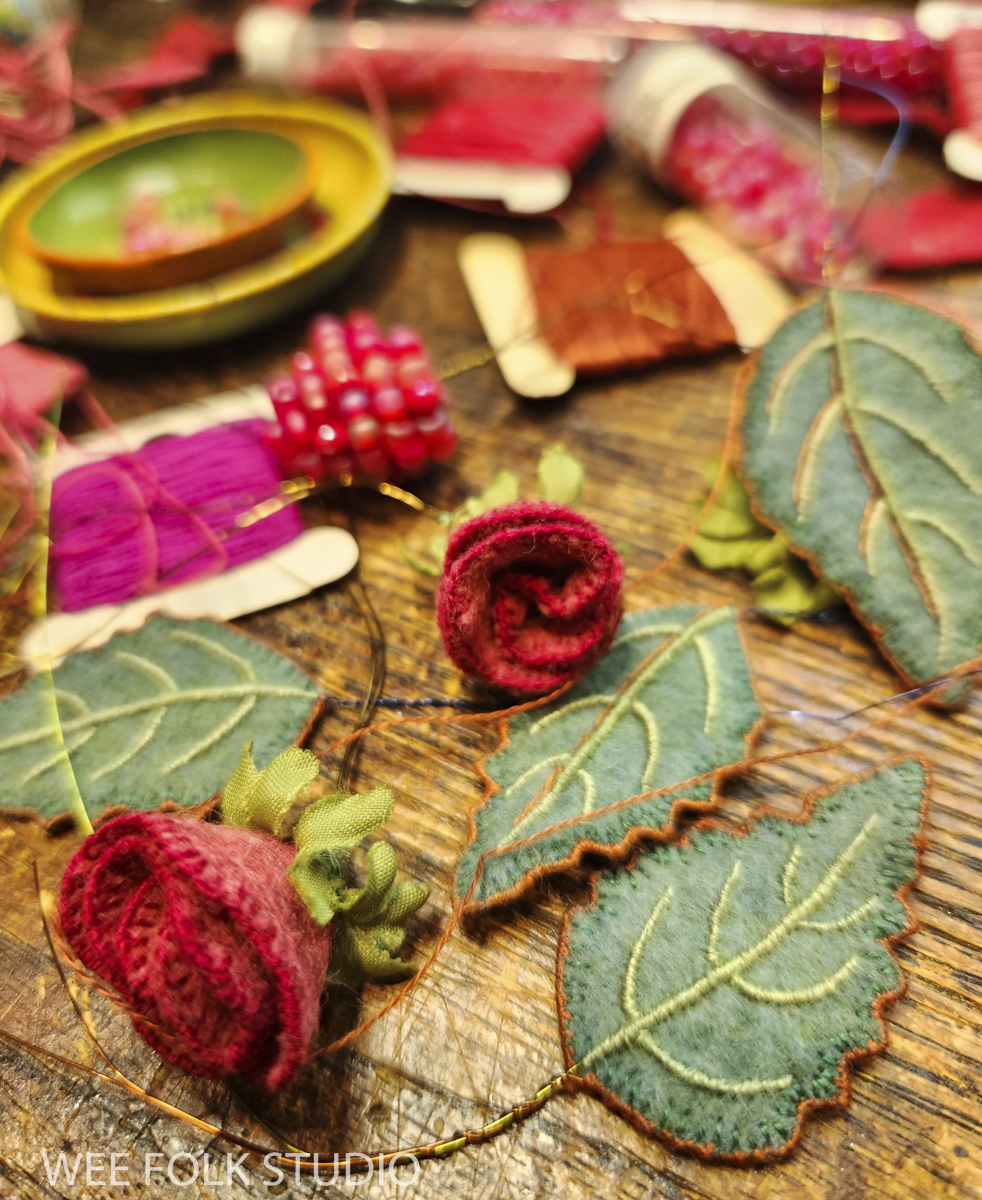
Some of the foliage in this piece are realistic interpretations, like the leaves on the rose vine and raspberry plants (which will be covered in future posts), but others are pure fantasy. I wanted the scene to look believable, without being completely true to life. It’s not biological illustration; I was more interested in creating a unique ecosystem where little people could live alongside birds and berries.

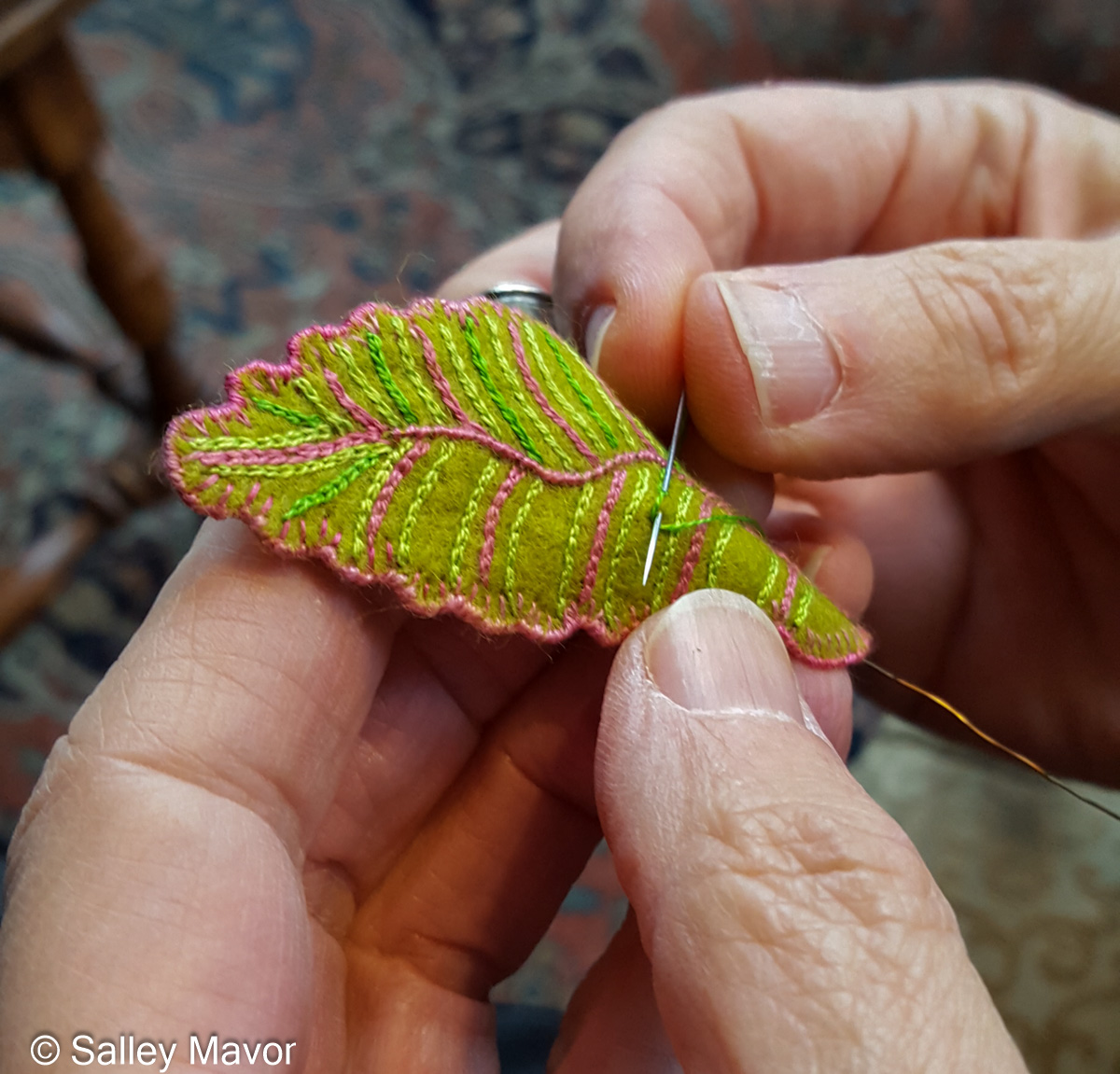
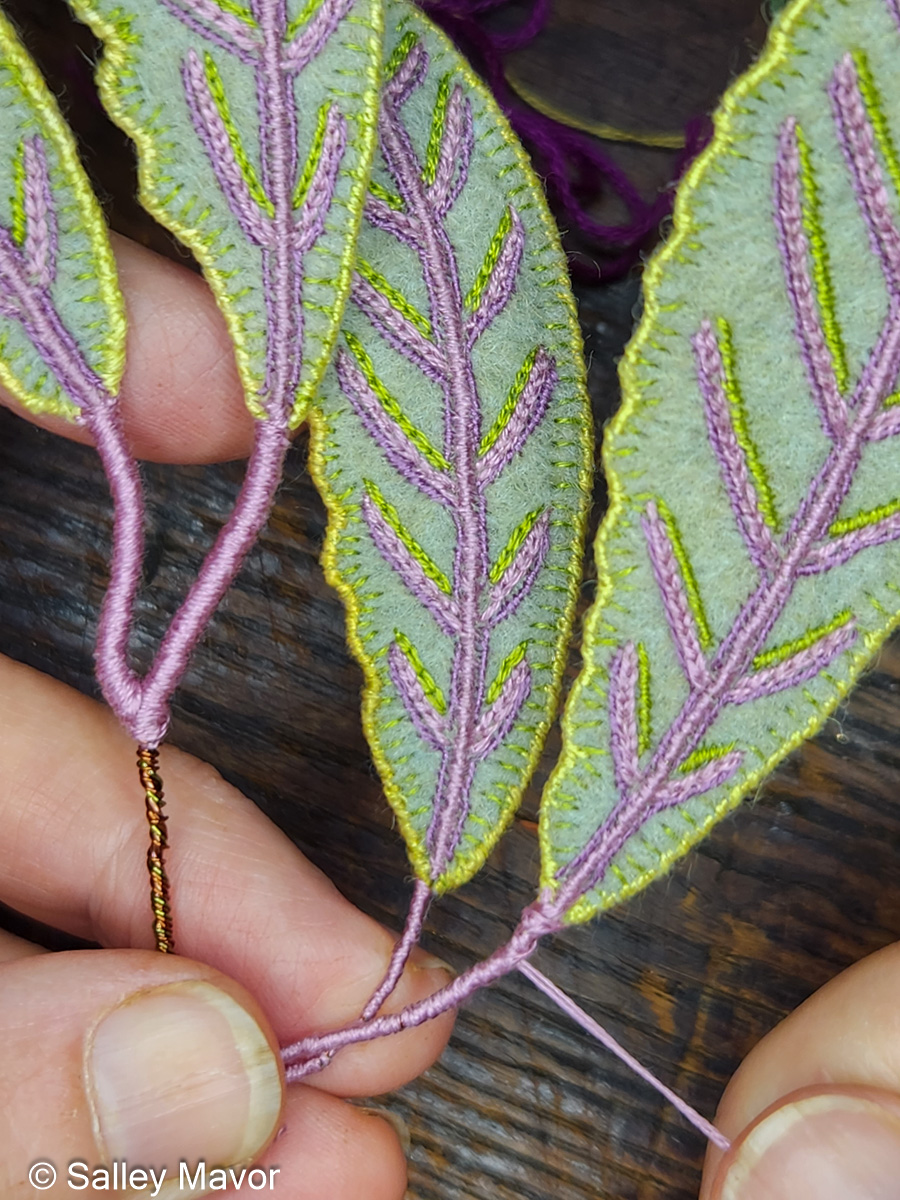
I made the leaves with 3 basic materials – wool felt, wire, and embroidery floss. The following Stitch Minute video demonstrates how to make a simple leaf, edged in wire.

Stitch Minute – leaf

STEMS
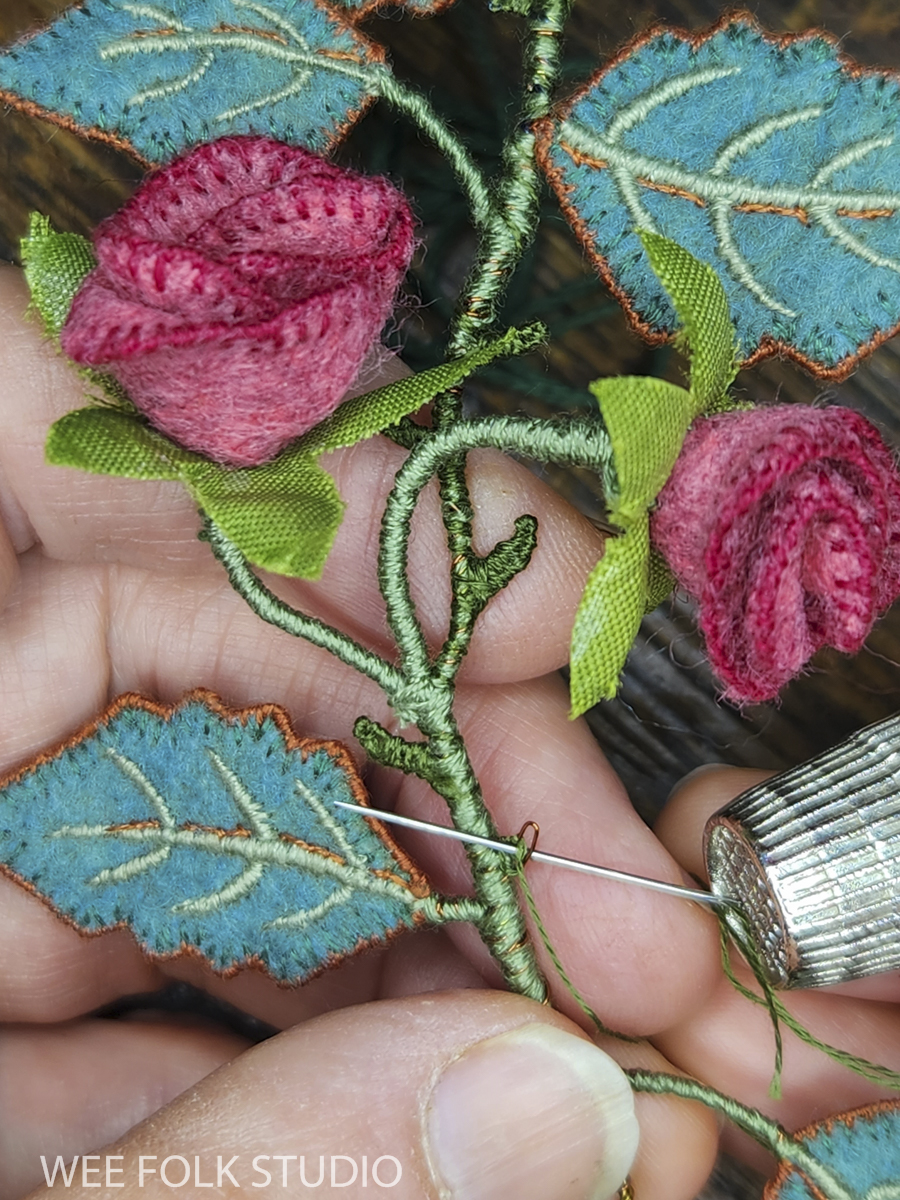
Wire is literally the backbone of my work. I use it as a structural framework to keep floppy materials (like felt) firm enough to exist in space, above the background fabric. In this piece, I used copper wire made by Parawire to edge the leaves and form their stems.

The trick is to cover all of the shiny metal with floss. It takes many passes around the wire to make a smooth surface.

This video shows how I wrapped the wire stems on the central tree in the Summertime scene.

For me, making curvy stems and bending them around is like doodling with wire. I’m never sure how a vine is going to grow and climb. This purple bush was calling out for something extra, so I made a curly vine to wrap around its trunk.

In this Stitch Minute video, you can see how I wrapped the curly vine, including its little corkscrew tendril.

BRANCHES
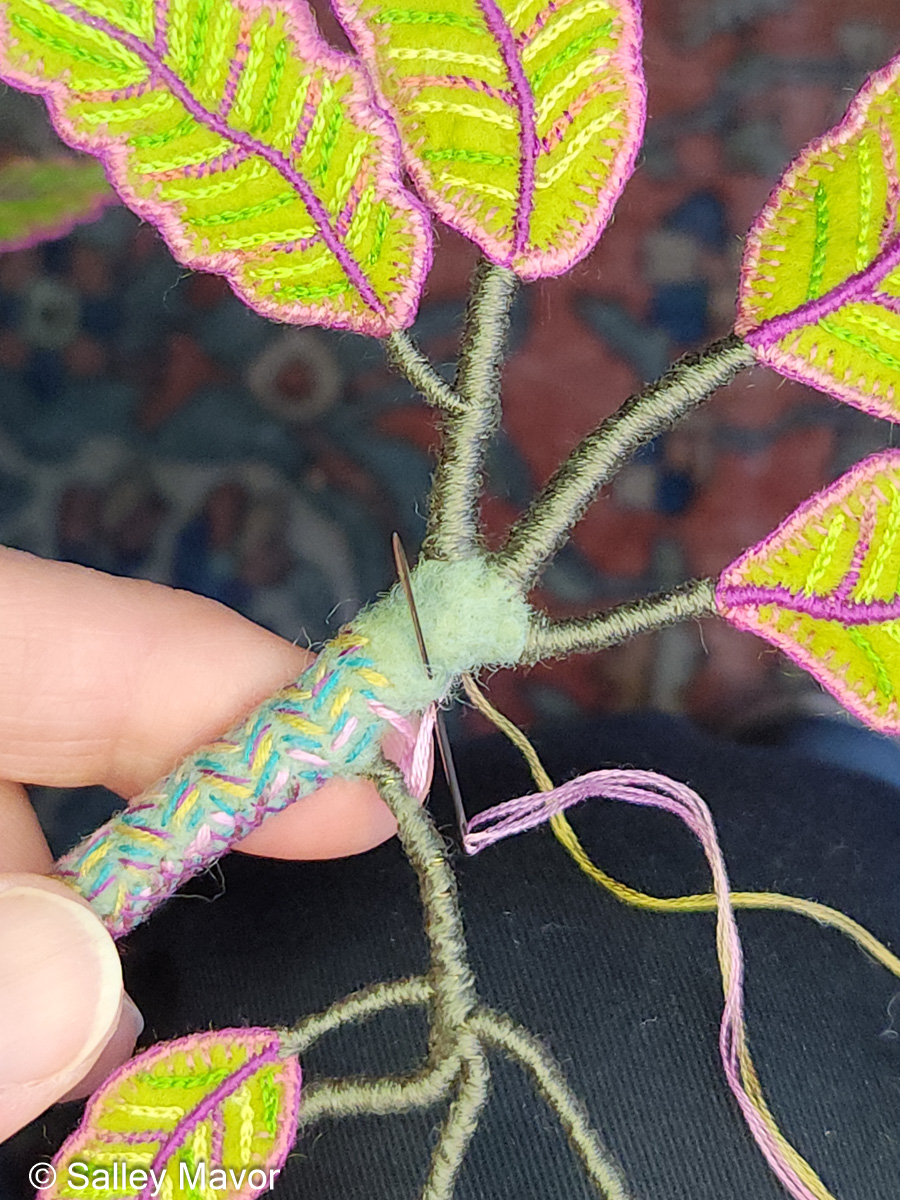
After years of developing ways of making tree branches, my preferred method these days is forming wire armatures and covering them with felt or embroidery floss. I usually embroider a textured “bark” pattern onto the felt before sewing it around the wire. Thicker tree trunks involve a different process, which I wrote about in Part 1.

In the following video, you can see how I stitched felt to cover the section that branches off into 3 separate wire limbs.

Stay tuned for Part 4 in this series, which will be about the Baltimore Oriole. If you want to receive email notices when I publish new posts, please subscribe to this blog using the form below.

To keep up with new posts, please subscribe to this blog. Your contact info will not be sold or shared. If you’d like to see more frequent photos tracking the projects in my studio, please follow me on Facebook, Instagram and BlueSky.
2024 – looking back and moving forward

Happy New Year! As I reflect on the past year and enter a new one, I feel grateful for the opportunity to share my life’s work with the world, both in person and virtually. Sometimes I wake up and think how lucky I am to spend every day making art! If you’ve followed me for years, thank you for coming along for the ride. And for those of you who’ve just discovered my doll-infested needle and thread universe, welcome!

For the past couple of years, I’ve felt a shift in my work habits. Instead stitching every spare minute, I’m happy to spend some part of my day playing with my grandchildren and puttering in the garden. Even though I’ll be turning 70 this year, retirement is out of the question! However, I like the idea of less pressure to make “important” artwork. With that in mind, I spent most of the past year making projects that are meaningful to me, no matter how small and seemingly insignificant. I caught up on gifts that were years overdue, sewing dolls and baby banners for friends and my grandchildren. It felt exhilarating to come up with designs that could be completed in a week or two, instead of months and months! Please come along as I review the past 12 months and share posts published in 2024.

So, what does 2025 have in store? I’ll soon be in winter hibernation mode, exploring alternative ways of working that require less time, which may be a futile exercise. I hope to make some new installations for this fall’s exhibition at the New England Quilt Museum (Sept. 9 – Dec. 27, 2025).

ENCHANTING THREADS: The Art of Salley Mavor
opened in July at the Albany Institute of History and Art. The show, which is extended to March 2, 2025, is one of the most artful and tasteful presentations of my life’s work that I’ve seen. I’m astounded by the number of people who’ve traveled far to see the show! They’re coming by plane, train and car and could probably get there by boat as well, since Albany is on the Hudson River.
Post links: Enchanting Threads opens!
Video tour of Enchanting Threads exhibition

Enchanting Stitches, Albany Institute of History and Art

SEASONAL SERIES
I started posting segments about Summertime and posted the last part about making Harvest Time. In the coming year, I will continue sharing photos, videos and commentary about various aspects of the Summertime project.
Post links: Summertime overview
Summertime: Part 1 – Tree Trunks
Summertime: Part 2 – Treehouses
Summertime Poster!
Harvest Time – Part 9 (embroidered trees)

PODCASTS
Throughout the year, I gave several slide presentations about my work, both in person and via Zoom. Podcasts are a different and effective way to reach an audience and I was delighted to be interviewed by two hosts from the UK.
NeedleXChange
Salley Mavor – Telling Wee Folk Tales PART 1 and PART 2.

I really enjoyed chatting with Mr X Stitch (Jamie Chalmers), who hosts a series of interviews with needlework and textile artists. He has a talent for disarming his guests and guiding the conversation in sometimes surprising philosophical directions.

Textile Talk with Salley Mavor – I had the pleasure of chatting with Gail Cowley from the School of Stitched Textiles. We delved into where my art comes from, how it’s evolved and why I do it. You are invited to listen to the podcast on the YouTube link below.

SALLEY MAVOR: BEDTIME STITCHES
The touring exhibition of original illustrations for MY BED keeps chugging along.

packing artwork for Bedtime Stitches exhibition

This past spring, Bedtime Stitches was on display at the Upcountry History Museum in Greenville, SC and it’s currently included in Enchanting Threads at the Albany Institute of History and Art through March 2, 2025. The next stop on the tour will be at the Mariposa Museum, Peterborough, NH, April – July, 2025.
Post links: Exhibition News post, bed book peek – back cover

bed book peek – back cover

BABY GIFTS
With the arrival of Eddie, our 2nd grandchild this year, all I wanted to do was make things for babies I know. I shared several projects in that vein, including a baby banner, dolls and ornaments.

BABY GIFTS post links:
Elias and Eddie ornaments
Inuit doll remake
Baby Polar Bear suit
Baby Bunting Twins
Eddie’s Baby Banner

Inuit Dolls

FAIRIES
Despite declaring that I’ve moved on from making fairies, I did bring along materials to keep my hands busy during our train trip across the country this past fall. So, by the time we returned, I’d almost completed 48 fairies!
Post links: New Ltd. Edition Fairies are coming!
Fairies, train travel and a podcast
Bur Oak Fairies

Bur Oak Fairies

RABBITAT
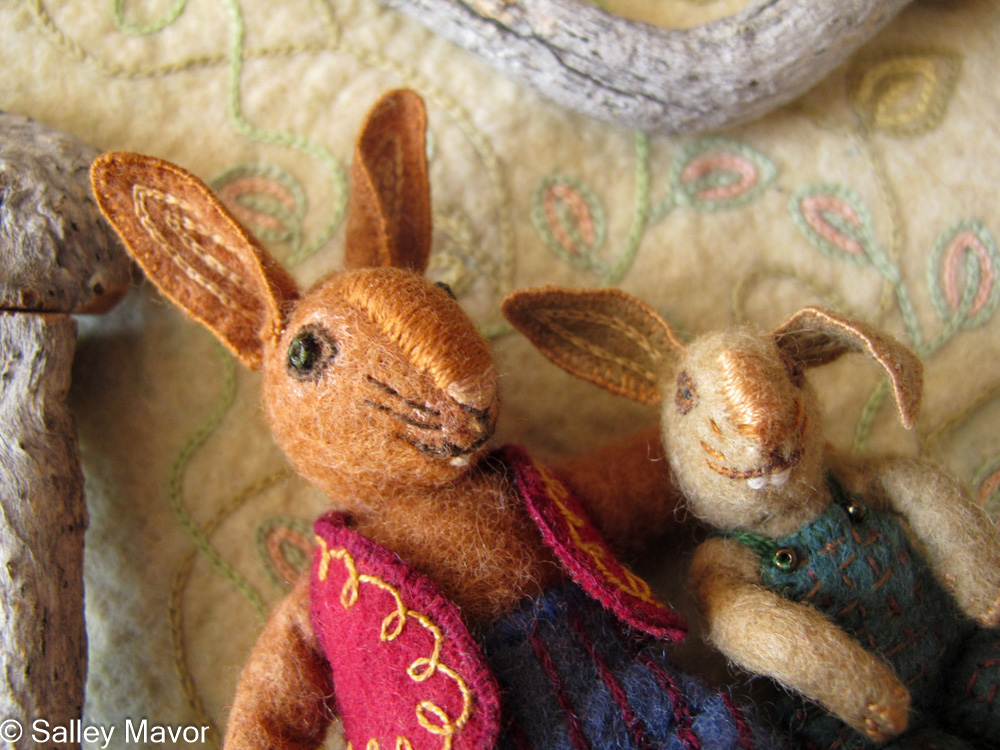
Last spring, I revisited Rabbitat (2012), with tons of process photos and recollections about making the piece.
Post link: Rabbitat revisited

HORNBOOK MAGAZINE
As part of their centennial celebration, the Hornbook Magazine held a “very-subjective, not-serious” contest to pick favorite covers from previous issues. While scrolling through Instagram, I discovered than my 2012 cover illustration won the Jan/Feb category! It seemed like a good time to republish a post about how I made it.
Post link: Cover Madness at the Hornbook

To keep up with new posts, please subscribe to this blog. Your contact info will not be sold or shared. If you’d like to see more frequent photos tracking the projects in my studio, please follow me on Facebook, Instagram and BlueSky.

Elias and Eddie ornaments 2024

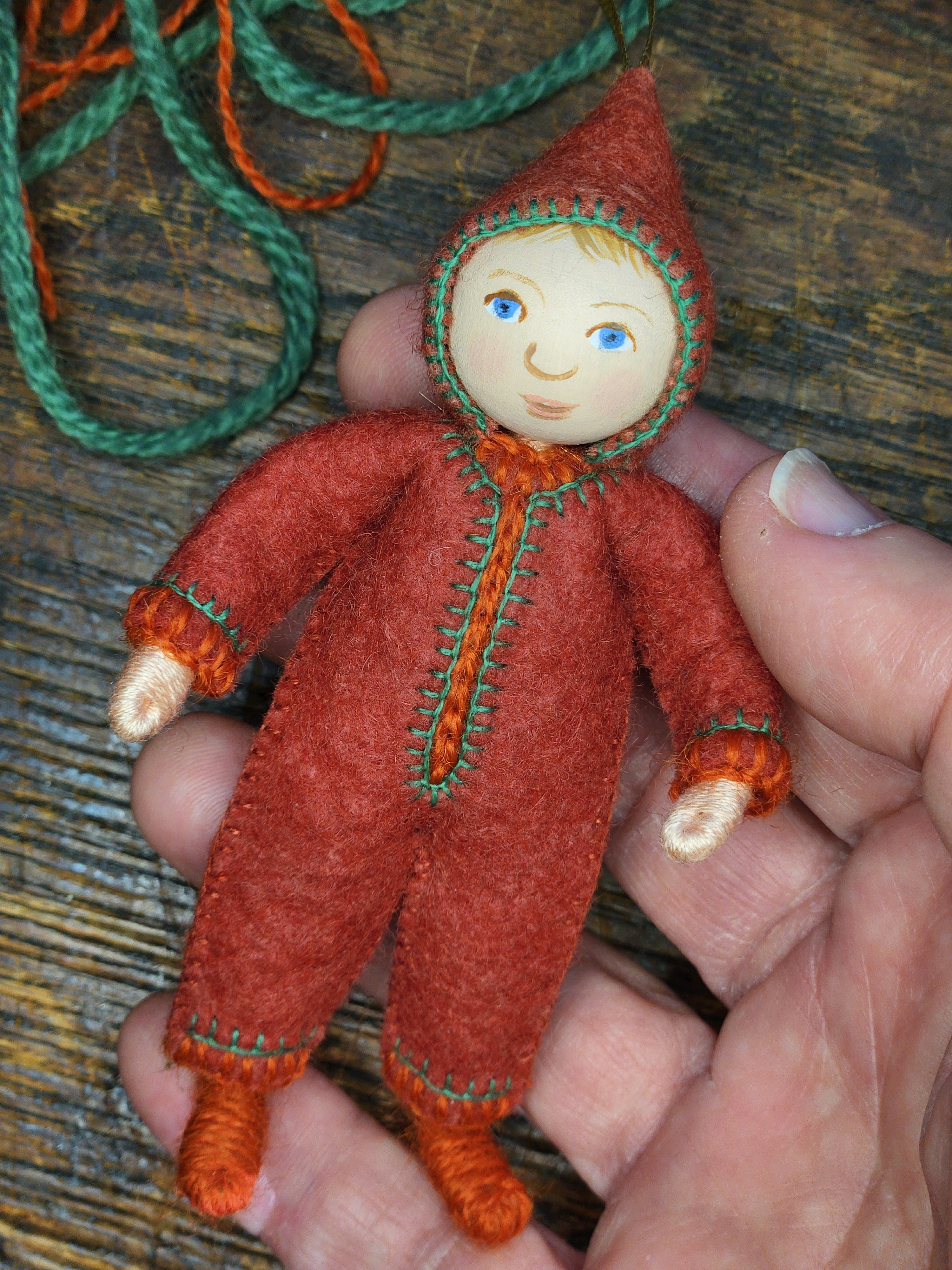
Last year, I started a family tradition of making personalized wee folk ornaments to give as gifts. The miniature Baby Polar Bear Suit ornament of my grandson Elias was so much fun to make that I couldn’t wait to come up with this year’s depiction. And with the birth of his cousin Eddie in February, I got to make two little versions of my grandkids! The dolls were constructed the same way as the 4″ figures in my how-to book, Felt Wee Folk.

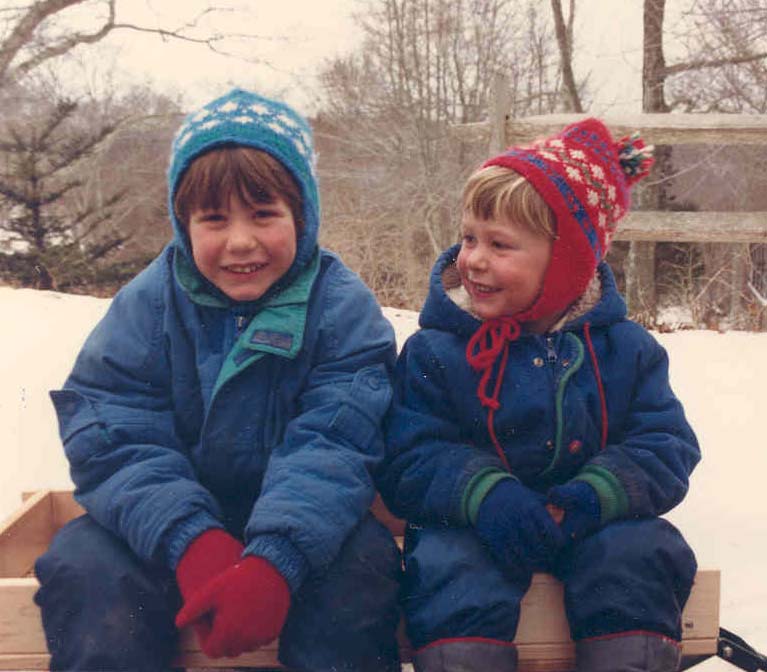
My mother set a wonderful example, by always making things to give to her friends and family. In her lifetime, she produced hundreds of hats, sweaters and blankets, offering them like warm hugs. She was most prolific with hats, which had side flaps and and a pompom on top. She started making them in the 50s, when we were kids. The hats weren’t just for children, but for her adult friends, too. She’d find out the colors they liked and measure their heads, frequently testing the hat sizes half way through the knitting process. Her hats were the subject of one the first posts on this blog. She made hats for my sons Peter and Ian (pictured below in 1989), who have grown up to be the proud fathers of Eddie and Elias, respectively.

My sons Peter and Ian in their grandmother’s hats, 1989

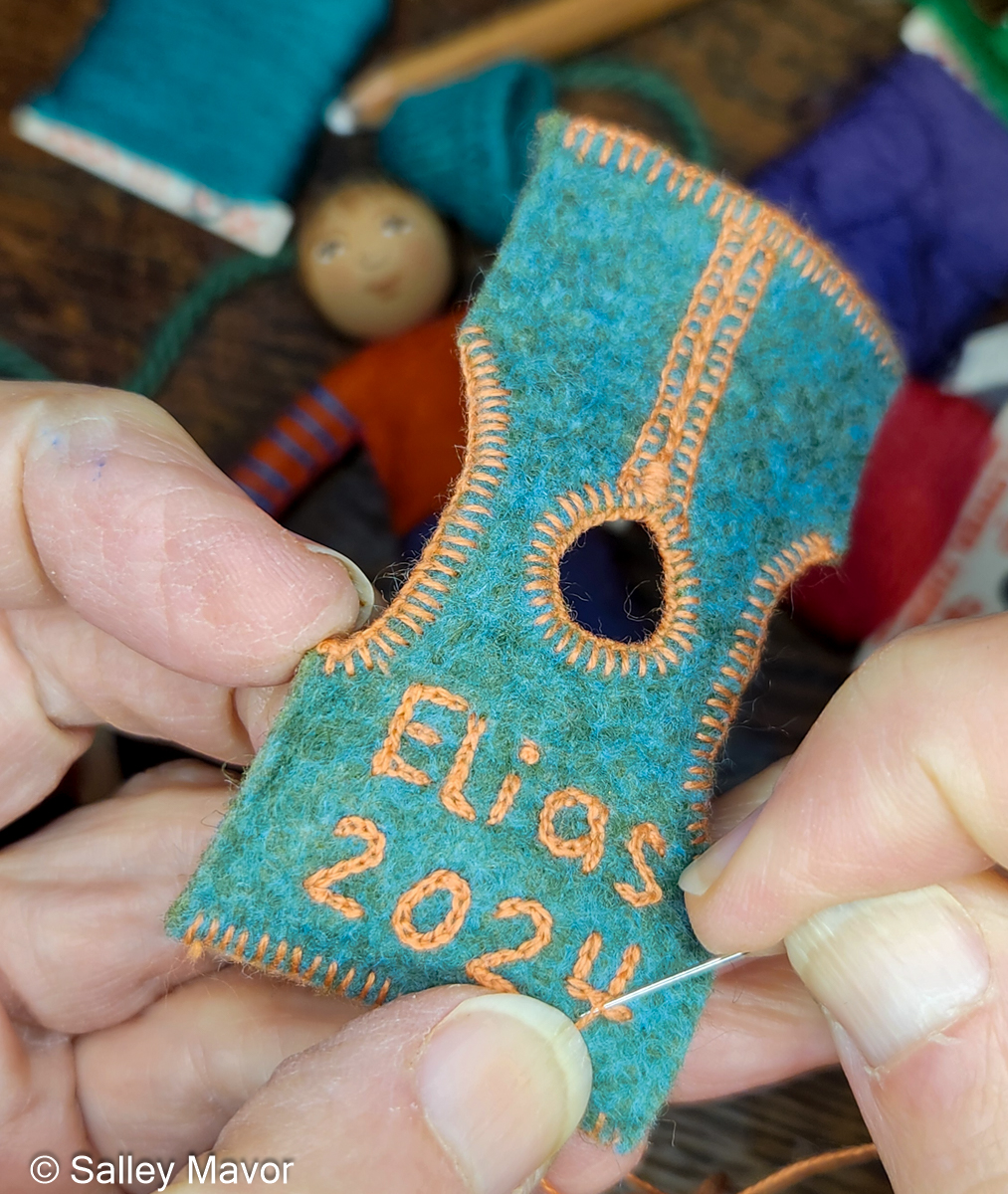
Elias, who will be 2 next month, loves being outside best of all. He’s my little helper in the garden and loves pointing out the moon and stars in the darkened sky when I stroll him home after his afternoon visit. He has spent nearly half his life wearing a particular green hat, so it had to be included!

Elias often wears vests, too. I embroidered his name and the year on the back.

The following video shows how I stitched the clothing and glued on the head and hat.

10 month-old Eddie lives 2 hours away and I visit him every few weeks. Right now, his favorite things are singing, clapping his hands and smiling.

In the following video, you can see how I stitched the baby bunting and glued on the head and hood. I’m not sure if he has a full-sized red suit like this, but he now has one in miniature. I’m already looking forward to making next year’s ornaments! If you want to receive email notices when I publish new posts, please subscribe to this blog using the form below.

To keep up with new posts, please subscribe to this blog. Your contact info will not be sold or shared. If you’d like to see more frequent photos tracking the projects in my studio, please follow me on Facebook, Instagram and BlueSky.

Banjo repair, new podcasts and a 2nd artist talk

In this post, you will see a banjo pin repair job and find tidbits of studio news, including a new podcast interview with NeedleXChange, and the scheduling of an additional Artist Talk at my exhibition in Albany, NY.

BANJO Repair
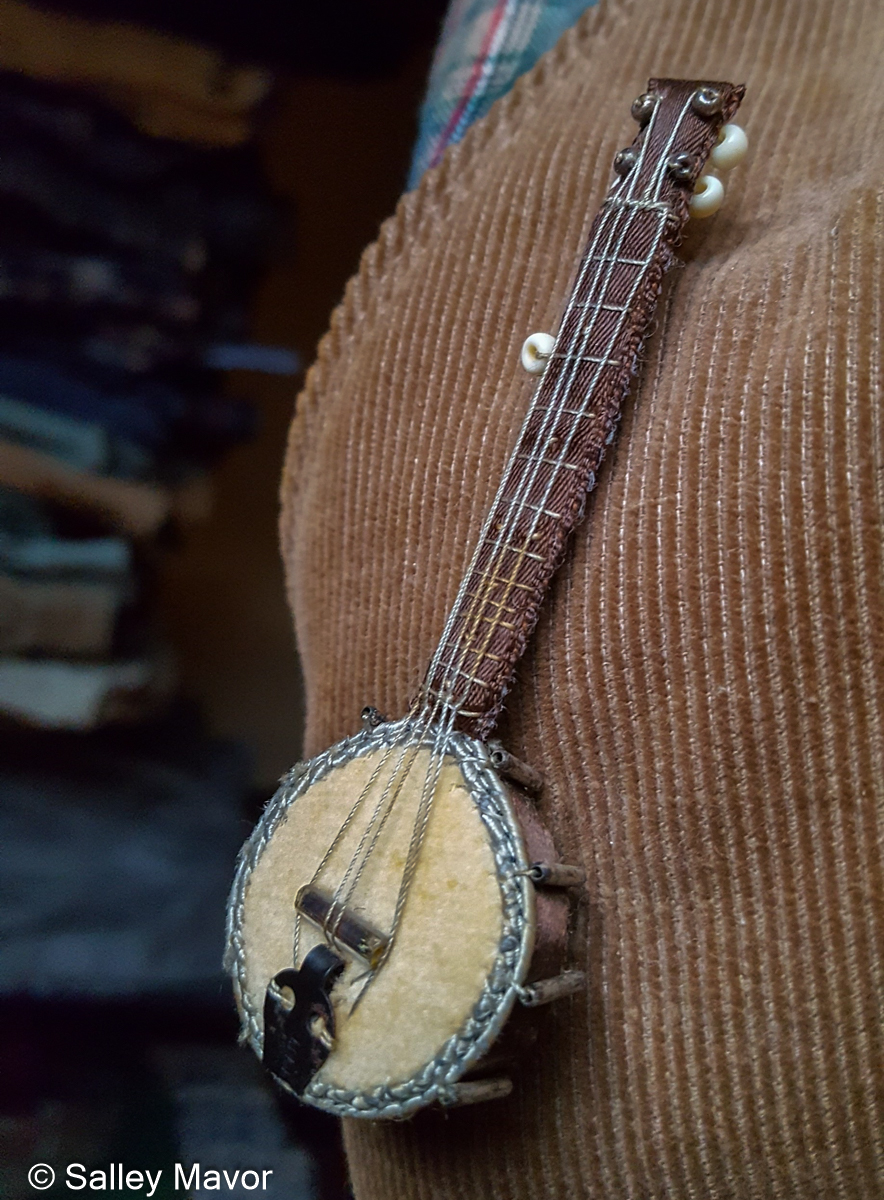
About 45 years ago, I made this banjo pin for Rob, which he keeps on a corduroy vest that I also made. The other day, I noticed that the banjo needed repair. The brackets around the drum had fallen off, so I replaced them with new tube beads that I still had in my stash. It was a simple and quick job that felt satisfying way longer than the time it took to do it!

BANJO REPAIR

PODCAST interview with NeedleXChange

NeedleXChange PODCAST Links:
Salley Mavor – Telling Wee Folk Tales PART 1 and PART 2.

I recently had the pleasure of being interviewed by Jamie “Mr X Stitch” Chalmers for his popular podcast NeedleXChange. The series features interviews with needlework and textile artists, who’s work ranges from edgy to sublime. I really enjoyed chatting with Jamie, who’s lively banter kept things moving along in an entertaining way. He has a talent for disarming his guests and guiding the conversation in sometimes surprising philosophical directions. The more I take part in and listen to other interviews like this, I realize that it’s more interesting to hear what artists think than how they do what they do. You can listen to our 2 part interview through the links below. While you’re there, please check out the other interviews. You’re sure to discover someone you had no idea existed before, just like I did!


2nd Artist Talk scheduled at the Albany Institute of History & Art.

GOOD NEWS! Due to high demand, the Albany Institute of History & Art in Albany, NY has scheduled an additional Artist Talk at 11:00 AM on Sunday, Dec. 8th (the 2 PM talk is sold out!). I look forward to meeting you and sharing the story of my life’s work! My exhibition, Enchanting Threads: The Art of Salley Mavor, is on view at the museum through March 2, 2025. To register for the 11:00 AM talk, please go to this link.

To keep up with new posts, please subscribe to this blog. Your contact info will not be sold or shared. If you’d like to see more frequent photos tracking the projects in my studio, please follow me on Facebook, Instagram and BlueSky.
New Ltd. Edition Fairies are coming!

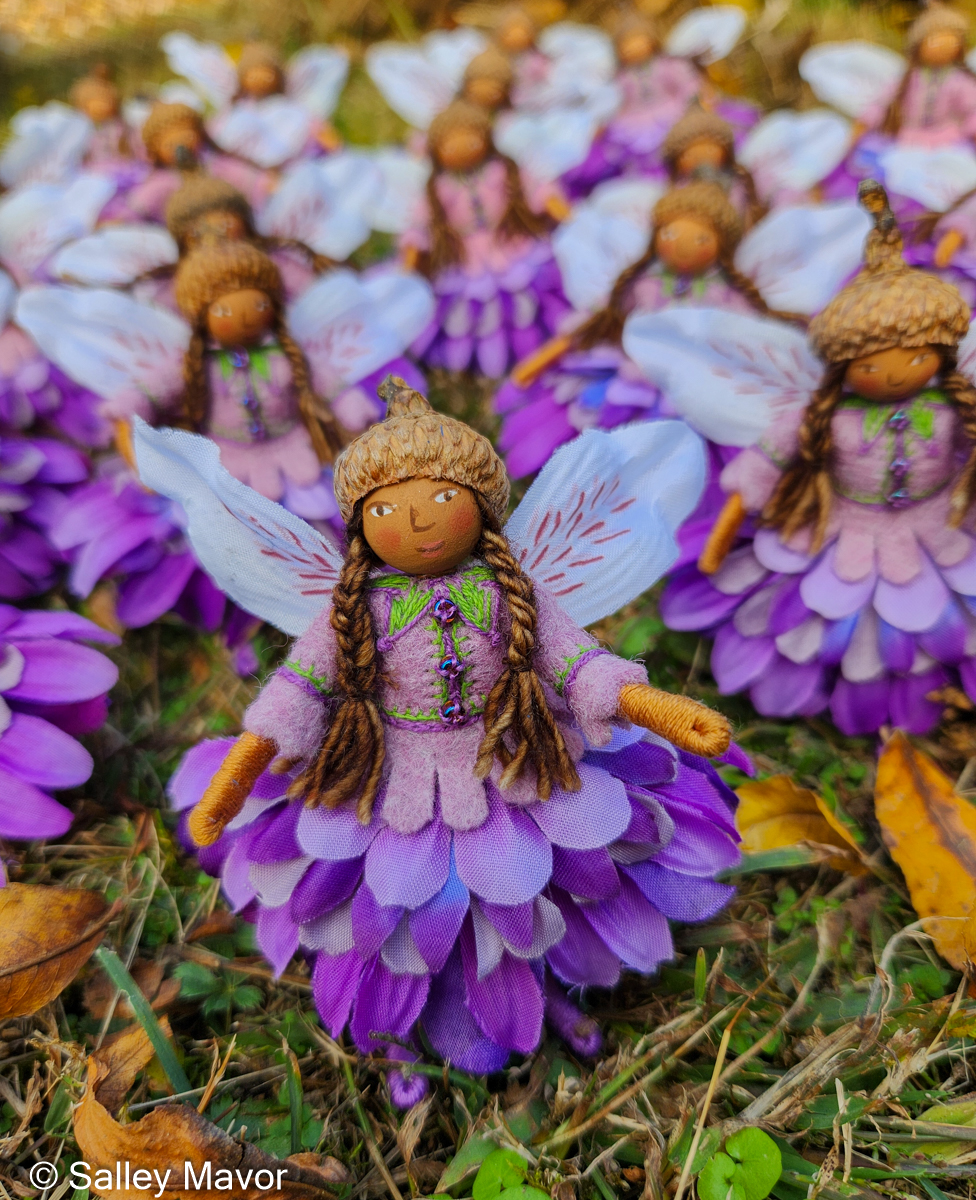
I’d like to introduce AMETHYST and CAMILLIA, two new Ltd. Edition Fairies. How can that be? I keep saying that I don’t sell dolls. But this is an exception because I needed something to do on our recent train trip across the country!

UPDATE: The fairies sold out in 7 minutes!
Both sets of 24 dolls are dressed, coiffed and winged and will be ready to fly off to their new homes on Saturday, Nov. 23, 2024 at 10 AM (Eastern US time). They will be sold for $100 each through my Etsy Shop on a first come, first served basis, so please act quickly if you really want one! Sorry, no pre-orders ahead of time. I realize that 10 AM on Cape Cod is in the middle of the night for those of you on the other side of the world, but I can’t figure out how to make it perfectly fair for everyone.

Despite my intention to move on, I haven’t weaned myself entirely from making fairies. It’s a nice relaxing, portable activity when traveling. I’ve had to put limits on myself at home or else I would make them all the time, instead of pushing myself to do new work. 

Camellia Ltd. Edition Fairy Doll
Amethyst Ltd. Edition Fairy Doll

They’re basically the same fairies from my how-to book of doll projects, Felt Wee Folk – New Adventures. During the train trip, I was able to complete the most time consuming steps, like embroidering felt peplum jackets and wrapping pipe-cleaner bodies.

The following video shows how I finished making CAMELLIA once I got home.

Salley Mavor Makes a Fairy

These fairies have a different hair material than I’ve used before. Instead of wool fleece, I used single ply, fingering weight Merino yarn, which is easy to braid. Unfortunately, Flying Finn Yarns, the small cottage industry I bought it from, is not currently in business.

It was fun revisiting the fairies, although it did remind me of why I don’t do mass-production any more. Now, I’ve got to change gears and work on some new pieces for my next exhibition, which will be in the fall of 2025 at the New England Quilt Museum. I can hardly wait for January, when hibernation sets in and you can be busy inside without the distractions of warm weather!

My Etsy Shop is well stocked for the holiday season, with a selection of books, cards, puzzles, notebooks, posters, and bookmarks that feature my particular doll-infested needle and thread universe!

To keep up with new posts, please subscribe to this blog. Your contact info will not be sold or shared. If you’d like to see more frequent photos tracking the projects in my studio, please follow me on Facebook, Instagram and BlueSky.
Fairies, train travel and a podcast

This post includes a mixed bag of activities and events that are coming up or have already happened – a train trip west, a podcast interview, a Tiffany window with a family connection, an artist talk, and new ltd. edition fairies.

In October, Rob and I traveled by train to Portland, OR to see my sister, Anne Mavor, who is also an artist. Here we are at the Leach Botanical Garden. Every year, we look more and more alike. Not only do we have the same hair and face genes, we have a similar color and fashion sense, from our zippered jackets down to our totally practical over-the-shoulder purses.

Sisters Salley and Anne Mavor in Portland, OR

NEW PODCAST: I had the pleasure of chatting with Gail Cowley from the School of Stitched Textiles. We delved into where my art comes from, how it’s evolved and why I do it. You are invited to listen to the podcast on the YouTube link below.

ENCHANTING THREADS Exhibition: It’s wonderful to hear that my exhibition at the Albany Institute of History and Art in Albany, NY continues to attract a steady stream of visitors. I’m amazed that some fans are traveling far to see the show. They’re coming by plane, train and car from different parts of of the US and even driving across the border from Canada. And from what I hear, they say that it was worth the trip! One advantage of having the show up for a 7 month long stretch, is that there’s time for word to spread about the show. We’ve all had the experience of finding out about an exhibit after it’s closed. Enchanting Threads will be on view through March 2, 2025.

ARTIST TALK: I will return to Albany to give a talk about my work on Sunday, Dec. 8th. The talk is free with gallery admission. They anticipate the event will reach capacity and encourage those interested in attending to reserve early. To register, please click here.

HARTWELL MEMORIAL WINDOW: On our way home, Rob and I got off the train when it stopped in Chicago, specifically to see the Tiffany window that my great grandmother, Mary Hartwell, commissioned in 1917. The window was a memorial to her husband, Fredrick, who grew up near the New Hampshire landscape it depicts. We were fortunate to spend some uninterrupted time gazing at the window and talking with a member of the curatorial team that worked on the project.

Seeing this stained glass masterpiece designed by Tiffany artist Agnes Northrop made me feel emotionally connected to my great grandparents in a way that I didn’t expect. After spending 100 years in their Baptist church in Providence, RI., the window was sold to the Art Institute of Chicago, where it was restored and installed in 2021. To learn about the window, please visit this page of the museum’s website.

NEW LTD. EDITION FAIRIES: If you’ve followed me for a while, you’ll know that I don’t sell one-of-a-kind dolls. But every once in a while I offer a ltd. edition of 25 dolls similar to the ones in my how-to book, Felt Wee Folk. I only work on them outside of my studio, while traveling, so there’s no predicting when a set will be finished. This is my way of controlling the urge to make them all the time. As some of you’ve discovered, making wee folk can be addictive! That isn’t such a bad thing, but if I succumbed to the impulse, I would be less inclined to work on new projects.

We traveled across the country by Amtrak, from Boston to Portland, OR and back home again. Besides gazing out of the train window at midwestern farms and plains for days, I wrapped pipe cleaners and stitched felt peplum jackets for 2 sets of ltd. edition fairies. I’ve made a lot of progress, but there’s still more work to do before the fairies are all dressed, coiffed and winged! They will be sold in my shop on a first come, first served basis. Sorry, no pre-orders. I’ll announce their listing date on this blog, Facebook, and Instagram when they’re closer to completion.

To keep up with new posts, please subscribe to this blog. Your contact info will not be sold or shared. If you’d like to see more frequent photos tracking the projects in my studio, please follow me on Facebook, Instagram and BlueSky.

Video tour of Enchanting Threads exhibition

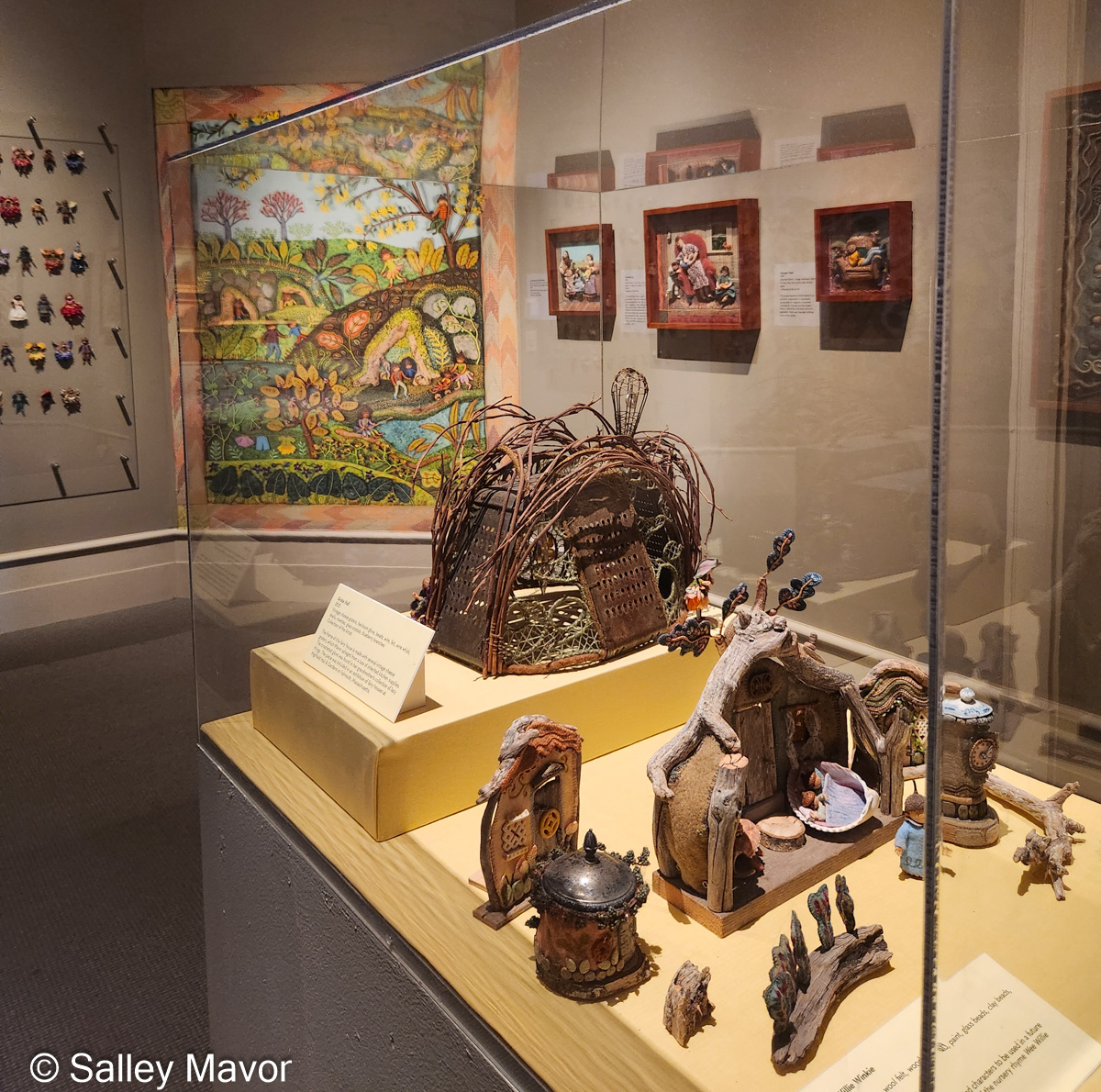
Come along on a a quick walk through Enchanting Threads: The Art of Salley Mavor, my current exhibition at the Albany Institute of History & Art. The show will be there through March 2, 2025, so, there’s plenty of time to plan a trip to Albany, NY with your friends and family! Many of the pieces on display have been featured on this blog – see a list with links below.

The exhibition has the feeling of a retrospective, with over 100 framed pieces and sculptural objects from the past 45 years, from a modular village I made in art school to the recent four seasons series. There are also over 100 wee folk figures that I made for my how-to book, Felt Wee Folk on display.
Four Seasons Series

The complete series of original bas-relief illustrations from my picture book, MY BED is also included in the show.
“Enchanting Threads” includes all of the original illustrations from MY BED.

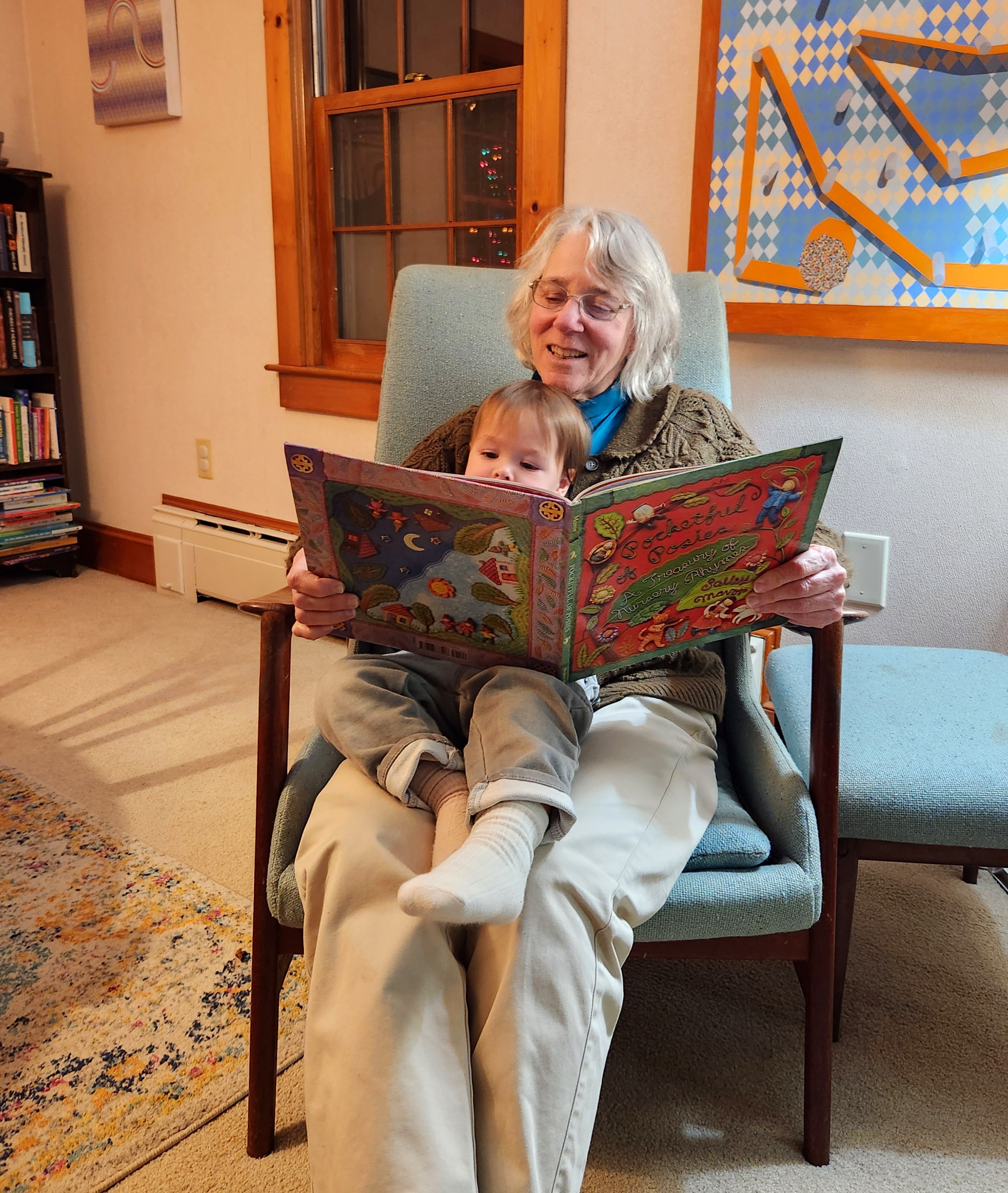
The following images show just a portion of what’s on view in the show (click individual images to enlarge). If you’ve followed me for a while, you’ll recognize several of the pieces, including Birds of Beebe Woods, Self Portrait, Displaced, Cover Up, Whiskers, Face Time, Rabbitat, Liberty and Justice, Pocketful of Posies, My Bed, Grate Hall, Lichen Lookout, Summertime, Harvest Time, Mossy Glen, Frosty Morning, Felt Wee Folk.

NEW IN MY SHOP!
I’m pleased to offer 18″ x 24″ frameable posters of Summertime and Harvest Time. These printed reproductions just a little bit smaller than the bas-relief embroidered scenes, so the scale of the wee folk, bird, foliage, roots, fruit, and thousands of stitches is very similar to their actual size. They’re the closest thing to experiencing the original pieces in person!

To keep up with new posts, please subscribe to this blog. Your contact info will not be sold or shared. If you’d like to see more frequent photos tracking the projects in my studio, please follow me on Facebook, Instagram and BlueSky.