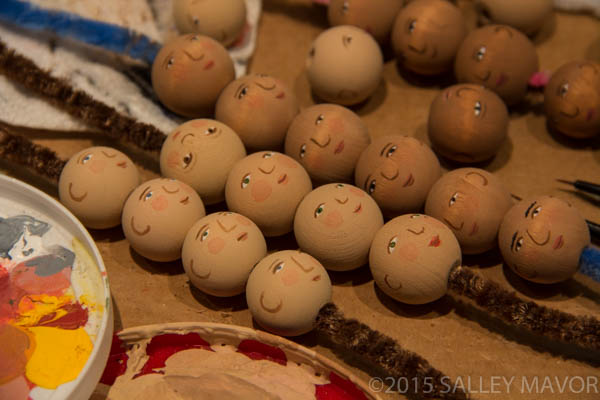
This is Part 2 in a series about making my newest piece, Face Time. It picks up where I left off in Part 1, which is about the painted and wigged wooden bead heads.
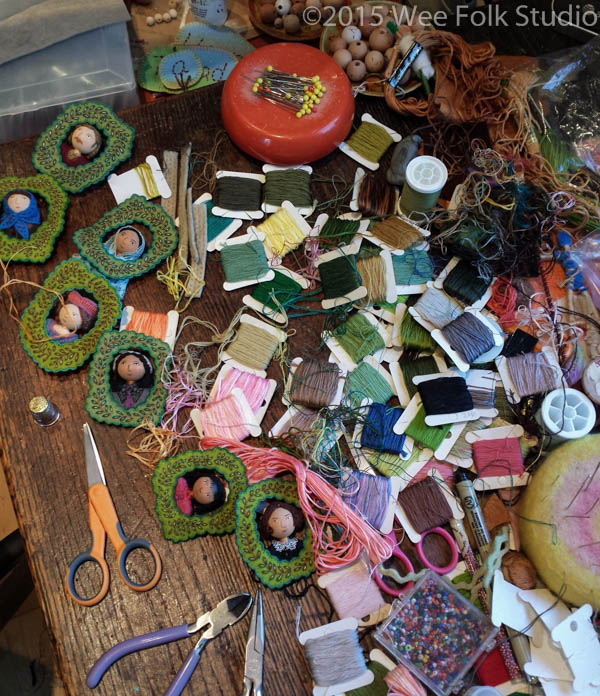
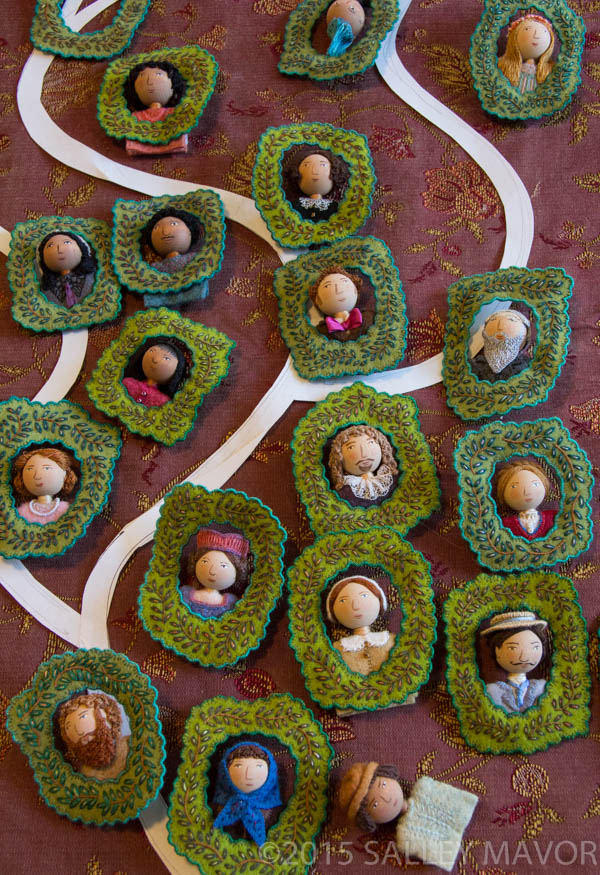
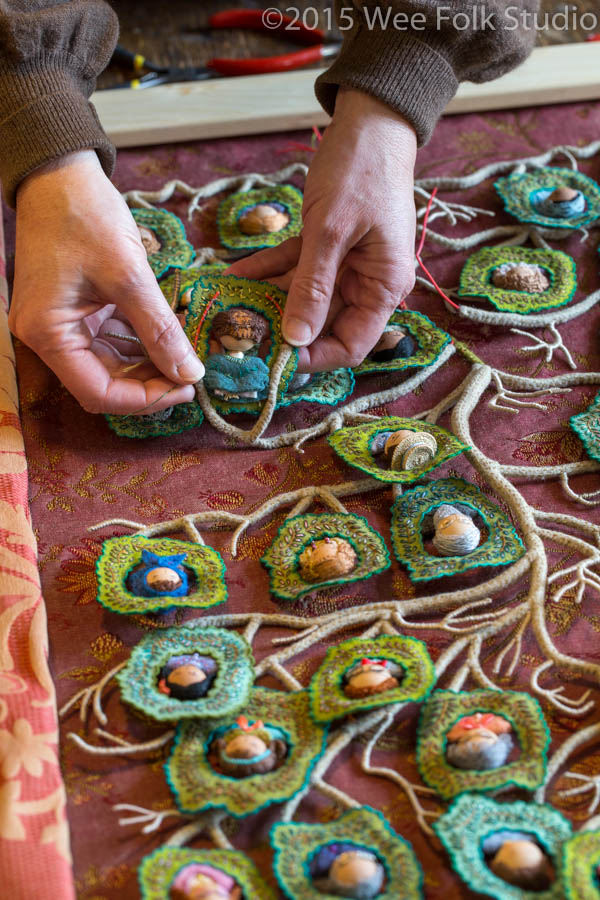
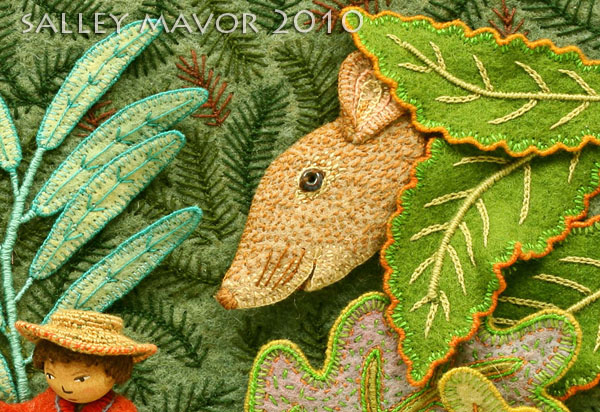
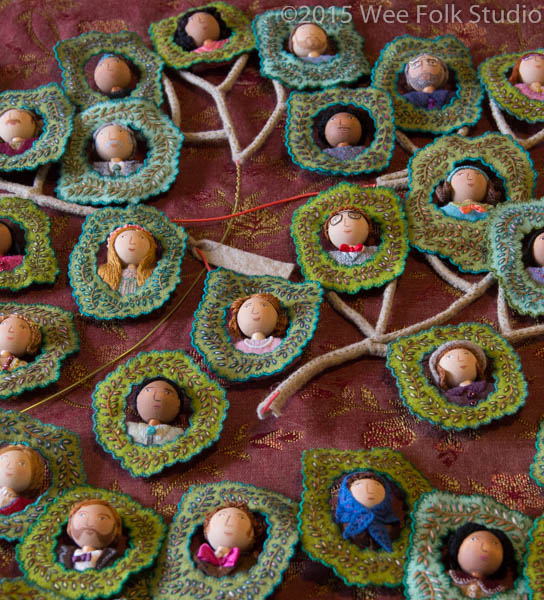
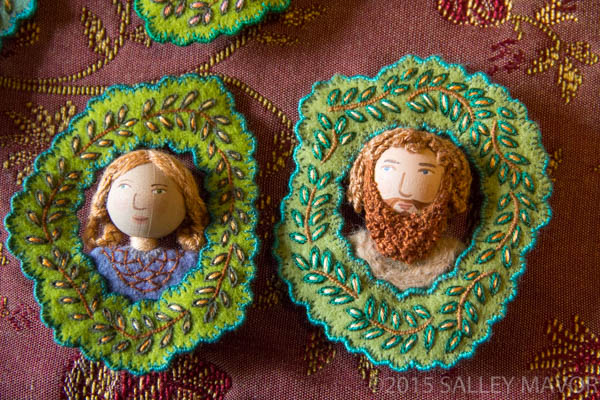
I wanted each character to peek out of their own frame, like cameo portraits. I cut pieces out of felt with scalloped shears and embroidered the edges. This, along with stitching the leaves and stems took many, many hours.
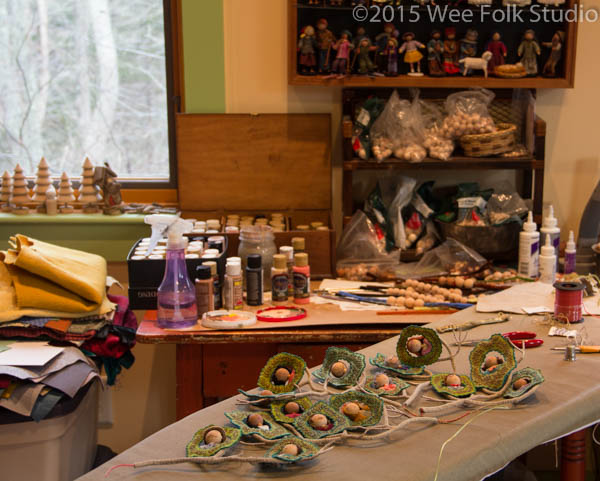
I brought them with me on boat excursions near home…
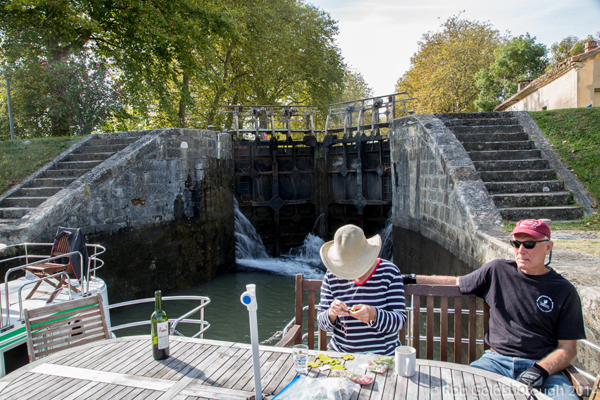
and far away on our canal trip in France. I got a lot done on the plane ride, too.
Finally, all 41 busts had their own wreath-like frame.
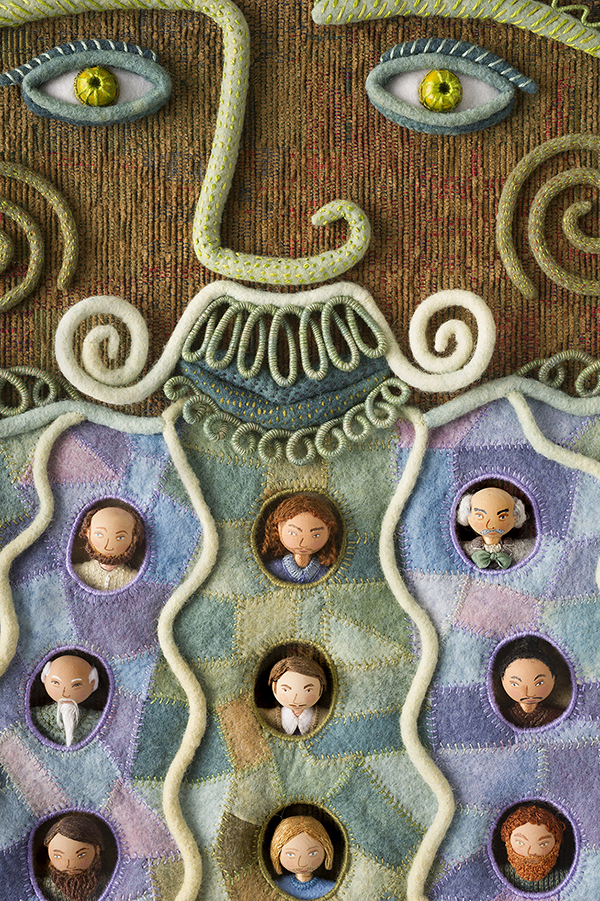
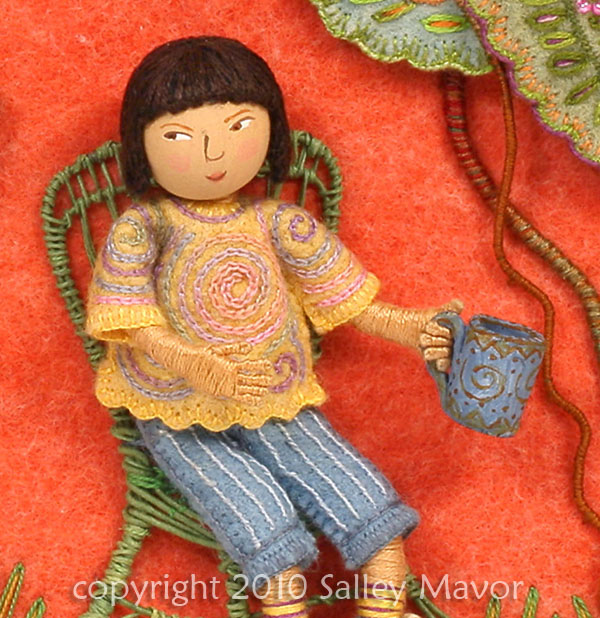
The heads are based on the wee folk dolls in my how-to book Felt Wee Folk – New Adventures. This little lady’s bonnet is made with wire wrapped with embroidery floss.
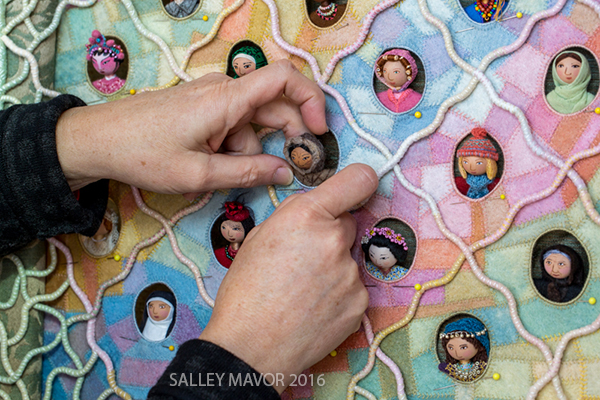
After the wreaths were completed and the busts sewn in place, I figured out their arrangement on tree branches. They would be grouped according to time period, going from the past at the bottom to the present at the top.
To keep up with new posts, please subscribe to this blog. Your contact info will not be sold or shared. If you’d like to see more frequent photos tracking the projects in my studio, please follow me on Facebook and/or Instagram.
About a year ago, my newest piece, Face Time started taking shape. I took pictures along the way, while its collection of little heads grew on my work table. The piece was completed this past winter after about 6 months of work.
UPDATE: Face Time was the first of 3 collective portraits. Cover Up and Whiskers also focus on bringing to life different people from around the world, using themes of history, style and cultural identity. In each piece, head and shoulder busts peek out of “cameo” framed holes.
Cover UpWhiskers
I’m often asked how long it takes to make a large piece like this (24″ x 30″). It’s hard to say for sure, because my days are interspersed with so many distractions having to do with the business side of being an artist. Of course, I’d rather be stitching every day in my studio, but I fear that that would lead to an obscure life, without a presence beyond my studio walls. At least 50% of my work time is spent promoting my art in some way; e-mails, interviews and other publicity, Etsy Shop, editors and publishers, social media, writing blog posts, arranging exhibits, etc. OK, that’s enough of a reality check–shall we stick with the romantic notion of spending all day stitching in a window seat?
I’d like to take you through the making of Face Time, so you can have a sense of what’s involved. If you’ve read my post, When to tell how and when not to, you’ll know that I don’t always show my process, but this is one of those instances when I’ve taken enough photos to warrant a 3 part series. I’m excited to share the new direction my work has taken!
Face Time
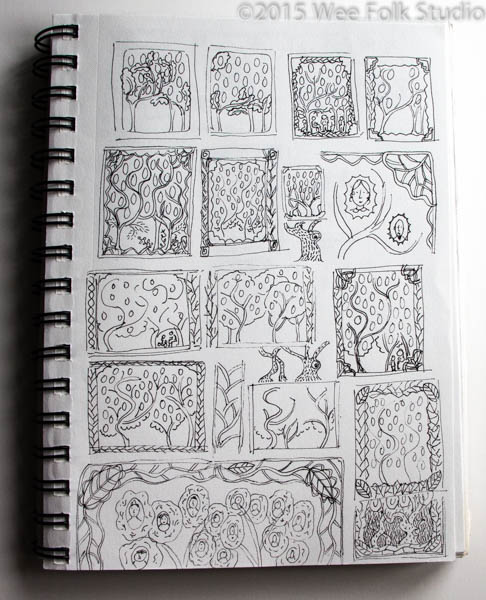
For Face Time, I started in the usual way, thinking about the idea for a long time before jotting down tiny drawings in my sketch book. While I worked, the concept remained strong and constant, while the overall design changed with time. I also considered how the parts will be rendered in embroidery and 3 dimensional needlework.
I wanted to show different people from all over, evolving through time, from long ago civilizations at the bottom, to present day people at the top. I wasn’t so interested in making a personal family tree, but a depiction of a collective heritage. I envisioned a group of faces from a variety of backgrounds and cultures peeking out of the greenery, all linked to a tree-like form.
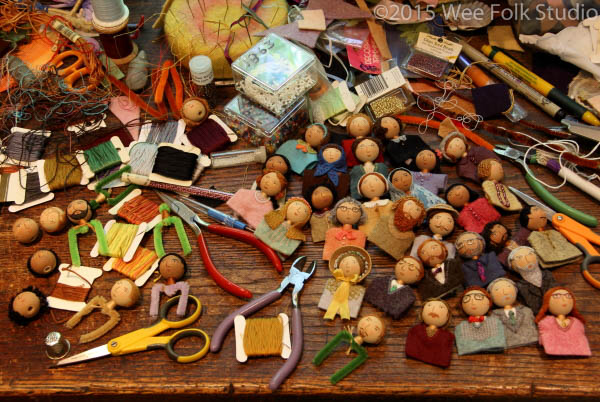
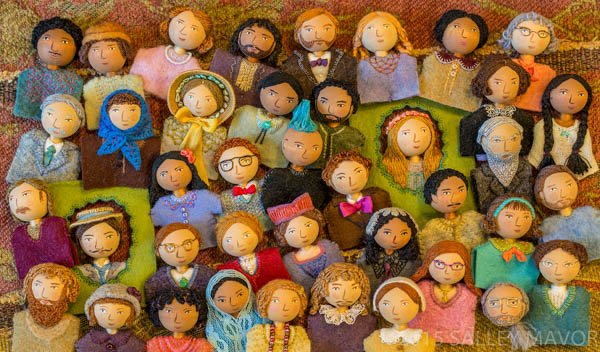
Researching fashion history was very fun! Online, I found pictures of hair styles, beards, hats and garments. In addition to wigs and painted facial features, each wooden head had a bit of clothing showing at the neck and shoulders. They expand on the wee folk doll projects from my how-to book, Felt Wee Folk: New Adventures. Wire glasses were something new, which I thought contributed to the individuality of some characters.
Over a period of many weeks, the heads grew in number, filling my already crowded work table.
There ended up being 41 heads in all, covering many centuries. Here they are, in a group shot, before they were separated by leaves and branches in the finished piece. I will show more about that in part 2.
To keep up with new posts, please subscribe to this blog. Your contact info will not be sold or shared. If you’d like to see more frequent photos tracking the projects in my studio, please follow me on Facebook and/or Instagram.
My Husband and I recently watched the movie “Woman in Gold”. Both of us were awestruck and moved by the true story of a Jewish woman’s fight to reclaim Gustav Klimt’s painting of her aunt Adele (pictured above) that was taken by the Nazis. The movie is beautifully filmed and acted by Helen Mirren, but the real star is Klimt’s powerful painting, which serves as the centerpiece of this drama about family heritage, national identity, justice and the long-lasting devastating effects of WWII.
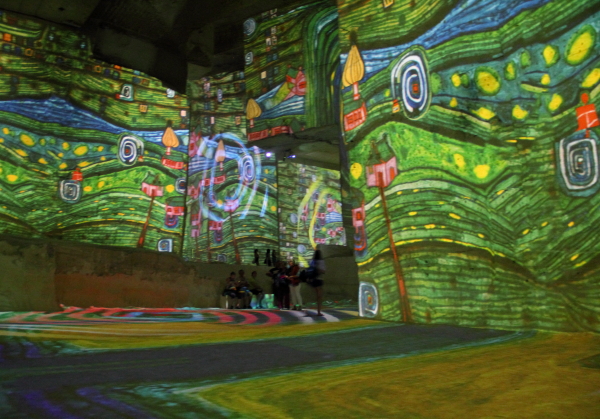
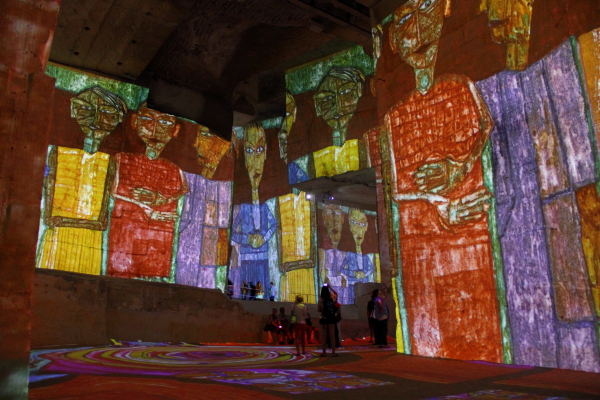
Seeing the movie reminded me of an amazing exhibit we saw last year in Provence at the Carrières de Lumières. My photos give a sense of the scale of the cave, but they don’t sufficiently convey the powerful experience of seeing images from Klimt’s paintings projected on every surface inside, from under foot to over head. The scenes constantly moved to music, evolving from one image to another. Klimt’s iconic patterns were everywhere, surrounding and enveloping the viewers, who wandered around, room to room, dwarfed by the huge interior walls. I felt like I was inside his paintings. Every year, they feature a different artist’s work and I feel lucky to have seen this special production in 2014!
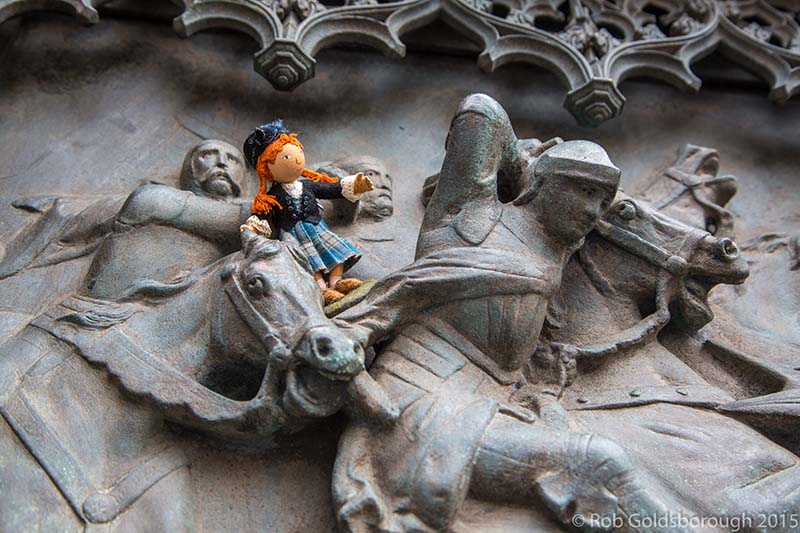
While walking the Royal Mile in Edinburgh, Polly came close to being stepped on by John Knox and saw musicians playing under the gaze of Adam Smith.
Polly atop a wee head of hair in a garden outside of Glasgow.
King James V looks down from Stirling Castle.
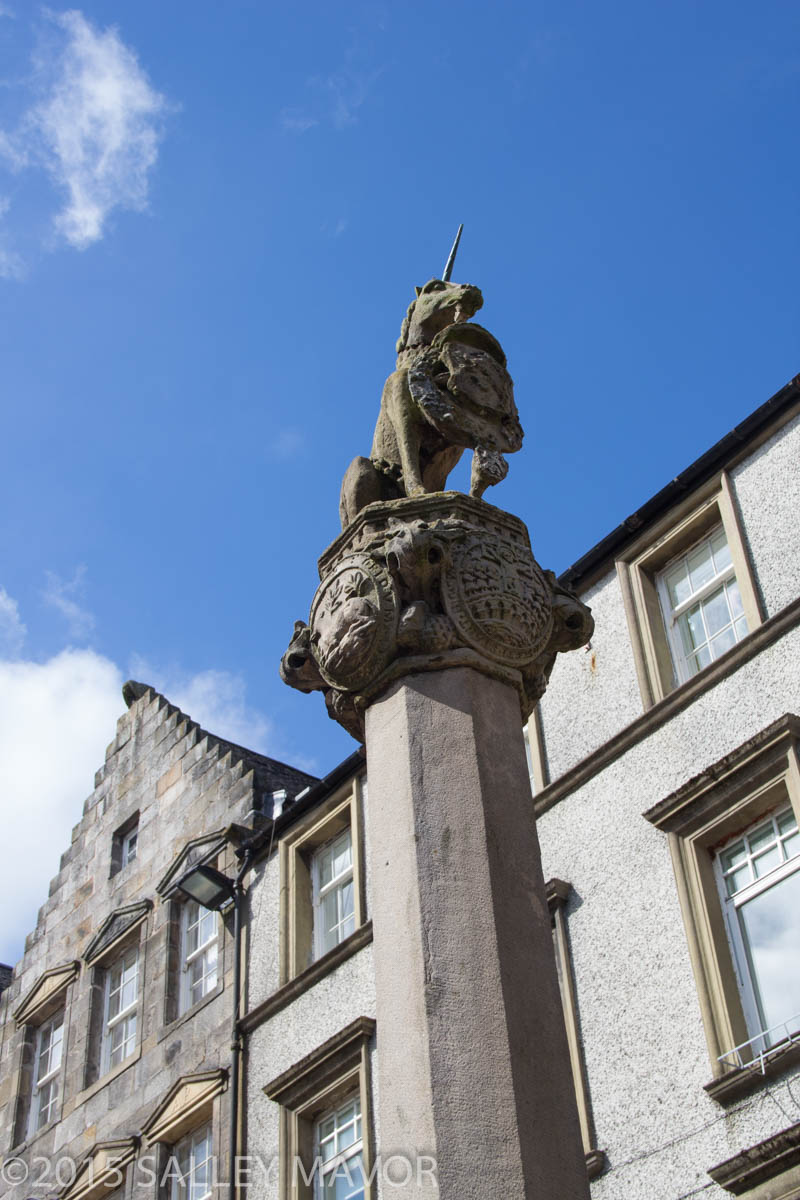
A unicorn pointing high from a street in Stirling.
Polly meets some friends and gets into the action in Edinburgh.
A majestic deer in Edinburgh.
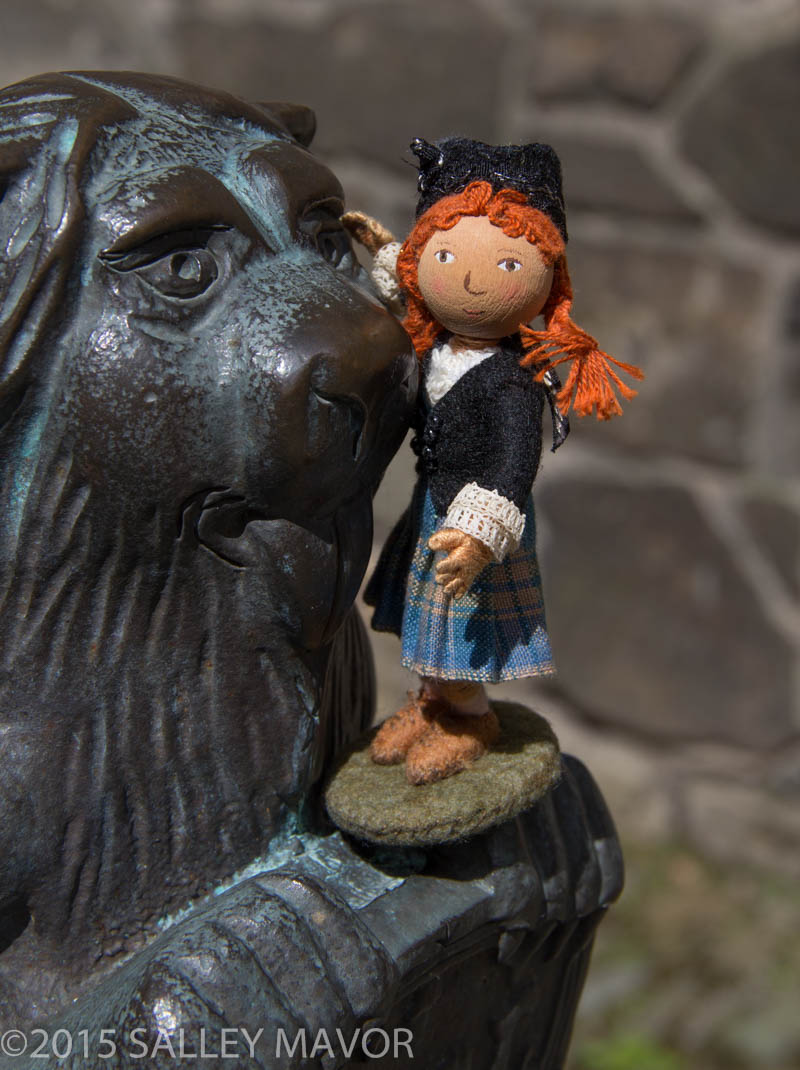
Polly pets a lion at Edinburgh Castle.
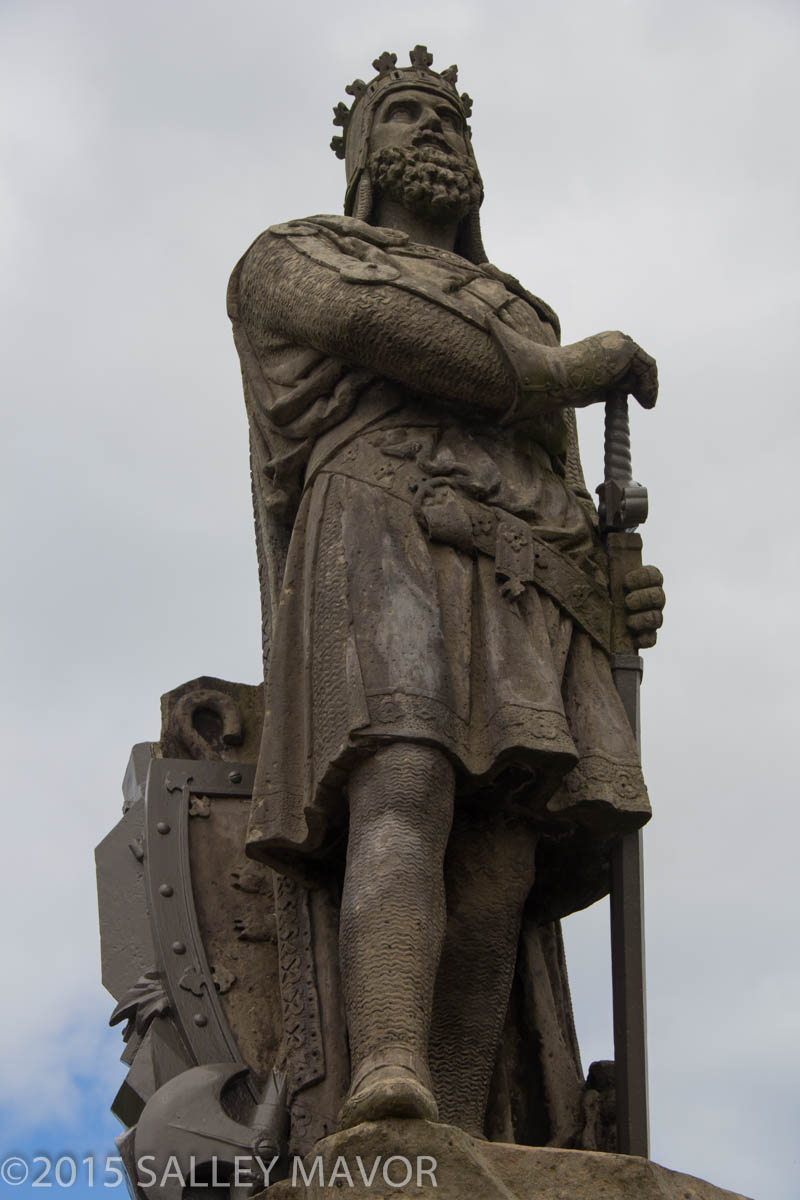
And steadfast Robert the Bruce guards Stirling Castle. See all of the archived posts with Polly Doll here.
To keep up with new posts, subscribe to this blog (top right column on the home page). Your contact info will not be sold or shared. If you’d like to see more frequent photos tracking the projects in my studio, please follow me on Facebook and/or Instagram.
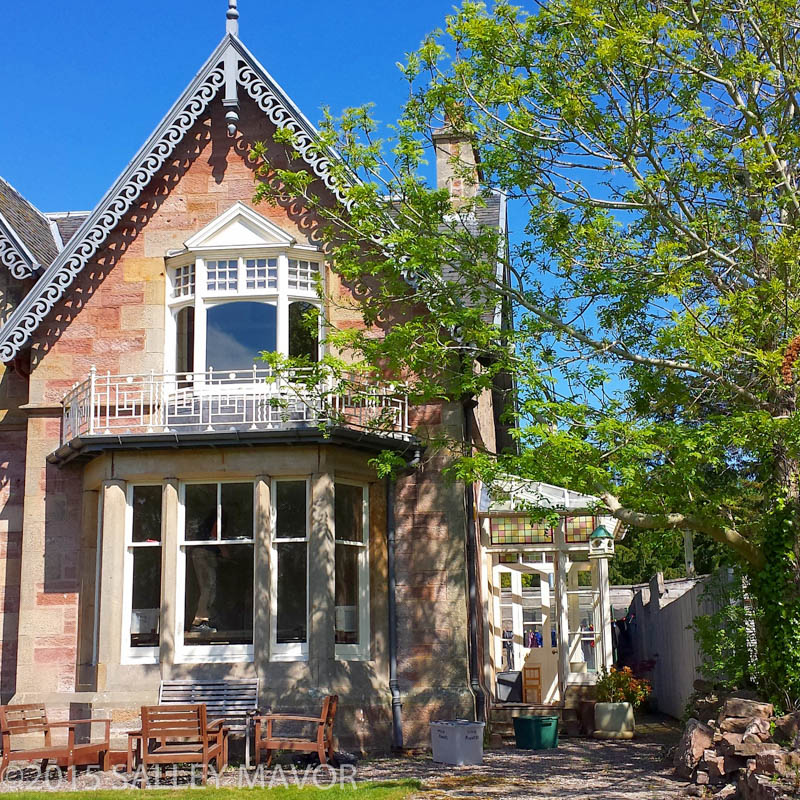
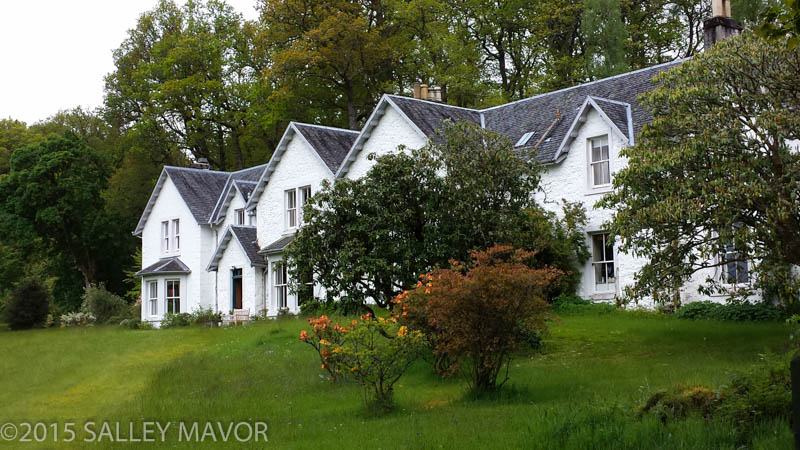
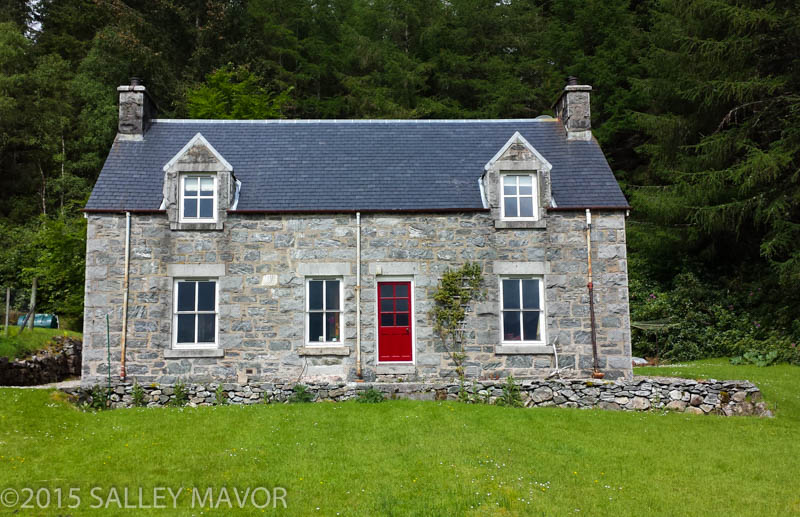
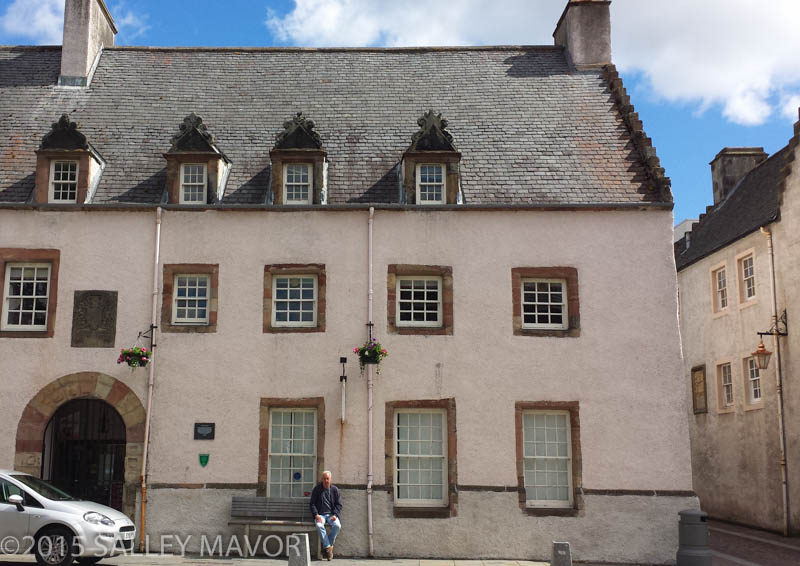
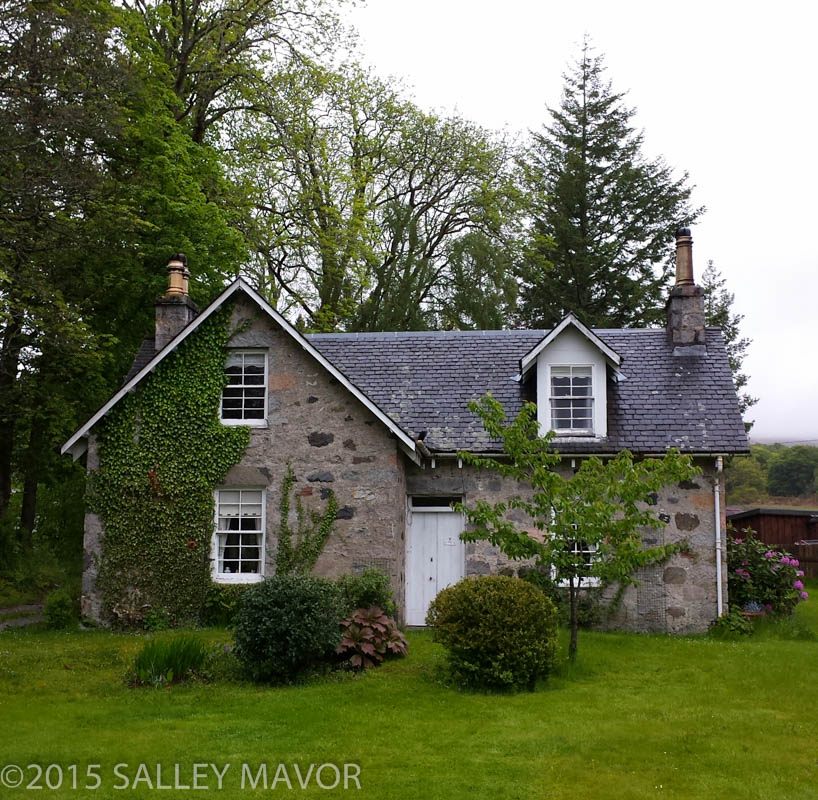
Coming from the land of cedar shingled cottages, it’s quite a contrast to see Scottish houses, which are all made of brick, stone and slate. I love their solid stance, with a touch of whimsy showing in the windows and roof lines. These photos were taken in the towns and villages along our hiking route in the Highlands.
I am pleased to announce that the Pocketful of Posies Exhibit is traveling to the southern United States! About half of the original embroidered illustrations from my book (28 pieces) will be displayed in Maryland and South Carolina for the next 6 months.
The show has traveled to over 20 locations since the book was published 5 years ago. I am happy that so many people around the country have had the chance to see the detail and sculptural quality of the originals. No matter how excellent the photos are, there’s nothing like seeing the real thing! I’m sorry that many of you who live far from past and future venues will miss this opportunity.
At this point, I’ve moved on to new projects and will no longer be personally searching for new exhibit locations. There will inevitably be suggestions to “please bring the show to my city”, but I am not in a position to make that happen with the wave of a wand. Unfortunately, I have found sending out proposals to seemingly appropriate venues ineffective for the most part. All that said, inquiries from museums, art centers and libraries who would like to host an exhibit are always welcome! That’s how many of the shows have come about, including the next 2. So, the exhibit may or may not continue to tour beyond this winter, depending on the interest from suitable venues. Also, the collection is slowly dwindling as pieces sell, so the touring exhibit will eventually come to an end.
For now, I’m excited to have my work shown in the mid-Atlantic area and as far south as western South Carolina. Perhaps we will meet when I give a talk in Greenville, SC on Nov.19th! See the schedule with links below:
Oct. 17, 2015 – Feb. 28, 2016 at the Upcountry Museum – Furman University, Greenville, South Carolina. Artist talk with Salley Mavor ~ Thursday, Nov. 19th at 7:00 pm.
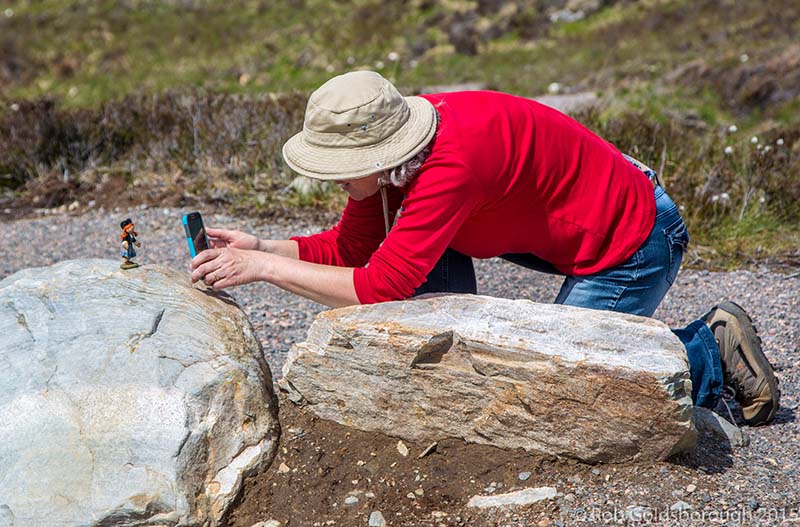
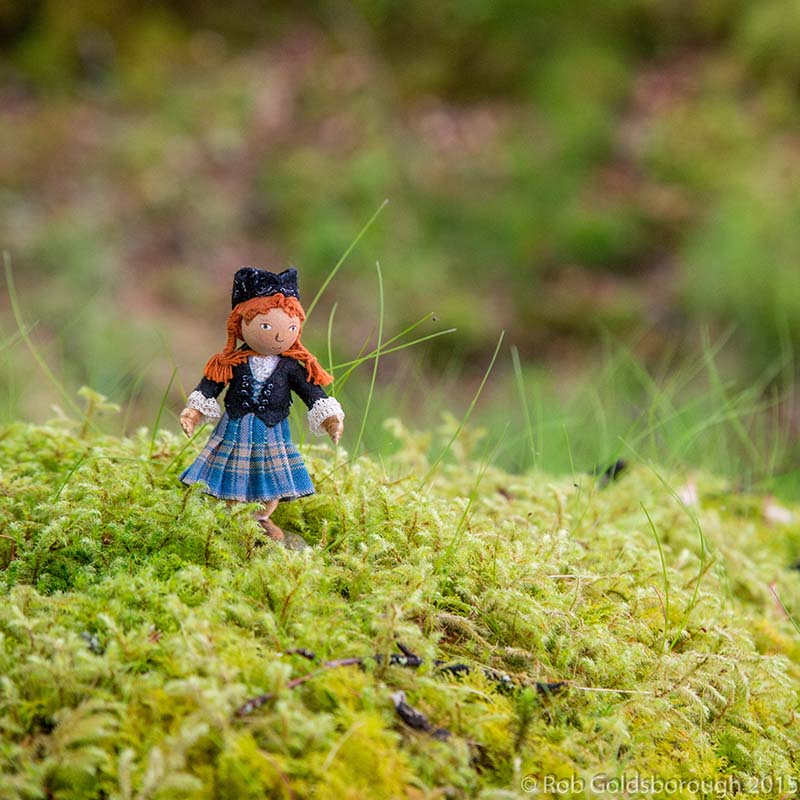
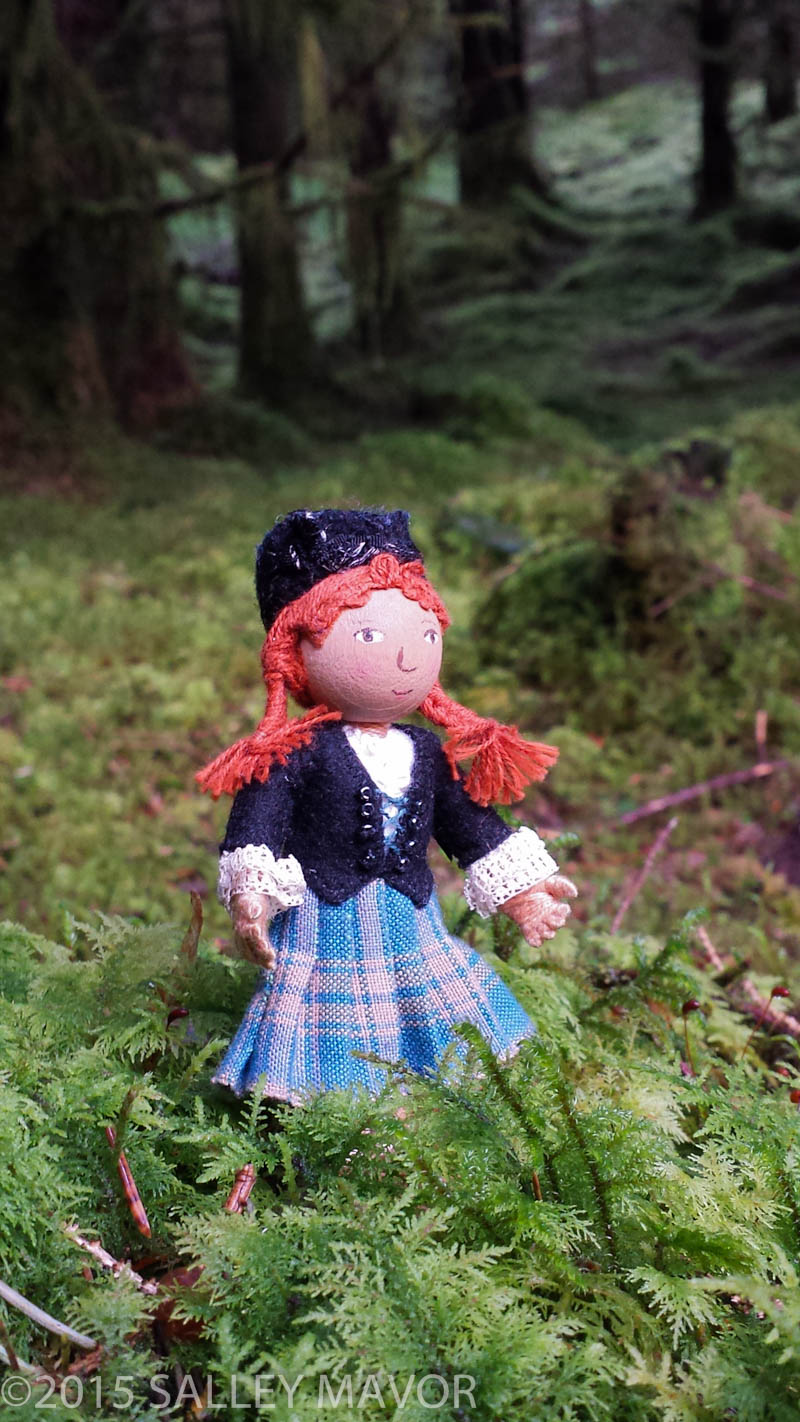
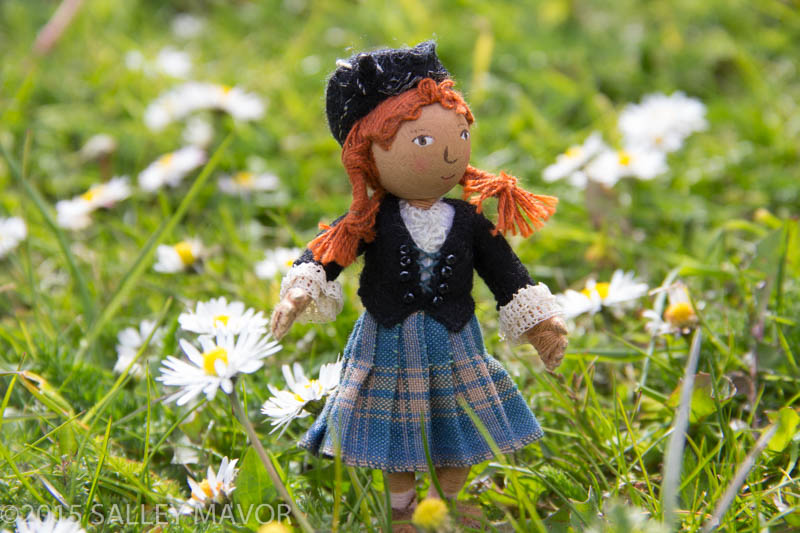
Polly doll came along on our trip to Scotland. She had a Highland dancer’s costume made for the occasion, complete with a Glen Garry bonnet. Yes, I know her kilt is not authentic in front, but she insisted on having it look more like a pleated skirt. I took her picture along the way, sometimes with my cell phone for Instagram, like the one at Urquhart Castle (above). The other photos were taken by Rob or me with a fancy Canon camera.
Wild mountain thyme was everywhere!
Polly learned the history of the Scottish Regiment in a museum display at Stirling Castle…
and admired the lush mossy ground.
She visited Edinburgh Castle…
stood amongst the flowers…
and peeked inside a cabinet at Argyll’s Lodging in Stirling.
Polly posed next to a primrose growing along the Great Glen Way…
and atop a bonny lass’s head in a garden near Glasgow.
To keep up with new posts, please subscribe to this blog (top right column on the home page). Your contact info will not be sold or shared. If you’d like to see more frequent photos tracking the projects in my studio, please follow me on Facebook and/or Instagram
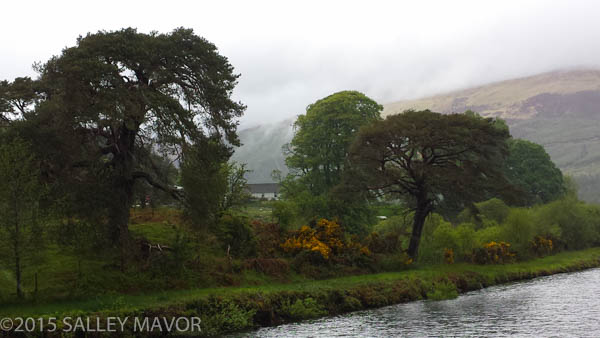
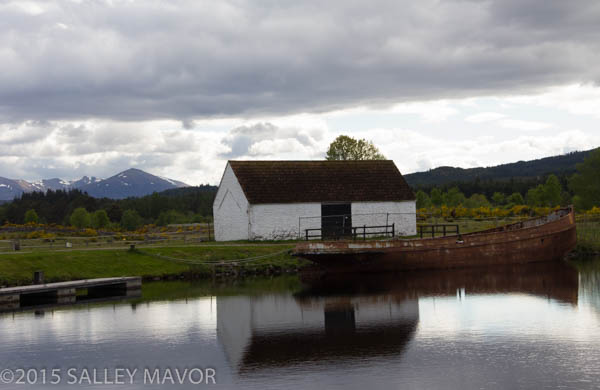
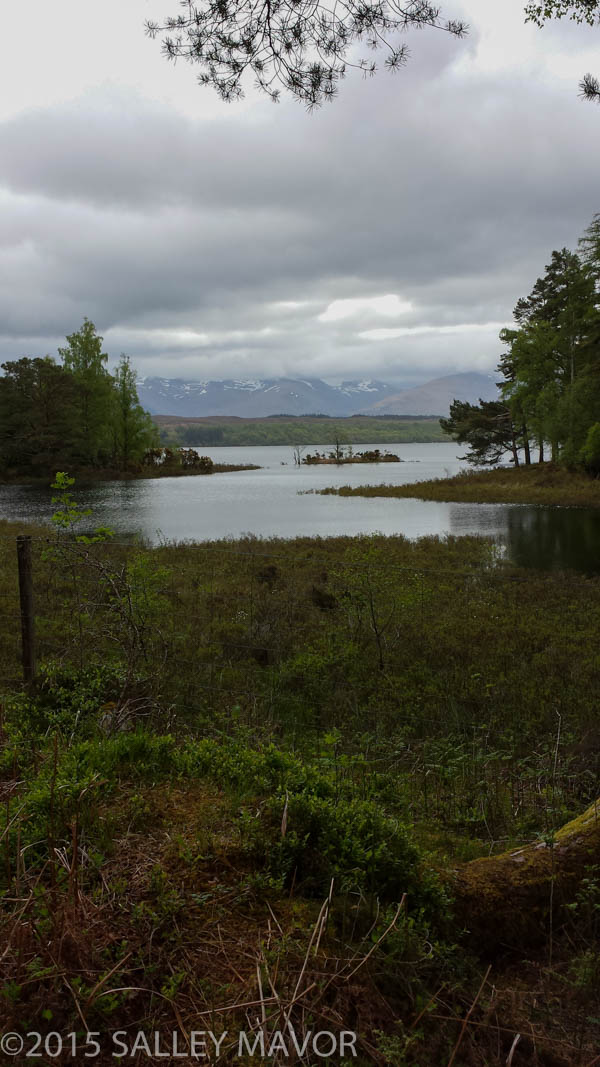
We hiked the Great Glen Way through rain, fierce wind, fog and occasional sunshine. Every day, the scenery along the Caledonian Canal, from Fort William to Inverness was different and magnificent. Except for the iconic Urquhart Castle on Loch Ness (below), I have trouble remembering exactly where most of these photos were taken, but they are located somewhere along our route. I hope that you enjoy the tour!
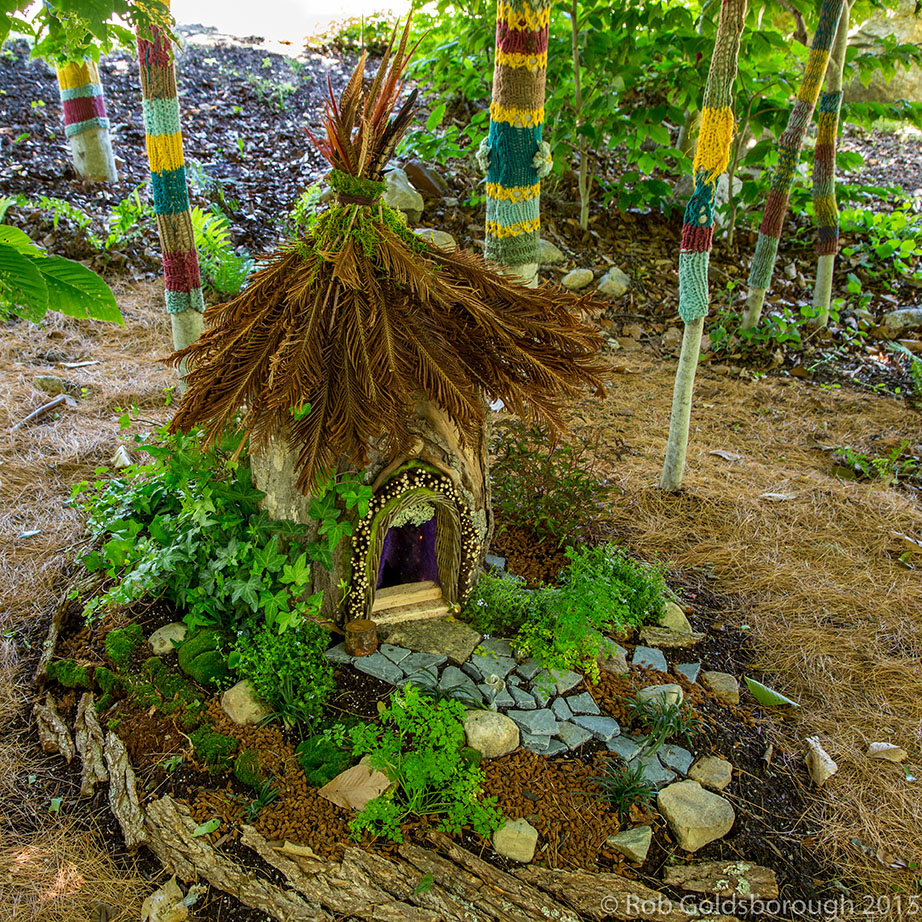
This year’s Fairy Houses of Highfield Hall exhibit is larger than the 2013 show and it will be on display longer, too. The houses are holding up quite well and we’re confidant that most structures will stay intact until the closing on August 31st.There have been some instances of eroding moss and hot glue not holding parts together well enough, which backs up my personal bias against glue guns! But, the fairies have made repairs and are doing their best to keep up the neighborhood.
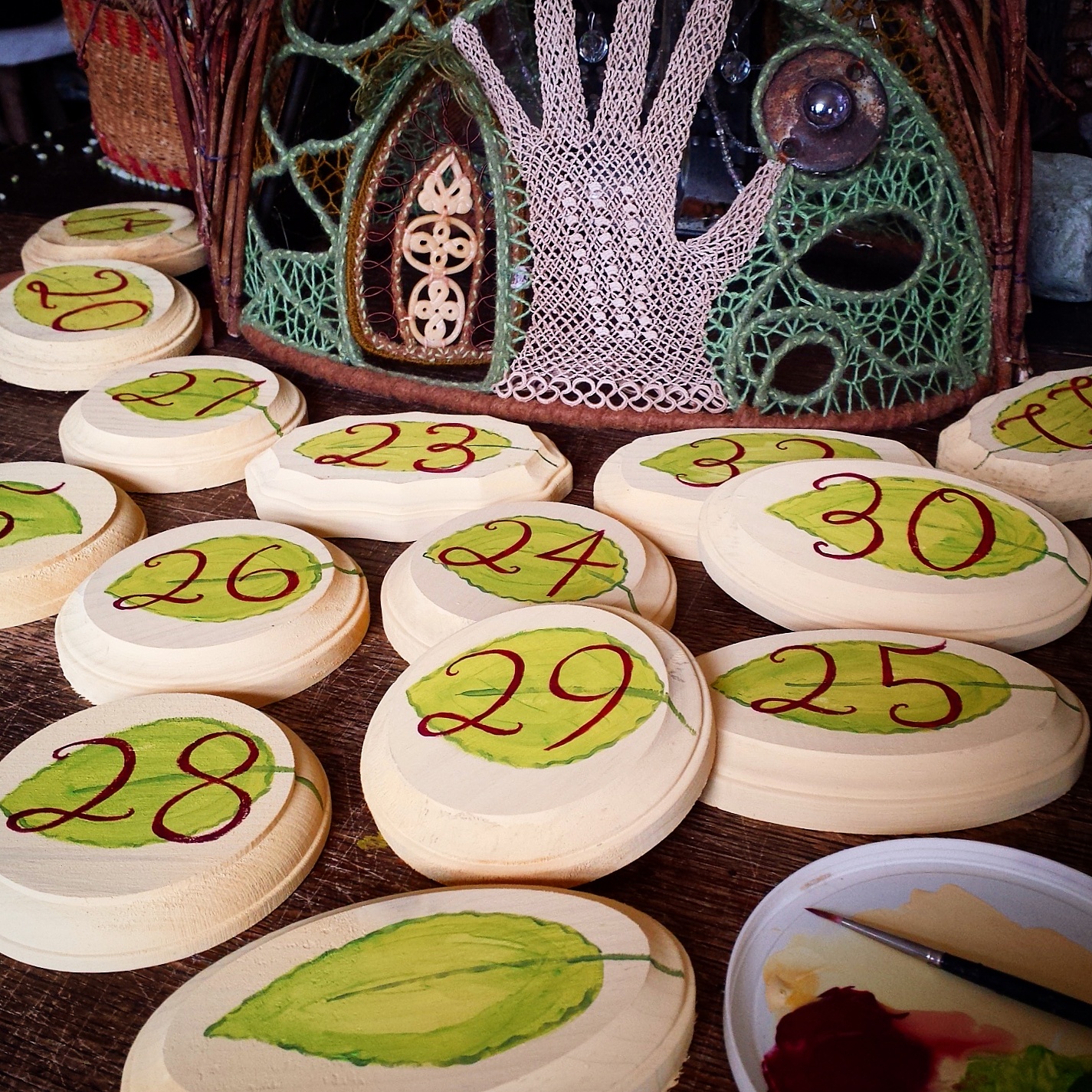
Each fairy house has a number, so visitors can identify the 32 locations around the Highfield property. Maps, with a list of house names and their makers are available inside during open hours. I hope that more of you can come see the show during its last month. A printable pdf file of the map is here.
Highfield Hall Open Hours: Mondays – Fridays, 10:00 am – 4:00 pm Saturdays & Sundays, 10:00 am – 2:00 pm. Grounds are accessible from dawn to dusk, except during private functions For this year’s collection, I painted 10 more markers to make a total of 32. Earlier this summer, I took pictures of some house builders setting up their creations.
Nicole St. Pierre – Enchanted Baa Baa Hollow Cottage
She also planted miniature succulents around the base.
Nicole St. Pierre – Enchanted Baa Baa Hollow Cottage
The fairy family raffle for the benefit of Highfield Hall will continue until August 30th, so there’s still a chance to win! You can buy 3 tickets for $5.00 online here.
Throughout Scotland, the building materials of choice are stone, with slate roofs.The rooftop scene above was taken from Stirling Castle. And just a short stroll down toward town is Argyll’s Lodging (below).
Argyll’s Lodging
This joining of metal and slate roofs was in a village along the Caledonian Canal.
Chimney pots and pointy roofs with finials added a bit of whimsy to the solid structures. The rest of the photos were taken in small towns in the Highlands and in Inverness.