Wee Folk centerpiece

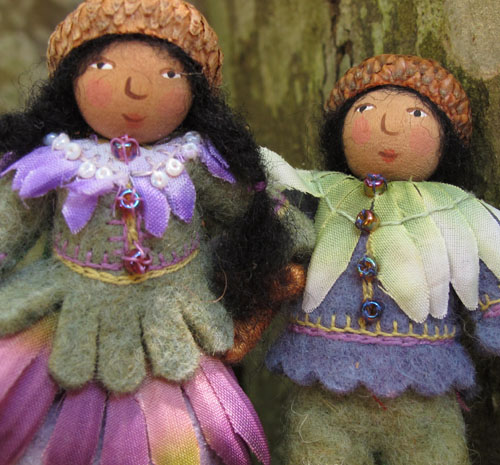
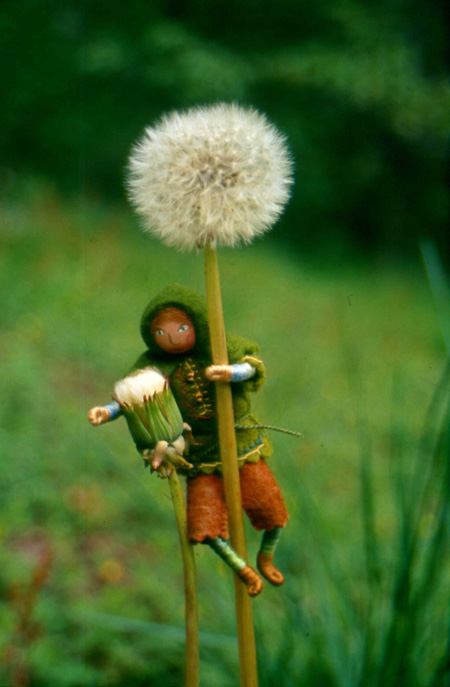
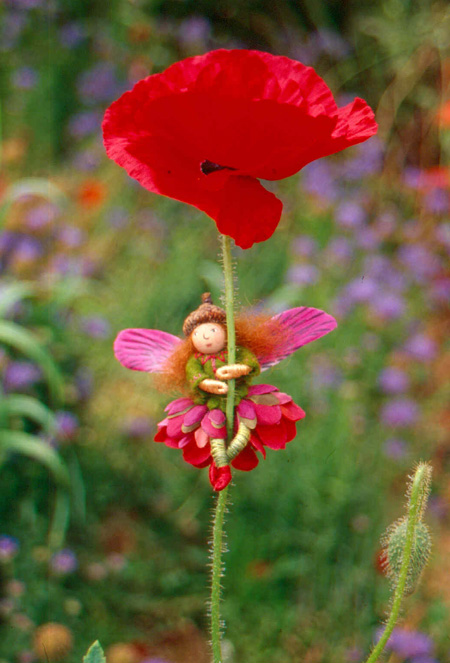
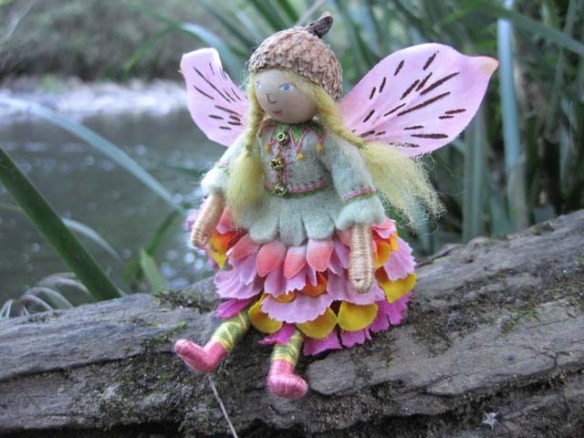
In the last post, I mentioned making a centerpiece for the Pocketful of Posies book release party at Highfield. Since I forgot to take pictures of the finished setup, here are some shots taken during the construction phase. Many of the dolls were models for projects in my how-to book Felt Wee Folk: Enchanting Projects and were unearthed for this event.
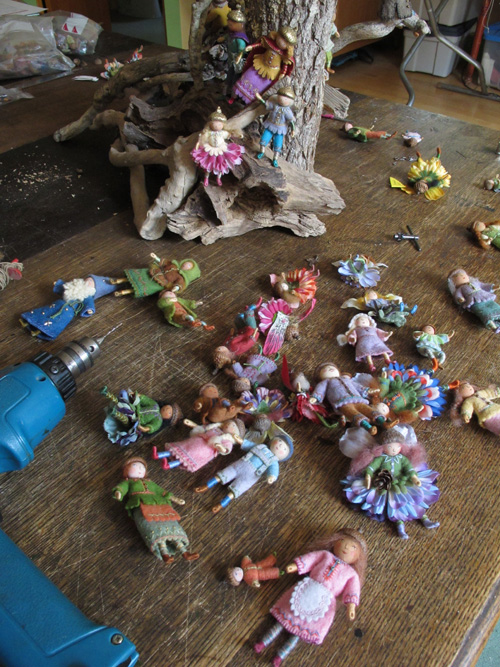
I arranged driftwood and logs that the wee folk could sit on and climb up. Old, dried up bayberry bushes, with their compact spread of small branches make good wee folk scale trees.
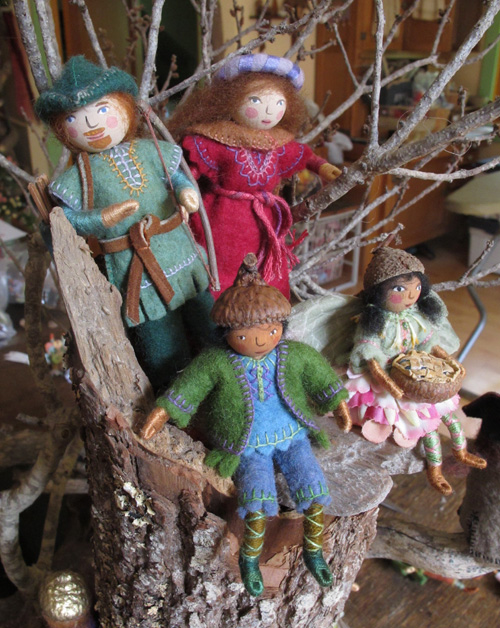
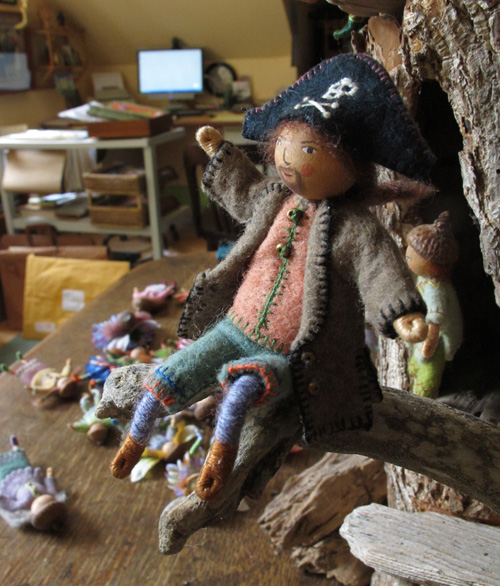
I drilled holes in the wood for small screw eyes, which served as anchors for the dolls. I felt like a prison guard, shackling their tiny ankles and tying their waists to the screw eyes with wire. But, it was to protect them from easy escape into the hands of big folk.
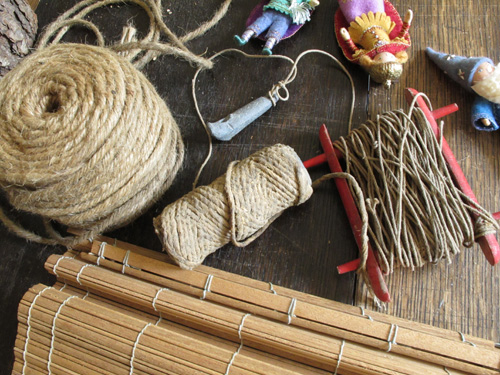
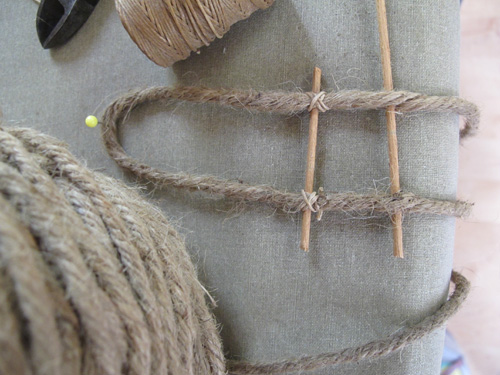
One vertical log needed a rope ladder, so I gathered some possible materials; jute rope and twine, old fishing line, a woven wooden slat place mat .
I selected the fatter jute rope and pulled out a wooden slat from the place mat. To make the rungs, I fed broken off wood sections through the rope and lashed them in place with an improvised knot. I wished we had learned knot tying in girl scouts. You never can tell when you’ll need outdoor survival skills!
Here’s Jack climbing up the finished rope ladder. See Jack climbing the bean stalk here.
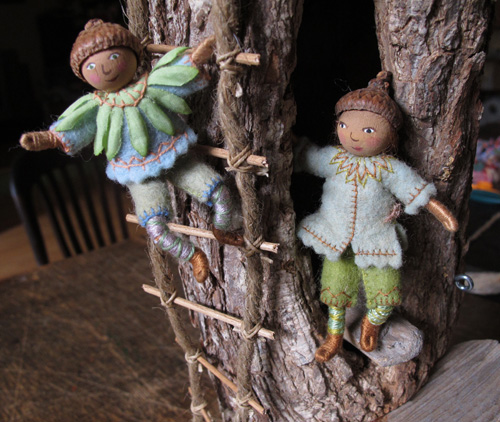
Here are some characters from Felt Wee Folk.
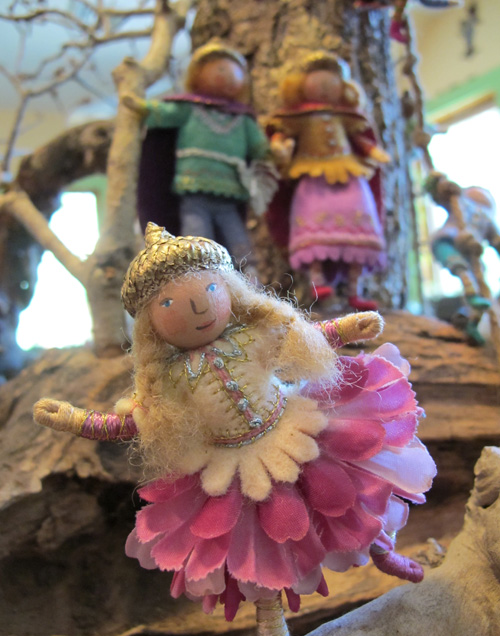
Princess from “Felt Wee Folk: Enchanting Projects”

Jester from “Felt Wee Folk: Enchanting Projects”

Hansel & Gretel and the Witch from “Felt Wee Folk: Enchanting Projects”

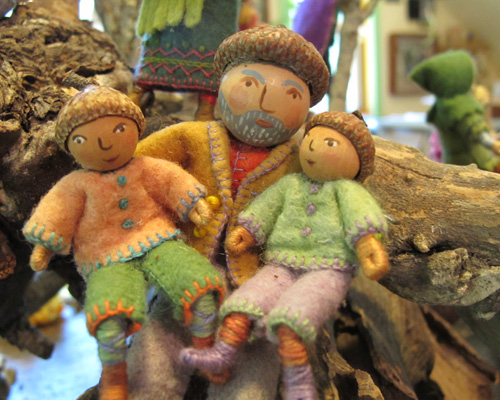
And a grandpa with his grandchildren. It sure was fun playing with these dolls again and bringing them on a short outing to my exhibit at Highfield.
Pocketful of Borders: Ring around the Rosie

The one woman border stitching factory is running double shifts to get the illustrations finished and framed in time for my Pocketful of Posies traveling exhibit, which you can read about here.  This one is from the page for the rhyme “Ring around the rosie”. The border turned out to be much more involved than I planned and took several days to complete. From now on, I can’t afford to play around, trying out different approaches for each piece. It’s time to get serious. My goal is to complete one a day, so I’ll have all 51 ready by mid Sept., when we hang the show.

I picked out some upholstery fabric for the background and then chose the felt border colors.

I like to lay out different skeins of pima cotton from the Caron Collection next to the artwork and pick a color scheme that matches.

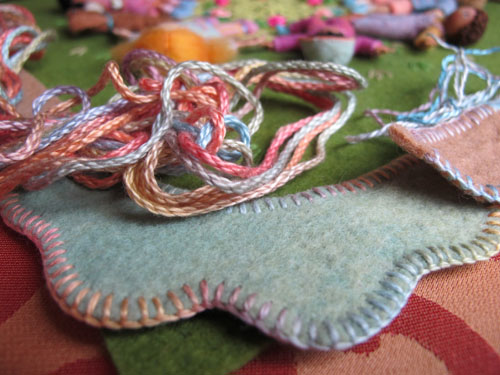
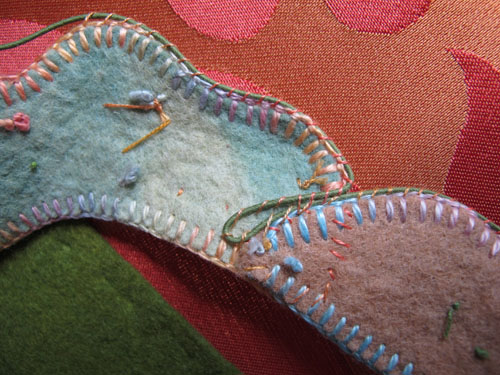
Then I edge the border pieces with a blanket stitch.

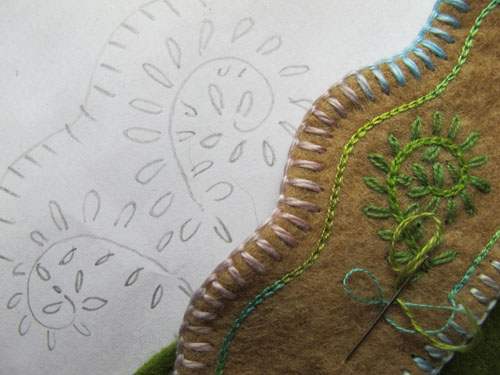
There’s a lot of open green space around the dancing figures in this illustration, so I thought that the border could take some embellishment. I did a little sketch of some leafy curled stems and embroidered them.

One thing led to the next and before I knew it, I was filling the leaves with orange floss and scattering french knots around like confetti.

When I put the finished border piece next to the artwork, it looked too busy and the many colors detracted from the circle of characters. It was clear to me that the first try didn’t look right and instead of wasting time trying to make it work, I quickly moved on. I put it aside and decided to make another design that was still embellished, but was limited to green chain stitching.

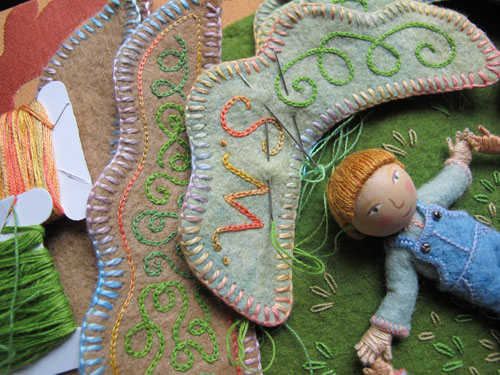
They were true doodles, done free hand, with every border section different. That way, I don’t have to plan it out and repeat exactly the same design for all 4 side pieces. Also, without a set pattern, the border more accurately reflects the lighthearted and uninhibited mood of the characters.

I then embroidered the date and my initials on the bottom corner pieces.

And continued doodling…

After sewing the side and corner pieces together to make a square border, I thought that it needed a little lift off the surface, so I added some wire around the outside edge.

Later, after I’d sewn the wire all around, I realized that I should cut and adjust the wire to conform to the curves of the corner pieces.

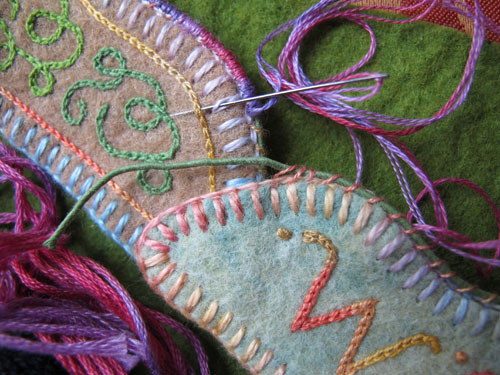
I then covered  the wire by wrapping it with variegated embroidery floss.

And to help define the form, I slipped some wire through the stitches on the backside of the inside edge, like a underwire bra.

Now, I sewed the whole wire supported border to the artwork and bent waves into the outside scalloped edge.

I’m half way through making the borders, with about 25 to go! I’ll try to remember to pause and take pictures as I go, but know some steps won’t be documented because I’m so intent on finishing this project.

Note: See other posts from the Pocketful of Borders series here.

Rose Hips

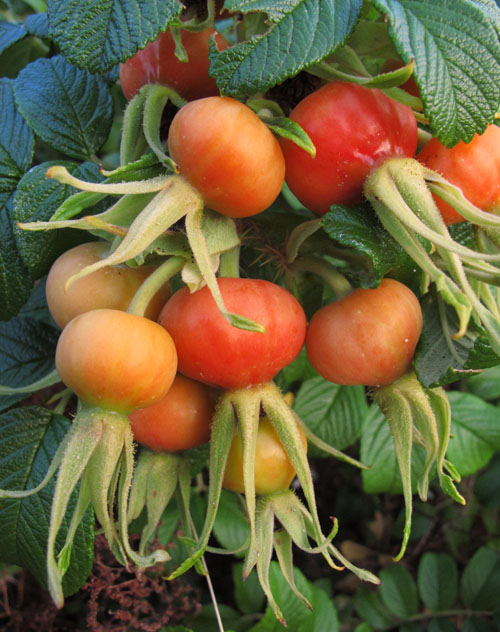
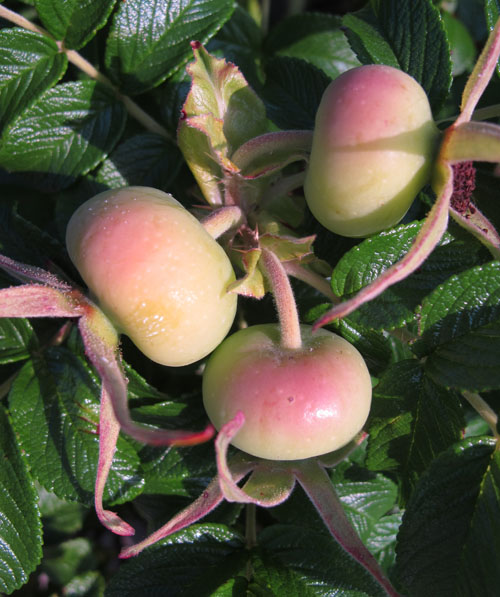
Rose hips are everywhere this summer.  The rosa rugosa plants are not native, but brought over from Asia hundreds of years ago. They love our climate and grow like weeds along the bike path, on road sides and along the edge of the beach. First, they bloom with the most brilliant deep pink flowers.

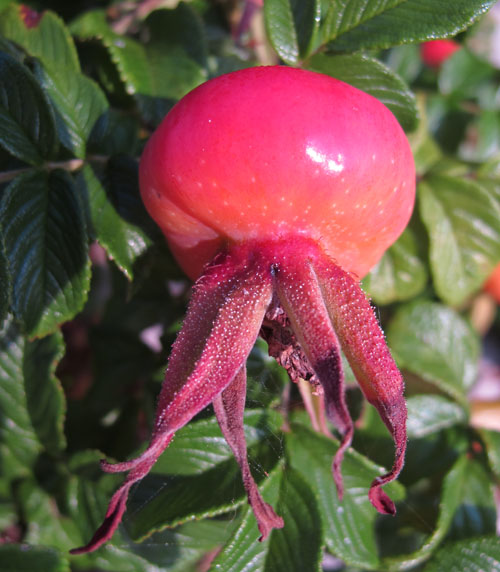
And then form rose hips that look good enough to eat, although they don’t taste very good. Years ago, I made the mistake of calling these beach plums (which are a totally different edible fruit), but the “botany police” corrected me.

They turn wonderful shades of orange and red and look as exotic as sea creatures, like mini octopi.

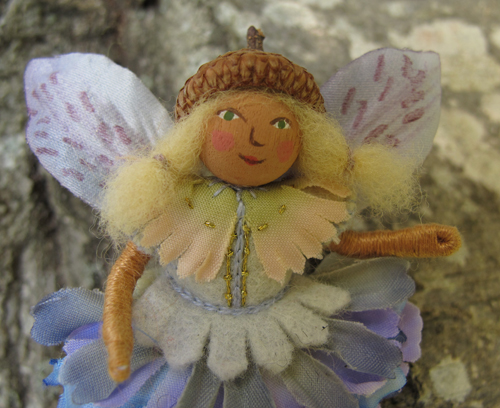
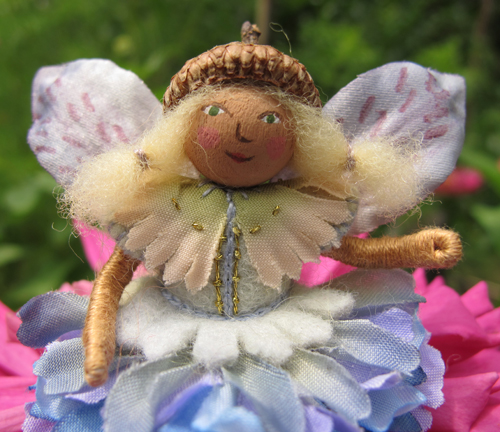
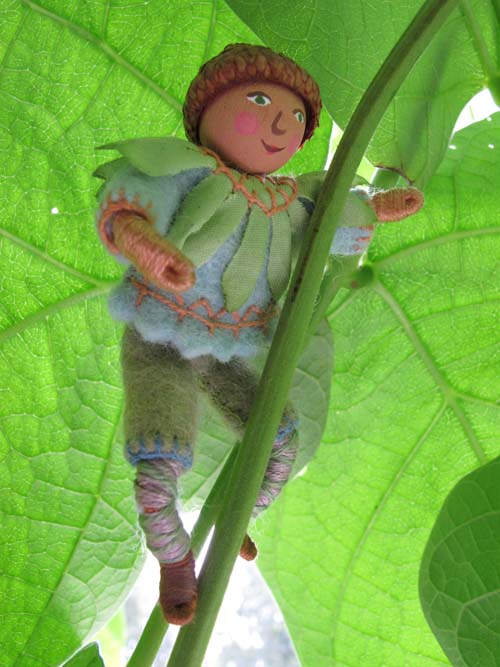
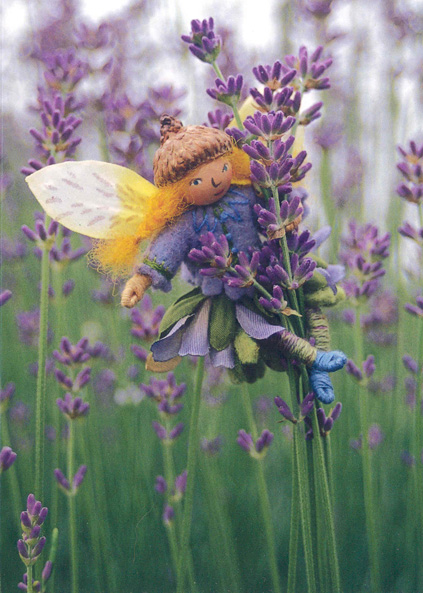
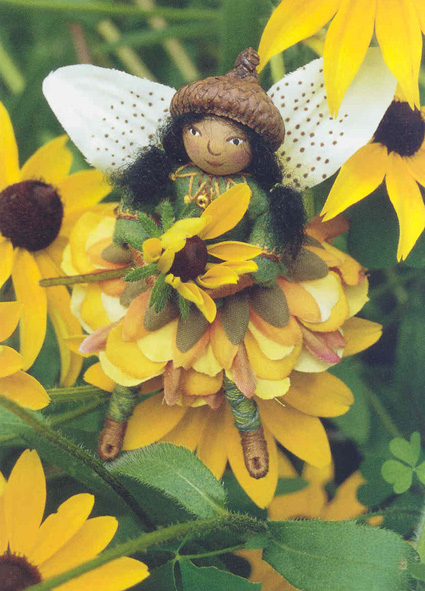
This fairy is in my how-to book, Felt Wee Folk .

Wee Folk: Pearl & Urchin

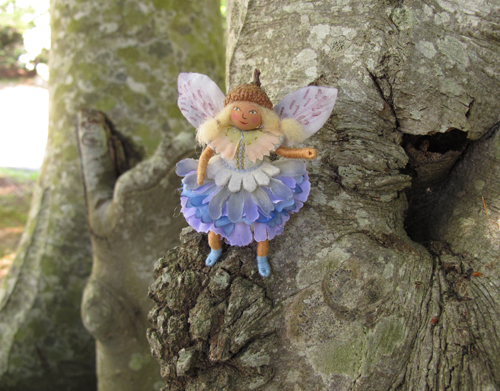
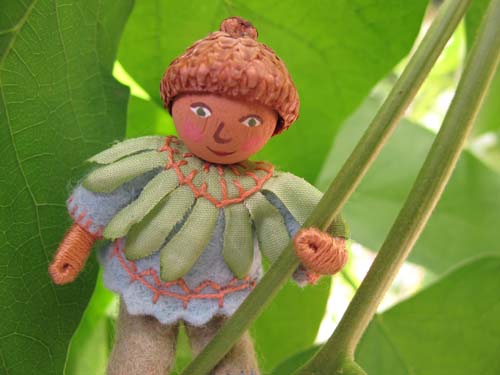
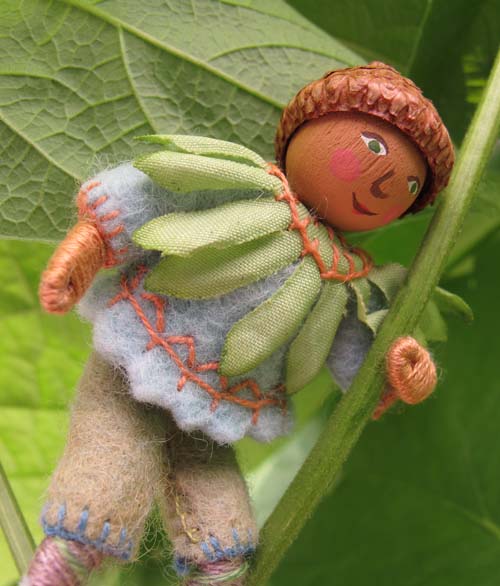
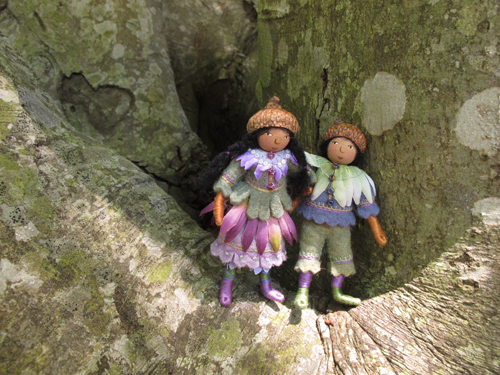
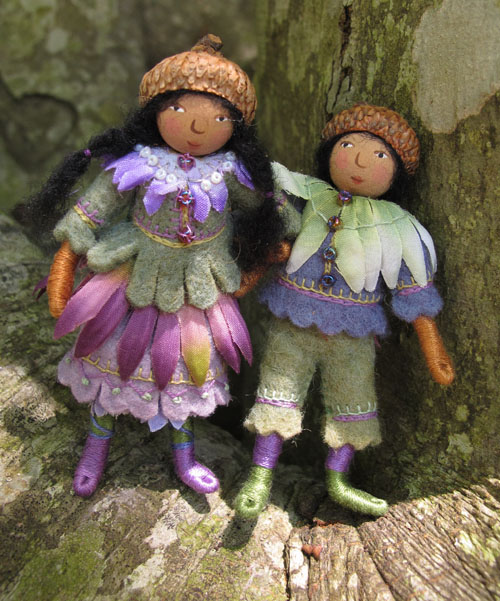
I took Pearl and Urchin out for a climb up a beech tree. They patiently waited and stayed still as I took their picture. We were all quiet as I played with my camera, adjusting the aperture and speed settings.

I suppose you could call Pearl and Urchin “retired”, a term used in the collecting business for sold out. They were the models for a Ltd. Edition and there are 25 other pairs out in the world. After a few years spent sealed in a plastic bag, I thought they could use some fresh air.
dolls’ new home in Australia

Lucinda Hooper sent me these photos of some Ltd. edition dolls which I sent to her in Australia. It’s fun to see Dahlia and Bud & Ivy settled in their new home on the other side of the world.
Dahlia, Bud & Ivy with Mimi Kirchner’s tiny world pin cushion

The dolls feel at home with Mimi Kirchner’s tiny world pin cushion, which also found its way from Massachusetts to Australia. See more of her pin cushions in an earlier post here. Thank you for sharing these pictures, Lucinda!

Dahlia sitting by a river in Australia

Bud & Ivy with a “river stone” cottage made by Lucinda’s Mum

Close-ups (mushrooms)

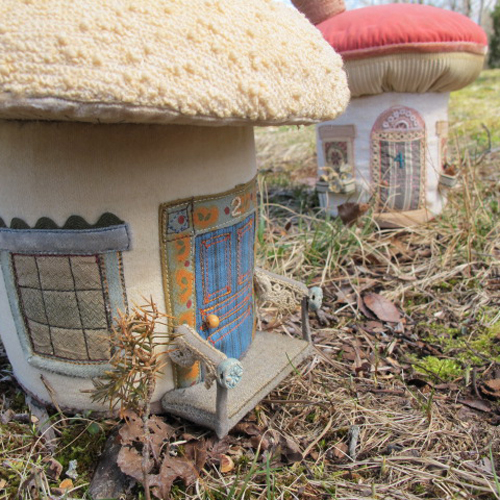
Ah, the fascination of mushrooms, with their bizarre, alien quality. This group includes some real mushrooms I found and used as props and some I made.  The first photgraph is of some mushroom houses that I made for a scene that was used in an educational reader illustration in 1979. To see more mushroom houses and read about the story in another post go here.

mushroom houses, 1979

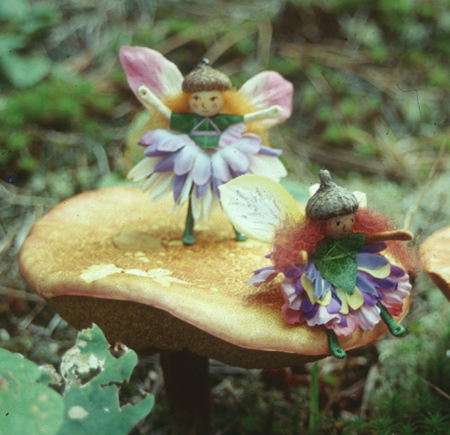
 Skip ahead 20 years to this photograph, which shows some of the first Blossom Fairies that I offered as kits in 1999.

Blossom Fairies on a mushroom, 1999

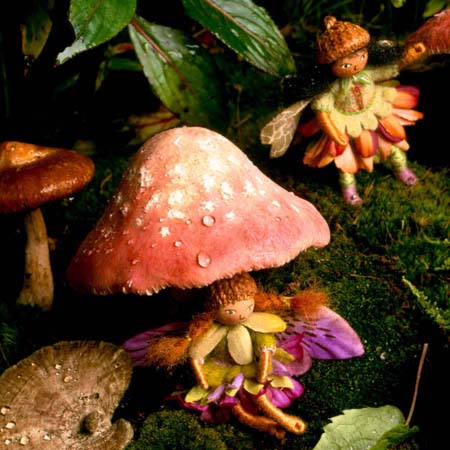
  This is a pair of wee folk sitting in a cluster of mushrooms that were growing so fast that I had to run home and get my camera before they changed shape.

Wee Folk under mushroom, 2002

 I molded the next mushroom from clay, glued kid leather on top and painted the leather red. For the photo shoot, I put some drops of glycerine on the mushroom to look like rain.

mushroom made from kid leather, 2005

 This last one is from my up-coming book, Pocketful of Posies (Sept. 2010).  

detail from "Pocketful of Posies" 2010

Note: See other posts in the Close-ups series archive here.