Pins (part 2)

Continued from Pins (part 1).

I started adding new designs and soon had 20 different pins.  It was time to be more serious about marketing and I decided that a catalog was needed to reach more people. A former classmate from RISD, Niki Bonnett, volunteered to develop some promotional materials for my business.

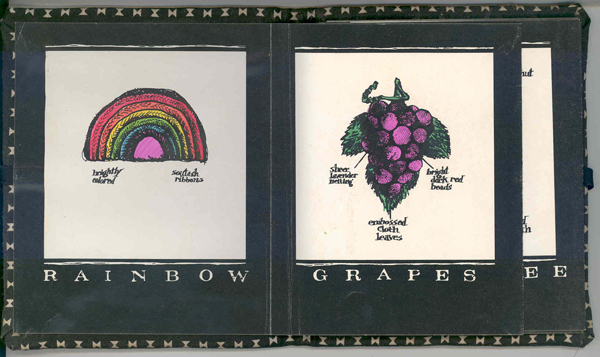
Pin catalog designed by Niki Bonnett, 1980

Niki devised a poster that could be cut up in strips and glued together in such a way as to make an accordion-fold catalog. She made drawings, with descriptive hand written notes identifying materials and features of each pin.  For the sake of economy, the poster was printed in black and white, and I hand colored the pin illustrations with markers. I constructed a cover for each catalog out of cloth-covered cardboard. Then I glued the beginning and end of the accordion folded pages to the inside of the front and back covers, along with ribbon ties. The finished catalog size was 4″ x 3″.

pin poster designed by Niki Bonnett,1980

In a recent conversation from her home in Ashville, NC, Niki remembers this about the project: “When I did your job, I was working at Hill, Holliday, Connors, Cosmopulos (HHCC), a well-known ad agency in Boston. I was doing freelance work at night to build my portfolio and I loved your pins. For your project, I designed a poster with all the art and type as white on a black background. Once printed, it could be cut up into horizontal strips that were then hand colored, accordion folded, taped together and hand-bound into a fabric wrapped cover (also handmade) that tied shut with a bit of ribbon. Obviously, back then I didn’t think about my time as part of the cost of doing the project, and I had plenty of it back then too! All it cost was the printing of some black and white posters! Those posters looked great on their own, and it was lots of fun making those books; they were little gems.

In addition to the design and production of the piece, I also did all the illustrations of the pins, the calligraphy naming each pin style. I got one of the typesetter reps who visited HHCC every day to give me an entire alphabet of uppercase, metal letters (“slugs”? I forget the terminology for those bits of lead type). The letters were tiny, maybe 12 point. I used a brayer to roll black acrylic paint out on a piece of glass and then hand printed each tiny letter on rough newsprint until I got the “perfect” letter. Once I chose the letters for the entire alphabet, I blew them up to four times the original size on the Photostat machine (Good thing I had a key to that ad agency! Can you imagine being able to sneak back into a large office now to work on your own stuff from 8 to midnight?). That became my typeface from which I made all the “typeset” words. Needless to say, there was A WHOLE LOT of cutting and pasting goin’ on!

House Pin 1977

I was very proud of that project and I know I still have at least one of those books and some pins tucked away somewhere all these years later. I sure do miss the hands-on way design was done before computers; that’s what eventually caused me to quit my graphic design business in favor of making art quilts. I never made the kind of money I made in commercial art with my textile artwork, but it was so enjoyable… the creativity and the “making” of things!”
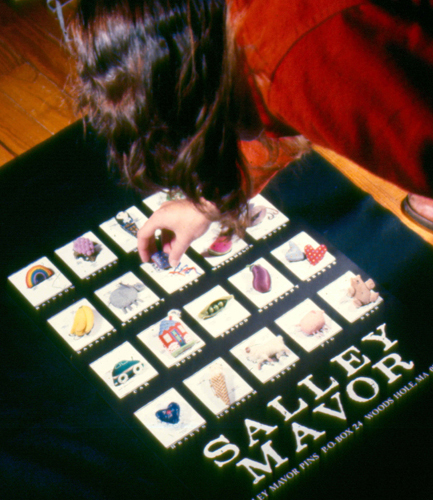
Salley arranging pins on top of poster, designed by Niki Bonnett, 1980
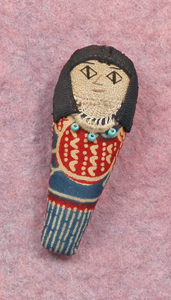
Mummy pin
Eggplant Pin 1977

My pins were included in Yankee’s Feb. 1981 issue, along with articles about a man who played music on a saw and someone who repaired oriental rugs. Laura Gross wrote, “Sparkling beads and soft velvet compliment her intricate hand-sewn and embroidered Egyptian mummies, palm trees, hearts, carrots, etc. Prices range from $4.00 to $12.00, and her custom work starts at $15.00. In the past, Salley has specially made banjos, cats, mermaids, New York town houses, corn-on-the-cob and a doctor’s bag, complete with gold initials.” I don’t recall making the doctor’s bag, but I do remember sewing on individual yellow seed beads for kernels of corn.
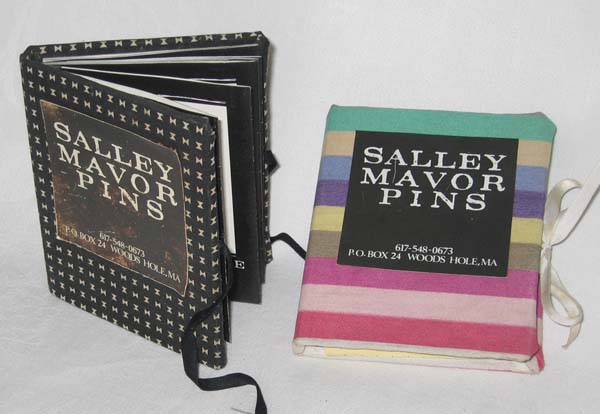
pin catalogs, 1980

People wrote in response to the article and I sent out free catalogs in manila envelopes. I can’t remember how many orders came in, but it was enough to keep me busy for a while.
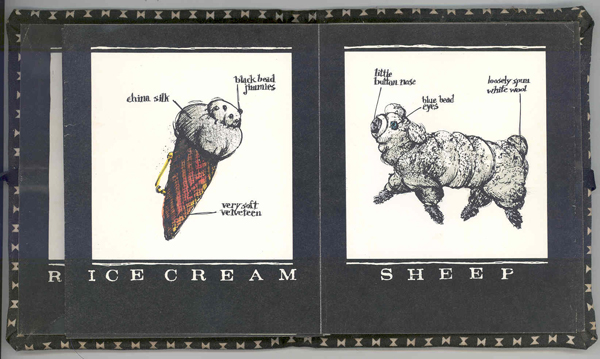
Pin catalog

The story will be continued in PINS (part 3).

To keep up with new posts, please subscribe to this blog. Your contact info will not be sold or shared. If you’d like to see more frequent photos tracking the projects in my studio, please follow me on Facebook and/or Instagram.


Pins (part 1)

The peapods were the gateway to my life of stitching. I started making peapods and other pins in art school in the 1970s, as a totally separate project from my class assignments.  Some of my friends knew about them, but my teachers hadn’t any idea.

peapodpin2WM

One day during class, I was listening to a critique, sewing some peapods, when my teacher, Judy-Sue Goodwin-Sturges, noticed what I was doing. She looked more closely, asked me a few questions and said, “Why don’t you do this kind of thing for your illustrations? Try sewing them.”

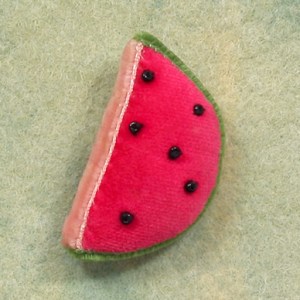
Watermelon pin 1977
Bunch of Grapes Pin 1977

With that simple encouragement, I stopped trying so hard to translate the images in my head through a brush or pen. Given permission to work outside of traditional illustration mediums, I found that I was much happier and energized. I was no longer struggling to keep in step, but, with a needle and thread, I could dance.  For some reason, I’d been under the impression that in art school, one does “serious” fine art and I’d kept my interest in sewing and handcrafts underground. I rediscovered the joy of creating and learned to trust my hands and gut feelings to help work out challenges.

catpinWM

After graduation, I added more designs and started mass producing pins and selling them on a wholesale basis to shops. I had to really push myself to call shops and and arrange in-person visits to businesses. I was more content sitting at home, covering little red beads with sheer lavender fabric to make bunches of grapes or sewing strings of green wooden beads inside a velvet ribbon peapod.  Despite my shyness about pedaling my wares, I found the marketing part of the business to be a creative exercise. I’d spent my teenaged years working in my mother’s import shop in Woods Hole, From Far Corners, and the experience of dealing with customers and knowing the difference between wholesale and retail was helpful.

carrot2WM

I started making custom pins of people’s cats, based on photographs they sent. I found that Siamese cat owners were particularly fussy about their breed and one time had to redo a blue point. The cat ears are made from a coiled wire bead, which I cut in half.

back of Cat pin

Some of the pins like the cat and the watermelon have a cardboard shape inside to give them stability. I’d sew a little pocket, turn it right side out and slip the cardboard in, put in some stuffing and sew up the pocket.

cardboard patterns for pins

I used my Singer Featherweight, the same machine on which I learned to sew, to do the machine part. There was always a lot of hand sewing to finish and attach the pin back.  I had some labels printed with my name and sewed them under the pinback. They were the same kind of labels you get at fabric stores for sewing on children’s camp clothes.

In the studio 1979

This is the first of 3 parts.  The story is continued in PINS (part 2).  

To keep up with new posts, please subscribe to this blog. Your contact info will not be sold or shared. If you’d like to see more frequent photos tracking the projects in my studio, please follow me on Facebook and/or Instagram.
 

Close-ups (the Moon)

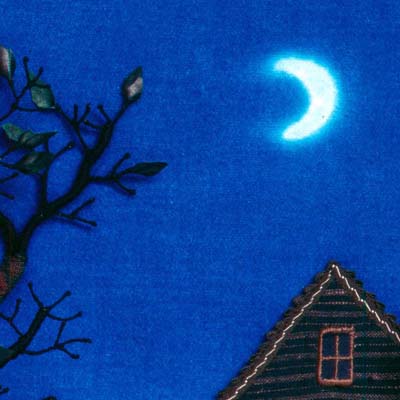
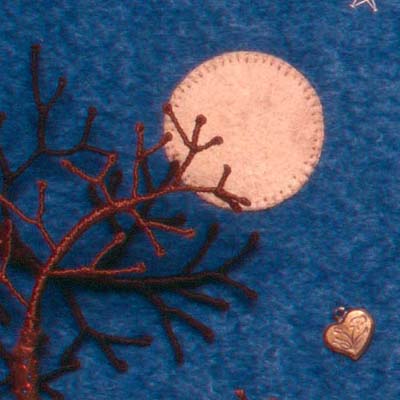
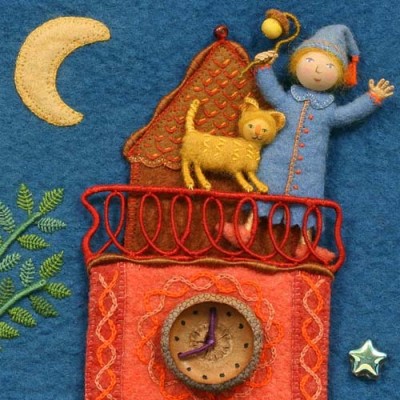
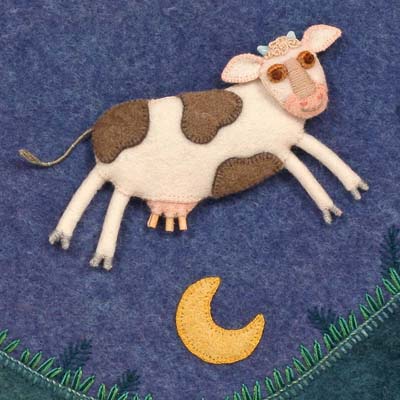
This series of moons are all details from some of my children’s book illustrations.  The close-ups are from The Way Home, You and Me: Poems of Friendship, In the Heart, Wee Willie Winkie and Pocketful of Posies and Hey, Diddle, Diddle!.

from “The Way Home” 1991

from “You and Me: Poems of Friendship” 1997

from “In the Heart” 2001

from “Wee Willie Winkie” 2005

from “Pocketful of Posies: A Treasury of Nursery Rhymes” 2010

Note: See other posts in the Close-ups series archive here.

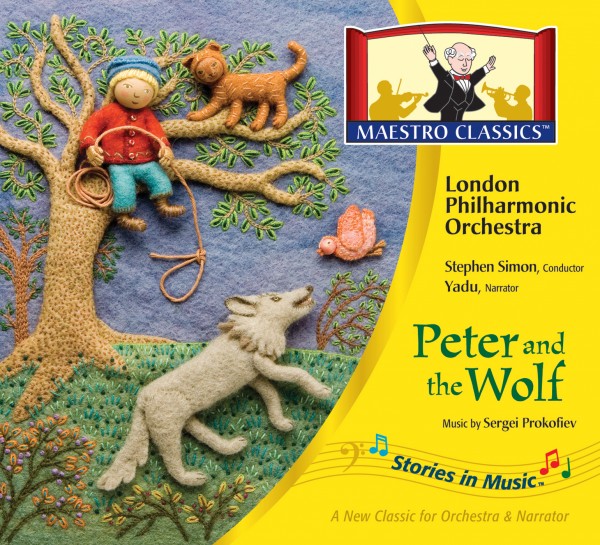
Peter and the Wolf CD

A good story told in combination with orchestral music is a special treat. I had the pleasure of working with my friends at Maestro Classics on one of their recent CD projects. They hope that families will be educated as well as entertained with their series of award-winning story and music CDs for children.  The producers of the recordings, Bonnie and Stephen Simon, have a house in Woods Hole and we have known each other for quite a few years. I remember Bonnie talking about her idea of making recordings of the Stories in Music™ performances that her husband Stephen had conducted in Washington, D.C. at the Kennedy Center. Well, they did it, and their company, Maestro Classics, now has eight CDs available, with more planned for the future. I was very excited to be asked to illustrate the CD box for Prokofiev’s Peter and the Wolf.    


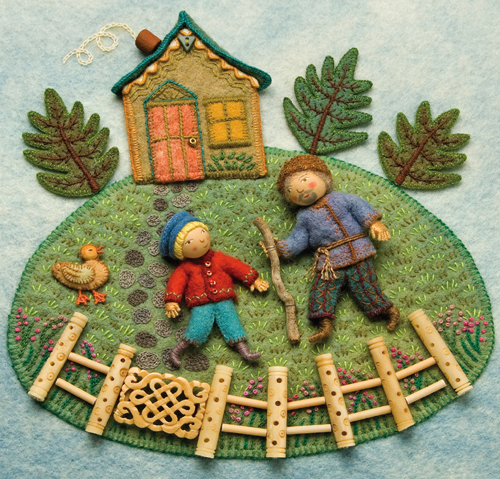
The Russian story was a perfect match for my folk art style and it was a joy to bring Peter and the animals to life. In addition to designing the cover illustration with Peter and the cat in the tree, with the bird taunting the wolf, I made a scene to be used inside the case. Here’s a sketch I made of Peter with his grandfather in their fenced in yard, which later was developed into a sewn scene. My layouts are usually simply drawn, with figures and other important features positioned in the space.    

Sketch of Peter and his grandfather

Later, when I’m sewing, the color and details will start to emerge. The fence posts are made from some bone beads which have been sitting patiently for years, waiting to be useful.   

inside illustration from "Peter and the Wolf" CD


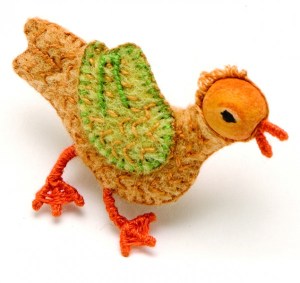
I also made individual characters from the story, including the hunters to be used as illustrations in a little activity booklet of games and information that comes with the CD. Lately, I’ve been using painted bead heads for some animals like cats and birds. It’s almost like a child’s  costume, with a painted face and hood with ears. But, the wolf needed to have a long pointed head. It was important that he be scary and imposing, not too cute, so I gave him teeth, intense eyes, and a shaggy mane.  You can see and listen to Maestro Classic’s CDs here.

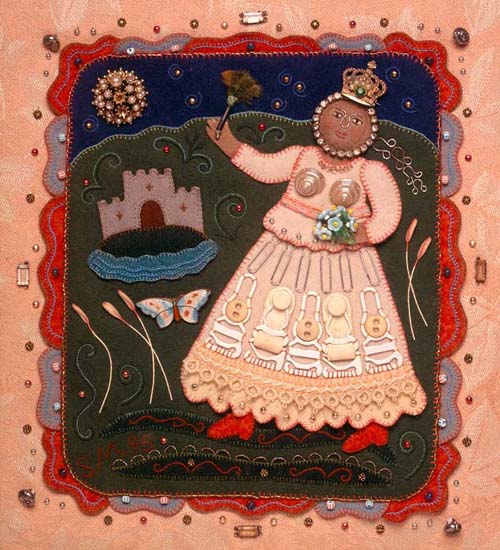
Queen with Duster

In the late 1980’s, my 97 year old grandmother died and we cleaned out her house in Bristol, RI. Along with drawers full of old keys and costume jewelry, I saved a stash of garter clips and kept them in wait for a future project. Their day came in 1995, when I started working on Queen with Duster.  

“Queen with Duster”, fabric-relief, 10″ x 11″, 1995

I’m always on the lookout for small interesting objects that can be sewn down and I liked the pattern created with the garters lined up. The figure started out as a bride, but evolved into a queen when she was crowned with a bejeweled pin. 

a collection of my grandmother’s garters
sketches for “Queen with Duster”

Her dress is made from an old wool petticoat of my grandmother’s that was washed so many times, it had become very thin felt. The silver hairpins were also my grandmother’s and she made the tatting on the bottom of the skirt. See “Pink House”, another piece made with my grandmother’s things, here.

detail from “Queen with Duster” 6″ x 4″
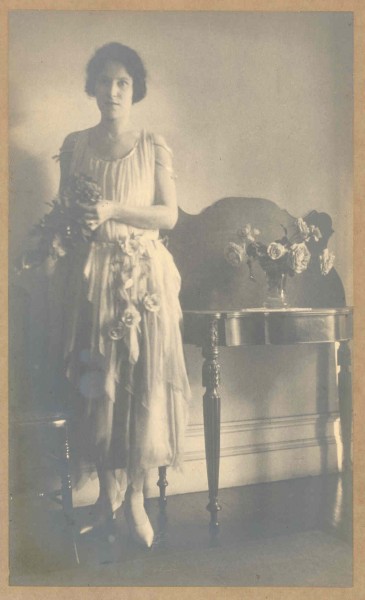
my grandmother, Louise (Salley) Hartwell in the 1920’s

To keep up with new posts, please subscribe to this blog Your contact info will not be sold or shared. If you’d like to see more frequent photos tracking the projects in my studio, please follow me on Facebook and/or Instagram.

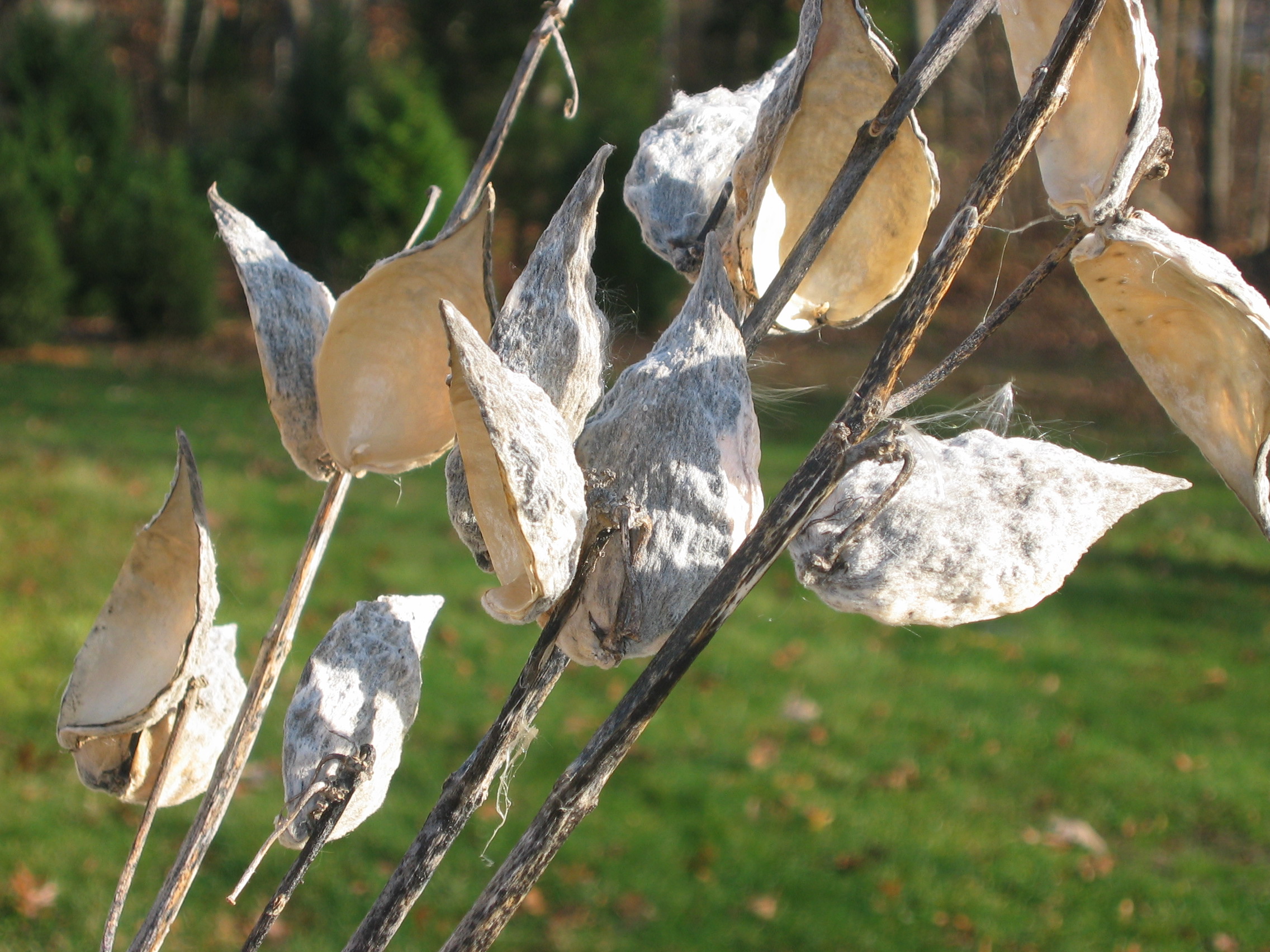
Milkweed Pods


milkweedtitlepageWMThe pods are light and almost have the texture of handmade paper. They open up in the fall, bursting with the most delicate, downy seeds and their boat-like shape and small size make a fitting bed for a little person.

milkweedbedWM

This sleeping girl nestled in her milkweed bed is in my board book, Wee Willie Winkie.milkweed2@WM

For more ideas on wee doll bedding, visit my post about walnut shells here.

Three Kings

In the early 80’s, I designed projects for magazines. I remember that the projects themselves were fun to figure out and make, but writing the directions was a big chore. You have to break the process down step by step and explain every detail. Sometimes it’s hard to tell how you did something in a clear understandable way. I work intuitively, so writing coherent directions was work!   

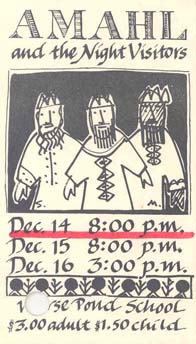
Ticket 1981

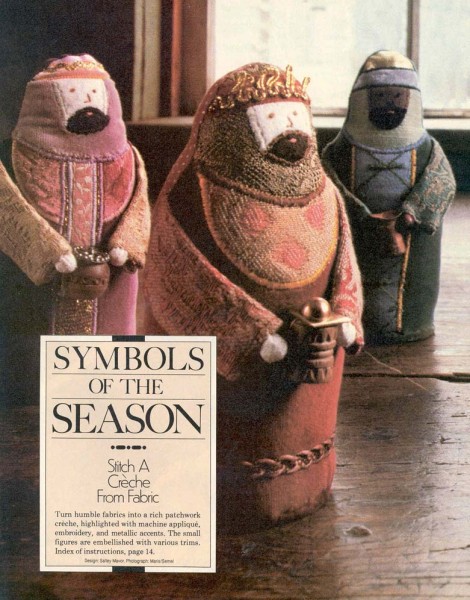
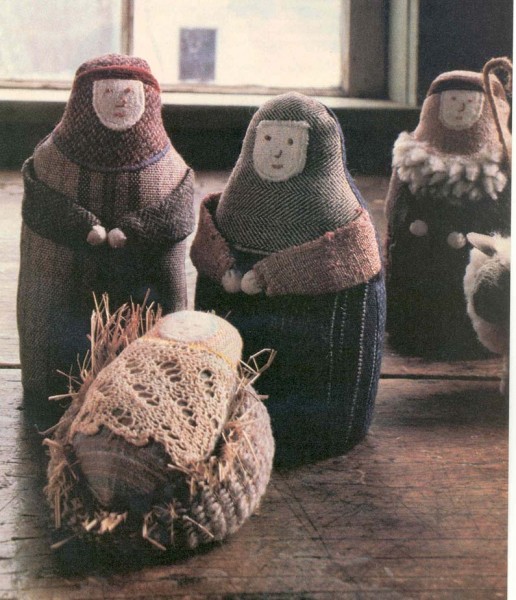
  Here’s a ticket stub to a production of the opera, Amahl and the Night Visitors, which was performed in Falmouth by a local theater group in 1981. I designed the posters, program, tickets and costumes. The image of the three kings got me thinking about doing a nativity scene of cloth dolls. The thing about dolls is that they usually have legs, which makes it difficult for them to stand on their own. So, I gave these characters long robes and even put sand in the bottom to make them stay grounded. The kings were made from lush fabrics like brocade and velveteen, with metallic braid, and they carried bead and button gifts. Mary and Joseph’s clothing was more homespun, with woven wools and roughly textured cloth.


Creche scene from Better Homes and Gardens, 1981
Better Homes and Gardens, 1981
patterns from Better Homes and Gardens, 1981

Mimi’s pin cushions

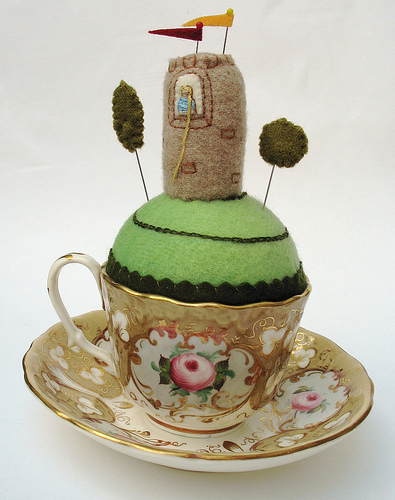
Mimi Kirchner’s Tiny World pin cushion

Mimi Kirchner inspired me start a blog because she makes it look so creative and fun. We first met in the 80’s at the Christmas Store, a seasonal cooperative  in Cambridge, Mass., which is now named Sign of the Dove. At the time she was making wonderful hand painted ceramics. A few years ago, Mimi asked me to be a part of an exhibit she was putting together in Arlington, Mass. called “Still Playing with Dolls”. We’ve been in frequent contact ever since and I’ve been following her blog, Doll, regularly. She is constantly coming up with delightful new designs, never the same thing over and over again. One thing we have in common is the almost obsessive compulsion to make things. Am I right, Mimi?

Snowy Hill by Mimi Kirchner

Rapunzel by Mimi Kirchner

Mushroom House by Mimi Kirchner

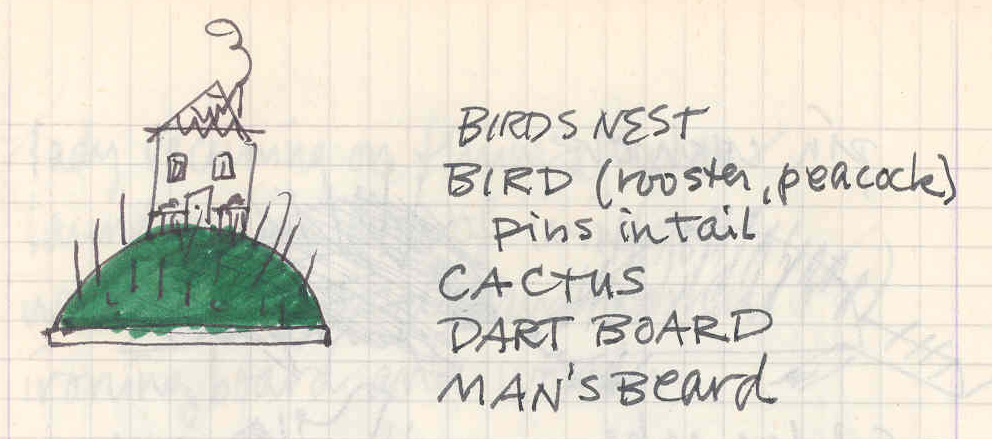
In a recent conversation, Mimi mentioned that she remembers seeing some pin cushions that I had made to sell in the coop store decades ago. Here are some pictures of a house and lion I made in 1980, along with some pages from my sketchbook of that time. Now, with her Tiny World pin cushions in tea cups, she has taken the concept and made it her own, producing new beautiful designs at an incredible rate. I agree with Mimi, who says, ” I am a believer that there is nothing new in the world and we are all inspired by each other.”

Mimi has taught Tiny World pin cushion classes in her studio in Arlington, Mass. and now has a pattern for sale in her Etsy shop.

House Pin Cushion by Salley, 1980

pin cushion ideas from Salley’s sketchbook 1980

from Salley’s sketchbook 1980

Walking the Dog

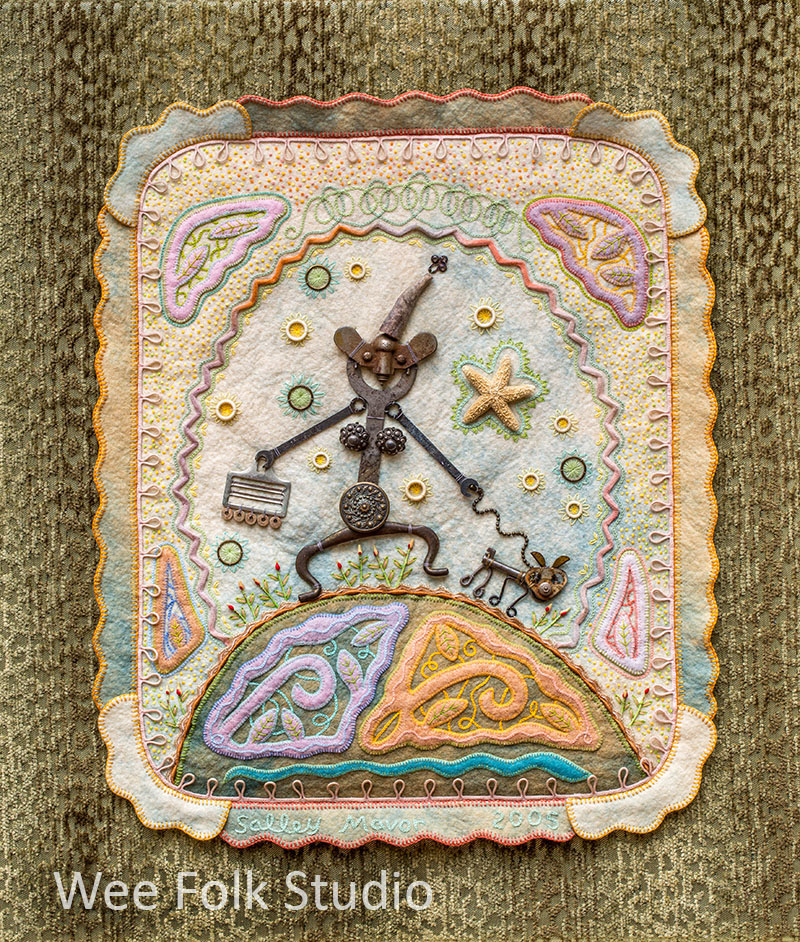
I started making Walking the Dog soon after my mother died in 2005. It is a kind of modern day mourning needlework piece, popular in 19th century America, although in mine, there are no figures dressed in black, grieving under weeping willows. My mother loved color and I never ever saw her wear plain black or brown. I thought about her throughout the process, about her gift of nonjudgmental encouragement and her willingness to provide time, space and materials for everyone in our household to create works of art. To her, art wasn’t an extra, but an essential part of everyday life.

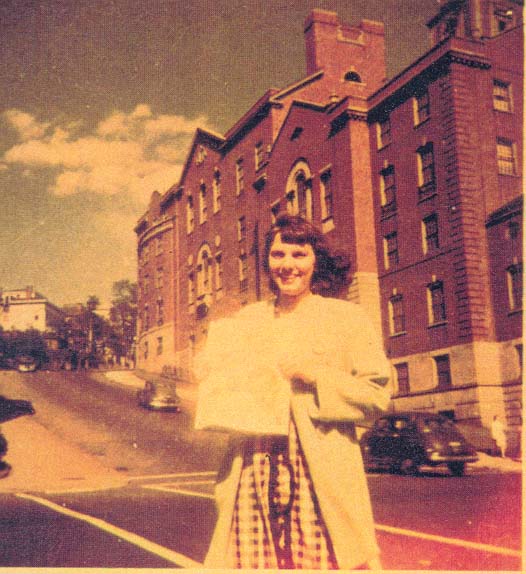
My mother, Mary (Hartwell) Mavor, holds up a newspaper announcing the end of WWII, while a student at RISD in Providence, RI

I often think about how wise and thoughtful she was. In a term paper about art education for her master’s degree in 1965, she wrote, “The student should be encouraged to find his own way, but this does not mean the void of laissez-faire.

Drawing of my Mom by an unknown RISD classmate, mid 1940’s

Children need a structured exposure to many ways of seeing, doing and thinking. To teach art, the teacher must be an artist. By having confidence in their own abilities, teachers will be able to sensitize children to want to learn and care—not just problem solving.  Through intuitive discovery a child will find himself, what he believes and be really free, even in a computer society. By giving students something to do—learn and contemplate what they can understand naturally—will give them the values needed today.”

“Walking the Dog”, fabric relief by Salley Mavor 2005, 20″ x 23″

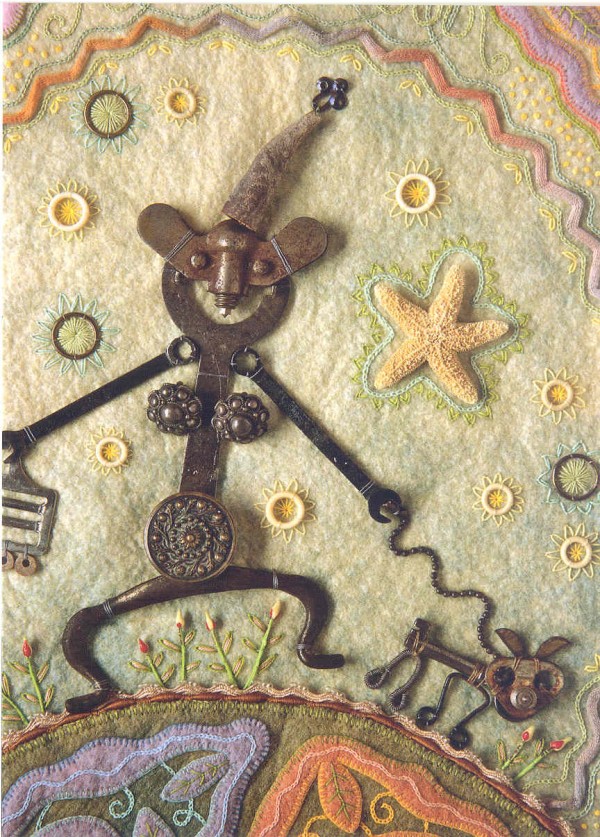
I started making Walking the Dog by spreading out a bunch of metal parts I’d been collecting onto my work table. Several of the objects, like the wrenches and drawer pull, I’d found a few years earlier at the Liberty Tool Company  in Liberty, Maine. I had no plan and tried to approach the project as an open exercise that may or may not lead to something tangible. I started playing around with the shapes and a figure emerged, then a dog made from an old key and a lamp pull chain leash. Later I added a handbag to balance the dog on the other side. Earrings and a brooch became her breasts and  tummy. Then the figure needed a place to be, so I made her a hillside out of wool felt. One thing led to the other, with the earth needing a felt atmosphere, which then needed to be contained with ricrac. I finished it off with lots of french knots, chain-stitched curly ques, and added a border made from a long section of antique button loops. Then I mounted the felt piece to some leopard-like spotted upholstery fabric. It ended up being a very satisfying experience, with something to show for it. Thank you, Mum.

This detailed image from Walking the Dog is part of card set in my Etsy Shop.
Detail from “Walking the Dog”

I recently found these childhood drawings and can see that my subjects and style haven’t changed much in almost 50 years!

Cowboy by Salley at age 6

Woman with hat by Salley age 5

Thanksgiving Offering

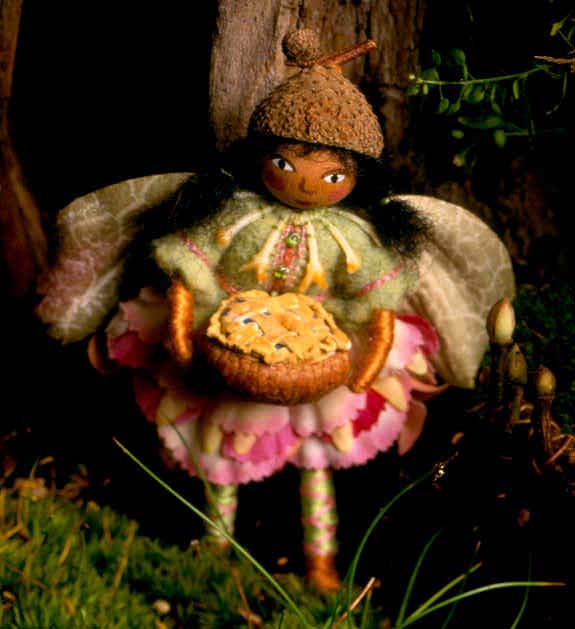
Fairy bringing a pie for Thanksgiving

Happy Thanksgiving!  I am thankful to all of you who have come to see and read my blog this past week. It’s been a pleasure to hear from so many of you and I am energized in a way that I haven’t felt in a long time. Ideas are coming fast, the scanner is warmed up and working overtime and the posts are queuing up. Please keep visiting!

Thanksgiving Dilemma, pen & ink by Salley Mavor 1976

I’ve been looking through my old portfolios from art school and came across this drawing of a Thanksgiving turkey dinner gone awry. I had forgotten how much I liked to draw before I started using mixed media techniques. I rarely draw now, except to work out designs for my illustrations. Needle and thread have replaced the pen and become my tools of choice. In future posts, I’ll be showing some more early work with the intention of pointing out common themes and styles in my evolution as an artist, regardless of the method or technique.

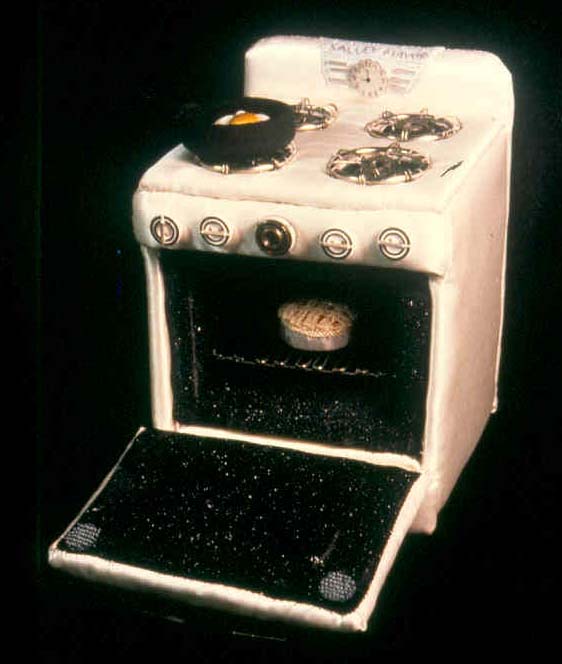
I made this soft sculpture stove 30 years ago, the first year out of art school. It is made with white satin,  covering a padded cardboard structure. I remember spattering paint with a tooth-brush onto the black fabric which lines the inside of the oven. I can see velcro circles on the oven door. The oven rack is made from hair pins, the knobs from buttons and the clock is the face taken from an old wrist watch. It looks like the burners are key rings fashioned with hooks from hook-and-eyes. I don’t remember what the frying pan is made from, but it must be cloth as that is my material of last resort. And the pie crust lattice is likely made from kid leather. This stove has a refrigerator to match, which I’ll show another time.

Stove, 5" tall, fabric sculpture by Salley Mavor 1979