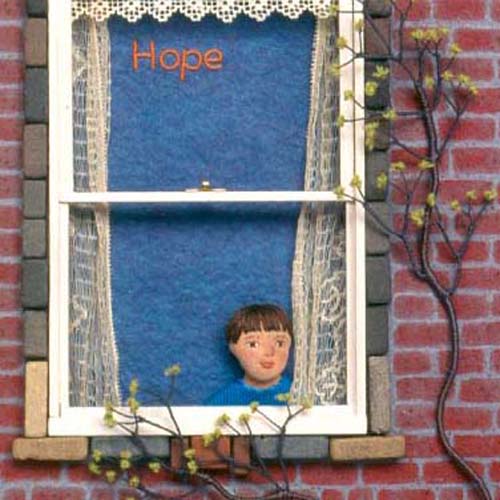
Windows are opportunities to go from one world and into another. They are like mini stages, complete with curtains. I also like the way they provide a structure for bringing pattern and color into a scene. This series of window close-ups are all from children’s books I’ve illustrated. The first one is from You and Me: Poems of Friendship. There are clay “brick” beads framing the window and the ones on the wall are painted on gray felt.
Illustration from "You and Me: Poems of Friendship" 1997
The next two are from the board book, Wee Willie Winkie. The window box is made of wire wrapped in embroidery floss and the fence is a row of budding branches.
Mitten (n.) A covering for the hand, worn to defend it from cold or injury. It differs from a glove in not having a separate sheath for each finger.
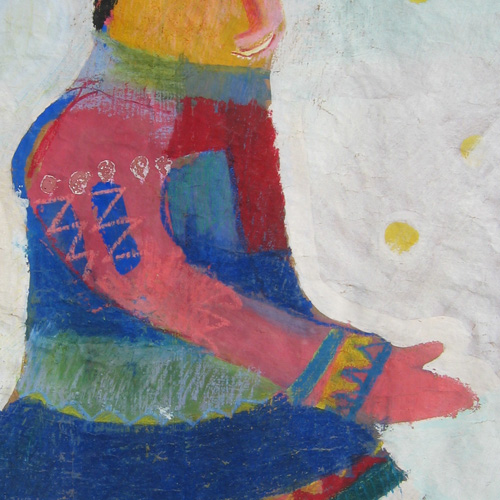
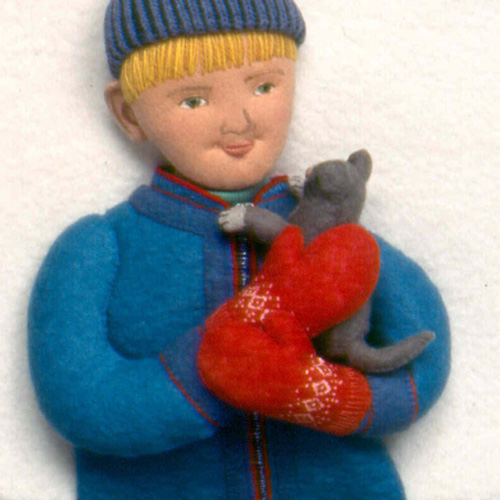
Even though Spring is around the corner, we still have cold snowy weather. Here are some mittens that have appeared in some of my pictures, starting with a detail from the tempera painting “Laplander”, which you can see here. Then there’s a boy with red mittens holding a kitten from You and Me:Poems of Friendship. The cozy father and daughter scene is from In the Heart, where red mittens as well as hearts show up throughout the book. The balsam pillow and felt purse projects are from my how-to book, Felt Wee Folk: Enchanting Projects. Last is a boy dressed for winter from Pocketful of Posies: A Treasury of Nursery Rhymes, which will be published in September.
detail from “Laplander” 1977
detail from “You and Me: Poems of Friendship” 1997
detail from “In the Heart” 2001
detail from the balsam pillow in “Felt Wee Folk” 2003
felt purse from “Felt Wee Folk” 2003
detail from “Pocketful of Posies” 2010
Note: See other posts in the Close-ups series archive here.
It’s lambing season, so the closeups are all from my 1995 children’s book, Mary Had a Little Lamb.
The 32-page hardcover first edition is out of print, but Mary Had a Little Lamb has been re-released as a board book. (sorry, it too is out of print) Read further to learn how some of the illustrations were made.
The barn wall is made from an old weathered shingle and the straw bed is a mixture of real straw and embroidery floss.
The lamb is made of wool felt, then covered in wool french knots. Mary’s dress is made of a cotton sock and the furniture hinge is a hook and eye.
The lamb’s ears are made from kid leather and the garden wall is beach stones glued in a circle
The tree trunk is wool tweed and Mary’s toes are made of wire, wrapped in embroidery floss.
The leaves are cut out of artificial leaves and the wood pile next to the house is made of wooden beads.
This scene inside the schoolhouse has desks sawed out of wood and a real slate black board.
Note: See other posts in the Close-ups series archive here.
At 26″ x 30″, Noah’s Ark is the largest piece I’ve ever made. Everyone has their own scale and mine tends to be small. Even if the outside dimensions of a piece are large, I will fill it with smaller items. Looking at this picture now, I see large areas that would not escape my present-day appetite for embellishment. It’s tricky to keep the all over design working, so that it draws you in first and then you can appreciate the detail up close. At this time, in 1985, I had stopped making the pins, but was still designing small animals of the same size to use in my fabric relief pictures. You can read a 3 part story about my pins in earlier blog posts here. Showing the story of Noah was an opportunity to continue figuring out how to make a variety of animals. It was also a way to play around with arranging them together in a landscape.
“Noah’s Ark”, 26″ x 30″, fabric relief 1985
The background fabric is cotton velveteen, which I dyed with a spray bottle, building up layers of color, giving it a variegated, stippled appearance. The border is made from an upholstery fabric remnant that I remember finding in a bargain bin at a fabric store in Berkeley, California.
dyed velveteen
Detail of "Noah's Ark", 9" x 12", 1985
sketch of Noah's Ark
During this time, I was hand embroidering the leaves on the trees and adding some leaf beads as well. The fabric is machine appliqued, something I would give up shortly after this in favor of hand stitching. I came to dislike the uniform, flat stitches and put my sewing machine away for years at a time. It’s fun to look at this piece and see early examples of human figures and animals that I will continue to rework and develop for another 25 years.
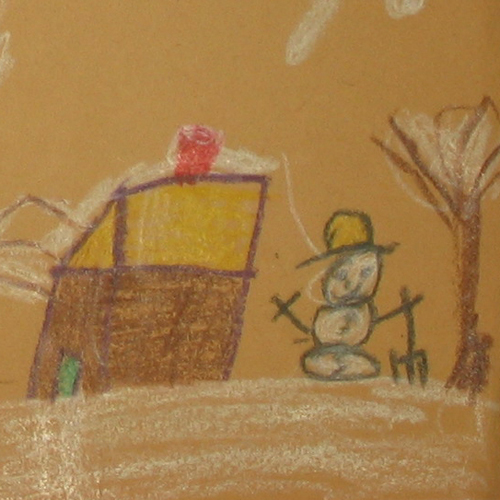
With snow falling and lingering in many parts of the country this winter, I’ve found some snow pictures to show you. First, here’s a crayon drawing saved from my childhood by my mother. Then we skip ahead to 1995, with a detail from the title page of the 32-page edition of Mary Had a Little Lamb. It’s the scene where Mary, her brother and her father are trudging through the snow to visit the lamb in the barn.
detail from "Mary Had a Little Lamb" 1995
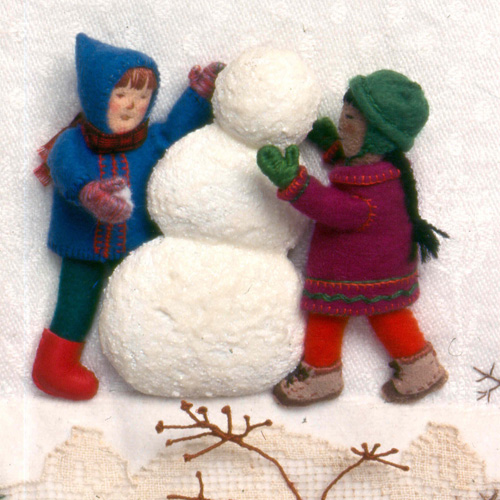
The next scene is from the illustration for the poem “Snow”, which is in the poetry anthology, You and Me: Poems of Friendship. The snowman is made of felt, painted with an acrylic based bumpy liquid medium. In the background is an old linen tablecloth.
detail from "You and Me: Poems of Friendship" 1997
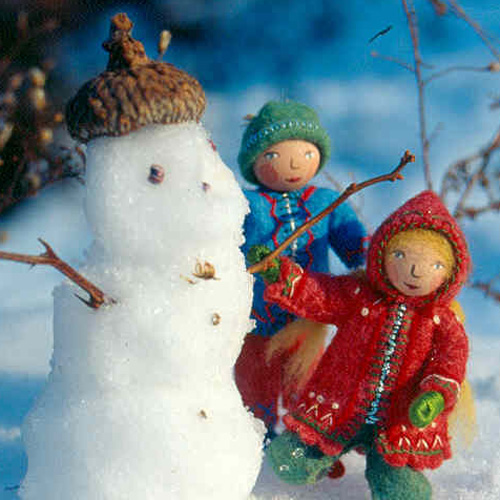
Here are some wee folk dolls that were brought out to play in the snow.
Wee Folk in the Snow 2002
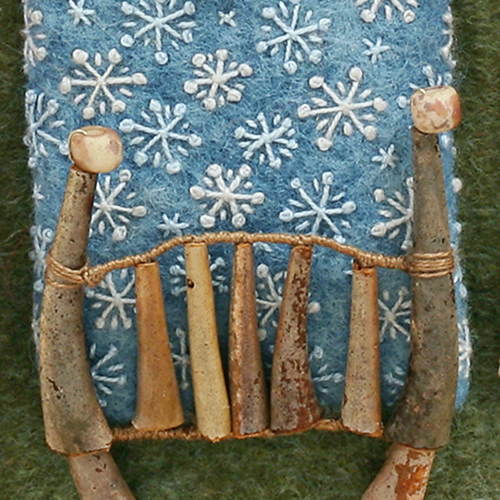
This snowflake covered bed spread is part of an illustration from Pocketful of Posies: A Treasury of Nursery Rhymes. The bed frame is made from some hollow dried plant parts, maybe thorns, with the sharp points cut off. I bought them a long time ago in a bead store. The original illustrations will be shown in a traveling exhibit when the book is released next September. Find out about it here.
detail from "Pocketful of Posies" 2010
Note: See other posts in the Close-ups series archive here.
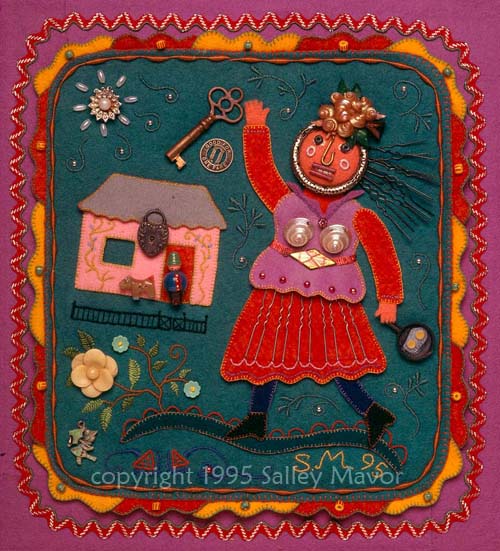
I can still remember how much fun it was to make The Pink House back in 1995. I had finished the 2 year project of making illustrations for Mary Had a Little Lamb and was ready to burst out with something bold and unplanned. I sorted through boxes of objects that I’d been collecting, selecting parts to use.
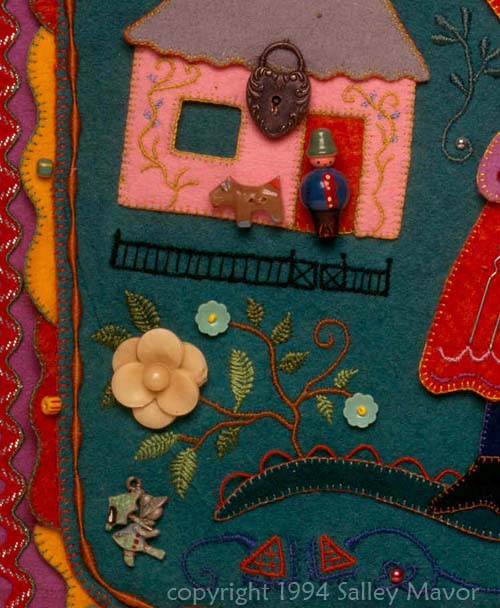
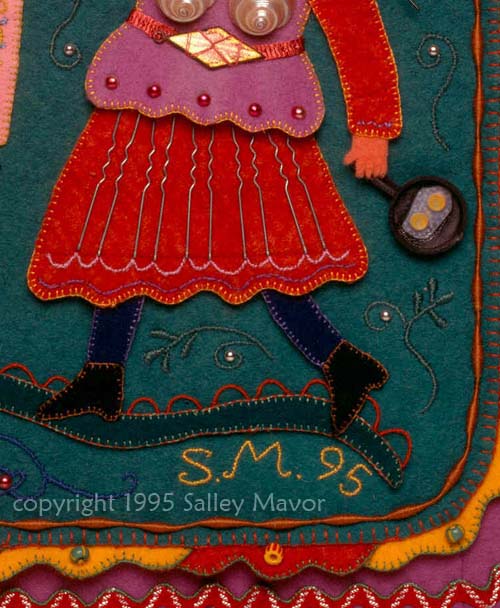
The hair pins and costume jewelry were from grandmother’s things. The key and New York subway token were found in her desk drawer. I try to find things that can be sewn. Even the shells used for the breasts were earrings with convenient holes already drilled, making it easier to sew them down. I prefer to sew things in place and not use glue, which is messy and unpredictable. With stitches, if somethings doesn’t work, you can always rip it out and try again.
hair pins
Some of the objects include a miniature silver lock, man and dog buttons, a girl with umbrella charm and a Bakelite flower button. The woman’s headdress is a pin made of a cluster of shells.
sketch for “The Pink House”
The Pink House was one of the first pieces I made with wool felt. The red felt is from an old maternity top my late mother had from the 50’s. The woman is holding a doll house sized plastic frying pan from my childhood. Queen With Duster is another piece I made with my grandmother’s found objects during the same period. You can see it here.
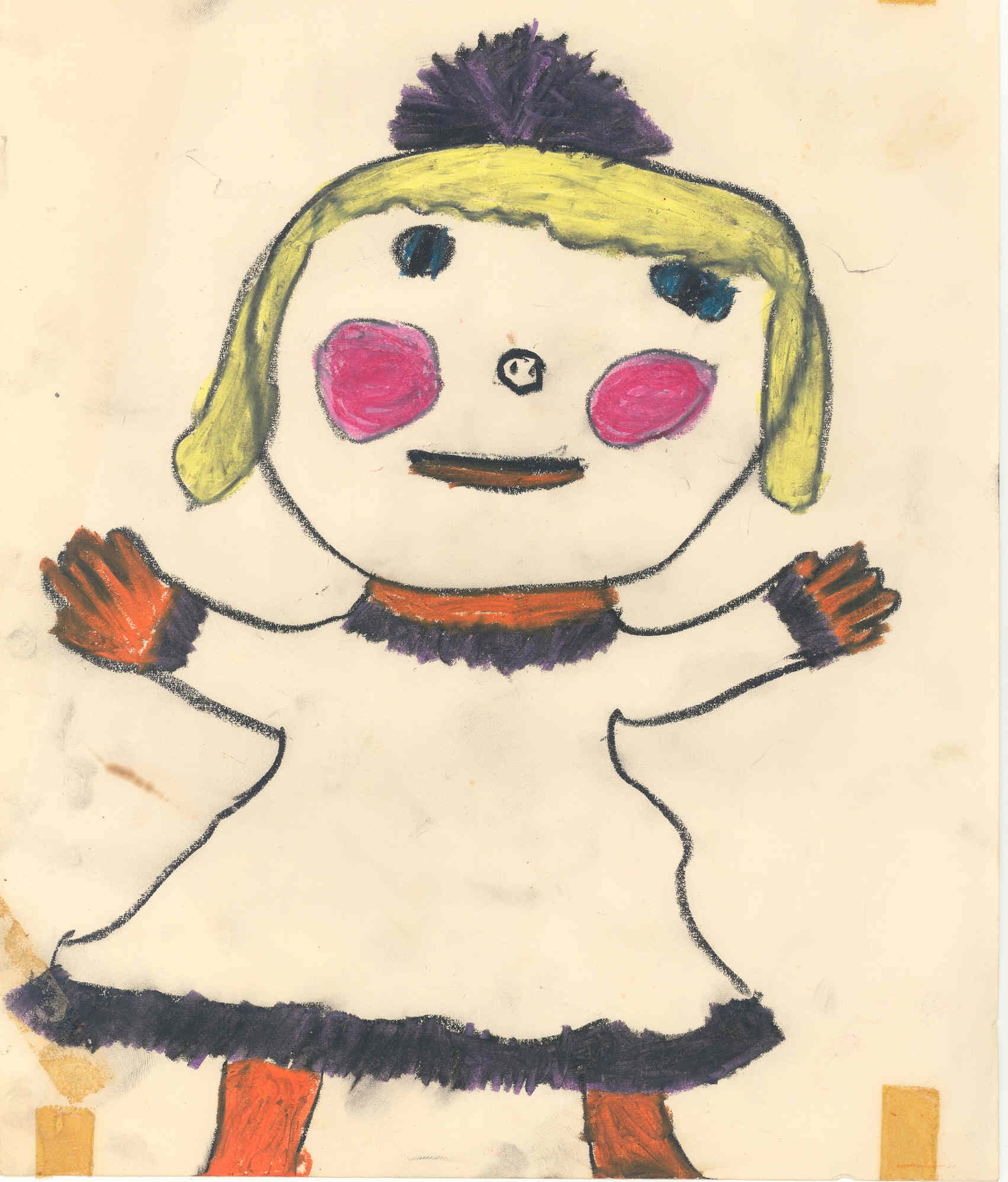
I’m so glad that my mother saved some of my artwork. I don’t remember this childhood drawing, which I just found when I was cleaning my parents’ house. I can’t help notice some similarities between this drawing and The Pink House. They both have a bold central figure in a dress, with arms raised, gesturing hands, a head-piece and circle cheeks.
drawing by Salley at age 7
To keep up with new posts, please subscribe to this blog Your contact info will not be sold or shared. If you’d like to see more frequent photos tracking the projects in my studio, please follow me on Facebook and/or Instagram.
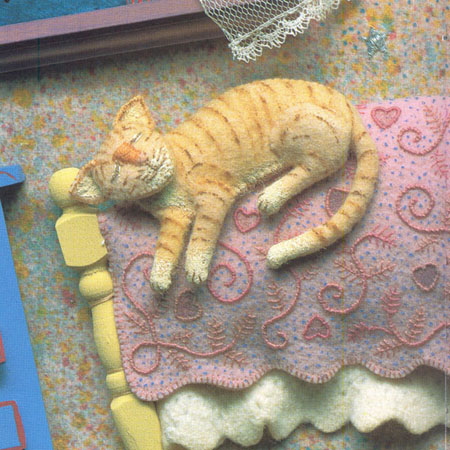
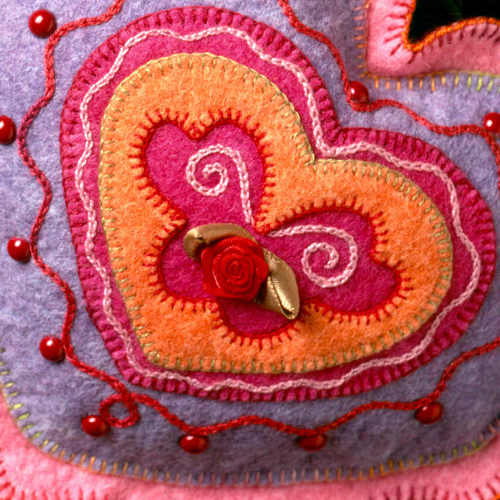
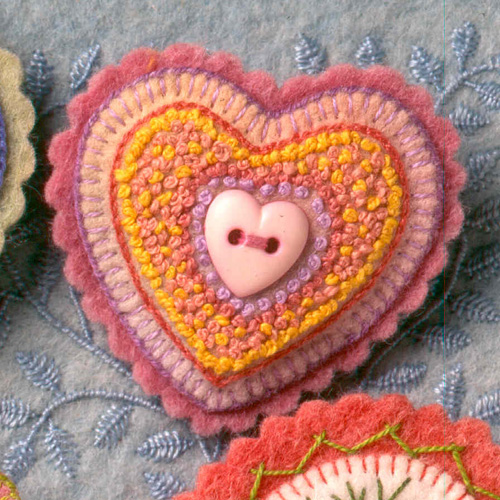
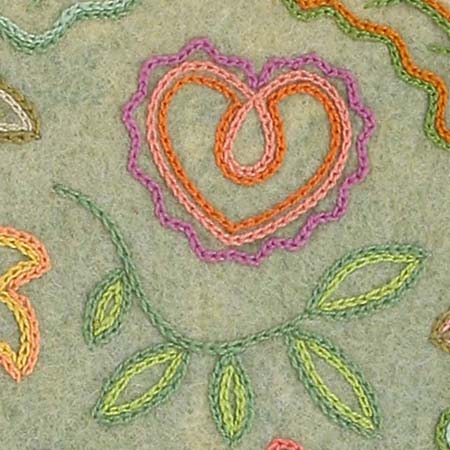
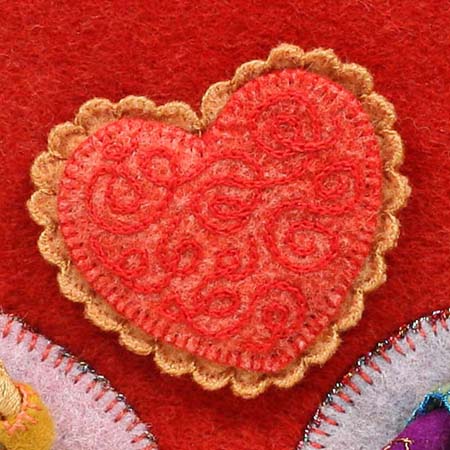
This selection of hearts begins with a sleeping cat on a heart covered bed spread from my book In the Heart. Then there is a felt balsam pillow and a heart pin covered in french knots, both projects from my how-to book, Felt Wee Folk. The last two are a chain stitched heart that’s part of the endpapers and a heart tart from “The Queen of Hearts” nursery rhyme (see in this post) from my upcoming book, Pocketful of Posies (Sept. 2010). The original illustrations will be shown in a traveling exhibition which you can find out about here.
detail from “In the Heart” 2001
balsam pillow from “Felt Wee Folk” 2003
pin from “Felt Wee Folk”
detail from “Pocketful of Posies” 2010
detail from “Pocketful of Posies” 2010
Note: See other posts in the Close-ups series archive here.
I had the pleasure of judging the Felt Smack Down 2010 “Challenge Alert”, which was organized by Patty from My life under the bus. You can see all the projects entered in the contest on her blog here. The premise of the challenge was to make something based on my Felt Wee Folk book. Here are the results! It was very rewarding to see such a variety of entries to the contest. Everyone’s felt project showed imagination and oozed enthusiasm, so it was fun to look at all the submissions, knowing that there was a lot of thought and labor invested in each one.
I looked for what I thought was the best character development, color choices, workmanship and presentation. I also was interested in how the projects from my book could inspire someone to come up with their own ideas and interpretations.
Prizes are for the following projects:
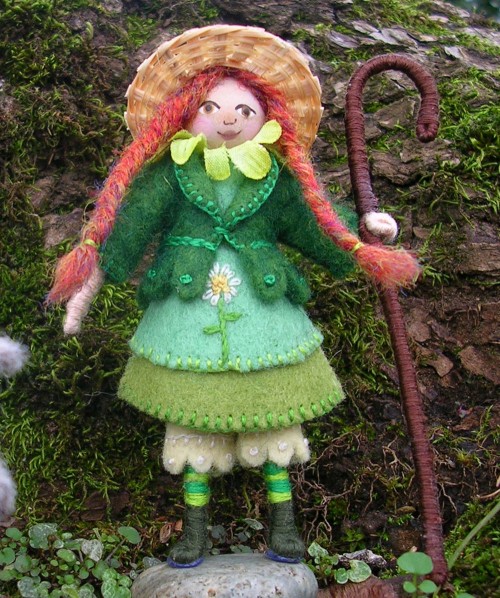
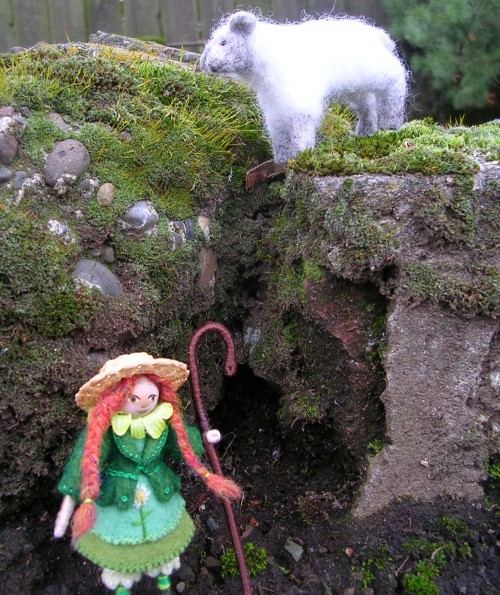
1st prize- Alison of Acorn Cottage for her Little Bo Peep. See her blog here.
First Prize, Little Bo Peep made by Alison
Little Bo Peep with sheep made by Alison
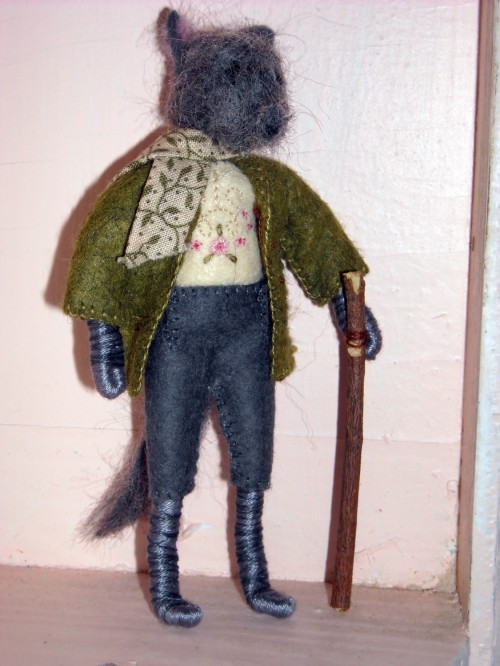
2nd prize- Caroline for her handsome fellow
Second Prize, Handsome Fellow made by Caroline
3rd prize- Loralynn’s Cottage
Third Prize, Loralynn's Cottage
Thank you to Patty for organizing this contest and to all the folks who committed themselves and worked on projects over the last few weeks. That’s a lot of blanket stitches!
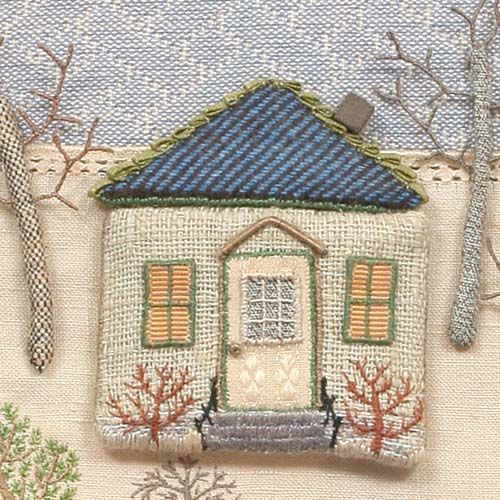
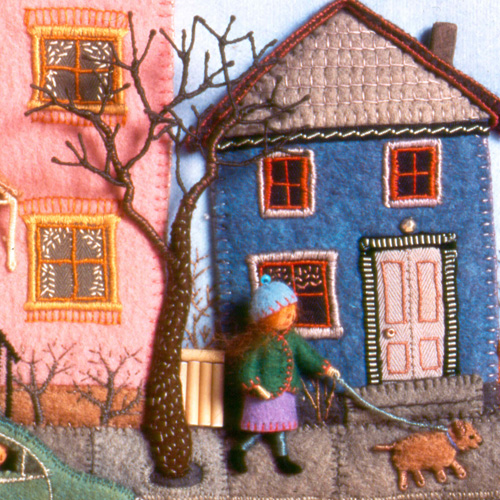
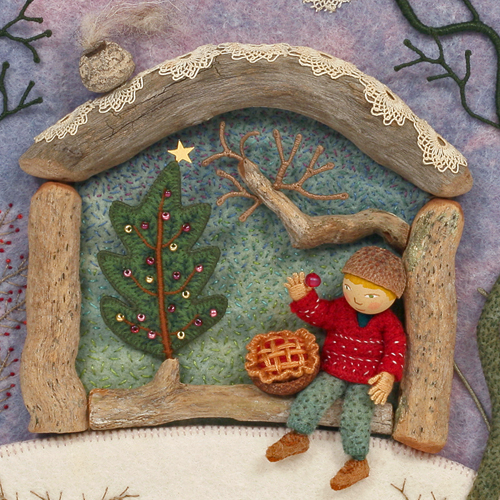
Houses appear so frequently in my artwork that I’ve divided them up into categories to show you in this Close-ups series. When you think about it, the shape is just a square with a triangle on top that can be depicted in any color and style to bring mood and stability. And houses are strong symbols of security that I seem to want in my pictures. This collection of winter houses starts with the winter section of a 4 seasons drawing I made at age 7. Then there’s a detail from a fabric relief piece called “Skating”. The next three are from the books, You and Me: Poems of Friendship, The Hollyhock Wall and Pocketful of Posies, which will be published in Sept., 2010.
by Salley at age 7
detail from “Skating” 1986
from “You and Me: Poems of Friendship” 1997
detail from “The Hollyhock Wall” 1999
from “Pocketful of Posies” 2010
Note: See other posts in the Close-ups series archive here.
The peapods were the gateway to my life of stitching. I started making peapods and other pins in art school in the 1970s, as a totally separate project from my class assignments. Some of my friends knew about them, but my teachers hadn’t any idea.
One day during class, I was listening to a critique, sewing some peapods, when my teacher, Judy-Sue Goodwin-Sturges, noticed what I was doing. She looked more closely, asked me a few questions and said, “Why don’t you do this kind of thing for your illustrations? Try sewing them.”
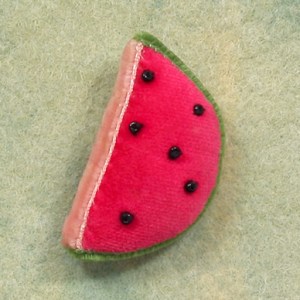
Watermelon pin 1977
Bunch of Grapes Pin 1977
With that simple encouragement, I stopped trying so hard to translate the images in my head through a brush or pen. Given permission to work outside of traditional illustration mediums, I found that I was much happier and energized. I was no longer struggling to keep in step, but, with a needle and thread, I could dance. For some reason, I’d been under the impression that in art school, one does “serious” fine art and I’d kept my interest in sewing and handcrafts underground. I rediscovered the joy of creating and learned to trust my hands and gut feelings to help work out challenges.
After graduation, I added more designs and started mass producing pins and selling them on a wholesale basis to shops. I had to really push myself to call shops and and arrange in-person visits to businesses. I was more content sitting at home, covering little red beads with sheer lavender fabric to make bunches of grapes or sewing strings of green wooden beads inside a velvet ribbon peapod. Despite my shyness about pedaling my wares, I found the marketing part of the business to be a creative exercise. I’d spent my teenaged years working in my mother’s import shop in Woods Hole, From Far Corners, and the experience of dealing with customers and knowing the difference between wholesale and retail was helpful.
I started making custom pins of people’s cats, based on photographs they sent. I found that Siamese cat owners were particularly fussy about their breed and one time had to redo a blue point. The cat ears are made from a coiled wire bead, which I cut in half.
back of Cat pin
Some of the pins like the cat and the watermelon have a cardboard shape inside to give them stability. I’d sew a little pocket, turn it right side out and slip the cardboard in, put in some stuffing and sew up the pocket.
cardboard patterns for pins
I used my Singer Featherweight, the same machine on which I learned to sew, to do the machine part. There was always a lot of hand sewing to finish and attach the pin back. I had some labels printed with my name and sewed them under the pinback. They were the same kind of labels you get at fabric stores for sewing on children’s camp clothes.
In the studio 1979
This is the first of 3 parts. The story is continued in PINS (part 2).
To keep up with new posts, please subscribe to this blog. Your contact info will not be sold or shared. If you’d like to see more frequent photos tracking the projects in my studio, please follow me on Facebook and/or Instagram.












 SALLEY MAVOR