The Way Home (part 2)

Continued from The Way Home (part 1)

After we moved, Judy and I kept in touch and would see each other when I visited Woods Hole every summer. Back in central Massachusetts, with my son in daycare part-time, I continued to sew pictures, developing my fabric relief technique. I tried out different ways of making people, animals and houses with flat cardboard backs that could be sewn onto a pieced and embellished fabric background. The raised figures and props seemed to work best at a shallow depth of 1/4″ to 3/4″. “Picking Peas” (1986) and “Raking Leaves” (1987) are examples of the change in my way of working.

“Picking Peas” fabric relief 1986

This was a very productive time for me. Even though I was busy taking care of a child, our life was simpler and less social because we hardly knew anyone in our new town.
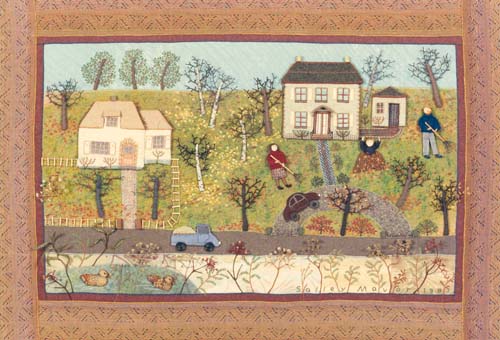
“Raking Leaves” fabric relief 1987
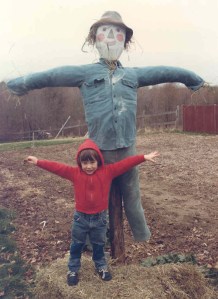
 

Peter with our scarecrow in Lunenburg 1986

The area was beautiful, and my artwork was influenced by the agricultural landscape of our neighborhood. I started working in my studio in the evenings, a habit I’ve kept ever since.

In an effort to test the illustration market for my type of work, I made a solo trip to New York City, meeting with an agent and a few children’s book editors. The agent wasn’t interested in my type of art, but I recall that one editor was intrigued. She laughed good heartily when I laid out the fabric background for “Noah’s Ark” on her desk and arranged the loose animals in front of her. I realize now that this presentation must have appeared quite unprofessional compared to the ubiquitous black portfolio with plastic sleeves that most illustrators carry. After looking at my various pieces, she told me she liked my work but found it hard to match with a story. She suggested I find a story that I thought would work together with my style and technique.

I went home feeling that I wasn’t practiced enough to take the leap from depicting one moment in a story to filling a 32-page book with enough action and visual variety to make a story come alive. I needed more time to develop my work to a point where I could confidently take on a large illustration project.
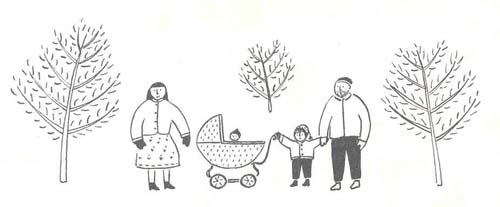
Ian’s birth announcement


‘Noah’s Ark” fabric relief 1986

After our second son Ian was born, I kept working on fabric relief pictures. I remember finishing up the “Noah’s Ark” piece on my worktable, with him rocking next to me in a wind-up swing. You can see an earlier post with several pictures of “Noah’s Ark” here. I continued to make and sell fabric relief pictures, trying new ways of constructing 3-dimentional parts that could be sewn in place.
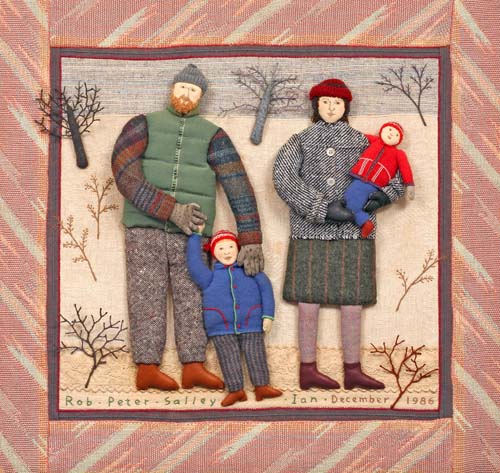
‘Family Portrait” fabric relief 1986
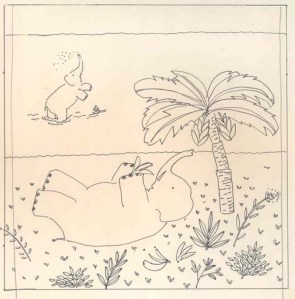
 

sketch for sample illustration

After four years away, we decided to move back to Woods Hole in the fall of 1987. Judy and I soon revived our interest in The Way Home and decided to start over and change our approach to the project. I felt more prepared to illustrate the story and with Judy’s encouragement, started to think how I would make a new sample to show. We wanted to impress the editors with our serious preparation, not wanting them to see us as two inexperienced housewives from Cape Cod. I made another illustration, this time picking a more active part of the story, where the mother elephant is enjoying herself on the beach, while Savi splashes in the water. I found some plastic banana beads that were the right size and cut banana tree leaves from cloth artificial leaves. Planning ahead for the border, I bought some diagonal striped upholstery fabric, in every color available.

 The text reads,

“Her mother cooled off in the shade of a banana tree and ate bananas. She rolled her big body from side to side in the sand. Savi stayed in the water.”
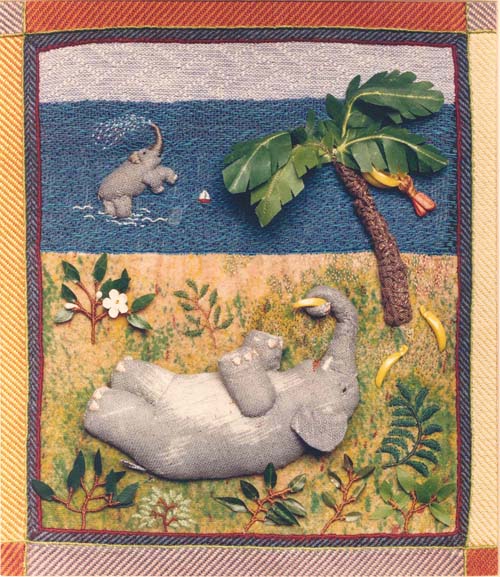
2nd sample illustration 1988

We knew that my new and untested method of working in 3-dimensions would be questioned as a viable illustration technique. We gathered everything that we could think of to counteract any skepticism. Since my originals would have to be photographed, we had a professional 4×5 transparency taken of my sample art. We also made a storyboard showing a simple layout in the standard 32-page format. It pictured the progression of the story with the different characters at the beach, in the water, walking through the trees’ shadows, following the banana trail and looking up at the moon at the end.

When we felt ready to present our project, we called and set up appointments with a handful of children’s book publishing houses in New York City. Judy was excited to be able to meet editors in person, because our visit would include showing my portfolio. Generally, writers are asked to submit their stories by mail only. My portfolio (brown leather, not black) held the original sample illustration for The Way Home, a color print and 4×5 transparency of the sample, the storyboard, plus a collection of 8×10 color prints of my fabric relief work from the past 4 years.

Judy and I drove to western Connecticut, where we stayed overnight with friends. The next morning we took the train to New York. We spent the entire day visiting children’s book editors, the most memorable being with Phyllis Larkin, an older, respected editor at MacMillan. When we were introduced and I saw her face, I knew that we had met before. I forget names, but faces make their imprint. I remembered that she was the one to whom I had shown the Noah’s Ark parts a few years earlier. Phyllis behaved as a true editor, asking to read the manuscript first before looking at my portfolio. She carefully read the story and then called in her art editor, Cecilia Yung. We laid out our visual materials and held the 4×5 transparency up to the light. They liked the pairing of Judy’s story with my artwork but had financial concerns about the extra expense of photography. They were also upfront about their inability to offer me an advance large enough to pay for the time it would take to sew the illustrations. We left them a photograph of the sample art and a copy of the manuscript and went home. We were encouraged because they liked our idea, but didn’t know if they would take the leap to offer us a contract. Months went by and we didn’t hear from any of the editors we’d met with. Judy and I put the project in the back of our minds and were fully distracted by summer activities.

To be continued in The Way Home (part 3).
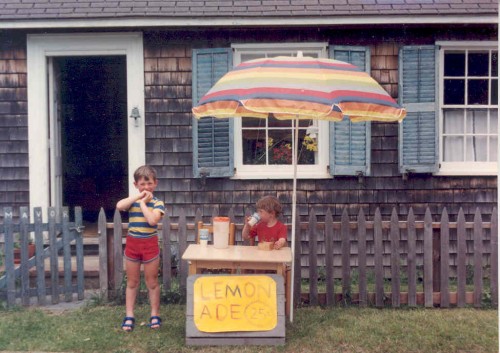
Summer in Woods Hole, 1988

To keep up with new posts, please subscribe to this blog. Your contact info will not be shared. If you’d like to see more frequent photos tracking the projects in my studio, please follow me on Facebook and/or Instagram.
The Way Home (part 1)

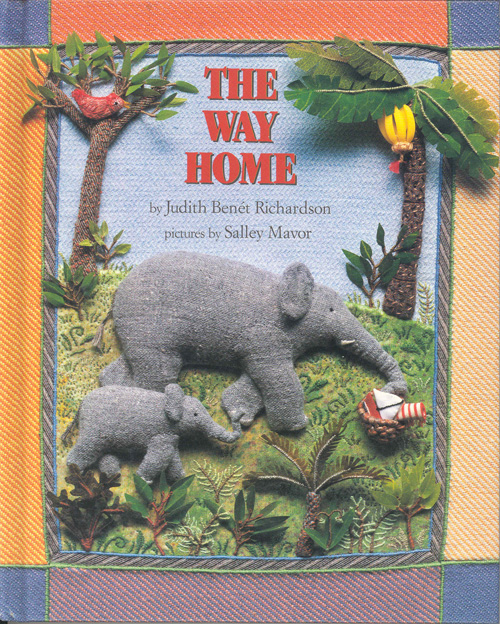
This is the story of the making The Way Home, my first picture book for children. In the 5-part series, I explain how the writer, Judy Richardson and I persisted over a period of 8 years, from our first glimmer of an idea in 1983, to having Judy’s story and my illustrations paired together in a book published by MacMillan in 1991.  This is not meant to be a guide for those who want to have their own work published. Our unique project and the time and circumstances in which we were working shaped the trajectory of events I will be sharing. There’s a lot to show and tell about this story and I hope that you will follow through until the end of part 5.

The Way Home, published in 1991

I majored in illustration in art school, but I never thought I’d make illustrations in a way that could be reproduced effectively. At the Rhode Island School of Design during the 1970’s, there wasn’t an obvious major for someone like me, who was interested in many different materials and methods.  I didn’t want to limit myself to a particular discipline and was attracted to the illustration department, with its focus on communication, rather than certain processes and mediums. Just as other schools are divided by subject, our student body was separated by technique, and I regret not mingling with people in other majors. Other possible matches, like the sculpture or textile dept. were too specialized for me.

Salley at RISD

The sculpture dept. seemed to me like an all-boys club, with its swarm of black clad, chain-smoking, wiry young men who produced large, austere metal sculptures, the kind that are now rusting in public places. Even the more female dominated textile dept., with its concentration on fabric design and weaving, was too specific for me. All I knew was that total abstraction left me hungry for more and I wanted my artwork to be a kind of narrative that viewers could connect to. In the illustration dept., I could use any materials I wanted, as long as my artwork solved the assignment. I used this time in school to teach myself different ways of working and showed a particular interest in fabric and sewing. For my senior thesis, I made a series of 3-dimentional illustrations of the story “Hansel and Gretel”.

“Hansel & Gretel” RISD senior thesis 1978
illustration from Houghton Mifflin educational reader, 1979

Following graduation in 1978, I spent a few years making soft sculpture. My first freelance illustration job was constructing insect characters and their neighborhood for a story in an educational reader. I found that making all of the parts was easy compared to setting up the scenes for the photo shoot. It was almost like making a movie in miniature, complete with an “Ivory Snow” winter scene. The project was challenging, and I came away thinking that I would have more control of the outcome if I figured out a way to present my sculpture in a different format.

illustration from Houghton Mifflin educational reader, 1979

I started making what I called “fabric relief” sculptures, which were figures and props sewn to cloth backgrounds. I guessed that if my work was hung on the wall, it would be more readily accepted as “art”. I also thought that bas-relief work would be easier to photograph than sculpture in the round. “Mother and Child” was an early fabric relief sculpture that I made with fabric-covered and stuffed cardboard shapes on a pieced and embroidered fabric background.

“Mother and Child”, fabric relief 1983

Molly Bang, an illustrator who lives in Woods Hole, showed me Judith Benet Richardson’s 2-page manuscript for a picture book titled The Way Home. Molly had recently illustrated Judy’s novel for young readers, David’s Landing, which takes place in a village very much like Woods Hole, named Maushope’s Landing. Molly’s cover illustration shows a drawing of the Woods Hole School (built in 1870), where I attended elementary school in the 1960’s.

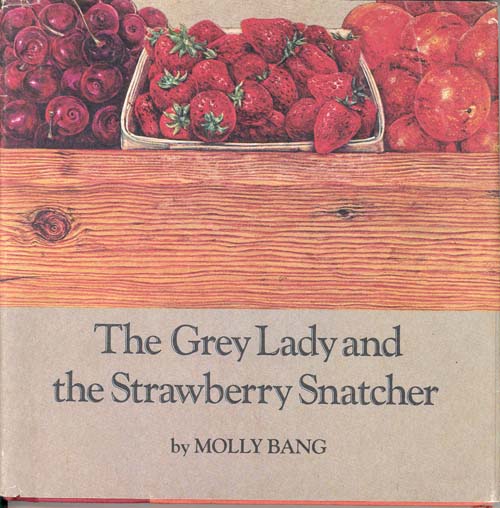
Her 1981 wordless picture book, The Grey Lady and the Strawberry Snatcher, had won recognition as a Caldecott Honor Book and she was nice enough to show an interest in Judy’s writing and my artwork. I liked The Way Home immediately and could envision the baby elephant and her mother at the beach. Today, 27 years later, I marvel at how very fortunate I was to have this story presented to me. As an illustrator who is not a children’s writer, I have learned to appreciate how difficult it is to craft a good story that children will want read to them over and over. Like poetry, everything about it has to work, the characters, the place and the rhythm, without any unnecessary words. Judy’s story had believable and charming characters, a strong sense of place, tension and a problem resolved in the end.

Molly Bang’s ‘Grey Lady and the Strawberry Snatcher” 1981
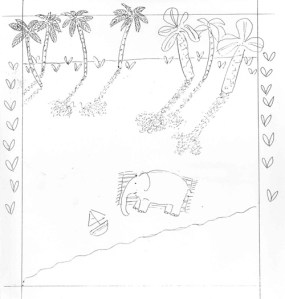
sketch of sample illustration

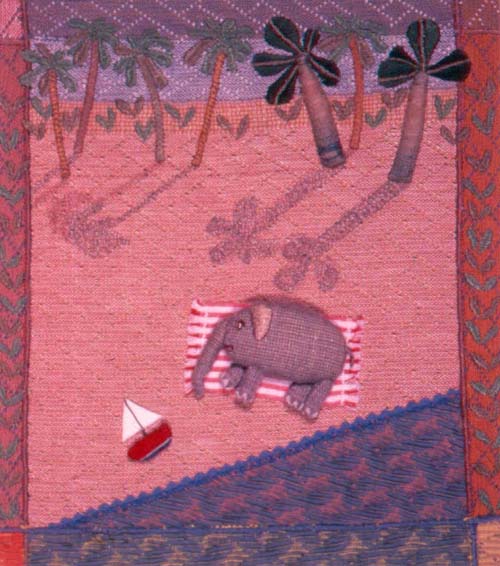
We decided to work together, and I made a sample illustration of Savi, the baby elephant, alone on the beach, with the banana trees casting long shadows. I knew that an editor would want to see just a sample of my work, not the complete set of illustrations. Picking a book size and designing the page layout comes later, after a contract is signed.

This part of the story reads:

“The sun went down a little farther. Savi came out of the water and lay on her towel. She began to feel cold and hungry.”

Sample illustration made in 1983

Judy and I sent out the story and photographs of my sample illustration to a handful of editors, none of whom were interested. Looking at it now, I can see that showing this part of the story was not a good choice for a sample. The artwork and the moment it illustrates were too static and not the obvious scene to pair up with the story. It was the most lonesome point, just after a tense moment when Savi’s mother leaves her because she refuses to get out of the water.  I can see why I was drawn to this emotional part, but visually it was too motionless. To sell our idea, we needed to show a more active scene, one that more accurately represented the story as a whole.

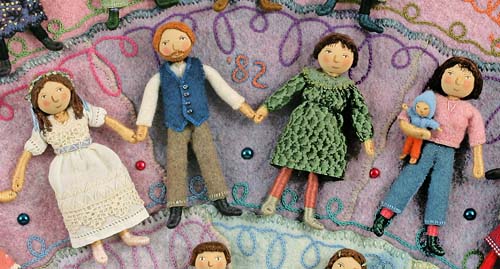
detail from “Self Portrait: A Personal History of Fashion”

That summer our book project was sidetracked by the birth of my first son, Peter. You can see more pictures of my Self Portrait in an earlier post here. Soon after, I moved away with my family to Central Massachusetts. My sample illustration for The Way Home sat in a box, while I adjusted to motherhood and living in a new town.

This story is continued in The Way Home (part 2).

To keep up with new posts, please subscribe to this blog. Your contact info will not be shared. If you’d like to see more frequent photos tracking the projects in my studio, please follow me on Blue SkyFacebook and Instagram.

Close-ups (windows)

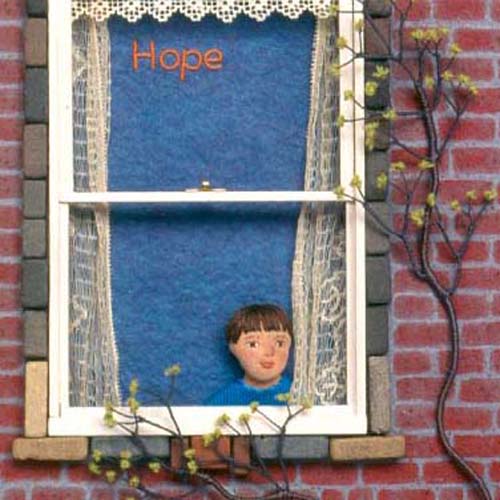
Windows are opportunities to go from one world and into another. They are like mini stages, complete with curtains. I also like the way they provide a structure for bringing pattern and color into a scene. This series of window close-ups are all from children’s books I’ve illustrated. The first one is from You and Me: Poems of Friendship. There are clay “brick” beads framing the window and the ones on the wall are painted on gray felt.   

Illustration from "You and Me: Poems of Friendship" 1997

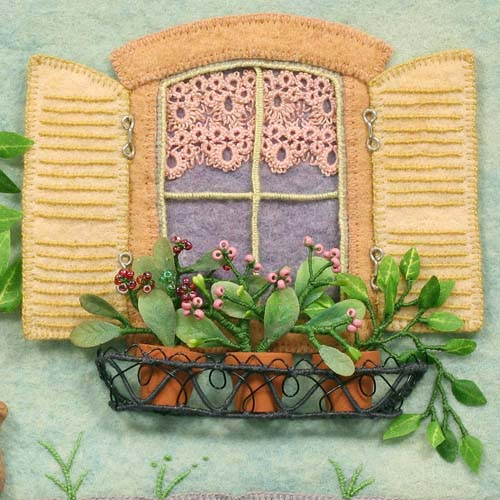
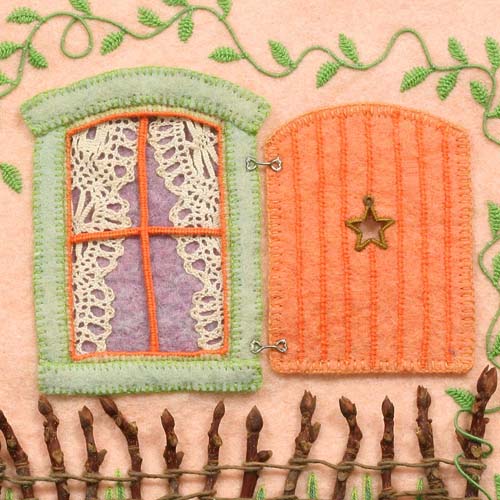
 The next two are from the board book, Wee Willie Winkie. The window box is made of wire wrapped in embroidery floss and the fence is a row of budding branches.  

Illustration from "Wee Willie Winkie" 2006

Illustration from "Wee Willie Winkie" 2006

 The last group are closeups of  illustrations from my upcoming book, Pocketful of Posies: A Treasury of Nursery Rhymes.  

Illustration from "Pocketful of Posies" 2010

Illustration from "Pocketful of Posies" 2010

Illustration from "Pocketful of Posies" 2010

Note: See other posts in the Close-ups series archive here.

Close-ups (mittens)

Mitten (n.) A covering for the hand, worn to defend it from cold or injury. It differs from a glove in not having a separate sheath for each finger. 

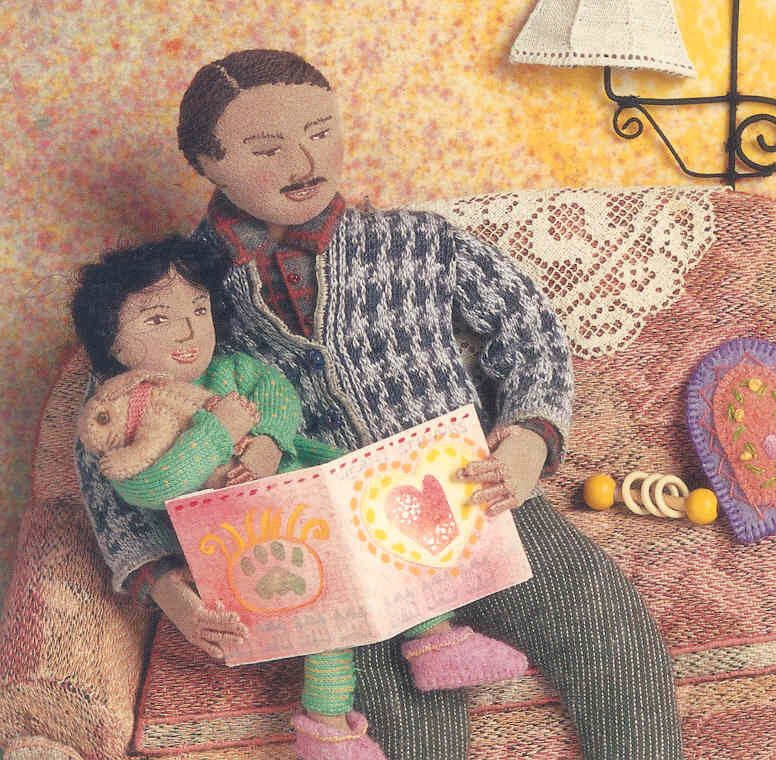
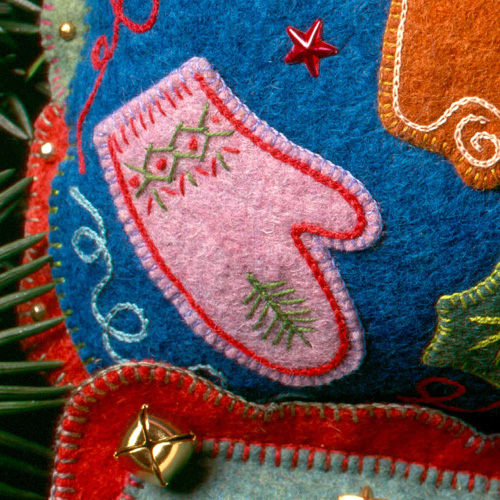
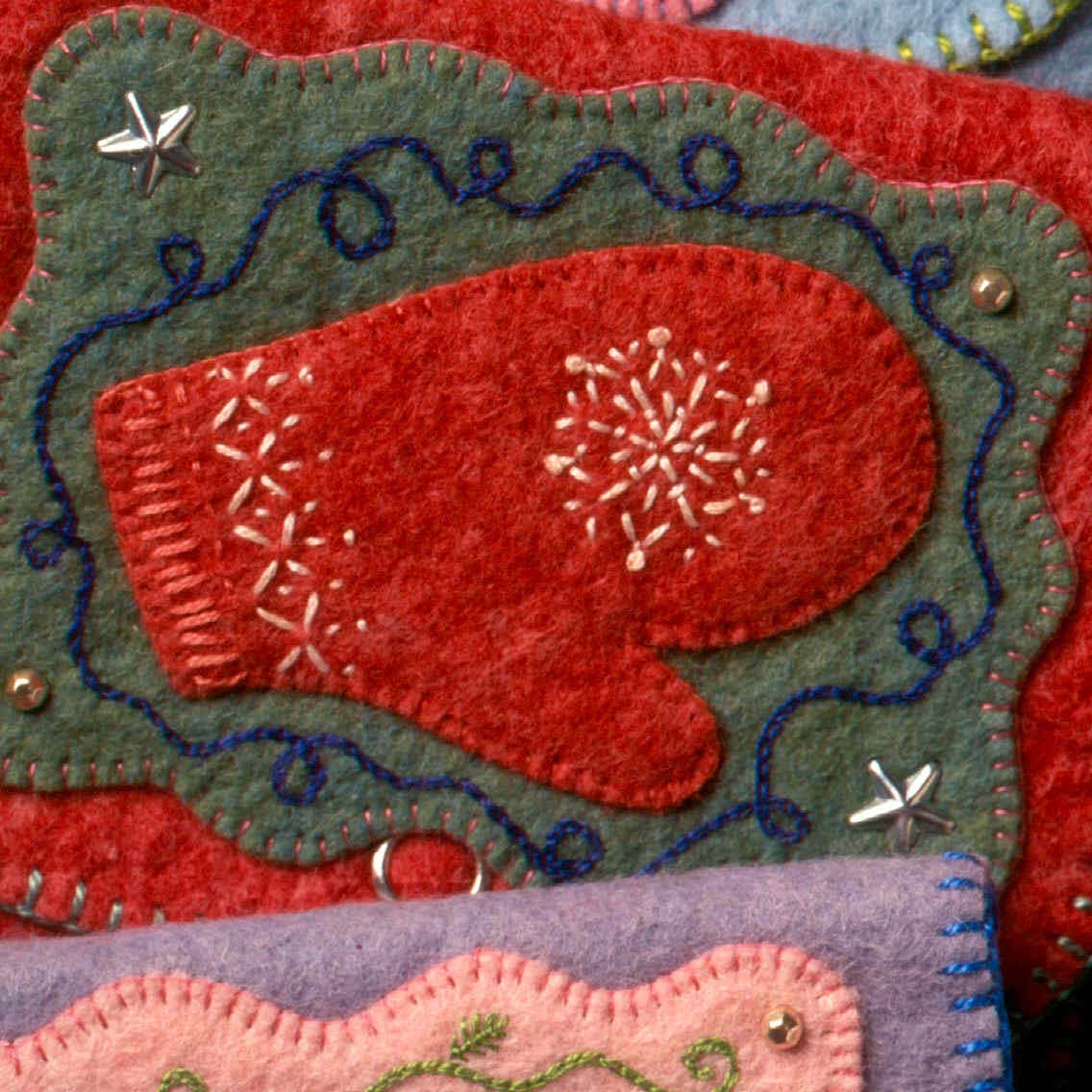
 Even though Spring is around the corner, we still have cold snowy weather. Here are some mittens that have appeared in some of my pictures, starting with a detail from the tempera painting “Laplander”, which you can see here. Then there’s a boy with red mittens holding a kitten from You and Me:Poems of Friendship. The cozy father and daughter scene is from In the Heart, where red mittens as well as hearts show up throughout the book. The balsam pillow and felt purse projects are from my how-to book, Felt Wee Folk: Enchanting Projects. Last is a boy dressed for winter from Pocketful of Posies: A Treasury of Nursery Rhymes, which will be published in September. 

detail from “Laplander” 1977

detail from “You and Me: Poems of Friendship” 1997

detail from “In the Heart” 2001

detail from the balsam pillow in “Felt Wee Folk” 2003

felt purse from “Felt Wee Folk” 2003

detail from “Pocketful of Posies” 2010

Note: See other posts in the Close-ups series archive here.

Close-ups (Mary’s lamb)

It’s lambing season, so the closeups are all from my 1995 children’s book, Mary Had a Little Lamb.

MHALLcoverWMThe 32-page hardcover first edition is out of print, but Mary Had a Little Lamb has been re-released as a board book. (sorry, it too is out of print) Read further to learn how some of the illustrations were made.

MHALL23WM

The barn wall is made from an old weathered shingle and the straw bed is a mixture of real straw and embroidery floss.

MHALL45WM

The lamb is made of wool felt, then covered in wool french knots. Mary’s dress is made of a cotton sock and the furniture hinge is a hook and eye.

MHALLp67WM

The lamb’s ears are made from kid leather and the garden wall is beach stones glued in a circle

MHALLclimbtreeWM

The tree trunk is wool tweed and Mary’s toes are made of wire, wrapped in embroidery floss.  

MHALL1011WM

The leaves are cut out of artificial leaves and the wood pile next to the house is made of wooden beads.

MHALLschoolWM

 This scene inside the schoolhouse has desks sawed out of wood and a real slate black board.

Note: See other posts in the Close-ups series archive here.

Noah’s Ark

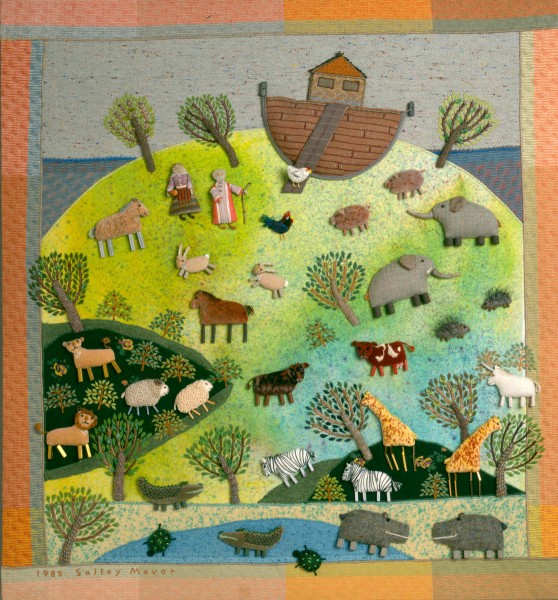
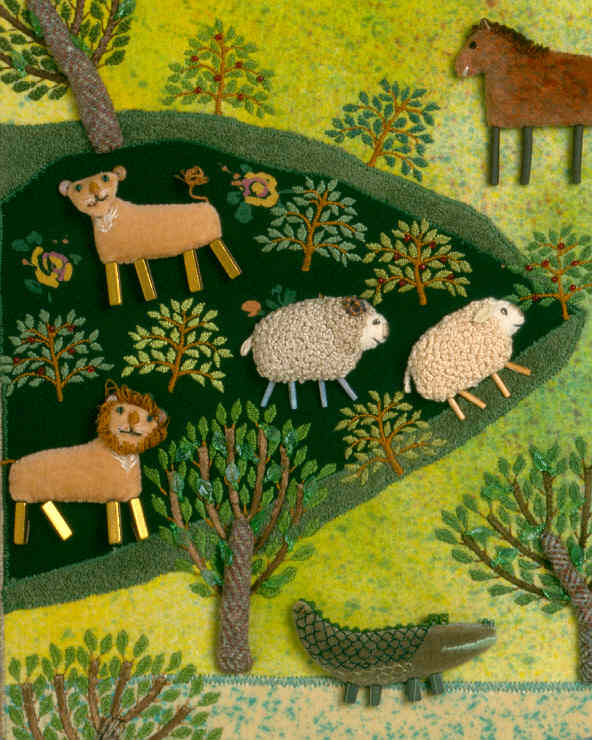
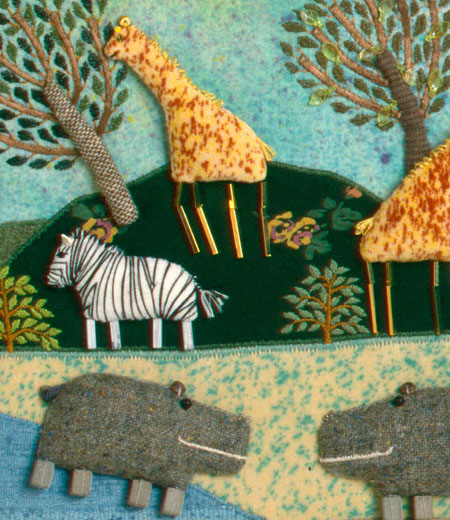
At 26″ x 30″, Noah’s Ark is the largest piece I’ve ever made.  Everyone has their own scale and mine tends to be small. Even if the outside dimensions of a piece are large, I will fill it with smaller items. Looking at this picture now, I see large areas that would not escape my present-day appetite for embellishment.  It’s tricky to keep the all over design working, so that it draws you in first and then you can appreciate the detail up close. At this time, in 1985, I had stopped making the pins, but was still designing small animals of the same size to use in my fabric relief pictures. You can read a 3 part story about my pins in earlier blog posts here. Showing the story of Noah was an opportunity to continue figuring out how to make a variety of animals. It was also a way to play around with arranging them together in a landscape.

“Noah’s Ark”, 26″ x 30″, fabric relief 1985

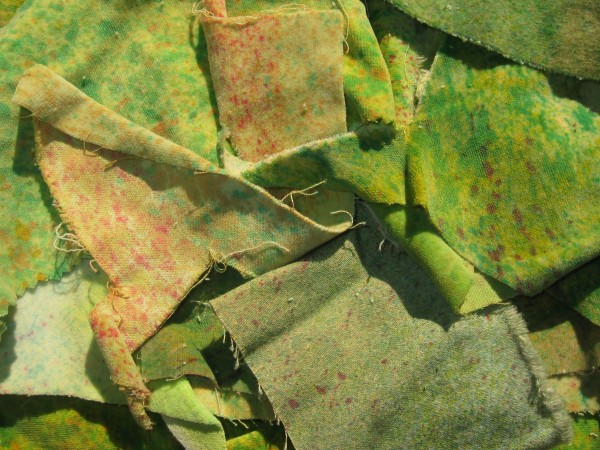
 The background fabric is cotton velveteen, which I dyed with a spray bottle, building up layers of  color, giving it a variegated, stippled appearance. The border is made from an upholstery fabric remnant that I remember finding in a bargain bin at a fabric store in Berkeley, California.   

dyed velveteen

Detail of "Noah's Ark", 9" x 12", 1985

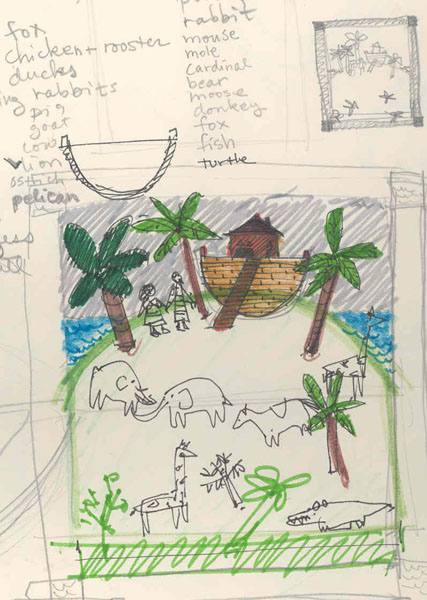
sketch of Noah's Ark

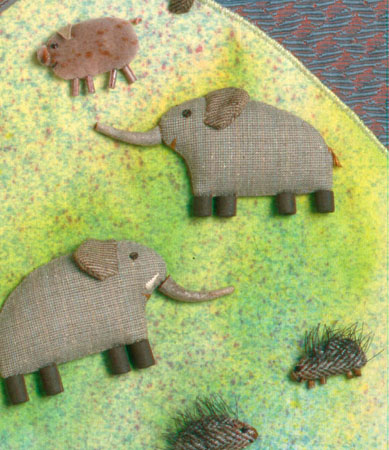
During this time, I was hand embroidering the leaves on the trees and adding some leaf beads as well. The fabric is machine appliqued, something I would give up shortly after this in favor of hand stitching. I came to dislike the uniform, flat stitches and put my sewing machine away for years at a time. It’s fun to look at this piece and see early examples of human figures and animals that I will continue to rework and develop for another 25 years.  

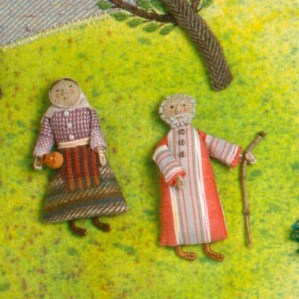
Noah and his wife

Detail from "Noah's Ark"

detail from "Noah's Ark"

detail from "Noah's Ark"

Close-ups (snow)

In the bleak midwinter Frosty wind made moan,   

Earth stood hard as iron,   

Water like a stone;   

Snow had fallen, snow on snow,   

Snow on snow,   

In the bleak midwinter,   

Long ago.   

by Christina Rossetti, English poet (1830 – 1894)   

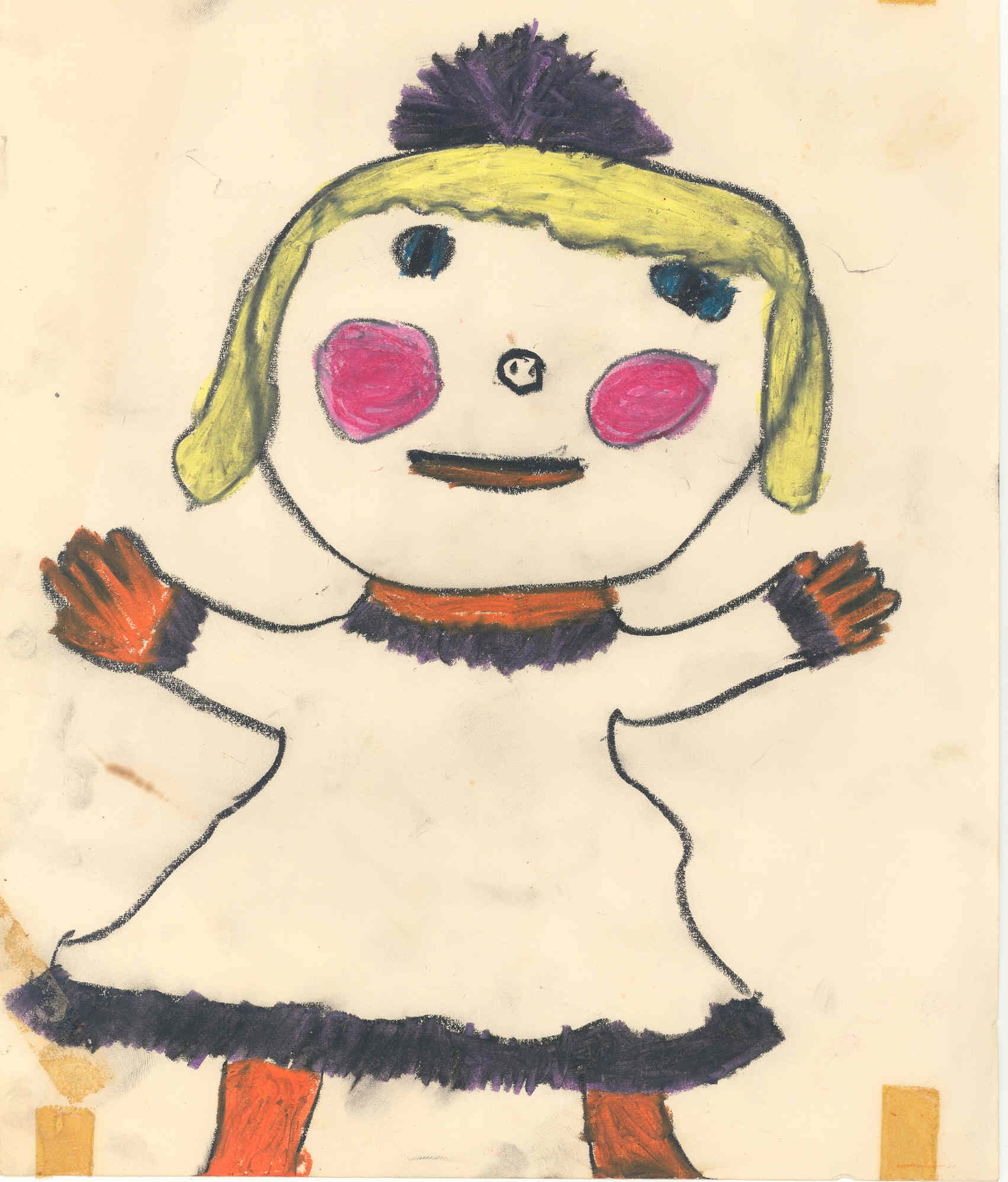
drawing by Salley. age 6

 With snow falling and lingering in many parts of the country this winter, I’ve found some  snow pictures to show you. First, here’s a crayon drawing saved from my childhood by my mother. Then we skip ahead to 1995, with a detail from the title page of the 32-page edition of Mary Had a Little Lamb. It’s the scene where Mary, her brother and her father are trudging through the snow to visit the lamb in the barn.  

detail from "Mary Had a Little Lamb" 1995

 The next scene is from the illustration for the poem “Snow”, which is in the poetry anthology, You and Me: Poems of Friendship. The snowman is made of felt, painted with an acrylic based bumpy liquid medium. In the background is an old linen tablecloth.  

detail from "You and Me: Poems of Friendship" 1997

 Here are some wee folk dolls that were brought out to play in the snow. 

Wee Folk in the Snow 2002

 This snowflake covered bed spread is part of an illustration from Pocketful of Posies: A Treasury of Nursery Rhymes. The bed frame is made from some hollow dried plant parts, maybe thorns, with the sharp points cut off. I bought them a long time ago in a bead store. The original illustrations will be shown in a traveling exhibit when the book is released next September. Find out about it here.  

detail from "Pocketful of Posies" 2010

Note: See other posts in the Close-ups series archive here.

Pink House

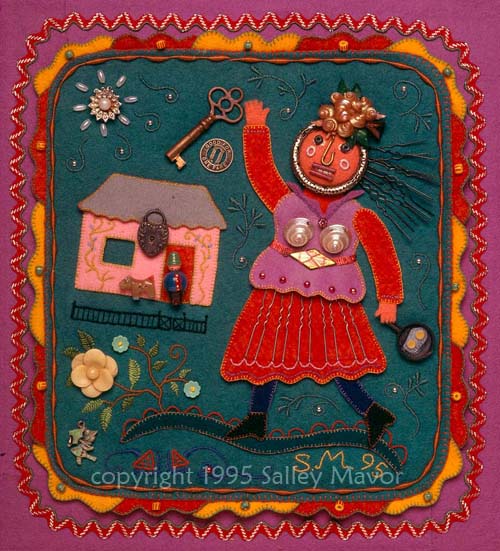
I can still remember how much fun it was to make The Pink House back in 1995. I had finished the 2 year project of making  illustrations for Mary Had a Little Lamb and was ready to burst out with something bold and unplanned. I sorted through boxes of objects that I’d been collecting, selecting parts to use.

PinkHouselowWM

The hair pins and costume jewelry were from grandmother’s things.  The key and New York subway token were found in her desk drawer. I try to find things that can be sewn. Even the shells used for the breasts were earrings with convenient holes already drilled, making it easier to sew them down. I prefer to sew things in place and not use glue, which is messy and unpredictable. With stitches, if somethings doesn’t work, you can always rip it out and try again.

hair pins

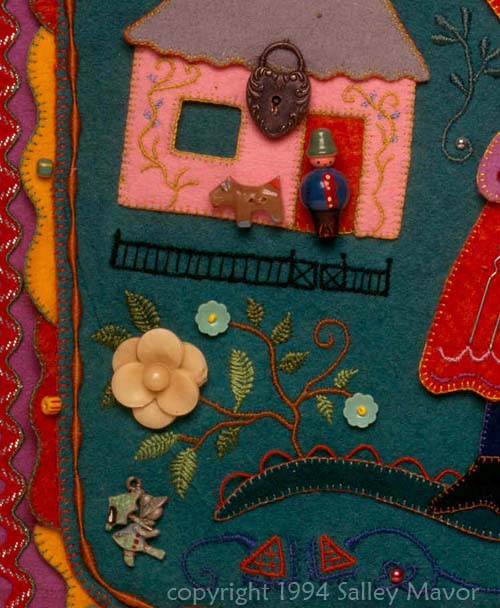
pinkhouse2detailWMSome of the objects include a miniature silver lock, man and dog buttons, a girl with umbrella charm and a Bakelite flower button. The woman’s headdress is a pin made of a cluster of shells.

sketch for “The Pink House”
pinkhouse3WM

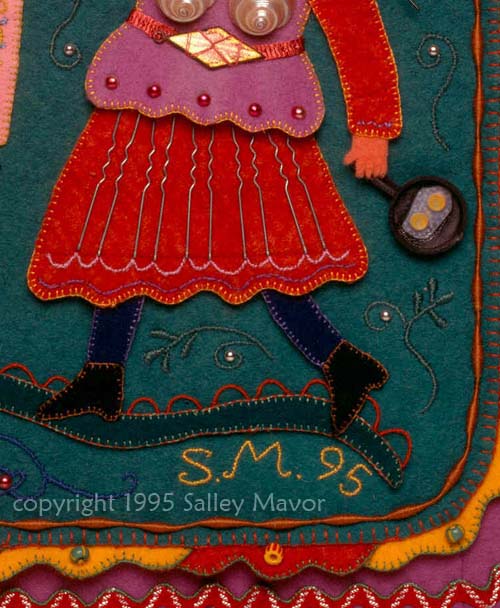
The Pink House  was one of the first pieces I made with wool felt. The red felt is from an old maternity top my late mother had from the 50’s.  The woman is holding a doll house sized plastic frying pan from my childhood. Queen With Duster is another piece I made with my grandmother’s found objects during the same period. You can see it here.

PinkhouseWM

I’m so glad that my mother saved some of my artwork. I don’t remember this childhood drawing, which I just found when I was cleaning my parents’ house.  I can’t help notice some similarities between this drawing and The Pink House. They both have a bold central figure in a dress, with arms raised, gesturing hands, a head-piece and circle cheeks.

drawing by Salley at age 7

To keep up with new posts, please subscribe to this blog Your contact info will not be sold or shared. If you’d like to see more frequent photos tracking the projects in my studio, please follow me on Facebook and/or Instagram.

Close-ups (hearts)

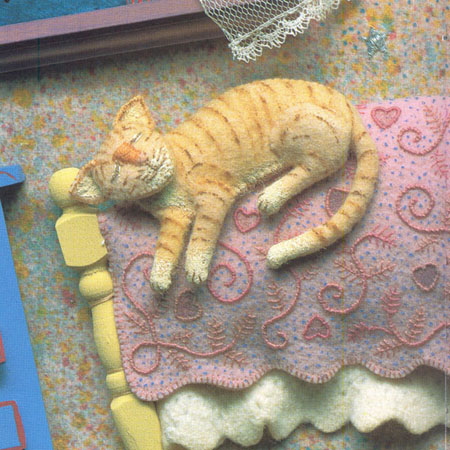
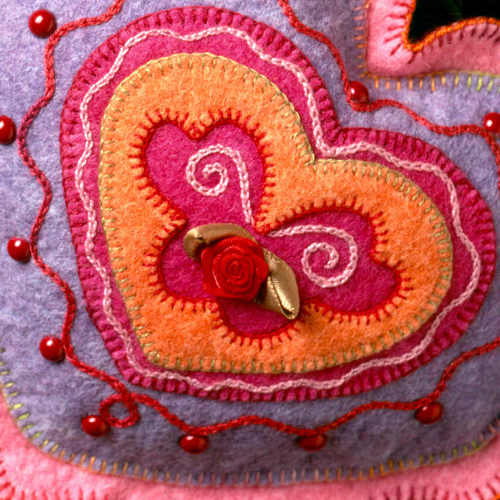
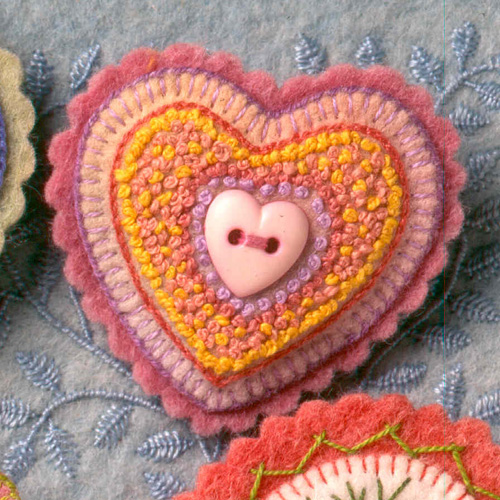
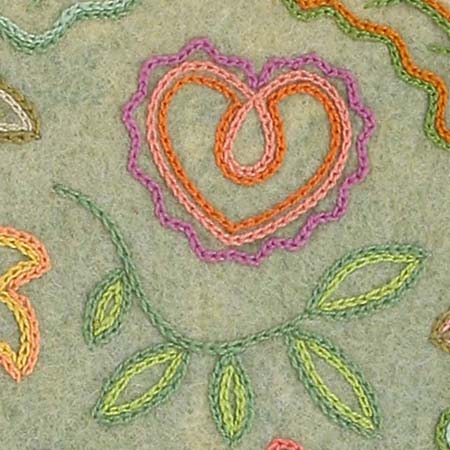
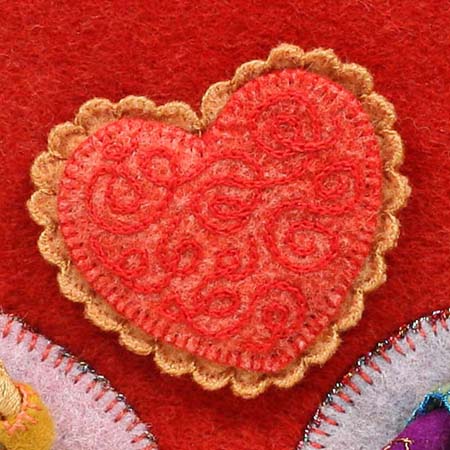
This selection of hearts begins with a sleeping cat on a heart covered bed spread from my book In the Heart. Then there is a felt balsam pillow and a heart pin covered in french knots, both projects from my how-to book, Felt Wee Folk. The last two are a chain stitched heart that’s part of the endpapers and a heart tart from “The Queen of Hearts” nursery rhyme (see in this post) from my upcoming book, Pocketful of Posies (Sept. 2010). The original illustrations will be shown in a traveling exhibition which you can find out about here.

detail from “In the Heart” 2001

balsam pillow from “Felt Wee Folk” 2003

pin from “Felt Wee Folk”

detail from “Pocketful of Posies” 2010

detail from “Pocketful of Posies” 2010

Note: See other posts in the Close-ups series archive here.

And the winners are…

I had the pleasure of judging the Felt Smack Down 2010 “Challenge Alert”, which was organized by Patty from My life under the bus.  You can see all the projects entered in the contest on her blog here. The premise of the challenge was to make something based on my Felt Wee Folk book. Here are the results! It was very rewarding to see such a variety of entries to the contest. Everyone’s felt project showed imagination and oozed enthusiasm, so it was fun to look at all the submissions, knowing that there was a lot of thought and labor invested in each one. 

I looked for what I thought was the best character development, color choices, workmanship and presentation. I also was interested in how the projects from my book could inspire someone to come up with their own ideas and interpretations. 

Prizes are for the following projects: 

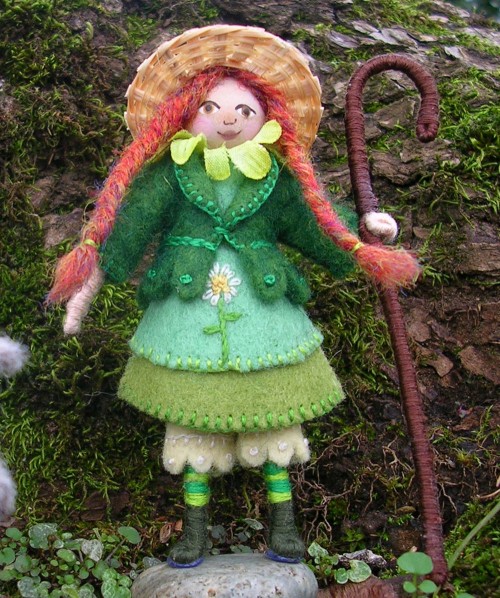
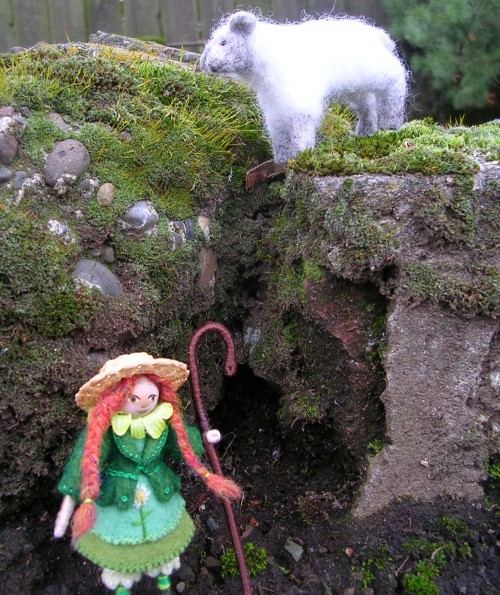
1st prize- Alison of Acorn Cottage for her Little Bo Peep. See her blog here

First Prize, Little Bo Peep made by Alison

Little Bo Peep with sheep made by Alison

2nd prize- Caroline for her handsome fellow 

Second Prize, Handsome Fellow made by Caroline

3rd prize- Loralynn’s Cottage  

Third Prize, Loralynn's Cottage

Thank you to Patty for organizing this contest and to all the folks who committed themselves and worked on projects over the last few weeks. That’s a lot of blanket stitches!