Eddie’s Baby Banner

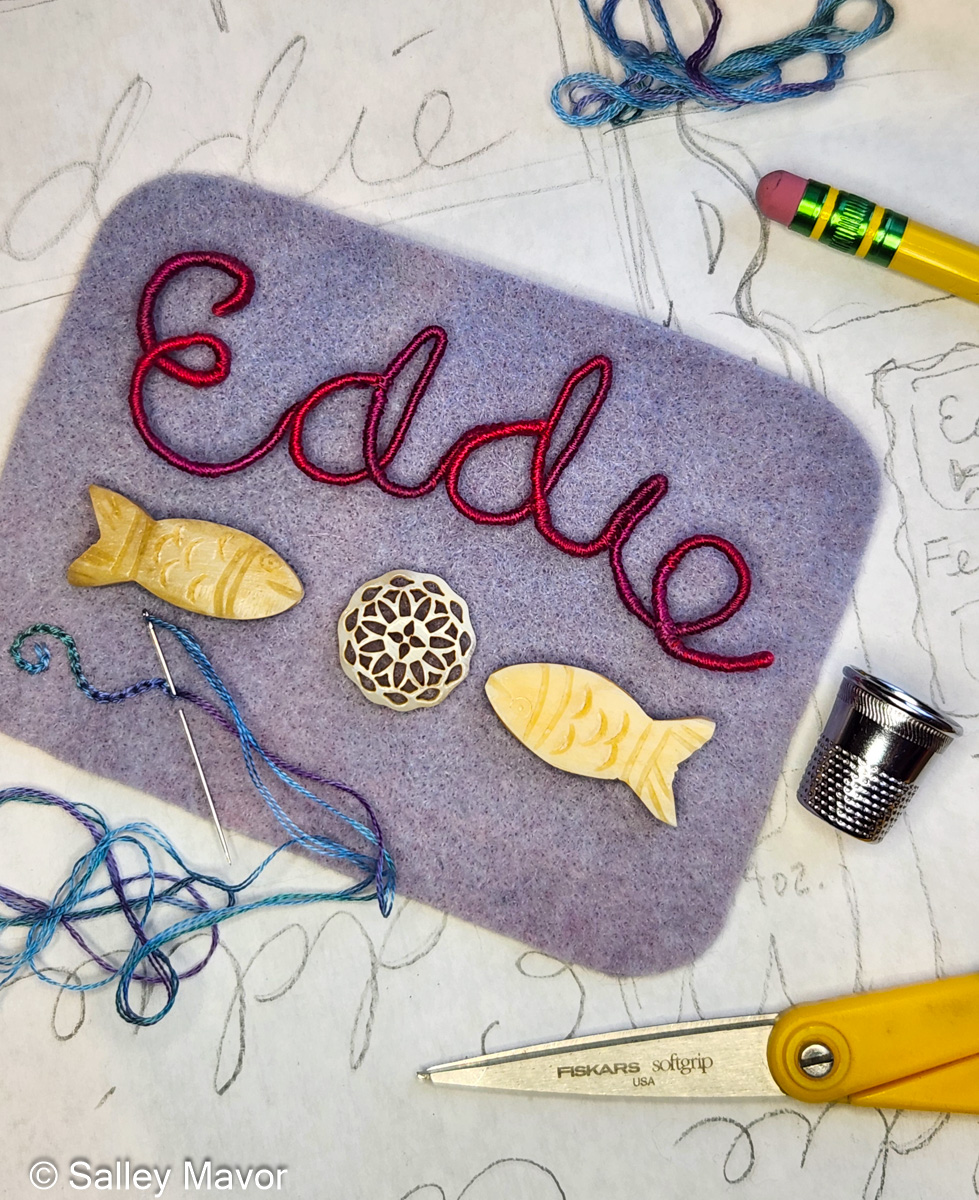
I’m happy to share the news that our new grandchild Eddie was born on Feb. 15th, 2024. He’s named Edward, after his maternal grandfather, but his parents, Mary and our son Peter, call him Eddie. So, that’s the name I put on his baby banner. Our family is growing so fast, I can hardly believe it! Little Eddie and his cousin Elias were born 13 months apart and we hope they become good buddies (see Elias’s banner here).

MAKING THE BANNER
Read ahead to see photos, videos, and commentary about making Eddie’s baby banner. I’ve divided the post into different sections, including wrapping wire letters and embellishing felt borders, which are are some of the more distinguishable features of my banners. To see posts about this and other celebratory banners I’ve made over the years for family and friends, scroll through the archives here.
WRAPPING WIRE LETTERS
After choosing a color scheme and picking out pieces of felt and thread, I wrote out Eddie’s name in cursive handwriting with a pencil on paper. Fortunately, his name could be written in one continuous line, which doesn’t always happen. I then wrapped a length of DMC memory thread (a kind of wire) with 3 strands of variegated embroidery floss (see video below). Using the drawing as a template, I bent the wire to form his name and stitched the letters together where they touched.

In this video, I demonstrate wrapping DMC memory thread with 3 strands of embroidery floss to create numbers and letters for Eddie’s birth weight. I thought it would be easier to see the process using contrasting wire and thread colors. Of course, using the same color wire and thread is better for hiding gaps and inconsistencies. It takes a lot of practice to get the hang of wrapping the wire. If you’ve learned to wrap arms and legs for the wee folk dolls in my how-to book, Felt Wee Folk, you’ve got a jump start on mastering this technique.

EMBELLISHING FELT BORDERS
I love embellishing with blanket stitching, especially with variegated thread. It’s a simple, but effective way to create an edge that looks clean and assertive, while also displaying a handmade quality. For me, it’s important to show that a real person made it, not a machine. For this banner, I created layers of felt pieces, which I blanket stitched with pima cotton (Watercolours by Caron).

In this is a video, I demonstrate embellishing borders for the banner.

The border around Eddie’s birth date needed perking up, so I added beads.

CANDY CANE STRIPES
When I finished making numbers for the year 2024 and laid them out, they looked kind of plain. So, I decided to wind a single strand of orange embroidery floss around the wire numbers (see video below).

I looked through my driftwood collection and found the right sized stick that would work as a hanging bar. I braided cord to make a strap and drilled holes in the stick big enough to thread cord through.

This video shows how I chain stitched spirals on the scalloped flaps at the bottom of the banner.
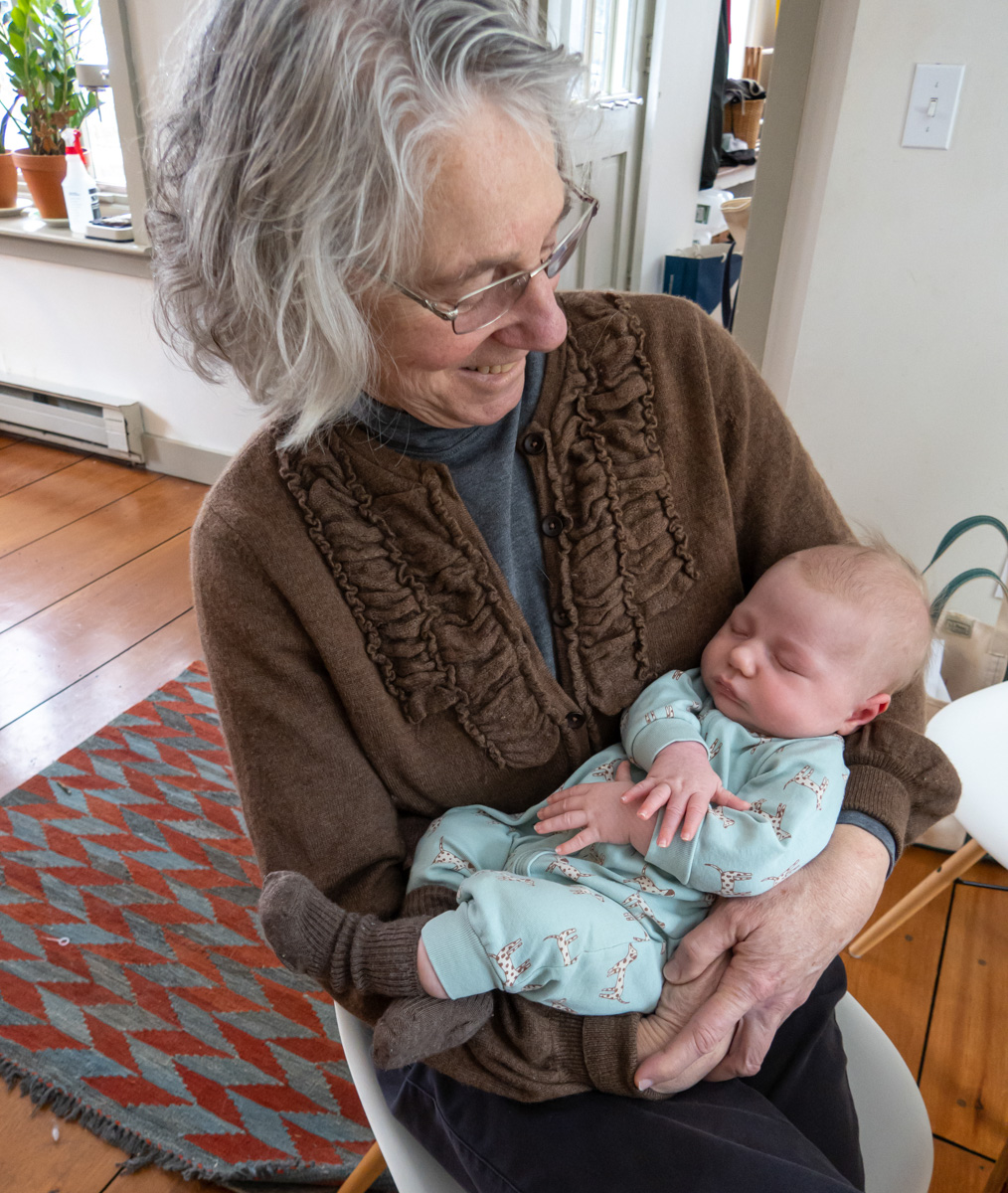
We’re pleased as punch with little Eddie and look forward to getting to know him as he grows!

To keep up with new posts, please subscribe to this blog. Your contact info will not be sold or shared. If you’d like to see more frequent photos tracking the projects in my studio, please follow me on Facebook, Instagram and BlueSky.

Inuit Doll remake

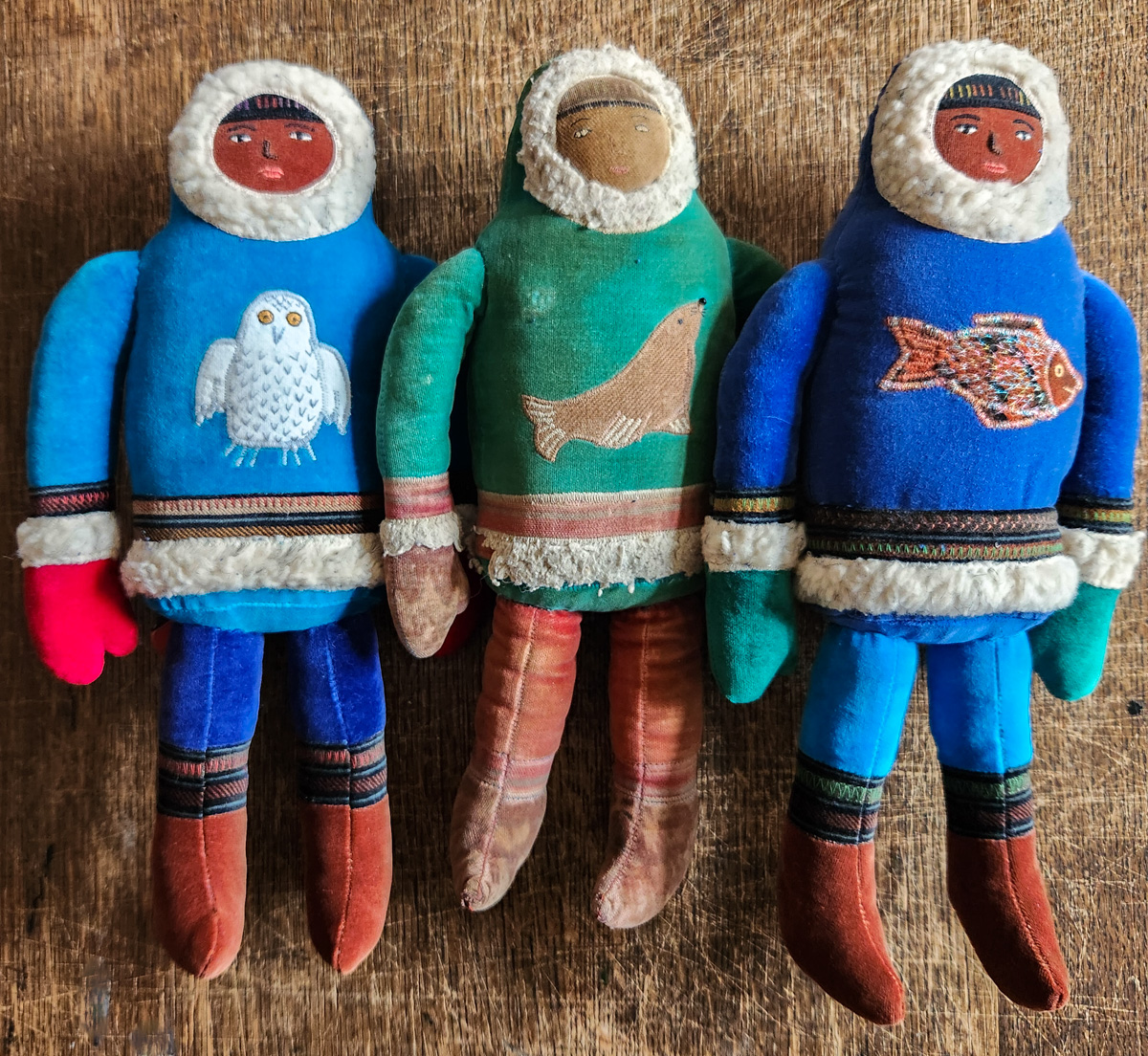
In 1985, I made a velveteen Inuit doll with a seal appliqued on its parka for my son, Peter. When you make something for a toddler, or anyone for that matter, you never know how it will be received. Will they actually play with it or leave it in the corner? I needn’t have worried, because Peter loved this doll to the point where its arms and legs had to be sewn back on several times. All these years later, I have 2 really good reasons to make dolls for a new generation, because a few weeks ago Peter became a father! So, it seemed right that little Eddie and his 1 yr. old cousin, Elias would each have their own Inuit doll to love.

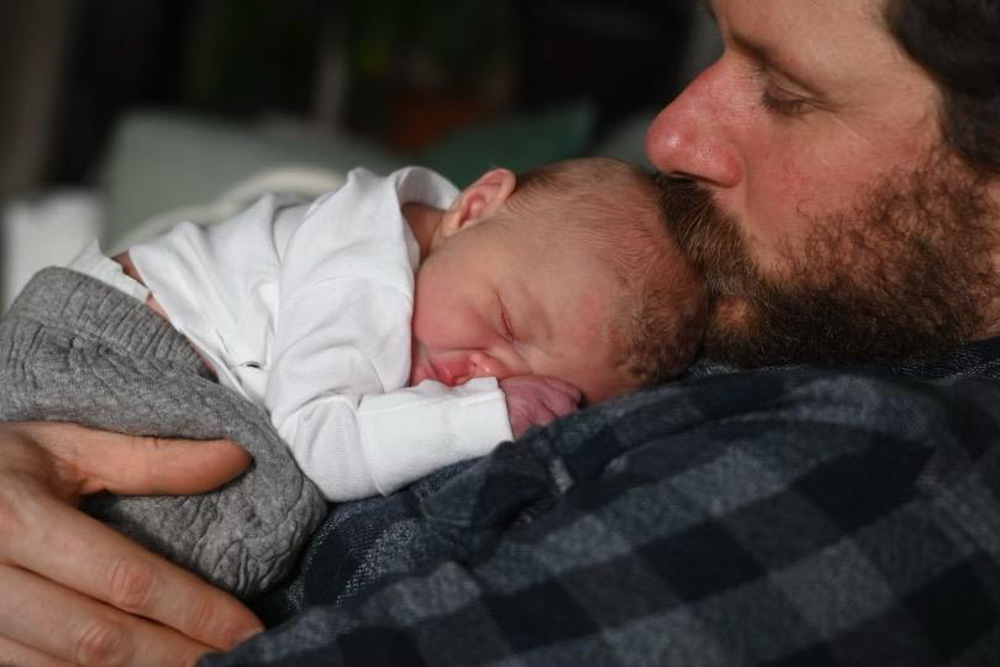
Little Eddie and his father Peter

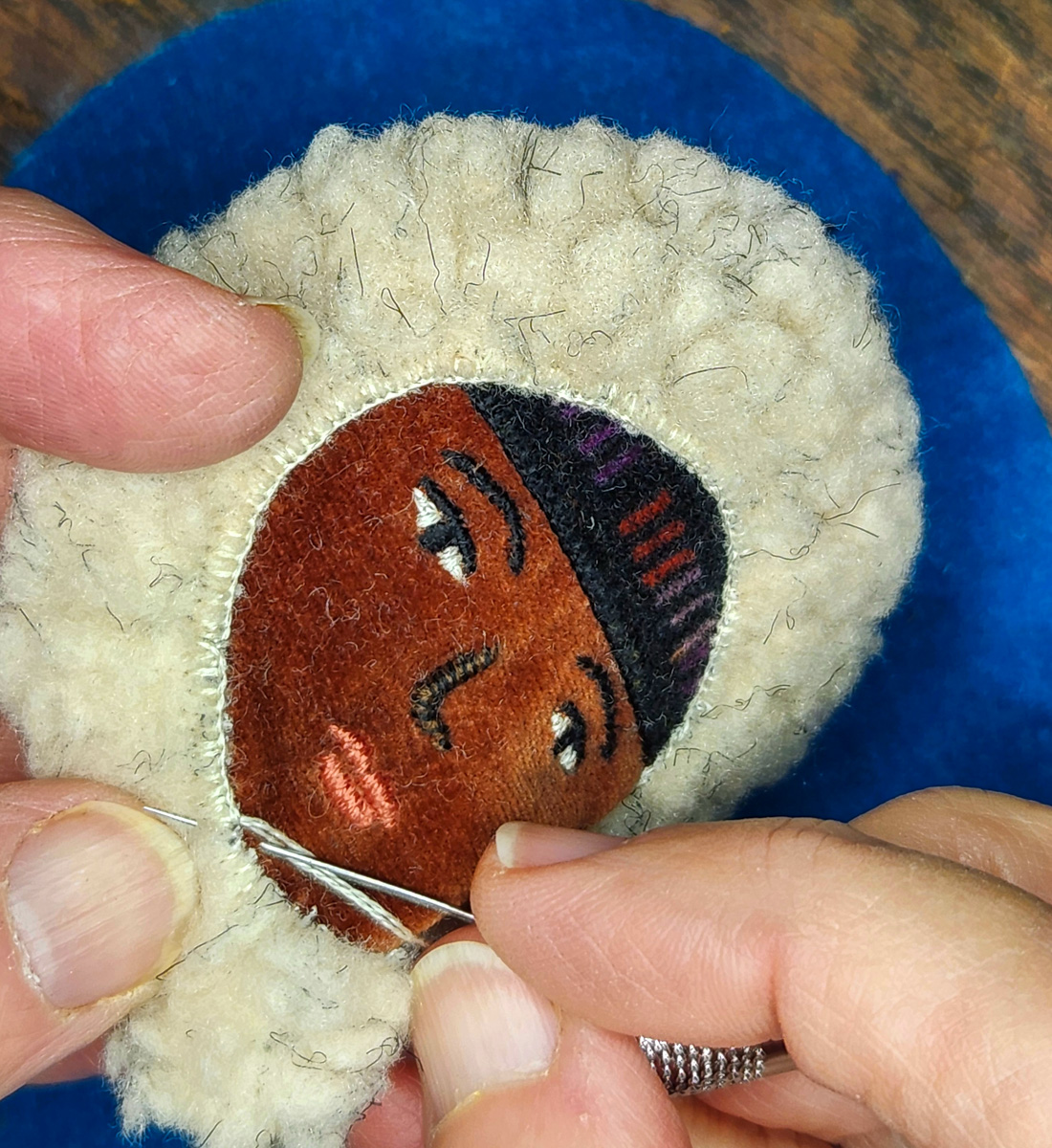
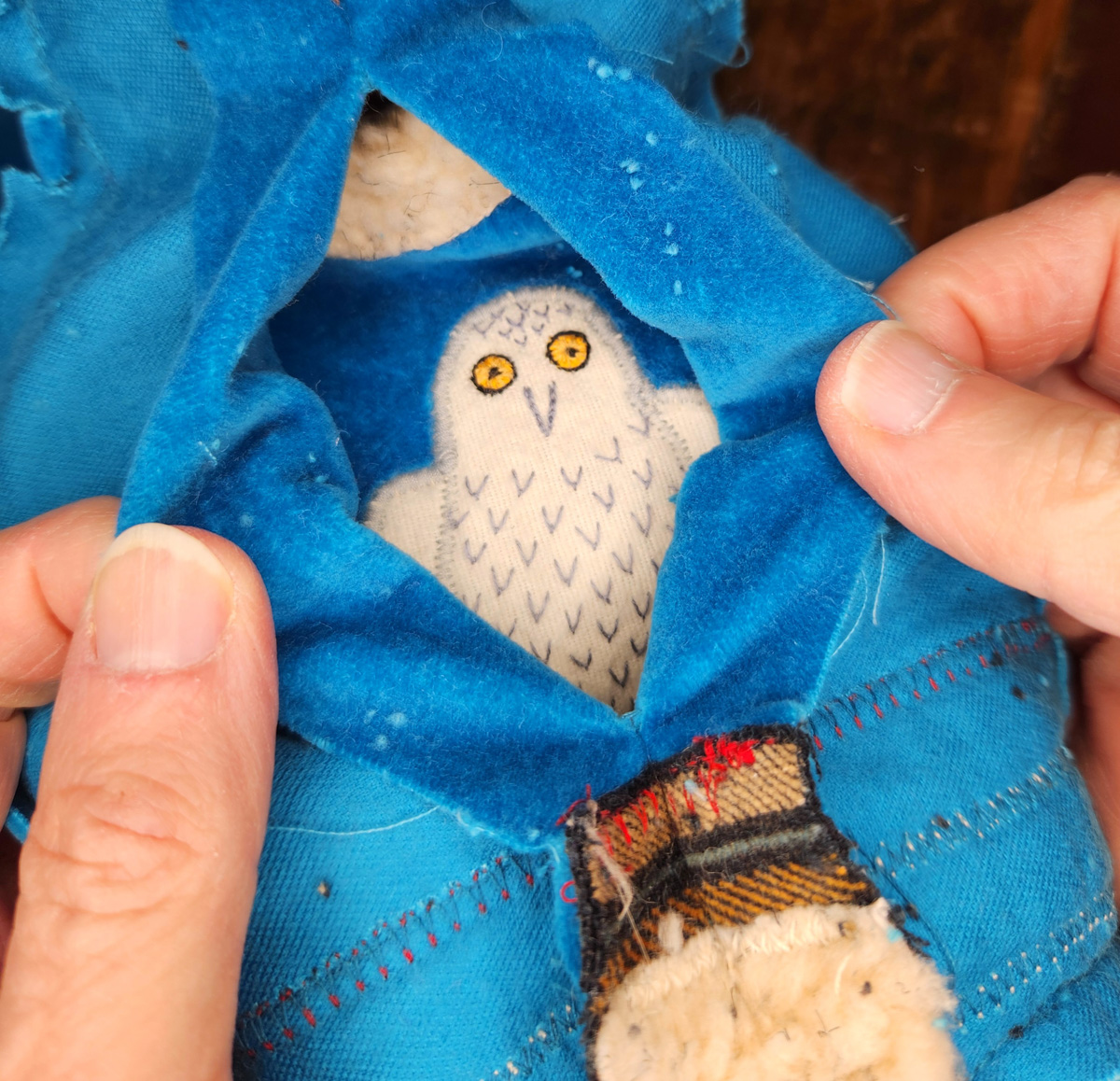
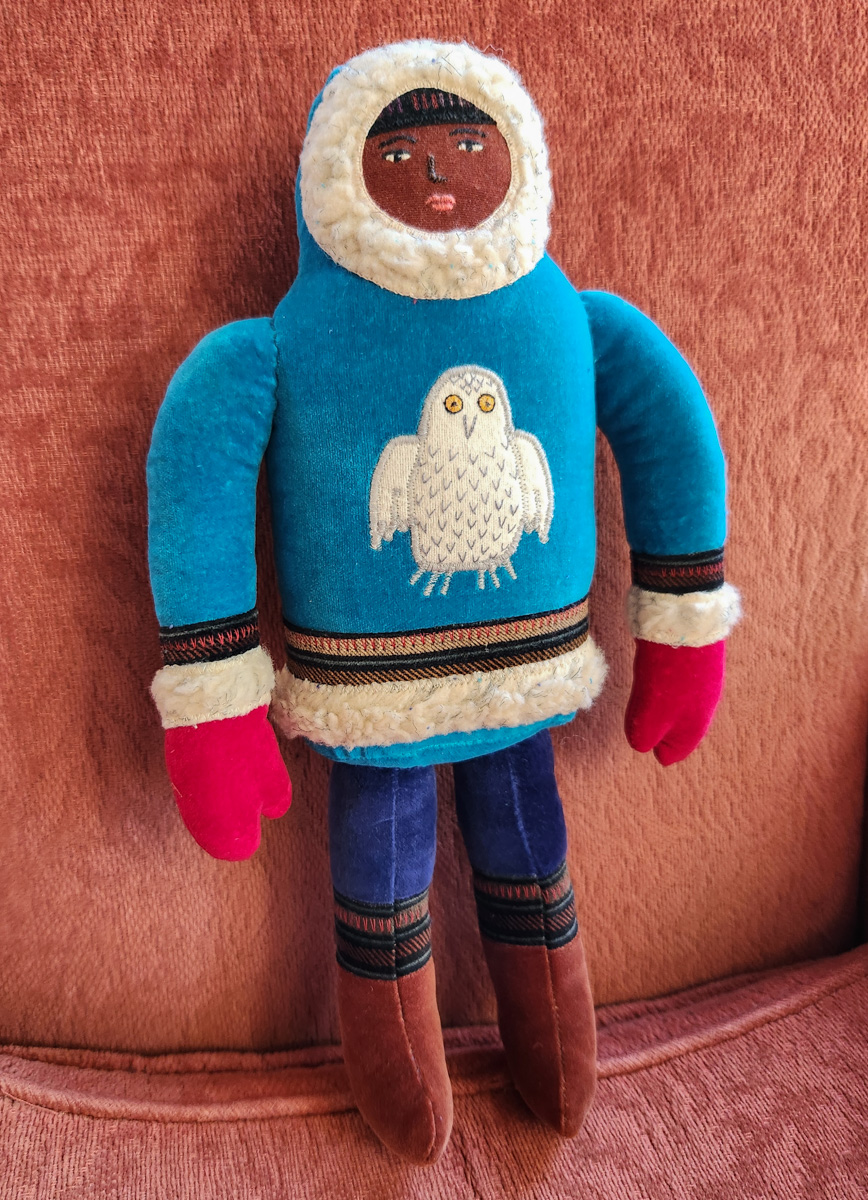
I found the original sketches and patterns for Peter’s doll in my files and unearthed pieces of cotton velveteen left over from my doll-making days. The only material I needed to buy was some sherpa fabric for the fur trim. This post includes photos and videos that show the process of making the 2 new dolls for my grandsons, one decorated with a snowy owl and the other with a fish.

Back in the 80s, when practically every checkout line at the supermarket had a rack full of homey women’s magazines, I designed sewing projects for Better Homes and Gardens. Sewing projects are conspicuously absent from today’s version of the magazine, which is limited to home decor ideas, gardening, and recipes. 

I mostly designed cloth dolls, including one with a prairie bonnet that they styled on the cover of their December 1982 issue. You can also see a crèche that Better Homes and Gardens published in 1981 here. When I submitted a photo of Peter’s Inuit doll to the magazine’s crafts editor, they asked me to design 3 dolls, which were included in the December 1986 issue.

During this early phase of my career, I enjoyed coming up with project ideas and making prototypes, even though the pay was dismal and I signed away my design rights (I was young and inexperienced). By the end of the 1980s, I was ready to move on to children’s book illustration, which came with its own suite of challenges.

When I was designing projects for the magazine, writing out step-by-step instructions was my least favorite part of the job. Describing what I’d done in words felt overly analytical and thoroughly anal! It took years to learn to show and tell how to make something in a way that intuitive and visual learners like me could understand. Then, I was ready to write my how-to book, Felt Wee Folk, which combines visual diagrams and step-by-step instructions for making little dolls. To find out more about my philosophy of sharing knowledge, please read this post.

Nowadays, I’m relieved to not have to explain in detail how I make something. Demonstrating my process through photos and videos is much more natural than describing every step in words.

I hope that you enjoy the following photos and videos that show how I embroidered the doll’s face, stitched and appliquéd the snowy owl, and sewed on the arm.

To keep up with new posts, please subscribe to this blog. Your contact info will not be sold or shared. If you’d like to see more frequent photos tracking the projects in my studio, please follow me on Facebook, Instagram and BlueSky.
Baby Polar Bear Suit

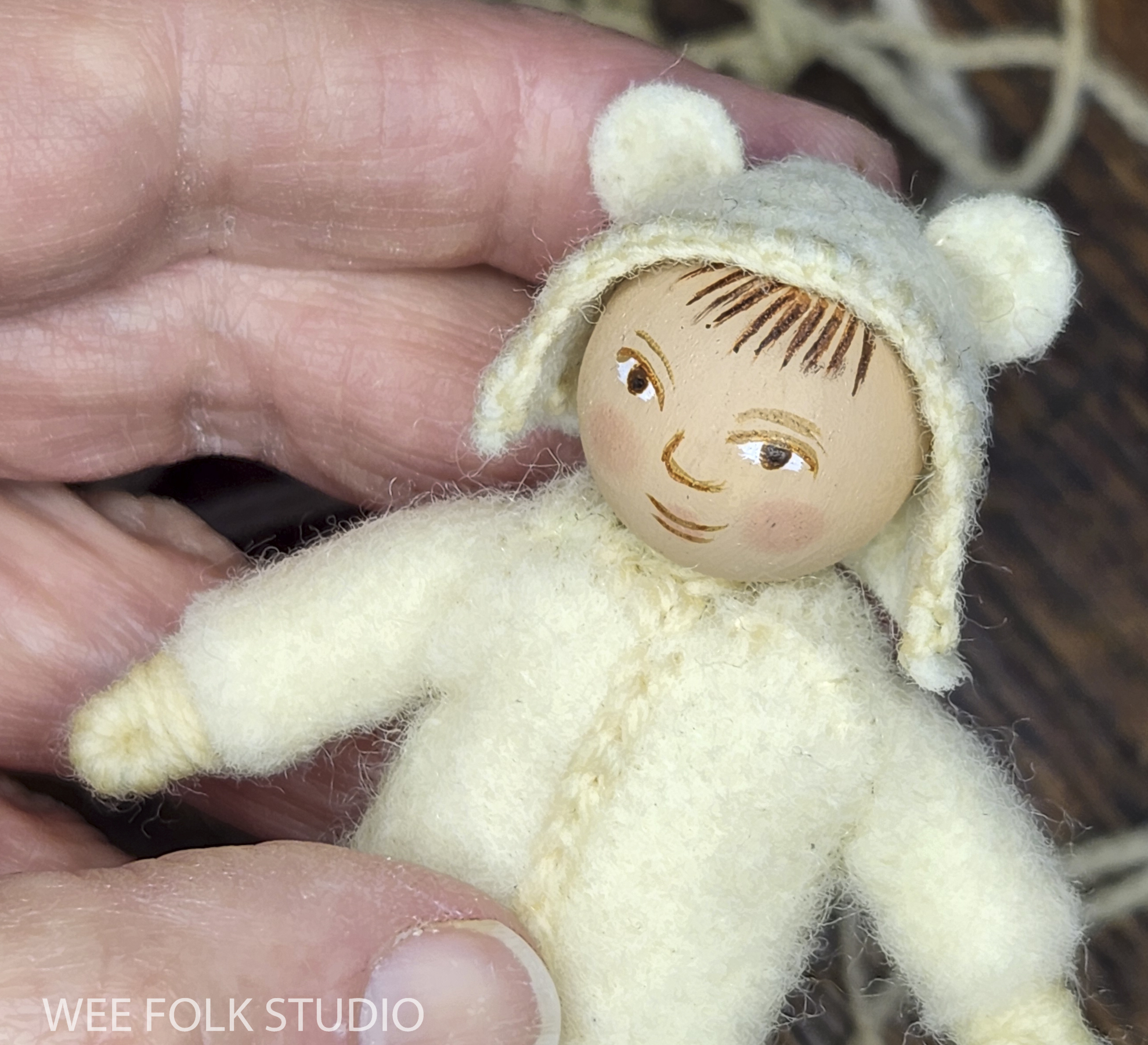
Last December, I made some small gifts, including a little version of my grandson Elias in his polar bear snow suit. I’m looking forward to making more mementos like this and hope it becomes a yearly tradition! These days, it seems that practically every children’s hat and hooded outfit comes with a pair of animal ears on top. That’s fine with me – the more playful, the better!

I also made new Inuit dolls, which I’ll write about in a future post. They are a redo of a project I originally made for my kids and designed for Better Homes and Gardens magazine in 1986.

Baby Polar Bear Doll
The 4″ doll is based on the figures in my how-to book, Felt Wee Folk, only I used wool needlepoint yarn (regular knitting yarn is too bulky) instead of embroidery floss to wrap the hands and feet on the pipe cleaner armature.

As usual, I painted multiple faces on wooden beads and picked out the one I like best. Even after painting thousands of faces, I still mess up sometimes.

The suit is made with some really thick wool felt that I was given years ago. It is probably manufactured for industrial purposes rather than little polar bear suits. The video below shows how I wrapped the feet and hands and sewed on the suit.

In the past year or so, I’ve used a hands-free phone/light stand made by Canvas that makes documenting my process a lot easier. I used to have to bug Rob to stop whatever he was doing and come film different steps with his camera. Now, I can take photos or videos whenever I want to. The downside is that I can’t get into the flow because I’m always thinking about recording some aspect of how I work. And there are times when I’m so engrossed that I skip entire sections of the process. That’s why my demonstration videos aren’t really tutorials. They’re more like peeking over my shoulder while I work. You might not see every detail, but you can get the gist of it.

After sewing on the suit, I made the hood – ears and all. The hood is made from a lighter weight wool felt.

The following video shows how I glued on the head and constructed the hood.

After the doll was finished, I got the idea of chain stitching Elias’s name and the year on the back. Yes, this will definitely be a yearly tradition!

To keep up with new posts, please subscribe to this blog. Your contact info will not be sold or shared. If you’d like to see more frequent photos tracking the projects in my studio, please follow me on Facebook, Instagram and BlueSky.

The best cheese straws in the world!

This family recipe was first published on my blog 10 years ago and the post has been a constant favorite ever since. If you want to bring something special that’s not hard to make to a holiday party this season, try it out!

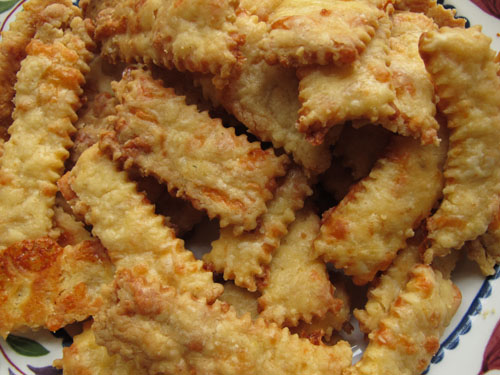
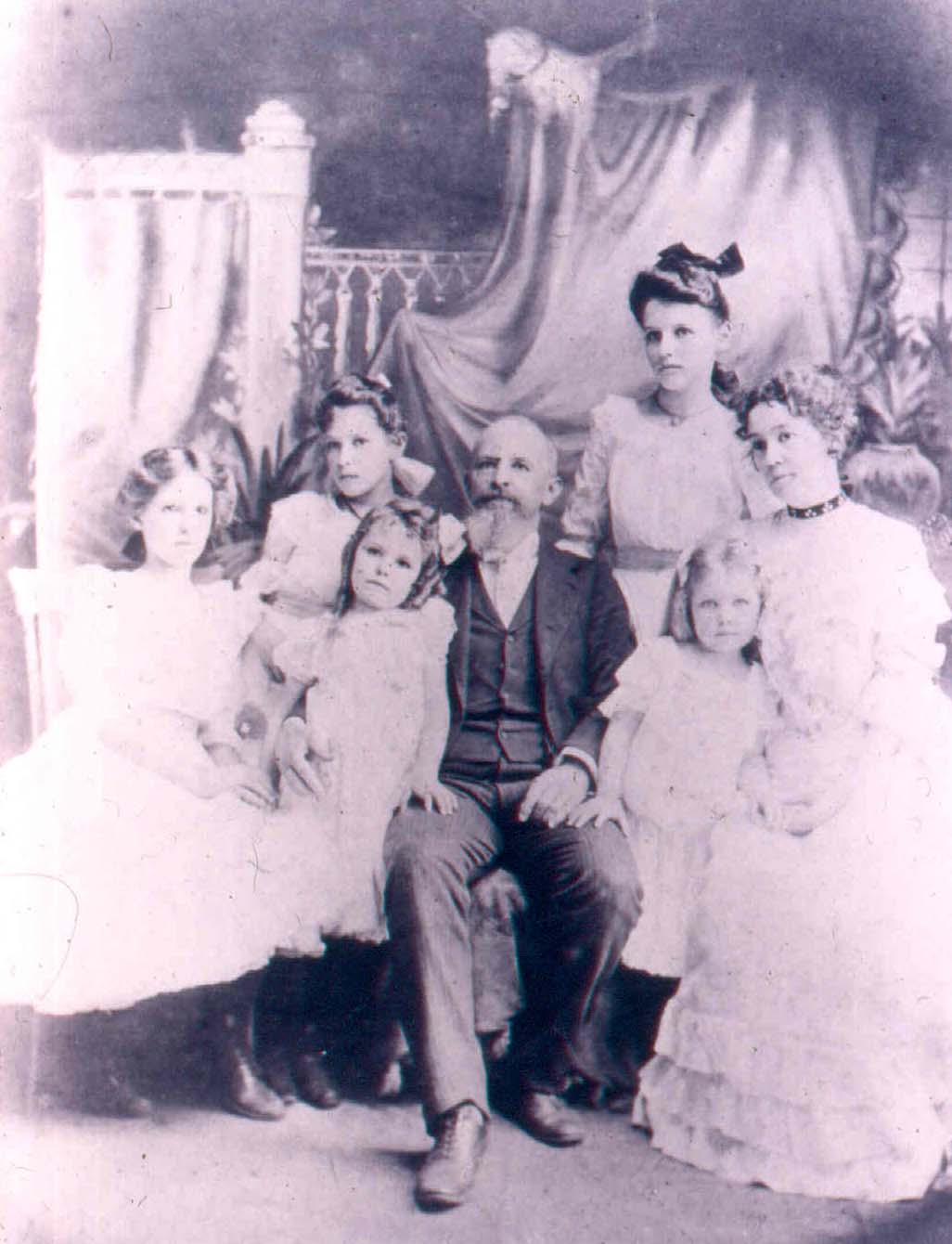
Cheese straws are my favorite offering to bring to holiday gatherings. The recipe comes from my maternal grandmother’s family, the Salley’s from Orangeburg, South Carolina. The tradition has been passed down from mother to child for generations. There are cheese straws and then there are these cheese straws, which always get a lot of attention. I’m working on teaching my sons how to make them – they sure like to eat them! The trick is to use the sharpest cheddar cheese you can get and to roll them as thinly as possible.

My grandmother (2nd from left) with the Salley family, in about 1900.

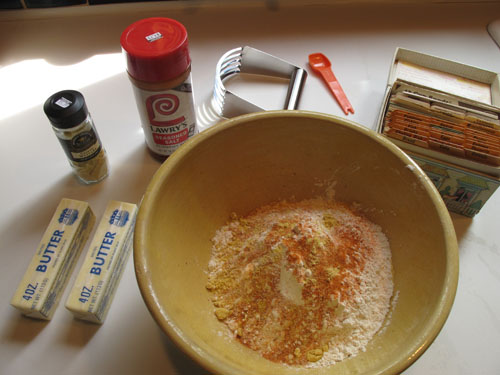
Ingredients: 3 Cups flour, 2 tsp. seasoned salt (I use Lawry’s), 1 tsp. dried mustard, 1 cup butter, 8 oz. very sharp cheddar cheese. Start by mixing the flour, salt and dried mustard in a bowl.

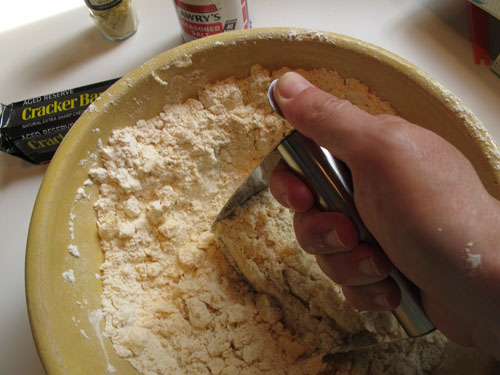
Cut in the butter with a pastry cutter, like you are making pie crust.

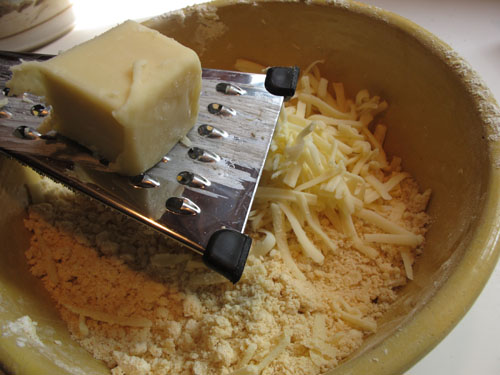
Grate the cheddar cheese and stir it in with the flour mixture.

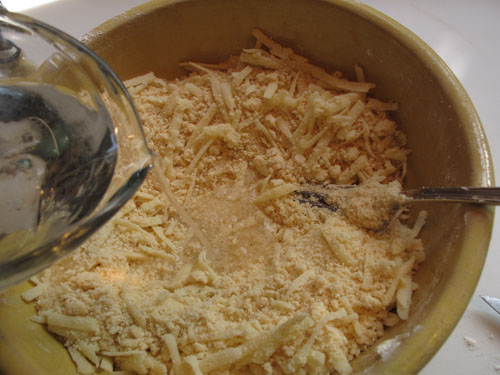
Dribble ice water into the mixture and combine until it sticks together in a doughy consistency. Don’t let it get too soggy!
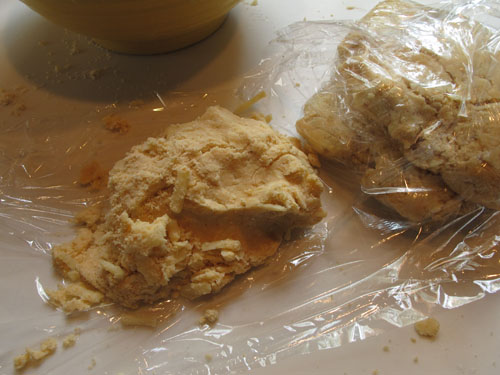
Divide into balls, handling the dough as little as possible. Then wrap the balls and refrigerate for a few hours.

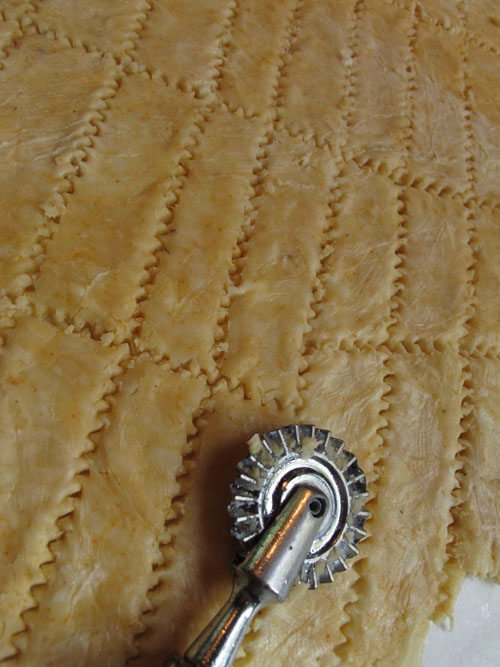
Roll out the dough balls as thinly as possible and cut in strips with a pastry crimper.

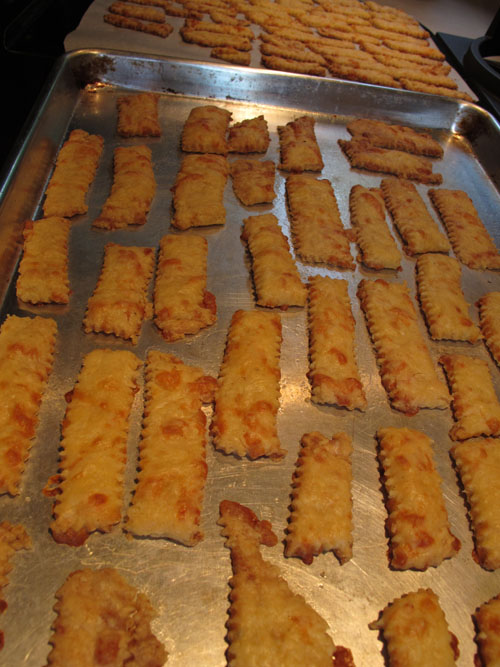
Spread the straws out on a cookie sheet and bake in a 350 degree oven for 15 to 20 minutes, until golden brown. They may take longer to cook, so check them often and switch pans to different racks during baking time.

They don’t take long to cool, so immediately sample a few. Now, put them out and watch them disappear! They can be saved in a tin and make a great gift, too.

Since so many of you’ve enjoyed the recipe over the years, I decided to make a card with the cozy kitchen scene on the front and the recipe for making cheese straws printed on the back. That way, it’s a greeting card (or Holiday card) and recipe card all in one. The Cheese Straws card is available in my shop in packs of 4 or 8.

To keep up with new posts, please subscribe to this blog. Your contact info will not be sold or shared. If you’d like to see more frequent photos tracking the projects in my studio, please follow me on Facebook and/or Instagram.

Introverts have the advantage

from “Felt Wee Folk: New Adventures”

In this time of physical social distancing due to the Covid-19 pandemic, introverts have the advantage, plain and simple. Putting aside the widespread disruption, financial hardship and increased anxiety, being told to stay home hasn’t required much of an adjustment for many of us who are already quiet, introspective, and enjoy the pleasures of domestic life.

I suspect that many of you who follow this blog have those traits, too. Further ahead in the post, I share my own story about living as an introvert in Confessions of a Homebody.

from “You and Me: Poems of Friendship”

Introverts are not all the same, but the general thought is that we are prone to exhaustion from too much social engagement, whereas extroverts are energized by being around people. So, for some, the stay at home order can seem like a reprieve from all the hubbub, while others feel as if they’re being sent to their room for punishment. No matter your personality type, we are all confronted by the seriousness of the virus, both individually and collectively. These dire circumstances are forcing everyone to face themselves and reflect on what they value most in life. And during this time when we may not like staying home for weeks on end, I think about the wisdom of this saying, “The place to be is where you are.”

Penikese Island, Massachusetts

I think that artists and introverts in general will get through this period of home confinement better than some, because they have an independent streak and already choose to spend time alone. Personally, I would not be able to make art if I had to be around people most of the day. Even for someone like me, who is cloistered in her studio 7 days a week, the idea of everyone staying at home all the time seems eerily unnatural, like we’re living in a dystopian novel. It takes all kinds to make the world go round and many people who thrive on social interaction are struggling as they try to navigate through this extraordinary time.

I marvel at the human capacity to adapt and innovate within a set of constraints, to get what they need. And if there ever was a time for creative problem solving, this is it. A person can’t really change their personality, but they can strive for a balance between people time and alone time. Just like I’ve had to push myself to engage socially, I hope that more extroverted people will take this opportunity to stretch themselves in the other direction and exercise their independent and contemplative side. However you look at it, people are looking at themselves, reflecting on their lives, and thinking about what’s important. The question is, can we all learn something from this experience that will benefit ourselves and society?


Confessions of a Homebody
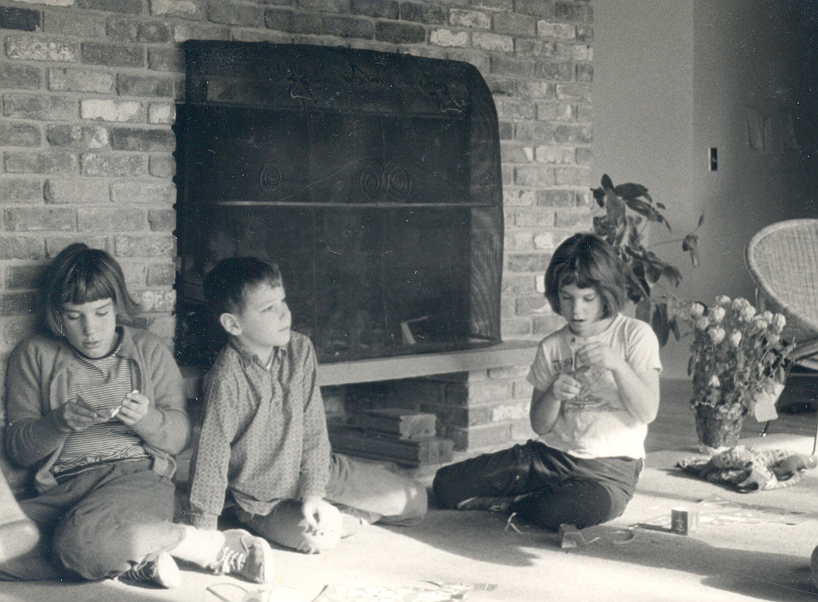
I grew up in a family of introverts — mother, father and 3 kids. You could say that we excelled at parallel play. Just look at this photo of me with my siblings – we are either engrossed in art projects or staring into space, not looking at each other or talking. We were all creative, with rich interior lives. Our family connected with each other and our wider community through art, music and dance. It wasn’t until later, when I married a more socially balanced person and we had children of our own, an extrovert and an introvert, that I realized family life could be anything different. From a young age, I have grappled with how to interact with the world outside of home in a way that didn’t become overwhelming. Being a classic introvert, there was only so much socializing that I could take, before melting into a puddle. The length of a school day was about my limit. I enjoyed school and my friends, but enough was enough. After the Woods Hole School let out, I’d carry my empty Flintstones lunchbox, along the path through the woods to home, where I could recharge for the next day. I remember being horrified when a friend of my parents described living in a Kibbutz where the children were raised communally, all together all the time. For me, living in such an environment would have been exhausting, but for my more outgoing son, it would have been heaven.

Woods Hole School 1965 – Salley in middle row, 2nd in from the right

When I was about 10 or 11 years old, a friend called after school to ask if I wanted to come over and play. I remember fingering the cord of the 60’s wall phone in the kitchen and telling her that I couldn’t because I was grounded. I’d heard about other kids getting grounded, so I must have thought it sounded plausible, as well as a good excuse to stay home. I’m sure that I lied other times to get out of things, but I remember this conversation, because the idea of a goody good like me doing anything that would warrant being grounded was preposterous. It just shows how desperate and awkward people can be when they pretend to be something they’re not, just because they don’t want to look like a weirdo.

Self-Portrait detail, 2007

Over the years, I’ve built up a tolerance for social gatherings and can even pass at being moderately gregarious, but there is a limit to how long I can keep it up. My husband Rob knows “the look” when it’s time to leave, before I do the grownup version of melting into a puddle. I’ve come to understand my needs and have learned to communicate them better. And in doing that, I’ve found out that there are an awful lot of other introverts out there!

To keep up with new posts, please subscribe to this blog (top right column on the home page). Your contact info will not be sold or shared. If you’d like to see more frequent photos tracking the projects in my studio, please follow me on Facebook and/or Instagram

The best cheese straws in the world!

This family recipe was first published on my blog 6 years ago. Based on the numbers of visits since then, the post has been a constant favorite ever since. If you want to bring something special that’s not hard to make to a holiday party this season, try it out!

Cheese straws are my favorite offering to bring to holiday gatherings. The recipe comes from my maternal grandmother’s family from Orangeburg, South Carolina.  The tradition has been passed down from mother to child for generations. There are cheese straws and then there are these cheese straws, which always get a lot of attention. I’m working on teaching my sons how to make them – they sure like to eat them! The trick is to use the sharpest cheddar cheese you can get and to roll them as thinly as possible.

My grandmother (2nd from left) with the Salley family, in about 1900.

Ingredients: 3 Cups flour, 2 tsp. seasoned salt (I use Lawry’s), 1 tsp. dried mustard, 1 cup butter, 8 oz. very sharp cheddar cheese. Start by mixing the flour, salt and dried mustard in a bowl.

Cut in the butter with a pastry cutter, like you are making pie crust.

Grate the cheddar cheese and stir it in with the flour mixture.

Dribble ice water into the mixture and combine until it sticks together in a doughy consistency. Don’t let it get too soggy!

Divide into balls, handling the dough as little as possible. Then wrap the balls and refrigerate for a few hours.

Roll out the dough balls as thinly as possible and cut in strips with a pastry crimper.

Spread the straws out on a cookie sheet and bake in a 350 degree oven for 15 to 20 minutes, until golden brown. They may take longer to cook, so check them often and switch pans to different racks during baking time.

They don’t take long to cool, so immediately sample a few. Now, put them out and watch them disappear! They can be saved in a tin and make a great gift, too.

Since so many of you’ve enjoyed the recipe over the years, I decided to make a card with the cozy kitchen scene (below) on the front and the recipe for making cheese straws printed on the back. That way, it’s a greeting card (or Christmas card) and recipe card all in one. The Cheese Straws card is available in my shop in packs of 4 or 8.

To keep up with new posts, please subscribe to this blog (top right column on the home page). Your contact info will not be sold or shared. If you’d like to see more frequent photos tracking the projects in my studio, please follow me on Facebook and/or Instagram

Anne of Green Gables & family ties

pollypei-10

During our trip to PEI, we visited Green Gables, of course. Although L.M. Montgomery never lived there, her cousins’ house and farm was the inspiration for the setting of her famous book Anne of Green Gables. The property has been designated as a National Historic Site of Canada and is one of the most popular tourist destinations in the country.

Our friend and hostess Polly (yes, a real life person!), Rob and I were glad to be there on a less crowded week day and freely roamed around the lovingly restored house, inside and out. After perusing every possible Anne themed souvenir in the gift shop, Polly (doll above) sighed with relief when she came across a stack of books.

pei-8

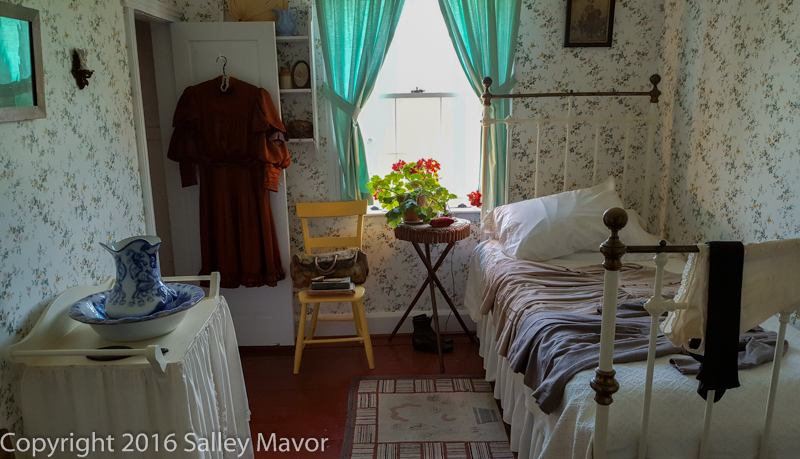
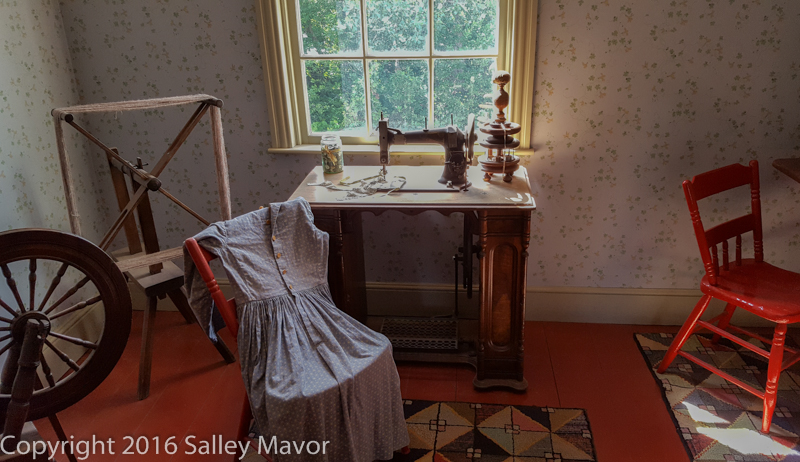
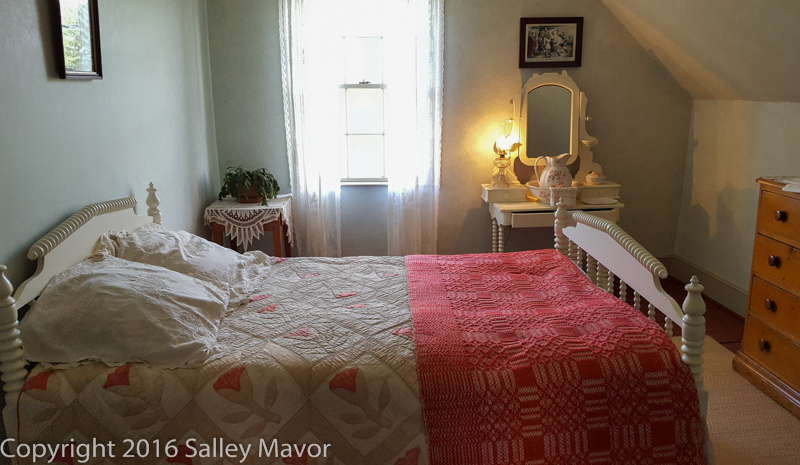
Green Gables is set up as if the character Anne Shirley and her adoptive family of Matthew and Marilla lived there in the late 1800’s. The rooms are furnished with a wonderful collection of period pieces and Anne’s room includes important book related items, like her carpet bag and puffed sleeve dresses.

pei-9

pei-11pei-10pei-12pei-13

This is where the family tie to Anne of Green Gables comes in. But, first a little family history. Growing up, I heard about our relatives in Toronto, the “Canadian Cousins”. We were the only branch of the family to move to America, where my grandfather followed his career in biology. My father’s grandparents, aunt, uncle and cousins in Canada seemed so much more interesting than the few family members we knew at home. The stories of their lives emphasized an unconventional and creative spirit, full of drama and public service. I never met them in person and that may be why they still loom large in my mind as colorful characters who were celebrated for their leadership and vision (at least in Canada).

I heard about my totally eccentric great-grandfather, James Mavor, who through his connections with the Canadian government and Russian Tolstoyans, helped arrange the mass immigration of the Doukhobors from Russia to Saskatchewan in 1898. I’ve never met an American who knows about the Doukhobors, but I think most Canadians have at least heard of them or know their descendants. There were also stories about James Mavor’s daughter, my great-aunt Dora Mavor Moore who is considered the Grand Dame of Canadian Theater. My father talked about Dora and her son, his first cousin, Mavor Moore who was a multi-talented creative force in CBC radio and television and the arts. These relatives and my parents are gone, but the family remembrances live on through stories, creating narratives beyond mere names and dates on a genealogy chart.

2004annesmall

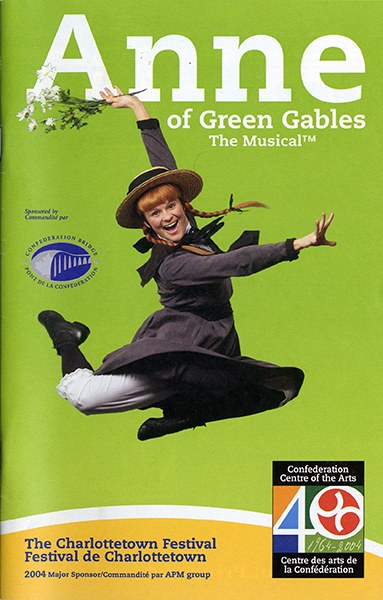
In Charlottetown, we saw the last performance of the season of “Anne of Green Gables – The Musical™”, which I really enjoyed.  I already knew that Mavor Moore had been involved from the show’s beginning in 1965 and was Co-writer of the lyrics.

What I didn’t know was that his daughter, Charlotte Moore was on stage, playing the leading role of Marilla. During intermission, I read the program and couldn’t believe it when her name and picture popped out. We had not met, but I was aware that she was a professional actress and singer, carrying on the family theater tradition.


chalottemoore

After the show, it seemed almost impossible to send a message back stage, but another actor told us that the cast sometimes gathers in the bar at Mavor’s Restaurant (named after Mavor Moore) in the same theater complex. We only waited a few minutes in the bar before I heard the name “Charlotte” being called out behind me. I turned around and there she was, my real life “Canadian Cousin”. After some quick introductions, we had a great chat about the family. I also got to meet Mavor Moore’s widow, opera singer, Alexandra Brown Moore, who was visiting PEI from Victoria, BC.

We were all so delighted to finally meet each other! I felt connected to the Canadian branch of my family in a way I hadn’t experienced before. Our interaction made me realize that sometimes just showing up, taking notice and making a little effort can make all the difference in how life unfolds. It’s daunting to think that I am the older generation now. How could that possibly be? After all, I still play with dolls, for goodness sake!

pei-7

To keep up with new posts, subscribe to this blog (top right column on the home page). Your contact info will not be sold or shared. If you’d like to see more frequent photos tracking the projects in my studio, please follow me on Facebook and/or Instagram.

my favorite dress pattern

philandjudy-1-2

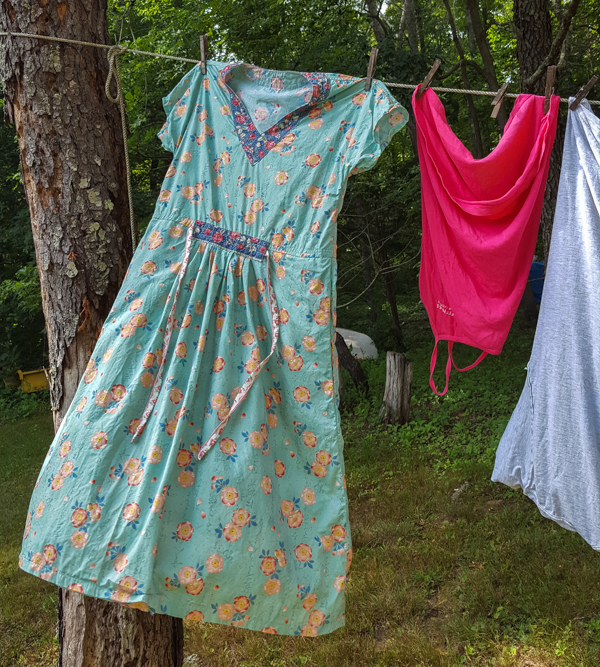
It all started with this photo from a recent post about wedding dolls. My sister Anne wrote to say that she liked my dress. I told her that I made it years ago and asked if she’d like one. While I waited for the fabric she picked out to arrive from Portland, OR, I decided to make another one for myself. After all, you can never have enough cotton dresses to wear in the summer heat. I think it’s my favorite dress style, simple and timeless, with just the right amount of fitted detail at the neck and waist. And there are large side pockets, which I can’t live without!

I first made a dress from this pattern over 30 years ago and it’s stood the test of time, at least in my world. I’ve resisted giving in to the ubiquitous black wardrobe in favor of color and pattern. To me, wearing black seems to lack imagination and looks more like the uniform of the grownup sophisticated set. Teenage Prom goers may crave this look, but I feel more myself in something comfortable and colorful.

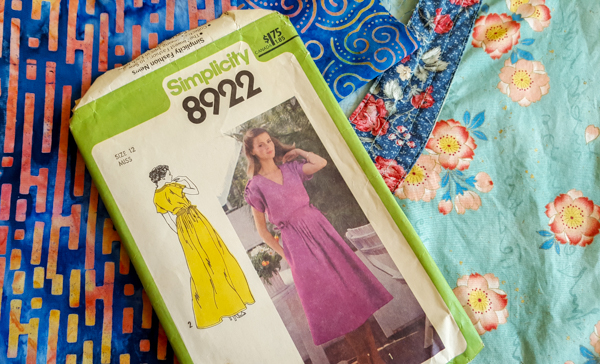
I searched all over my studio for the pattern, but couldn’t locate it. Luckily, I still had a white dress from the same pattern that I’d made to wear for Scottish dancing eons ago. I cut open the seams, which included a fair share of top stitching and used the pieces as a pattern. It wasn’t until after I’d made the 2 new dresses that I found the pattern, Simplicity 8922, from 1979.

dress-1-5

dress-1-8

dress-1-6

I’ve already worn mine enough times to have to wash it.

dress-1-2Anne’s fabric of choice was 2 different blue batiks, which worked out really well. She sent a photo of her wearing the dress.

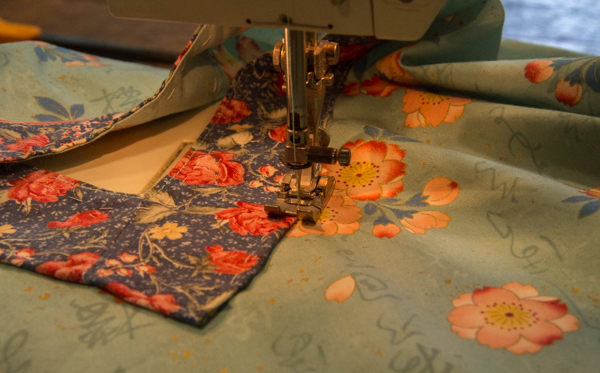
I really enjoyed the process of sewing the dresses, which was so fast and easy compared to my other work. It made me think about how revolutionary the invention of the sewing machine must have been in the mid 1800’s. This doesn’t mean I’m giving up hand stitching, though. Most of what I want to do can’t be mechanized and the slow methodical approach helps me work out my ideas. It’s just fun to hear the sound of a sewing machine as it wips together a piece of clothing every once in a while.

dress-1

dress-1-3

To keep up with new posts, please subscribe to this blog (top right column on the home page). Your contact info will not be sold or shared. If you’d like to see more frequent photos tracking the projects in my studio, please follow me on Facebook and/or Instagram

Posies exhibit in Greenville, SC

Posiesupcountry4

Last week, Rob and I visited Greenville, South Carolina, where I gave a talk in conjunction with my Pocketful of Posies exhibit. It was a pleasure to meet the people who came to see the show and hear about my work at the Upcountry History Museum  last Thursday. Before heading inside the museum, I couldn’t resist standing next to the enormous banner outside.

The museum staff did a superb job hanging the show! I’m happy to say that it’s the most creative and professionally presented installation I’ve seen on the five-year tour. There’s plenty of time to visit the show, which is on display until Feb. 14th, 2016. This could very well be its last venue, as I’m no longer soliciting new locations. Of course, it could be a different story if an invitation from a great place with funds to ship the artwork comes forth.

Posiesupcountry1

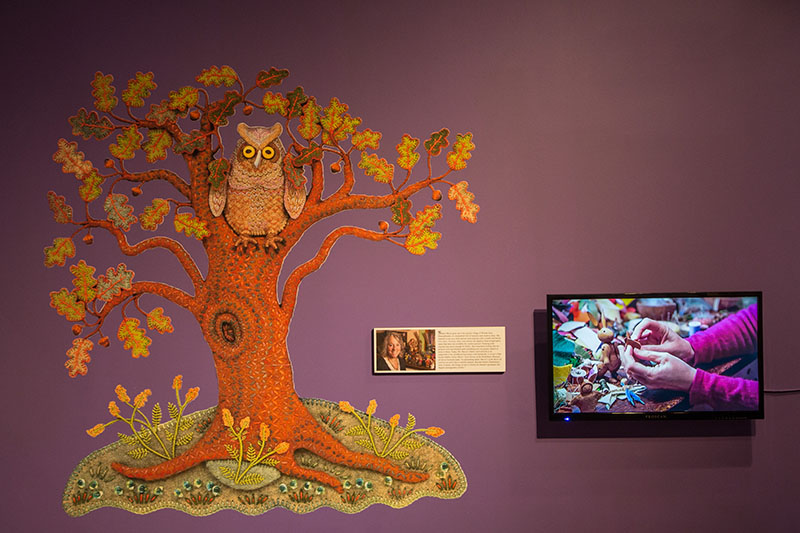
The bold choice of lilac purple walls really sets off the natural golden brown wooden frames. They covered one area with a 6′ blow-up of the “Wise Old Owl” and a screen, which shows my Rabbitat video and Felt Wee Folk book trailer on a loop. Signage with different versions and information about the rhymes hang below the framed illustrations. For this, the previous exhibitor, the Bel Air Library in Maryland generously shared their research about the rhymes with the Upcountry History Museum. To give an idea of how I make the figures, they laid out step-by-step parts in a display case. They’re the same ones I made and photographed for Felt Wee Folk. And last but not least, the black box theater lighting makes everything pop and sparkle!

Pocketful of Posies, Oct. 17, 2015 – Feb. 14, 2016 at the Upcountry Museum – Furman University, Greenville, South Carolina.

Posiesupcountry2

Posiesupcountry5

We really enjoyed our visit and took a few extra days to see a friend and relative in the area. I spent a wonderful day near Columbia with my cousin, also named Salley with an “e”. Her 5-year-old grand-daughter is also named Salley, so our family surname continues to be passed down. Our grandmothers were 2 of the 5 independently minded, high spirited Salley sisters of Orangeburg, SC. In this circa 1900 photo, my cousin’s grandmother has their father’s arm around her and mine is standing, 2nd from the left.

Salleyfamily

And we had a fantastic visit with my RISD classmate, Niki Bonnett, who lives in Asheville, NC. What an artsy, fun town! Years ago, Niki designed the poster and catalog for my pins, which you can see here. We could have soaked up the southern hospitality for a bit longer, but had to fly home.

SalleyNikiAsheville


Desire doll

Desire-19535This month, I’ve had the pleasure of making a special doll who represents one of my family’s ancestors. The “Desire Doll” personifies Desire Howland Gorham, who was born in Plymouth Colony in 1623 to John Howland and Elizabeth Tilley, who both came to America on the Mayflower.The doll was raffled to raise funds for my sister Anne Mavor‘s ground breaking art project, I Am My White Ancestors: Self-Portraits through Time. Her project involves much more than a genealogic study with a list of names and dates. She is striving to understand our ancestors’ motivations in a historical context. I am glad to be a part of Anne’s fundraising efforts and applaud her thought-provoking vision.

~ About the Desire Doll ~
Hand made by me, Salley Mavor, 4″ tall, stands on a weighted stand, extra sturdy bendable body, hand stitched, clothing made of wool and cotton, basket is made from coiled thread-wrapped wire, includes signed tag. This doll uses techniques taught in my how-to book, Felt Wee Folk: New Adventures. This is a rare opportunity to have a one-of-a-kind, more involved and detailed doll, as I usually only make them for gifts or for personal/family projects.

Anne’s art installation addresses issues of immigration, colonization, slavery and war through the personal stories of 10 to 12 of our European ancestors, going back through the centuries, as far as she can research. You can find out about Anne’s project here. Desire-1445

1418921295439

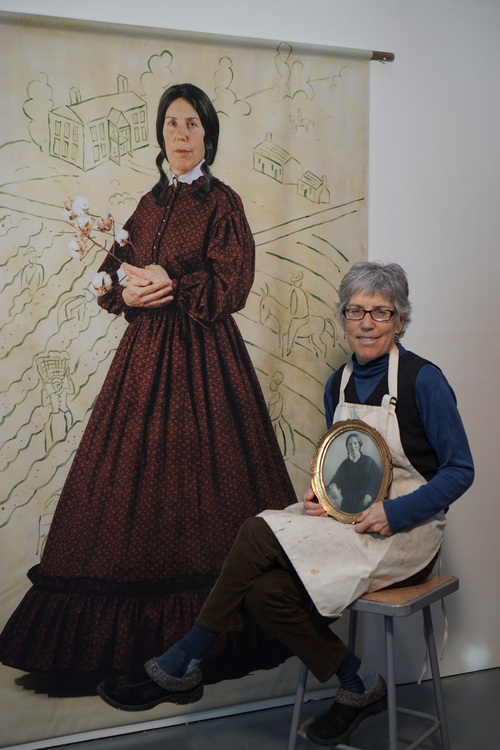
Anne as Eugenia Buchanan (1823-1898) in Orangburg, SC

Anne describes her exhibit this way:
“I Am My White Ancestors: Self-Portraits through Time is a multi-media installation that uses my family history to explore the conflicted story of European Americans. It will consist of 10-12 life-size photographic self-portraits of me as my ancestors, printed on fabric panels and accompanied by short audio diaries from each ancestor’s perspective.”

“This idea grew out of my interest to understand how my heritage impacts me as a white person living in the United States. I was curious to examine issues such as immigration, colonization, slavery, war, and what life was like in Europe. I wanted to know how similar or different I might be to my ancestors, and what I could learn from their lives. Claiming connection to my family history is also one step towards taking responsibility for the past.”

Desire-19534

In a recent update about her project, Anne wrote, “My research continues to turn up gems of information. I just learned more about the life of Desire Howland Gorham who will be my 17th Century self-portrait. She was born in 1623 in Plymouth Colony. Her husband John Gorham was an officer in King Phillip’s War, the last stand of Chief Metacomet and the Narragansett Nation against the English settlers in 1678. After the war, the victorious English soldiers each received parcels of former Indian lands, while the surviving Indians were enslaved or shipped off to the West Indies. Gorham died following the war and was buried on the stolen 100 acres he won on Poppasquash Neck in Rhode Island. Desire never lived there. After her death, her slave Totoo requested in his will that he be buried at the feet of his beloved mistress. War, slavery, and theft, contrasted with deep human connections.”

Desire-19547

Desire-19540

Desire-19553

To keep up with new posts, please subscribe to this blog. Your contact info will not be sold or shared. If you’d like to see more frequent photos tracking the projects in my studio, please follow me on Facebook and/or Instagram.