This is the final part in a series of posts about my new embroidered bas-relief piece Cover Up. In Part 1 and Part 2, the collection of “covered” women are introduced and discussed. Part 3 shows how I made the pieced felt background and Part 4 is about the felt covered wire border.
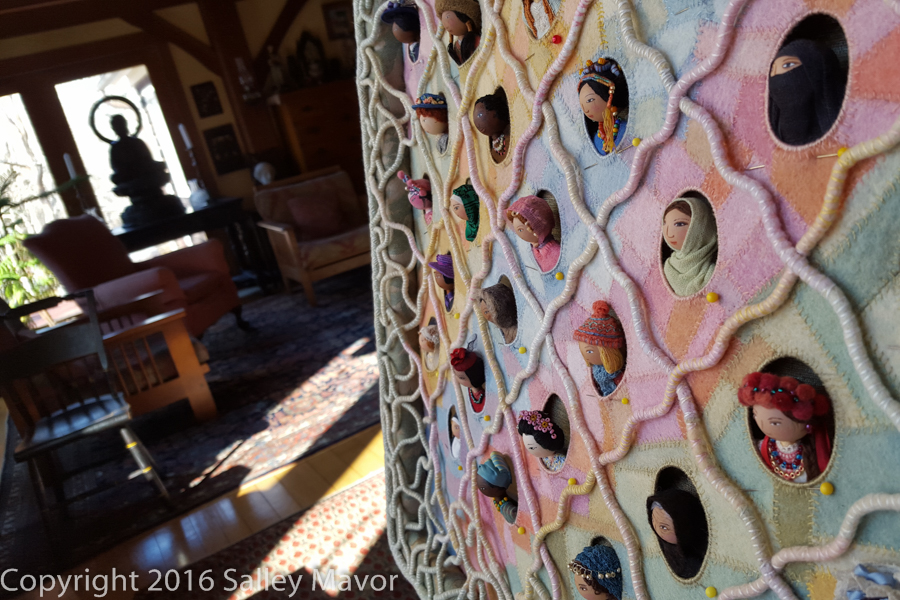
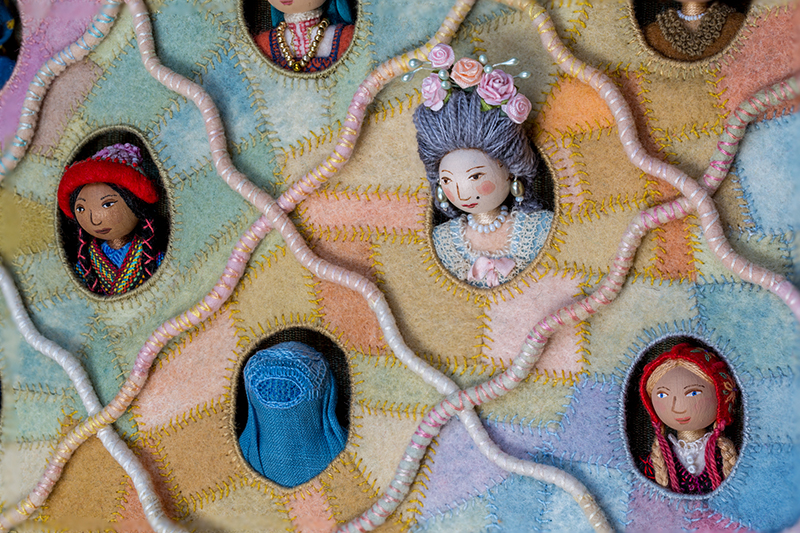
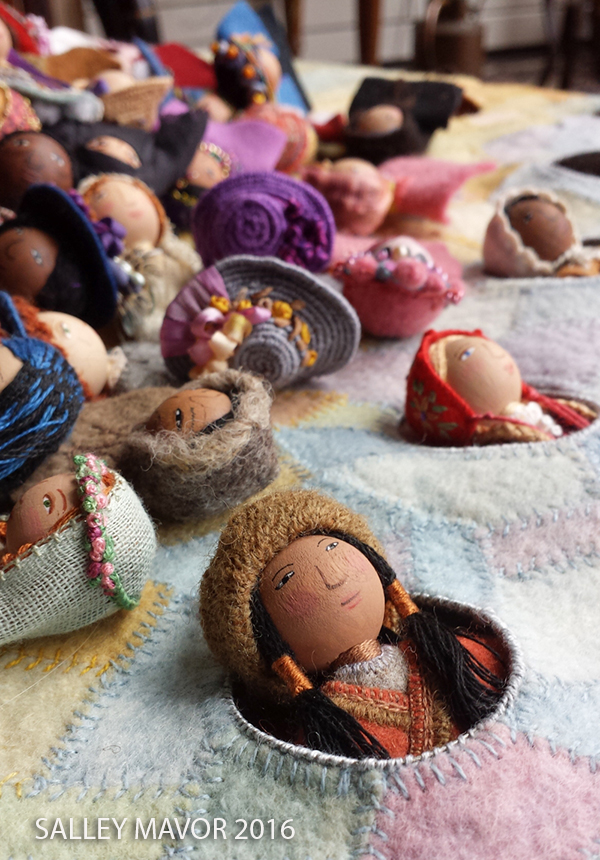
Before sewing all of the heads in place, I added squares of 1/4″ thick felt in between the holes. That way, the pieced felt background would lay flatter. I then stitched the heads so that they peeked out of the holes and covered the entire back with a piece of neutral colored fabric.
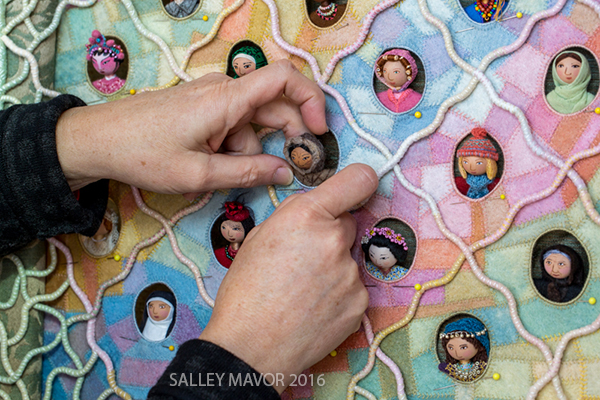
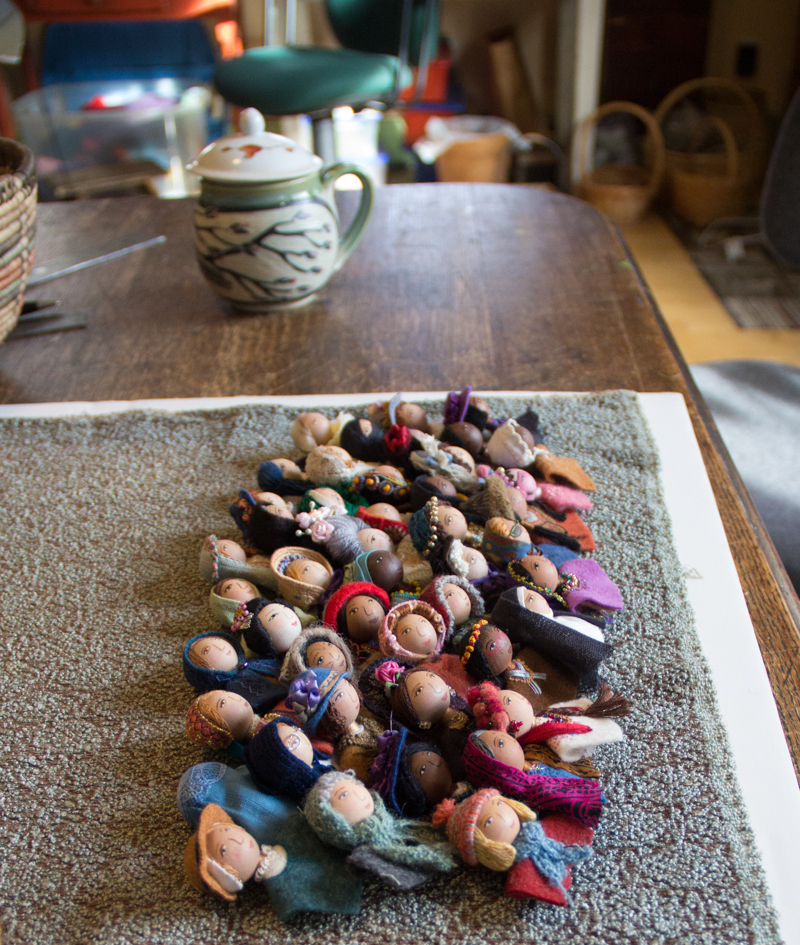
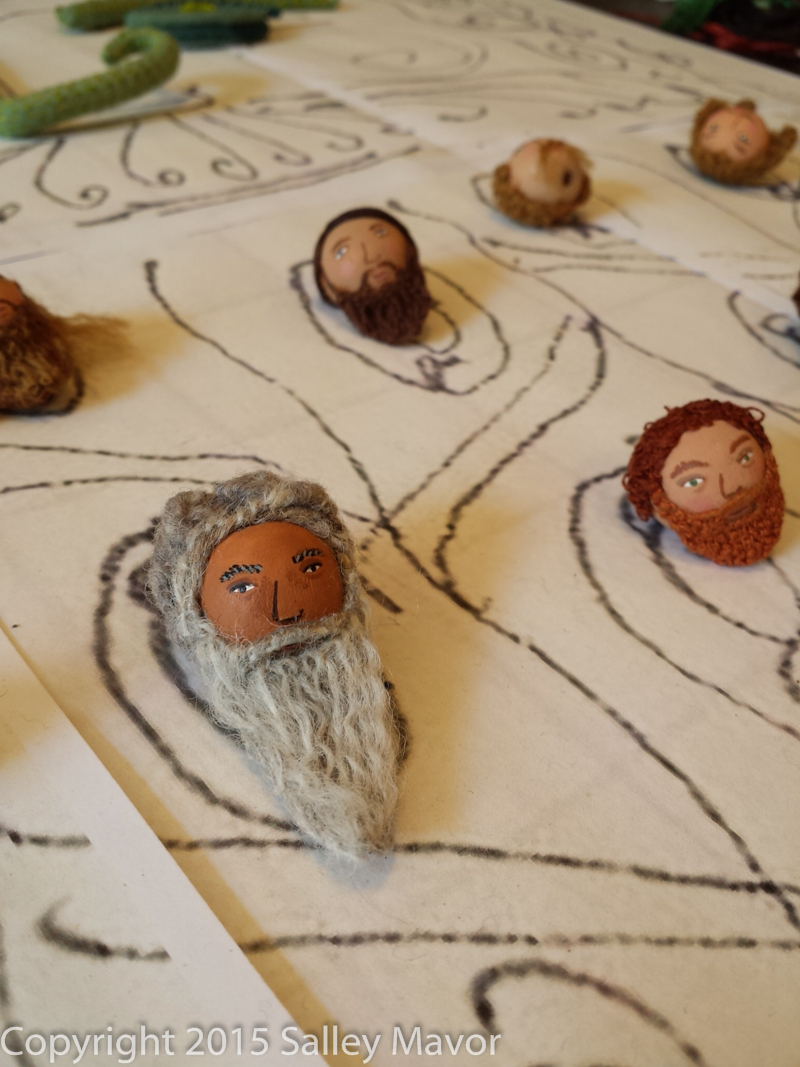
I pinned the heads inside the openings and shuffled them around quite a bit to get an arrangement that balanced color and contrast. It just took a few stiches at the hole rim to attach the portraits.
My husband Rob took photos of the finished piece downstairs. I hope that you have enjoyed this series of posts.
12 x 17 posters featuring of a selected group of portraits from Cover Up are available in my Etsy Shop here. Information about entering the Giveaway is at the end of this post.
Poster – Cover Up
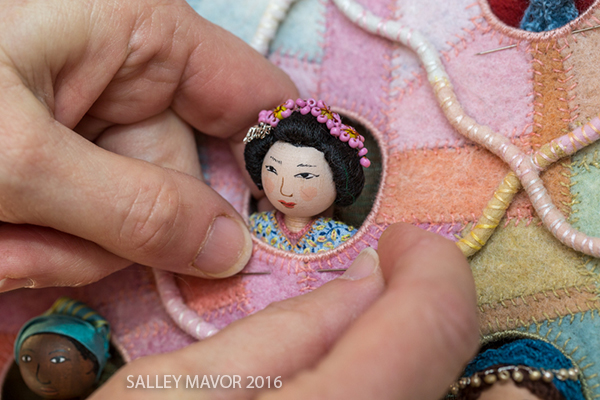
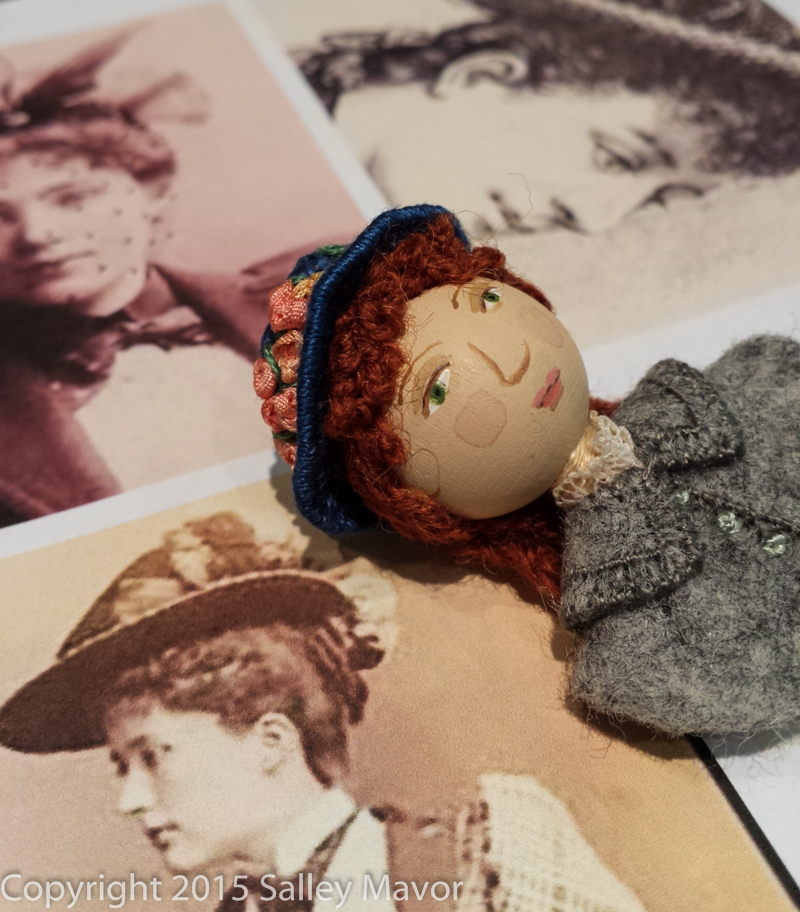
Cover Upis part of a series that includes Face Timeand Whiskers, which focus on bringing to life different people from around the world, using themes of history, style and cultural identity. In each piece, head and shoulder busts peek out of “cameo” framed holes. Their faces are painted 20mm wooden beads, with wigs and adornments, similar to the doll heads in my how-to book Felt Wee Folk – New Adventures.
To keep up with new posts, please subscribe to this blog Your contact info will not be sold or shared. If you’d like to see more frequent photos tracking the projects in my studio, please follow me on Facebook and/or Instagram.
This is part 4 in a series of posts about my new embroidered bas-relief piece Cover Up. In part 1 and part 2, the collection of “covered” women are introduced and discussed. Part 3 shows how I made the pieced felt background.
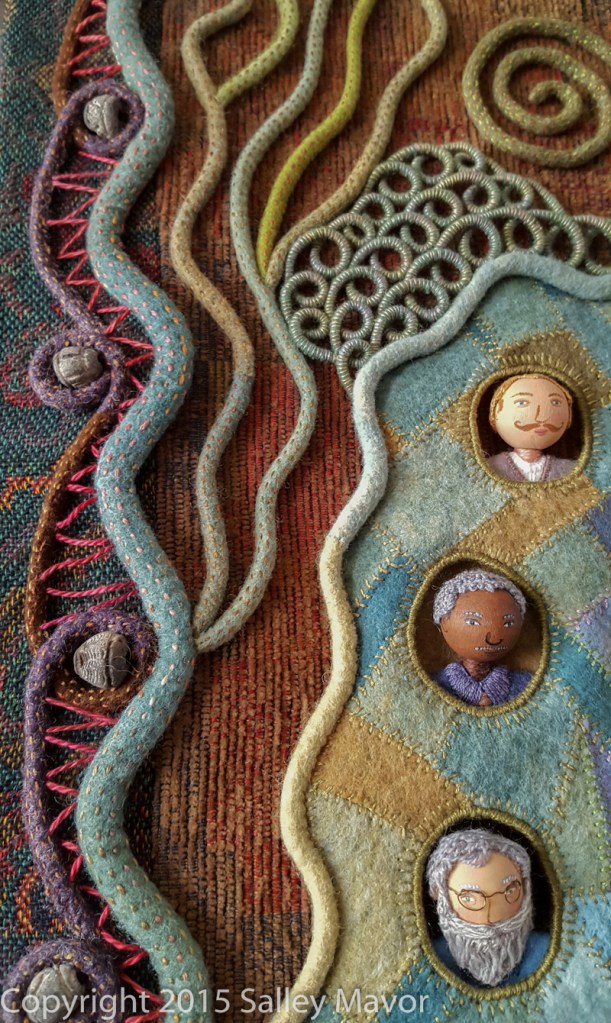
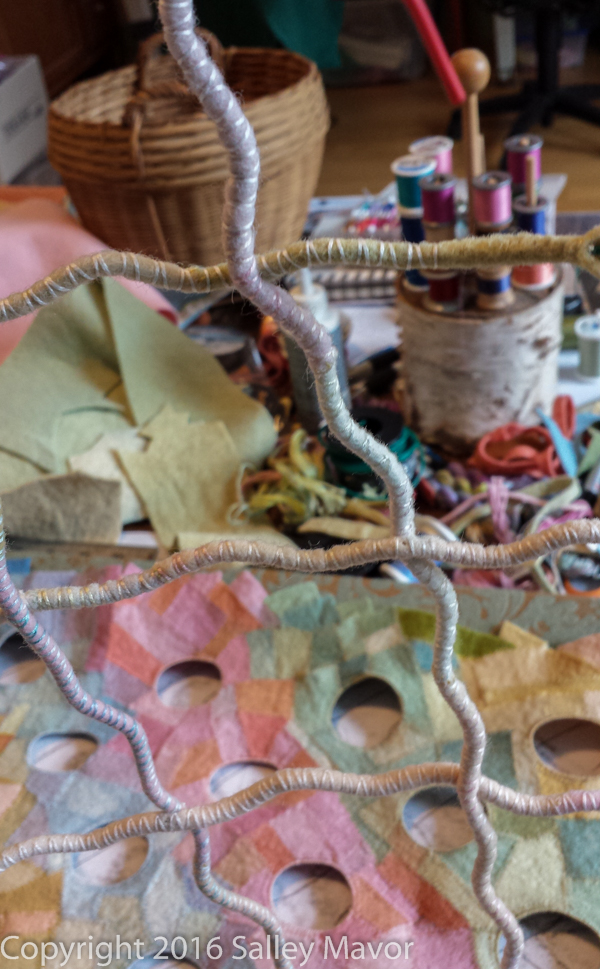
The next phase in the project involved making a felt covered wire border, which is a new technique I’ve developed over the past few years. The idea originated with a desire to form and stitch lines that have a 3-dimensional quality. I’ve used wire in my work for many years, but mostly in miniature scale. With larger gauge wire, covered in strips of embroidered felt, I have been able to incorporate bolder, linear patterns and designs into my work, like in the pieces shown below; Birds of Beebe Woods, Face Time,Whiskers and Rabbitat.
Birds of Beebe WoodsBirds of Beebe WoodsRabbitat animationFace TimeBirds of Beebe WoodsWhiskersRabbitatWhiskers
Cover Up’s border started with a sketch of a vine-like pattern. As usual, plans changed once my hands began the process of forming and articulating the wire lines. It ended up looking more like a lattice topped pie or a chain linked fence.
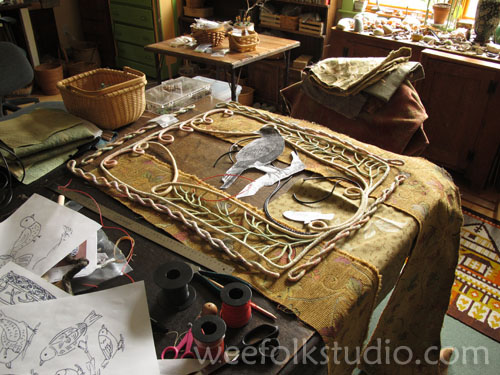
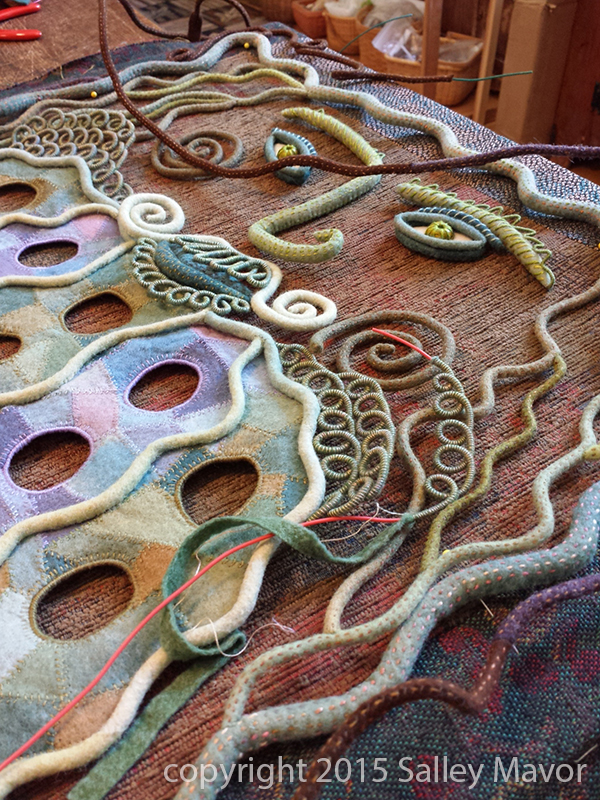
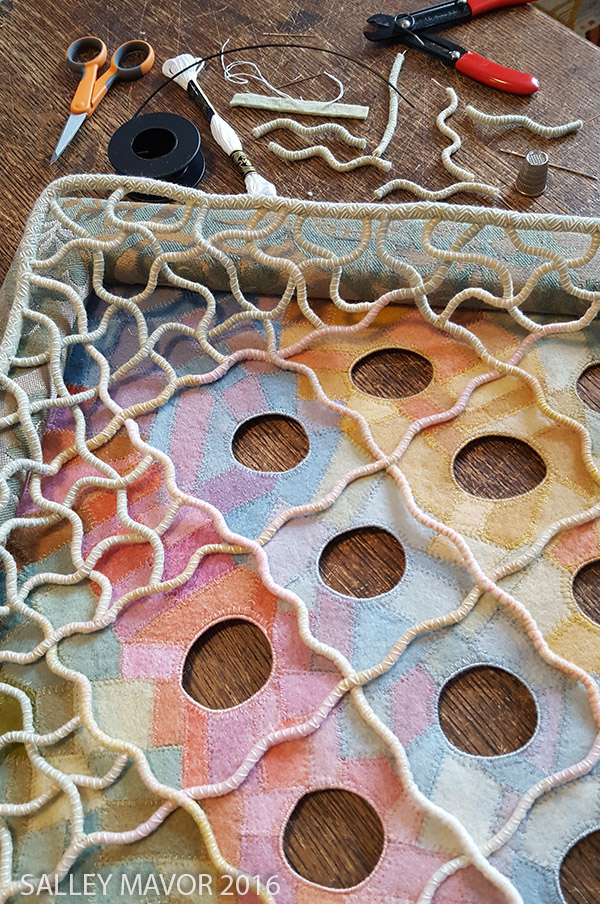
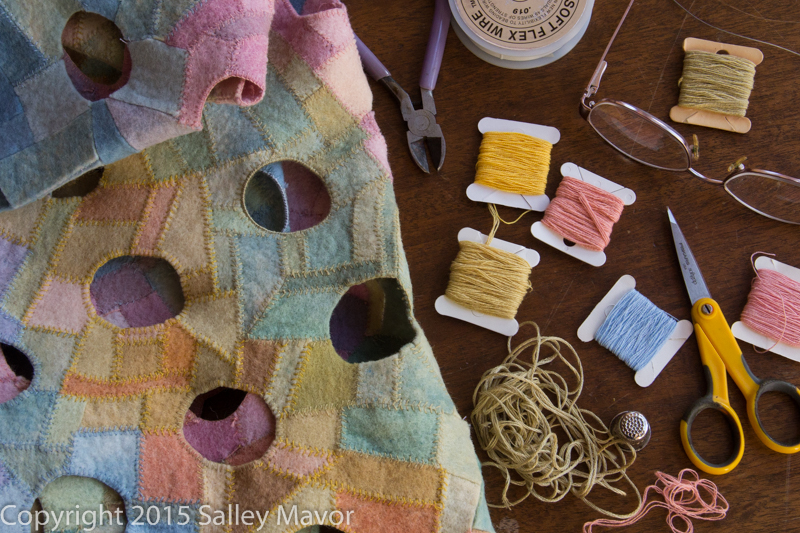
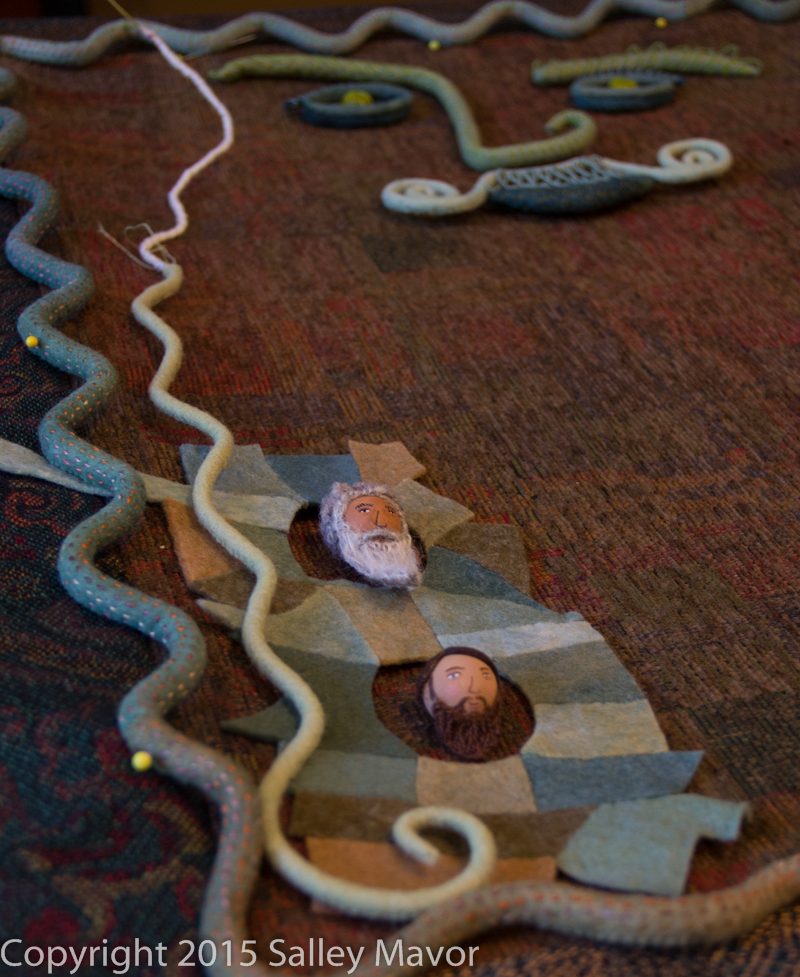
I sewed strips of felt to lengths of insulated electrical wire and embroidered the felt with pastel shades of variegated floss. Straight lines seemed too rigid and unwelcoming, so I wiggled the wire and arranged them in a diagonal grid.
This video shows close-ups of me covering and stitching wire with my non-manicured fingers.
For the lattice pattern, I used many worm shaped lengths of covered wire. I joined the wire ends in a way that’s hard to explain. Let’s just say that it involves poking wire through felt, with lots of fussy sewing to keep the wire from pulling out.
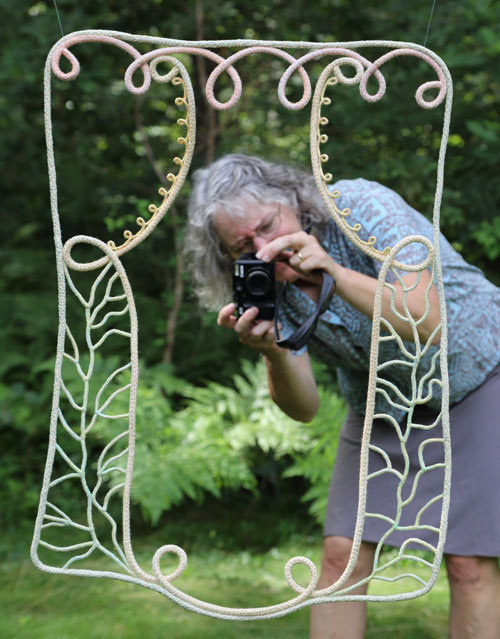
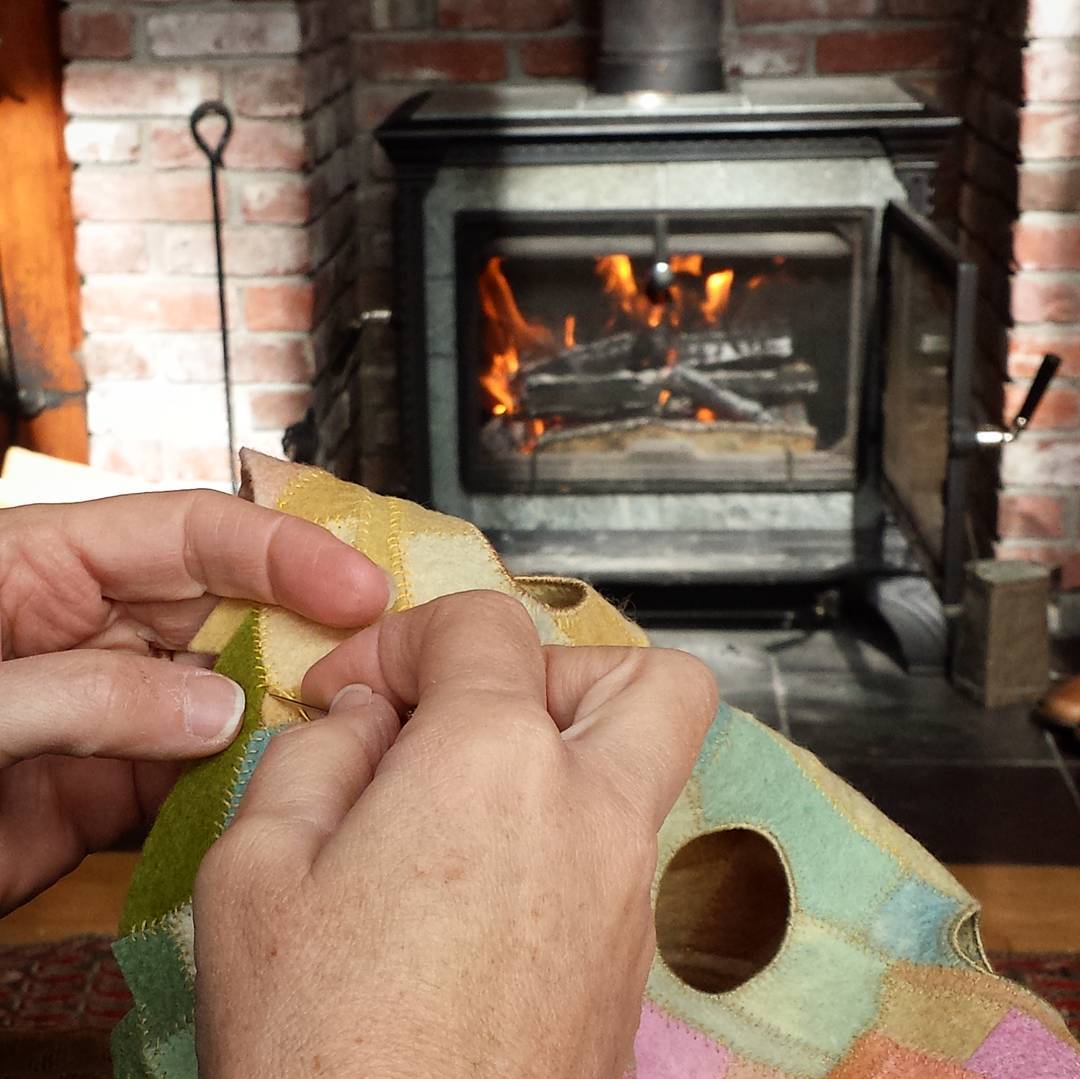
Here I am, working on the border downstairs, all cozy and warm in front of the wood stove, with snow outside.
When the border was finished, I spent a long time repositioning the doll heads until I was satisfied with the arrangement. I then secured each portrait inside their hole with a few stitches on their shoulders.
I want to mention the time commitment, because people are always curious. This size (24″ x 30″) piece usually takes 3 or 4 months of solid work. But, I must add that I believe time alone doesn’t give a piece of art its value. Like other artists who do labor intensive work, I am not deterred by the prospect of spending countless hours on a single piece, as long as it holds the promise of transcending the effort involved. I hope that you are enjoying this series of posts as much as I relished the process of making Cover Up. Stay tuned for one more post in the series! By the way, you can receive notice whenever I publish a new post by subscribing to this blog (at the top of the right column on the home page). Rest assured that I will not share your information.
Poster – Cover Up
12 x 17 posters featuring of a selected group of portraits from Cover Up are available in my Etsy Shop here.
Cover Upis part of a series that includes Face Timeand Whiskers, which focus on bringing to life different people from around the world, using themes of history, style and cultural identity. In each piece, head and shoulder busts peek out of “cameo” framed holes. Their faces are painted 20mm wooden beads, with wigs and adornments, similar to the doll heads in my how-to book Felt Wee Folk – New Adventures.
The next post (part 5) will show the end of the process, with the finished piece. Read Cover Up (part 1), (part 2) and (part 3).
To keep up with new posts, please subscribe to this blog Your contact info will not be sold or shared. If you’d like to see more frequent photos tracking the projects in my studio, please follow me on Facebook and/or Instagram.
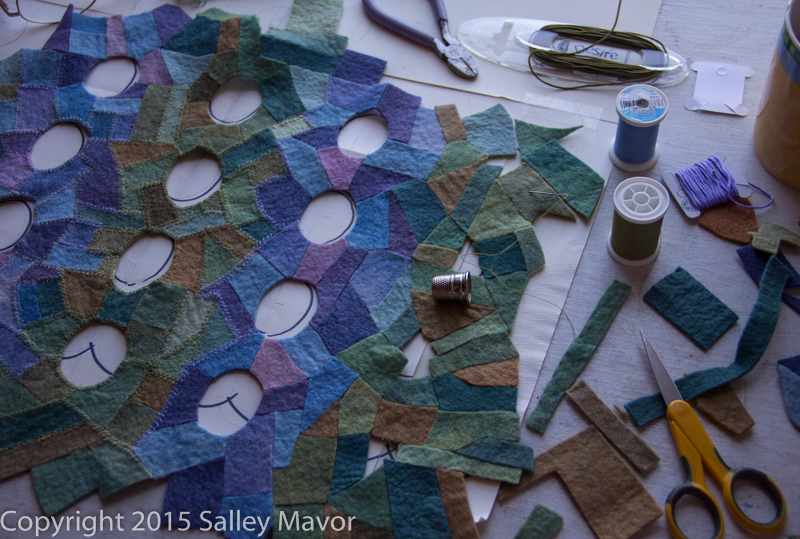
This is part 3 in a series of posts about my new embroidered bas-relief piece Cover Up. In part 1 and part 2, the collection of “covered” women are introduced and discussed. Now, I will show how the pieced felt background was made. There’s also a short video my husband Rob filmed, which shows me stitching various stages of the project.
I knew that the piece would be populated with portraits of women, with each peering through an oval opening, but I didn’t know how many characters would be included. I did some simple drawings to get an idea of its composition and proportions and then calculated that 45 portraits would have enough breathing room within the 24″ x 30″ size. As you can see in this sketchbook page, there were lots of possibilities for border treatment.
The background needed to be done in a way that would compliment the portraits and not compete with the detail of the individual women. I also wanted the colors and design to work from a distance and also entice viewers to take a closer look.
I grouped my felt scraps in piles according to color and pieced them together crazy quilt style in diagonal strips according to their hue. It was done in a similar way to the beard in Whiskers. I find that large solid colors can be too overpowering and simplistic, whereas breaking up the field into small parts brings a softer, more natural appearance. I guess it’s more like impressionist art that way. I used plant dyed wool/rayon felt that I bought years ago from Textile Reproductions. Unfortunately it is no longer being produced, so every little piece is as good as gold.
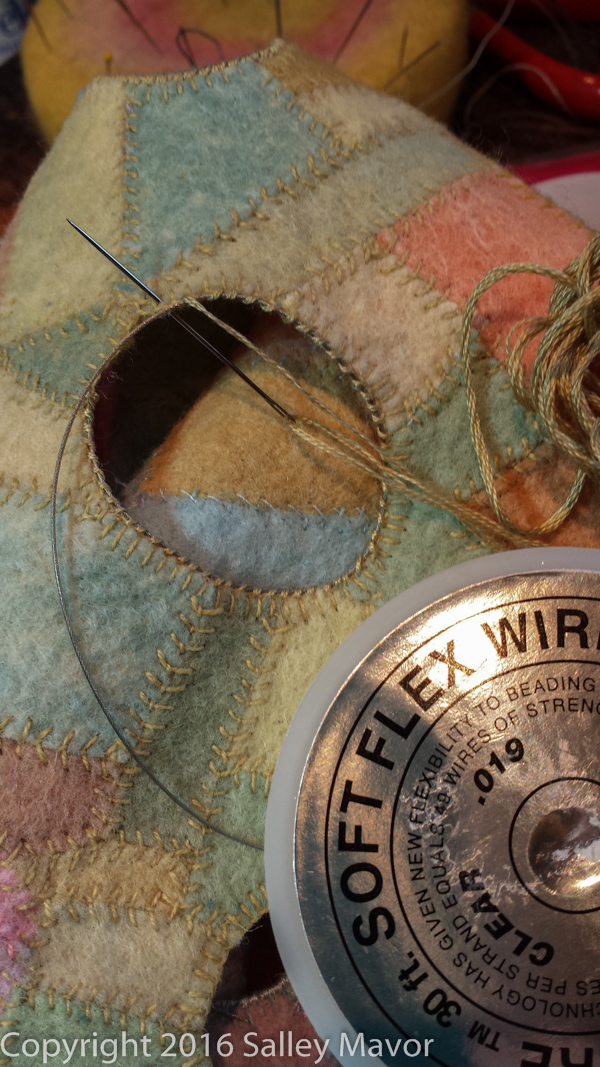
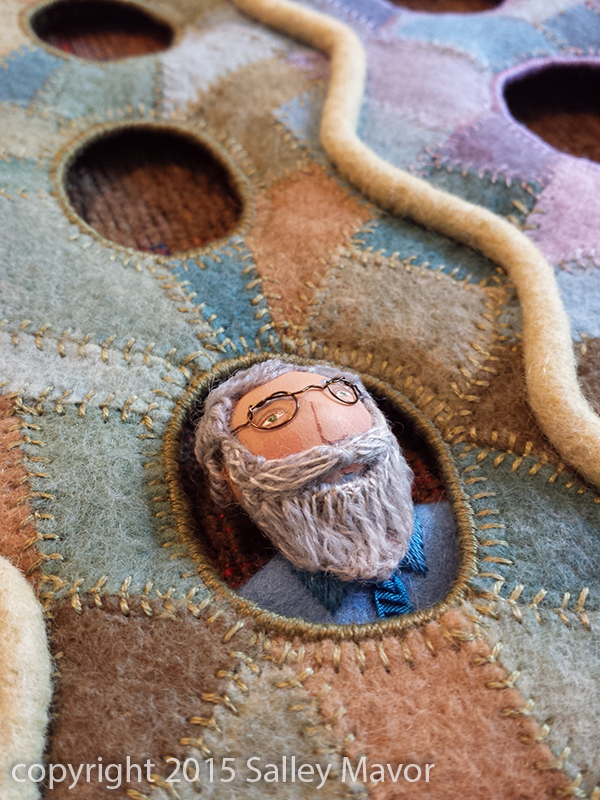
The odd-shaped pieces are held together on the back with a simple slip stitch. On the front, I used a fly stitch to join and outline the felt pieces. Here’s a video of some of the stitching:
It was great winter project, which I worked on through the holidays and into the new year.
I used Soft Flex beading wire to outline the holes and give them a clean edge and some structure.
I had fun playing around with the arrangement of the women.
Before sewing the portrait heads in their holes, I sewed the pieced felt background to a stretcher frame covered with upholstery fabric.
The next post (part 4) will show the process of making the border for Cover Up. Read Cover Up (part 1) here and (part 2) here.
Poster – Cover Up
12 x 17 posters featuring of a selected group of portraits from Cover Up are available in my Etsy Shop here.
Cover Upis part of a series that includes Face Timeand Whiskers, which focus on bringing to life different people from around the world, using themes of history, style and cultural identity. In each piece, head and shoulder busts peek out of “cameo” framed holes. Their faces are painted 20mm wooden beads, with wigs and adornments, similar to the doll heads in my how-to book Felt Wee Folk – New Adventures.
To keep up with new posts, please subscribe to this blog Your contact info will not be sold or shared. If you’d like to see more frequent photos tracking the projects in my studio, please follow me on Facebook and/or Instagram.
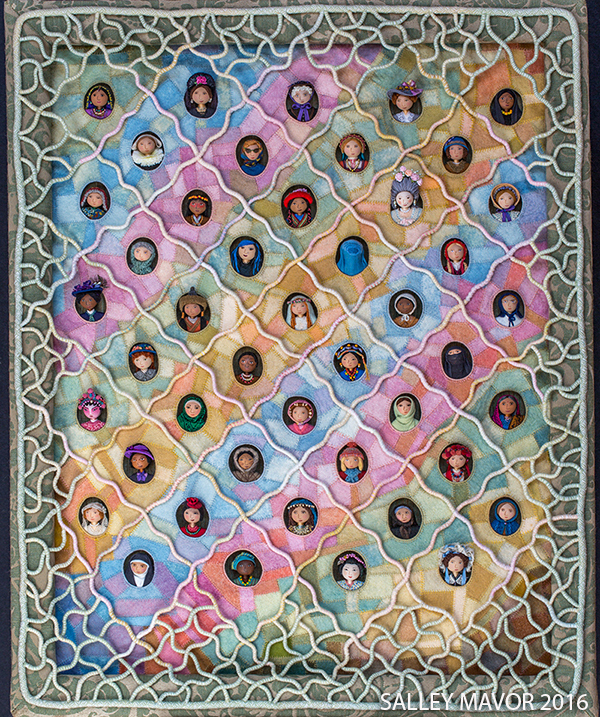
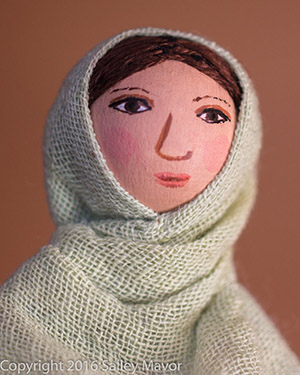
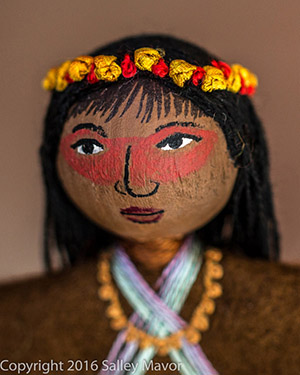
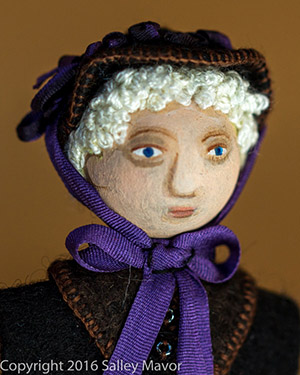
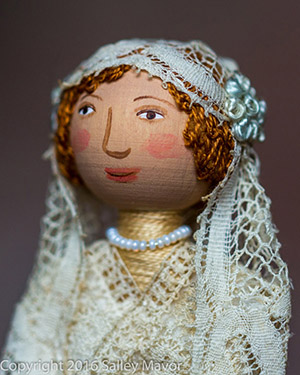
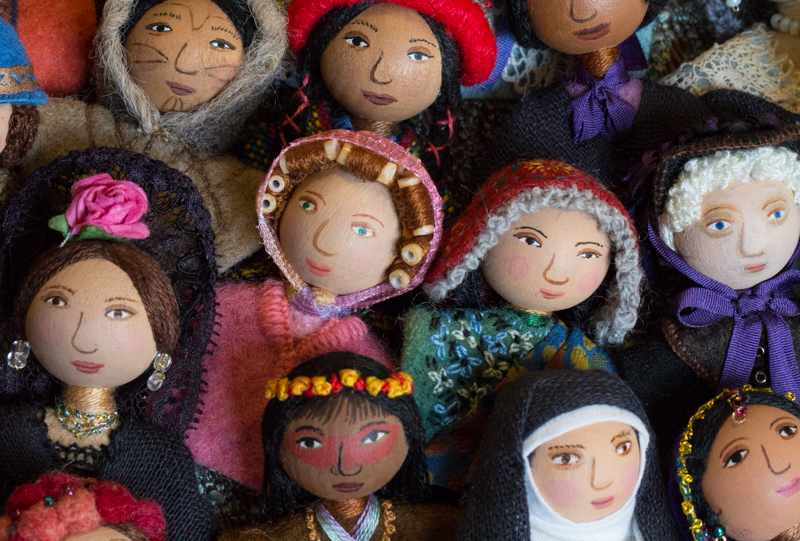
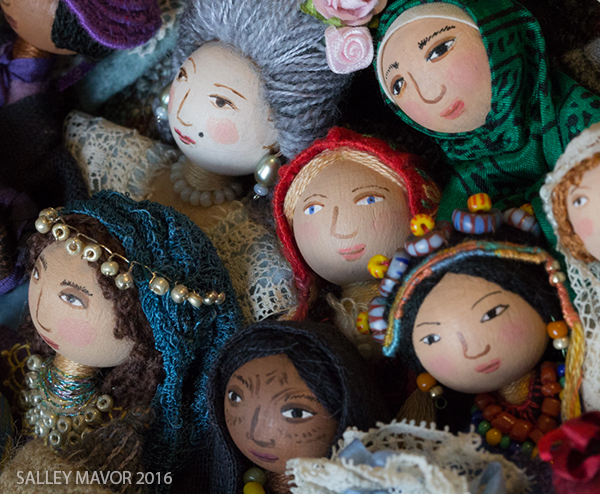
This is the 2nd part in a series of posts about my new piece Cover Up (24″ x 30″), which features 45 individual characters who represent women from particular times or places. They all wear some form of head covering, adornment, makeup or mask that serve as markers, whether they are forms of self-expression or dictated by religious or cultural tradition. There’s a wide array, from exaggerated fashions to veils that hide women from sight.
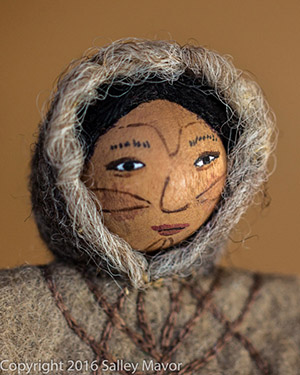
Some depictions are identifiable by their national costumes, tribal markings or regional headdresses and others are less distinguishable and open to interpretation, but they are all distinct individuals who fit into a collective portrait of women through history.
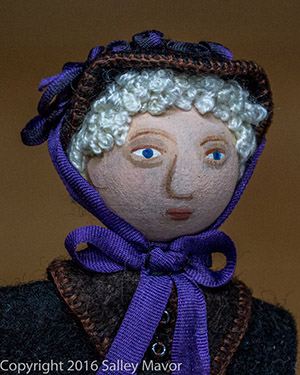
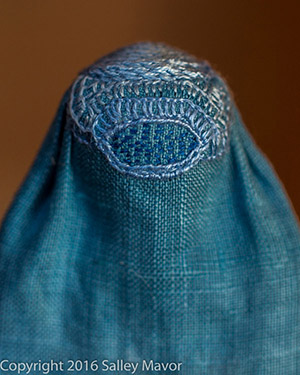
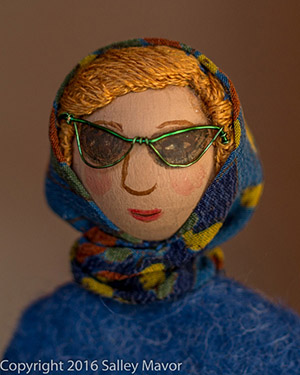
I tried to personify a variety of ethnic groups with accuracy and sensitivity. I didn’t want them to look like those plastic international souvenir dolls (shown on right), with generic features molded in different pigment shades. And I hope that Cover Up has more depth than a fashion show or a Unicef card. My intention was to show portraits of real imagined people, with their own personalities and spirits, who live or have lived with the pressure imposed by their society’s ideas about being female. Even the Geisha has an identity underneath her white pancake makeup and the Afghan woman has a unique self inside her blue burqa.
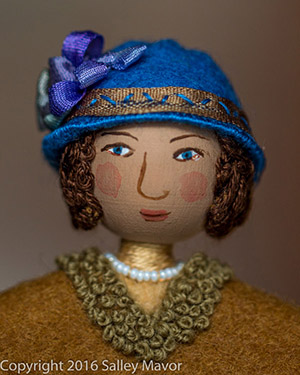
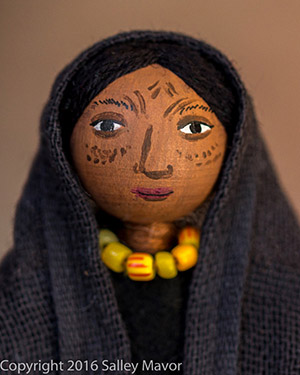
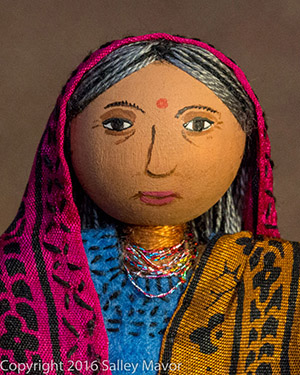
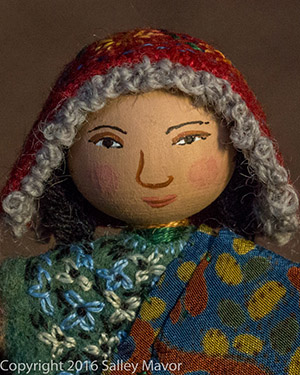
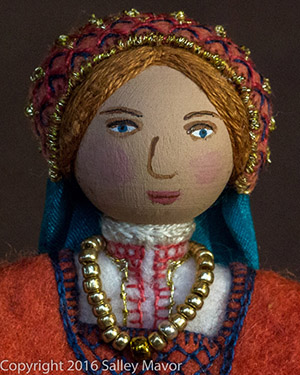
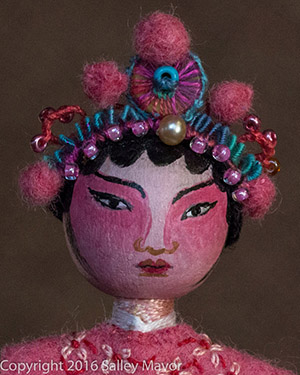
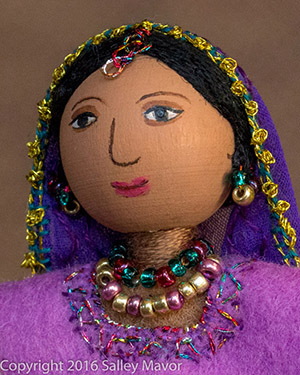
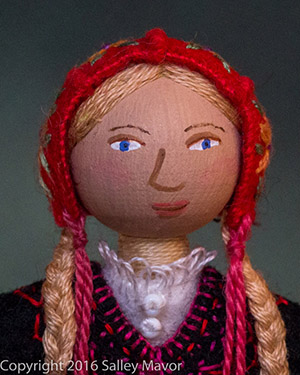
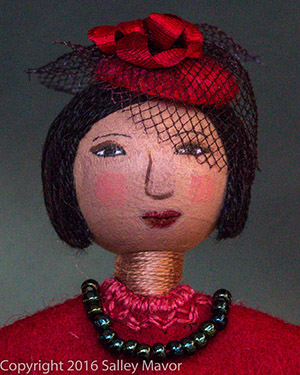
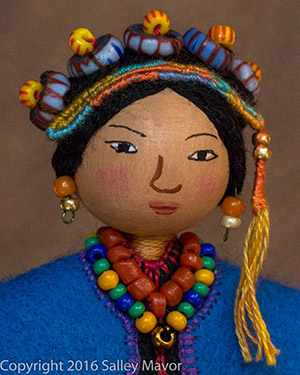
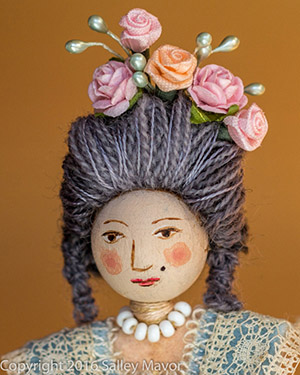
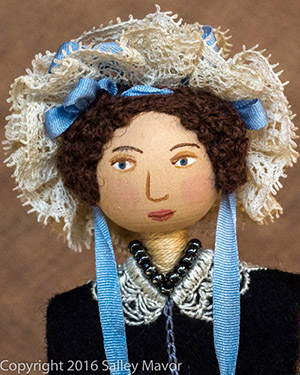
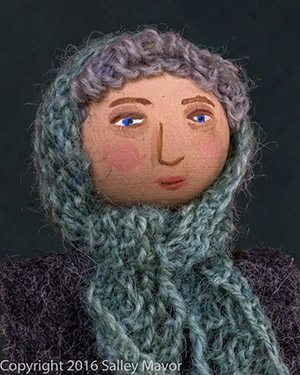
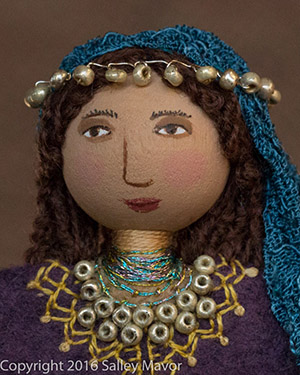
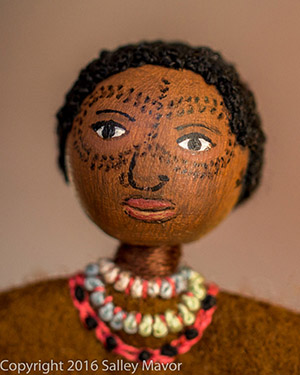
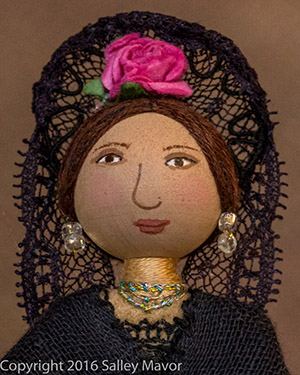
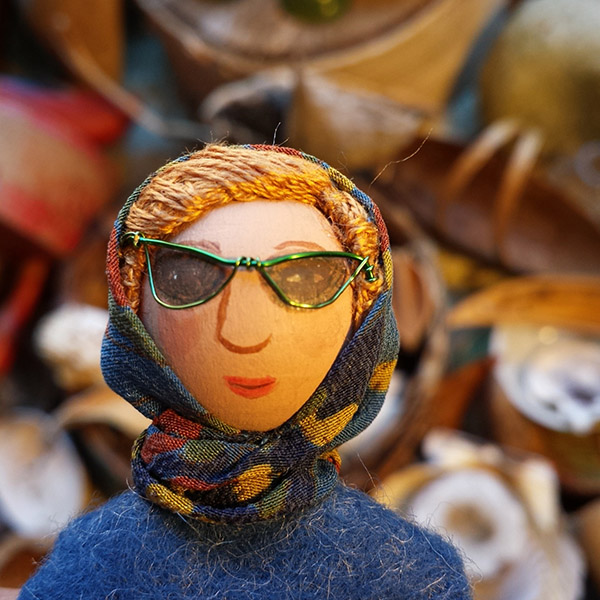
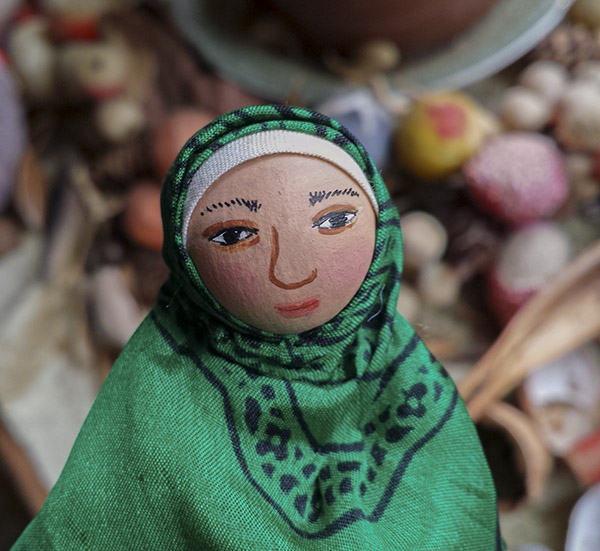
I used Google Images to find reference material and practiced painting likenesses on 20mm wooden bead heads with tiny brush strokes. As I watched the crowd of characters grow, I realized that each one had a story to tell. So, I photographed them all separately before sewing them onto the larger piece. Looking at the women individually may be a way to appreciate their distinct styles, but the relationship between them is missing. When viewed alone, there is no context for comparison, whereas the whole piece creates a juxtaposition that I find more thought provoking.
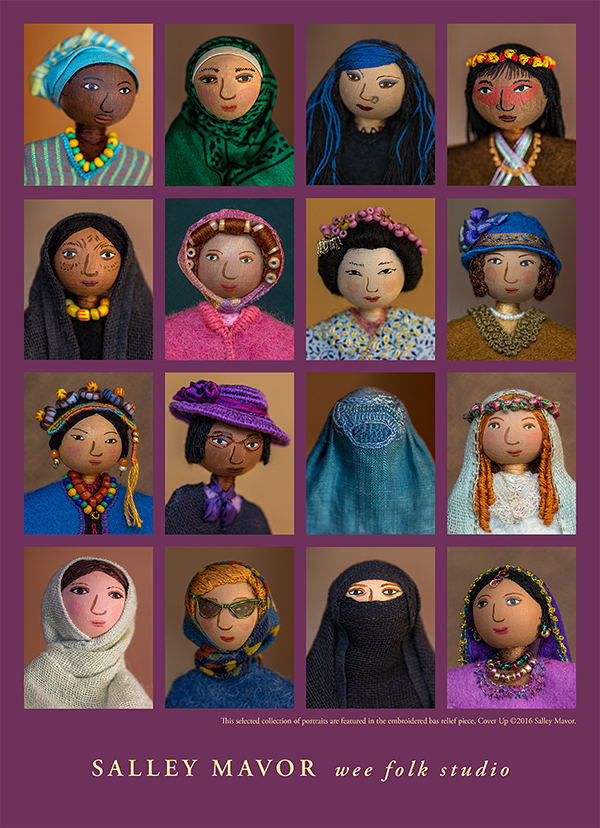
The following images are a collection of portraits of women who depict cultural, national, and religious forms of head coverings and tribal markings that reflect notions of female modesty, fashion, status and conformity from different times and places. The originals have 20mm wooden bead heads and these photos are enlarged so you can see the details.
Instead of making a key that lists each character’s source, I’ve decided to resist the tendency to label them and let their humanity speak instead. I hope you enjoy meeting the women!
12 x 17 posters featuring of a selected group are available in my Etsy Shop here.
Poster – Cover Up
Cover Upis part of a series (that includes Face Timeand Whiskers), which focuses on bringing to life different people from around the world, using themes of history, style and cultural identity. In each piece, head and shoulder busts peek out of “cameo” framed holes. Their faces are painted 20mm wooden beads, with wigs and adornments, similar to the doll heads in my how-to book Felt Wee Folk – New Adventures.
The next post (part 3 & video) shows the process of making the pieced felt background for Cover Up. Read Cover Up (part 1) here.
To keep up with new posts, please subscribe to this blog Your contact info will not be sold or shared. If you’d like to see more frequent photos tracking the projects in my studio, please follow me on Facebook and/or Instagram.
This is the first in a multi-part series of posts about my new fabric relief piece, Cover Up. It’s the female counterpart to Whiskers, my previous exploration of men’s facial hair styles.Cover Upfocuses on women’s head coverings that serve as identifying markers imposed by the conventions of a particular time and place throughout history. I wanted the 45 characters to invite comparison and point out contrasts and similarities between different societies, whether they are open or restrictive in tolerating self-expression and individuality.
I loved the research phase of the project and spent many days hunting down images of women from around the world, each wearing a form of covering that reveals something about the culture they come from. I’ve depicted individuals with all sorts of veils, scarves, hats, makeup and facial markings that reflect different notions of female modesty, attractiveness, fashion, status and conformity.
While searching through the images, I considered this question, “At what point does a bold, new fashion statement evolve into just another form of conformity that brands a group identity?” I also reflected on being a part of our diverse American society that is made up of immigrants and how this experience may influence one’s perception of “the other”.
The possibilities were endless and I could have kept making new heads for a long time, but I had to narrow it down and chose styles that I thought would best represent a variety of cultures. In a lot of cases it came down to choosing depictions that had characteristics I found personally intriguing.
Poster – Cover Up
After finishing the portraits and before making the background field to put them in, I took separate photos of each one and shared them on Instagram and Facebook. I invite you to follow me on these other social media sites for more frequent postings and notices, which include behind the scenes pictures.
The response to the photos was so enthusiastic that I decided to print a poster which shows enlargements (200%) of a selected collection of these portraits. The 12 x 17 poster (shown left) is available in my Etsy Shop here.
Cover Up is part of a series that includes Face Timeand Whiskers, which focus on bringing to life different people from around the world, using themes of history, style and cultural identity. In each piece, head and shoulder busts peek out of “cameo” framed holes. Their faces are painted 20mm wooden beads, with wigs and adornments, similar to the doll heads in my how-to book Felt Wee Folk – New Adventures.
Please stay tuned for more posts about making Cover Up. Coming up are more photos of the portraits and how the felt background was made. My husband Rob is even working on a short video with material he filmed while I was stitching the piece. Read (part 2) and (part 3 & video).
To keep up with new posts, please subscribe to this blog Your contact info will not be sold or shared. If you’d like to see more frequent photos tracking the projects in my studio, please follow me on Facebook and/or Instagram.
Cover Up(24 x 30), is the newest piece in an evolving collective portrait series. I’m in the process of writing more posts about the making of Cover Up, which will be published soon, but, I wanted to send out a preview first. It was an engrossing project that kept me busy all through the cold snowy days of winter. Cover Updepicts women wearing cultural, national, and religious forms of head coverings and tribal markings. The portraits reflect notions of female modesty, fashion, status and conformity from different times and places.
UPDATE: In this series, which includes Face Timeand Whiskers, I’ve focused on bringing to life different people from around the world, using themes of history, style and cultural identity. In each piece, head and shoulder busts peek out of “cameo” framed holes. Their faces are painted 20mm wooden beads, with wigs and adornments, similar to the doll heads in my how-to book Felt Wee Folk – New Adventures.
Because the many little portraits are hard to see, I decided that the finished piece (shown above) wouldn’t translate well into a reduced sized poster format. Instead, I chose to feature a selected group of women, with their photos juxtaposed in a grid. Each head is enlarged 200%, so that you can take in the details and essence of the person. The 12 x 17 poster (shown below) is available in my Etsy Shop here.
Several recent exhibitions of my artwork have included printed enlargements of the figures in Cover Up, such as this display in “What a Relief” at the Brick Store Museum in Kennebunk, ME.
To keep up with new posts, please subscribe to this blog Your contact info will not be sold or shared. If you’d like to see more frequent photos tracking the projects in my studio, please follow me on Facebook and/or Instagram.
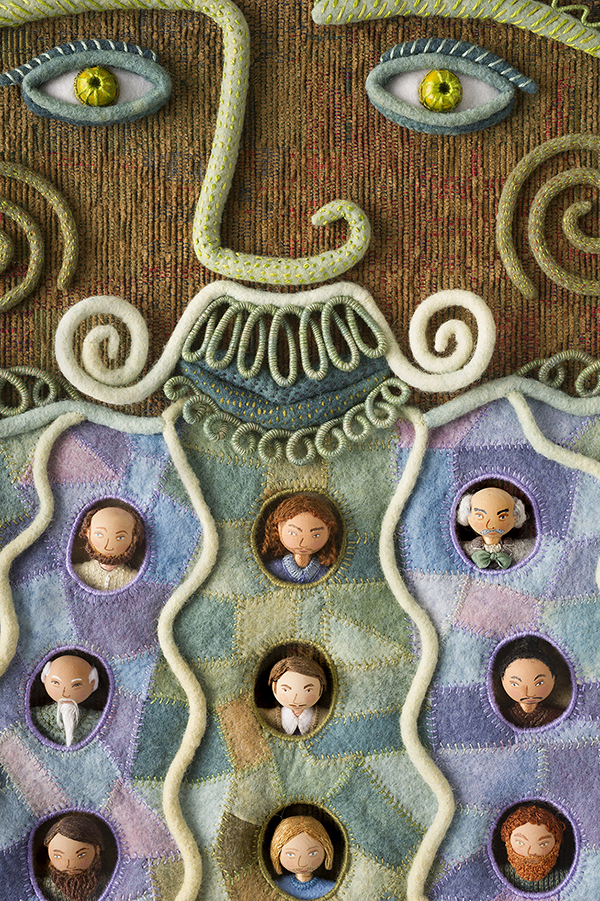
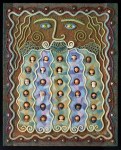
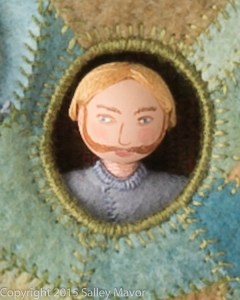
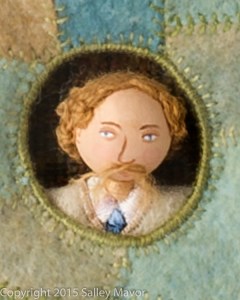
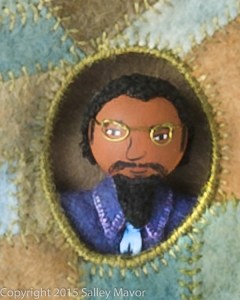
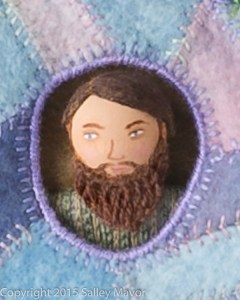
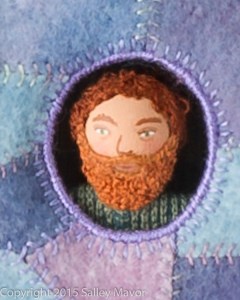
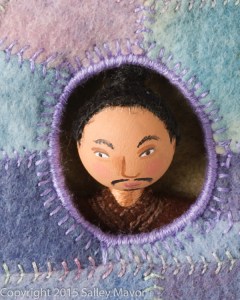
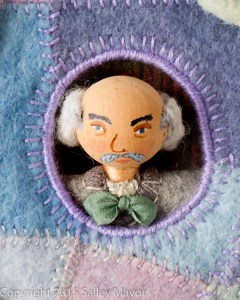
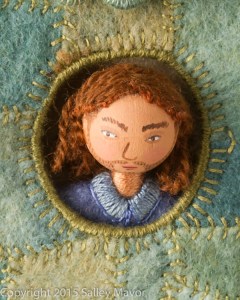
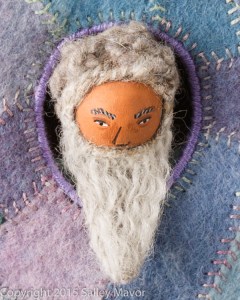
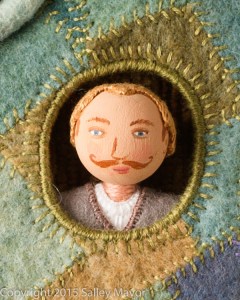
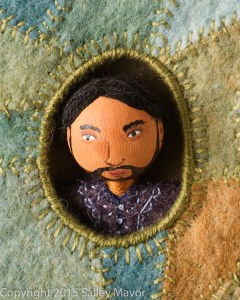
In this 3rd and final post about Whiskers, there are lots of close up photos, including individual shots of all the bearded and mustached guys. I can’t tell you how refreshing it was to take a detour from making sweet faced wee folk characters and delve into the world of hairy men! The styles range from handle bars to goatees to hipster beards. There’s more about Whiskers in Part 1 and Part 2.
Last summer, when I started making the piece, I posted a photo on Facebook of my work table full of bearded heads. Someone asked if there would be women as well. I answered that this piece was about facial hair and that only bearded ladies could be included! Don’t fret, a crowd of women (with head coverings, not beards) are featured in my next piece Cover Up, which I’ll write about in the future.
Whiskers, Cover Up and more new large (24″ x 30″) works will be included in my upcoming show, Intertwined – Needle Art of Salley Mavor at the Bristol Art Museum in Bristol, RI this fall, Sept. 16 – Oct. 30.
I pinned the head and shoulder portraits in their peep holes before sewing them in place. At this angle, don’t the guys look like they’re floating in swimming pool lanes?
After consulting with my artistically perceptive son Ian, it was clear that the piece needed another element to help finish it off. At the last minute, just before it was scheduled to be professionally photographed, I decided to add a red thread zigzag to the border.
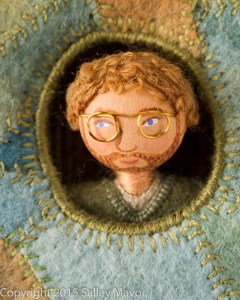
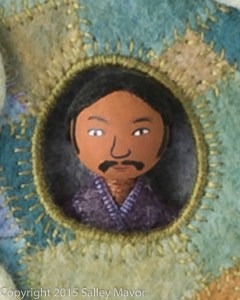
The collection of heads have doll wigs similar to the ones in the new edition of my how-to book, Felt Wee Folk. Some whiskers are painted, but the glasses and embroidered felt beards are a new development, since the book was written. So, here are the fellas…
I had a blast researching and making the bearded guys and I hope that you enjoyed meeting them! It’ll be the women’s turn next, when I show another new piece, Cover Up in future posts. You can get a preview on Facebook here and Instagram here.
Early on in the process, when I was mulling over the idea of making this piece and starting to do research, I envisioned a large, bearded face. I wanted to create a structure that could serve as a display mechanism for the group of little men. And because most people never see my original artwork, it was important that there be a strong graphic image that would translate well when reproduced in different image sizes.
At first, I was attracted to the “green man” concept, but veered more in the direction of Assyrian sculptures, which have wonderful stylized beards. I stayed with the green palate and added blues and browns.
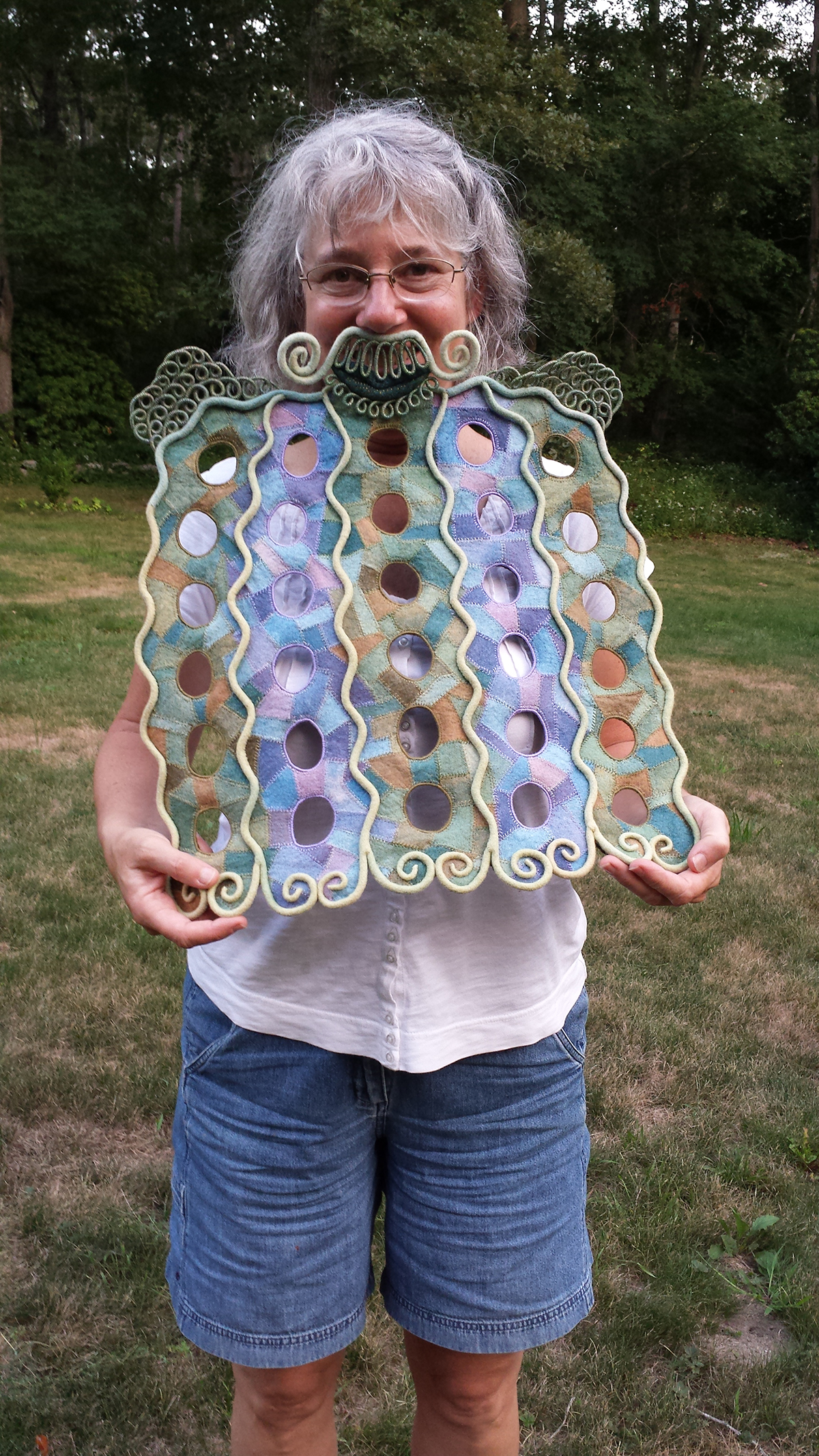
In this post, I will show photos of the process of making the beard, which turned into a separate piece that could be used as a costume!
The beard is made up of small scraps of felt, that are pieced together like a crazy quilt. I drew peep holes on a paper template and matched felt pieces like a jig saw puzzle to fit. The pieces are sewn together on the back with a slip stitch and then embroidered along the front seams with a fly stitch. I made a lot of progress while on vacation, which is further evidence that I work all the time. The view out the window was nice, though!
I used my felt covered wire technique to outline the beard and facial features.
To keep the holes rounded and firm, I stitched wire around the openings. The smaller curls on the mustache and beard top are made with floss wrapped wire.
The next post (part 3) click here shows the finished piece, with close ups of the bearded men. To read Whiskers (part 1) click here.
To keep up with new posts, please subscribe to this blog. Your contact info will not be sold or shared. If you’d like to see more frequent photos tracking the projects in my studio, please follow me on Facebook and/or Instagram.
Ok, it’s been awhile since I’ve checked in. My only excuse is that it’s winter – my favorite time to hunker down and go full throttle on a project. There’s no way I’m going to some place warm! I know that some of you are of like mind, but we happy hibernators generally don’t get much agreement out there. I’m happy to say that I just finished a piece I’ve been working on since fall. Cover Updepicts cultural and national forms of head coverings and tribal markings that reflect notions of female modesty, fashion, status and conformity from different times and places.
For now, let’s play catch up with a series of posts about a 24″ x 30″ piece I finished last summer. Whiskers focuses on beards and mustaches, showing an array of male characters from different cultures and historic periods.
Little men peek out and display themselves like an unlikely collection of international souvenir dolls. Their painted wooden heads appear in vertical lines, within a large man’s beard, which acts as a holding place. The bulk of the large beard is comprised of small pieces of felt that are patched together by hand with embroidery stitches. The large man’s bas relief face and beard are defined with lengths of wire covered with felt or wrapped with thread. Whiskers explores diverse societies and their origins, using needle and thread to signify the unraveling and mending of human cultures throughout history.
I made the heads like the wee folk dolls in my how-to book, Felt Wee Folk – New Adventures. Some beards are painted on the wooden bead head. I also tried something new, by gluing embroidered felt beards to their faces.
I had a blast researching beard styles for the collection of characters. This piece is a continuation of a new series that explores history and fashion. Face Time (shown below) is a previous piece showing cameo portraits from early civilizations to the present day. See Whiskers Part 2 here.
To keep up with new posts, please subscribe to this blog. Your contact info will not be sold or shared. If you’d like to see more frequent photos tracking the projects in my studio, please follow me on Facebook, Instagram and BlueSky.
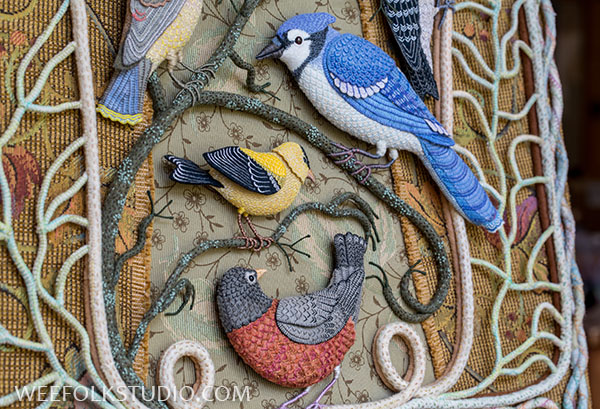
I recently cleaned the glass which protects the Birds of Beebe Woods. While the piece was uncovered and exposed, Rob took some new photos. This time he didn’t aim the camera straight on. We thought we’d try coming from the side a bit, to emphasize the sculptural quality of the birds.
I think these photos better translate the experience of looking at the real piece. Of course, it’s best viewed without glass, but it’s necessary for protection from light and dust.
Printed reproductions in the form of posters and cards are available from my Etsy Shop.
Birds of Beebe Woodsis on display at Highfield Hall, Falmouth, MA until Sept. 15th. I’m also excited about the upcoming outdoor exhibit, Fairy Houses of Highfield Hall (June 28 – Aug. 31), which I’m curating again this year.








































 In this 3rd and final post about Whiskers, there are lots of close up photos, including individual shots of all the bearded and mustached guys. I can’t tell you how refreshing it was to take a detour from making sweet faced wee folk characters and delve into the world of hairy men! The styles range from handle bars to goatees to hipster beards. There’s more about Whiskers in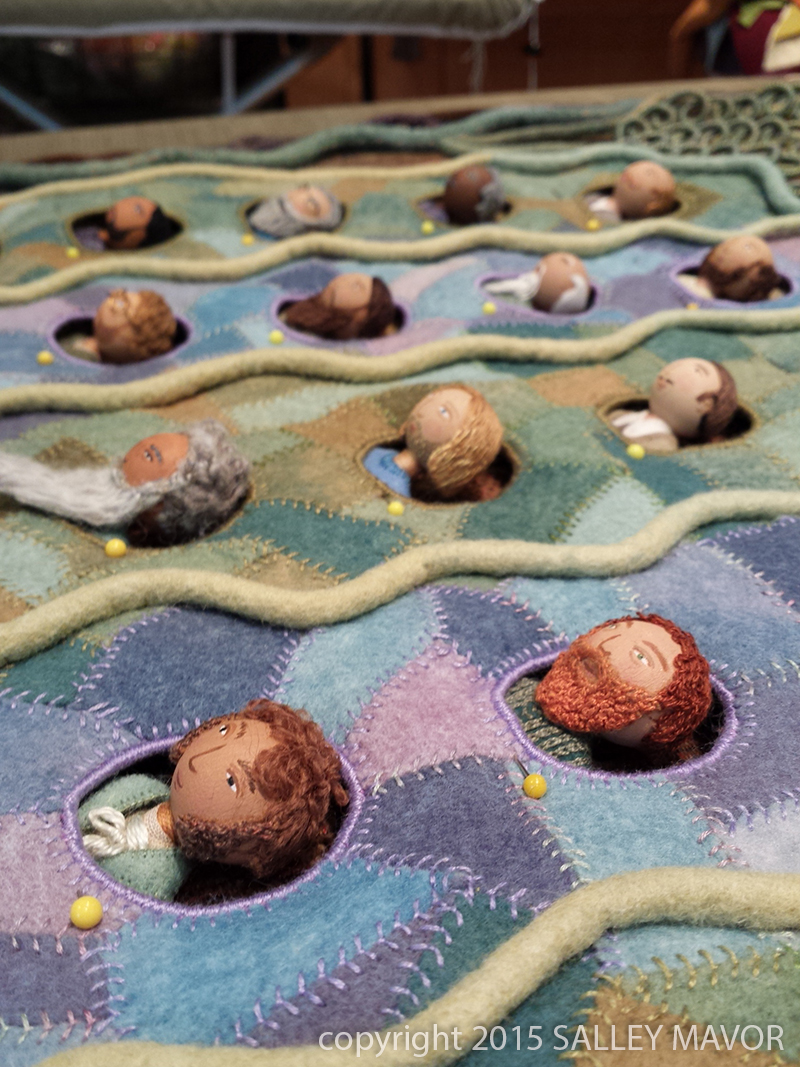

























 SALLEY MAVOR