Unknown's avatar

About Salley Mavor

I make 3-dimensional fabric relief pictures that are photographed and used to illustrate children’s books. I sew together different materials to create fanciful scenes in relief, much like a miniature stage set, with figures imposed on an embellished fabric background. My work is decorative and detailed, full of patterns from nature and found objects, all sewn together by hand with a needle and thread.

Laplander

This might look like something a child would do, but I painted “The Laplander” while a 21-year-old art student at RISD. My illustration teacher, Judy-Sue Goodwin-Sturges, gave me a roll of brown paper and told me to work big. She could see that I was struggling to find my way artistically and this was her way of getting me to see other possibilities.    
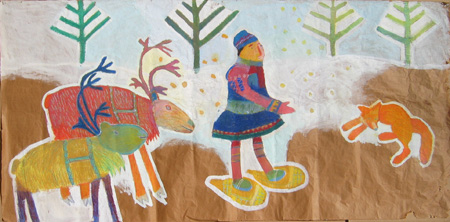
The Laplander, tempera and pastel, 1977

 The assignment was to illustrate a story about a Laplander. So, I bought some tempera paint, wide brushes and some children’s pastels and taped the 6 ft. long sheet of paper to my apartment wall. I can remember how exhilarating it was to move the wide brush across the paper. It felt as loose and playful as a finger trail on a foggy car window. As part of the excercise, I tried not to think too hard or overwork the painting.    
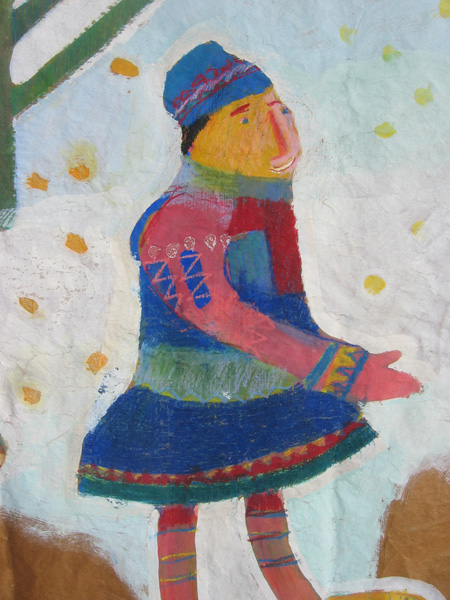
detail of "The Laplander", 1977

 When I brought the rolled up painting to class and hung it up with the other student’s work, it was by far the largest piece and was highly visible from across the room. During the critique, another teacher walked past the open doorway and poked his head in. He pointed to my picture and called out, “What is that?” I don’t remember if anyone responded to him, but he soon walked away. Now I must tell you that every art school student has bad critique experiences, but this was very unusual behavior for a teacher who has no connection to the class. This man, whom I shall not name, no longer teaches and has gone on to become a very famous illustrator. I can remember being shocked at his rudeness, but also felt excitement because he noticed my work. You see, I had previously decided not to register for his class because my friends had complained that his class was torturous unless you were willing to draw in his style. I’ve never spoken to him about the incident and for years held a grudge against him. It wasn’t until I saw him 20 years later at an art show that I experienced his human frailty, that I could see him for what he was, just an insecure man who is vulnerable like everyone else.    
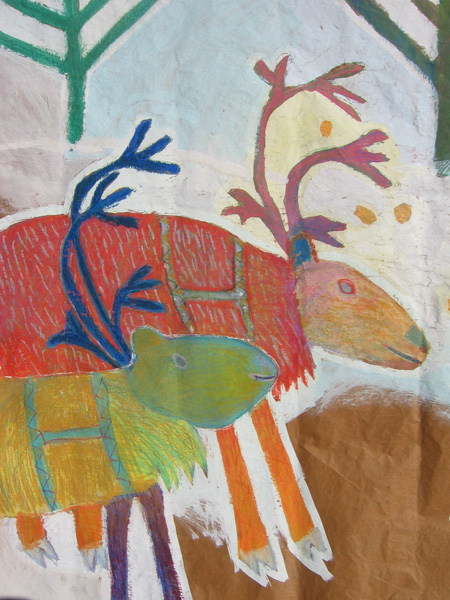
I’ve kept The Laplander painting for 30 years and recently unrolled it, ironed out as many wrinkles as possible and photographed it outside. Seeing it today reminds me of a time when I was unsure about how to make my mark and how, with the help of an insightful teacher, pressed forward into unknown territory. There have been other moments of uncertainty, but I continue to strive for qualities like sincerity, strength and vulnerability in my art and in my life.    

"The Laplander" with Salley today

My teacher, Judy-Sue Goodwin-Sturges still teaches at RISD and encourages students to develop their own individual styles and find new ways to extend themselves artistically. Thanks, Judy-Sue, for helping me find new possibilities, then and now! Here she is in the early 90’s with some of her former students who are children’s book illustrators, Salley, Ashley Wolff and Holly Berry.  

Judy-Sue (back), Salley, Ashley and Holly 1992
Fish Tattoo

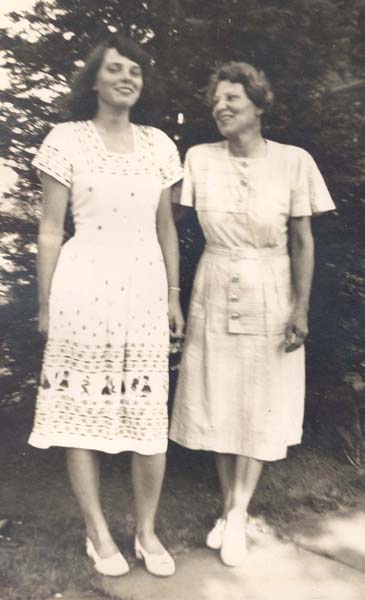
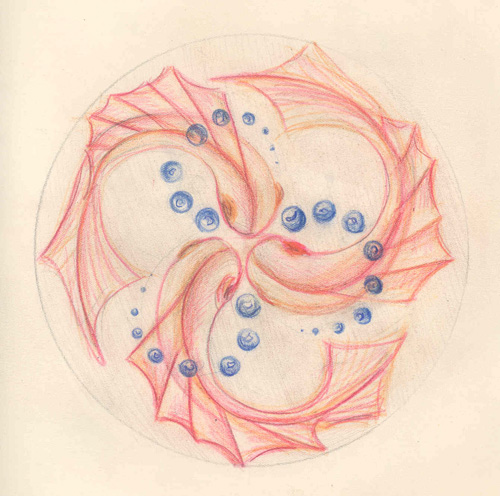
My niece, Danya, looked through her grandmother’s portfolio from RISD and really liked this drawing of three fish in a circle. It’s dated Feb. 4, 1944, so my mother was 19 years old when she drew it, the same age her granddaughter was when she chose it as the inspiration for her tattoo.    

drawing by Mary Hartwell (Mavor), 1944

Mary and her mother, Louise Hartwell, 1944

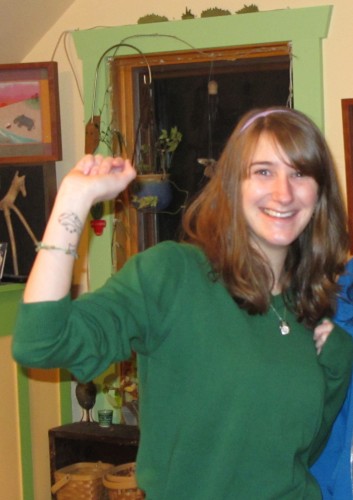
Danya is my brother Jim’s daughter, the youngest and only girl out of 5 grandchildren. She worked for me for a few summers, putting kits together when I still made them at Wee Folk Studio. She is now a sophomore in college, where she is discovering art history. For her tattoo, Danya traced one of the fish from the drawing and made a black ink copy complete with bubbles. She brought it with her to the tattoo parlor and had the fish tattooed to the inside of her right arm. Now, she has a constant reminder of her grandmother, whom I think would be quite amused at the idea.     

Danya showing her fish tattoo

Danya's tattoo

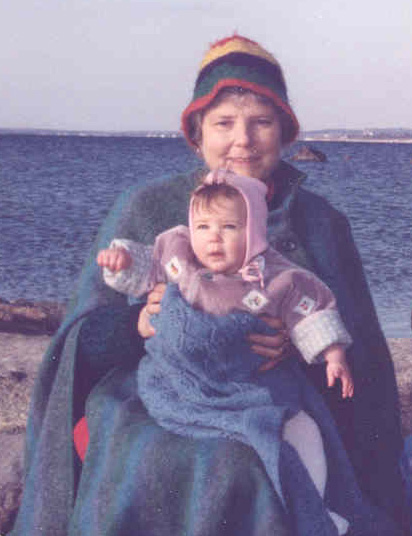
Danya with her grandmother, 1990

Pink House

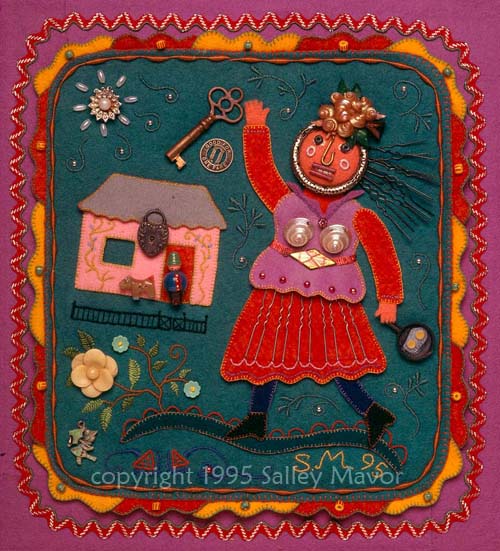
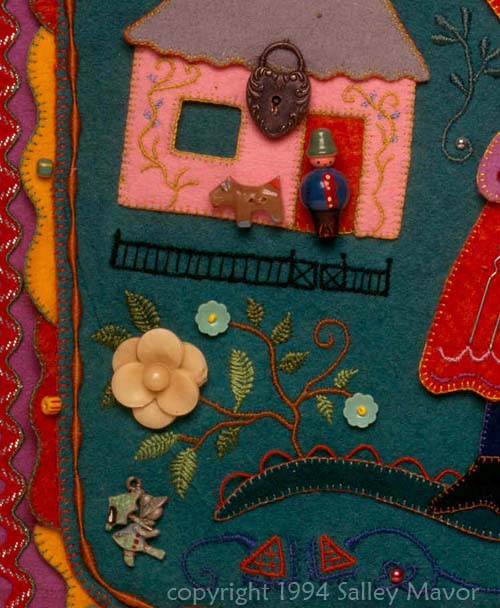
I can still remember how much fun it was to make The Pink House back in 1995. I had finished the 2 year project of making  illustrations for Mary Had a Little Lamb and was ready to burst out with something bold and unplanned. I sorted through boxes of objects that I’d been collecting, selecting parts to use.

PinkHouselowWM

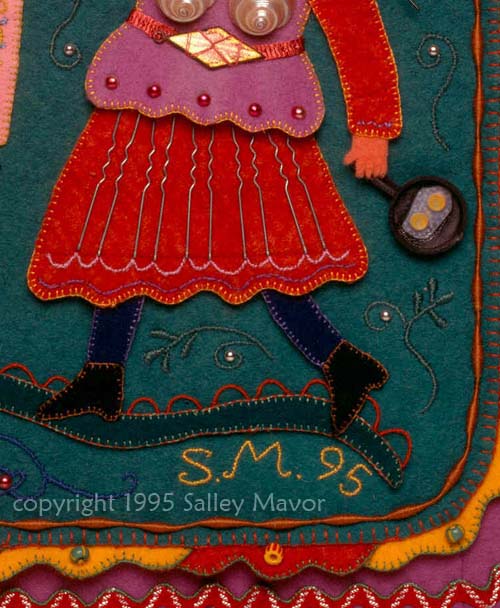
The hair pins and costume jewelry were from grandmother’s things.  The key and New York subway token were found in her desk drawer. I try to find things that can be sewn. Even the shells used for the breasts were earrings with convenient holes already drilled, making it easier to sew them down. I prefer to sew things in place and not use glue, which is messy and unpredictable. With stitches, if somethings doesn’t work, you can always rip it out and try again.

hair pins

pinkhouse2detailWMSome of the objects include a miniature silver lock, man and dog buttons, a girl with umbrella charm and a Bakelite flower button. The woman’s headdress is a pin made of a cluster of shells.

sketch for “The Pink House”
pinkhouse3WM

The Pink House  was one of the first pieces I made with wool felt. The red felt is from an old maternity top my late mother had from the 50’s.  The woman is holding a doll house sized plastic frying pan from my childhood. Queen With Duster is another piece I made with my grandmother’s found objects during the same period. You can see it here.

PinkhouseWM

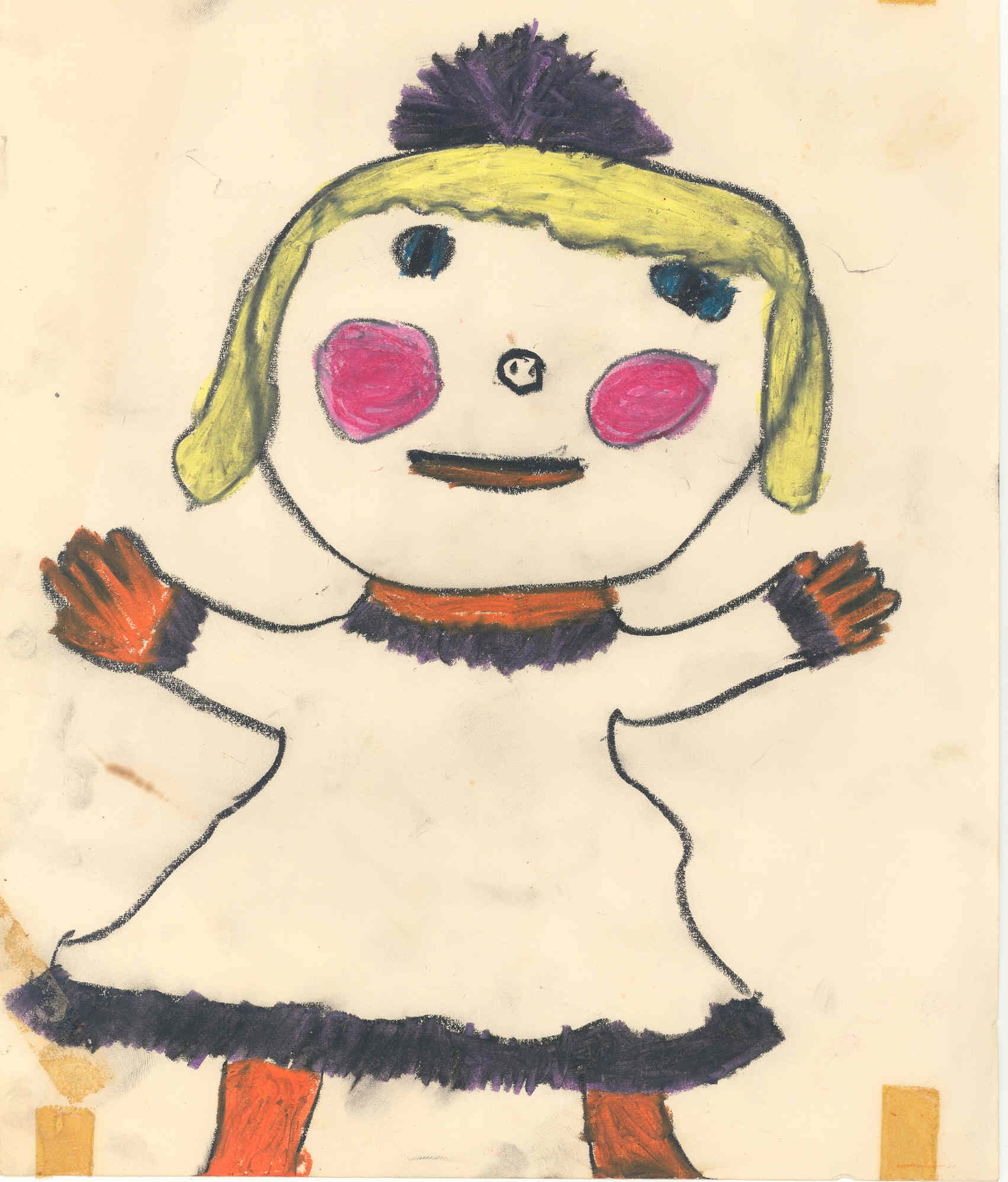
I’m so glad that my mother saved some of my artwork. I don’t remember this childhood drawing, which I just found when I was cleaning my parents’ house.  I can’t help notice some similarities between this drawing and The Pink House. They both have a bold central figure in a dress, with arms raised, gesturing hands, a head-piece and circle cheeks.

drawing by Salley at age 7

To keep up with new posts, please subscribe to this blog Your contact info will not be sold or shared. If you’d like to see more frequent photos tracking the projects in my studio, please follow me on Facebook and/or Instagram.

Close-ups (hearts)

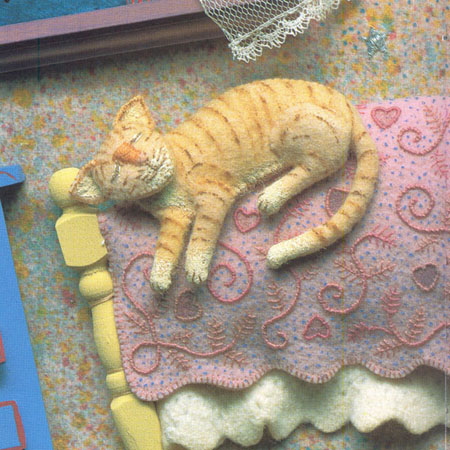
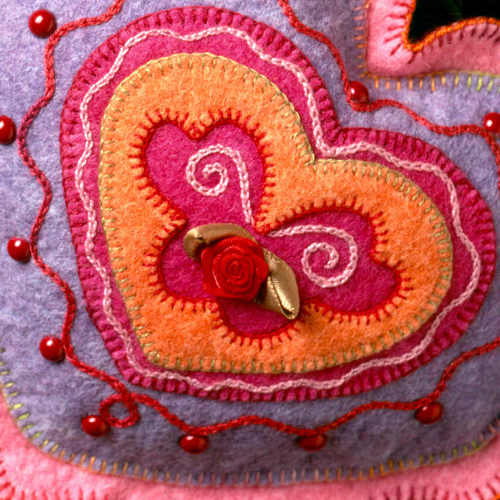
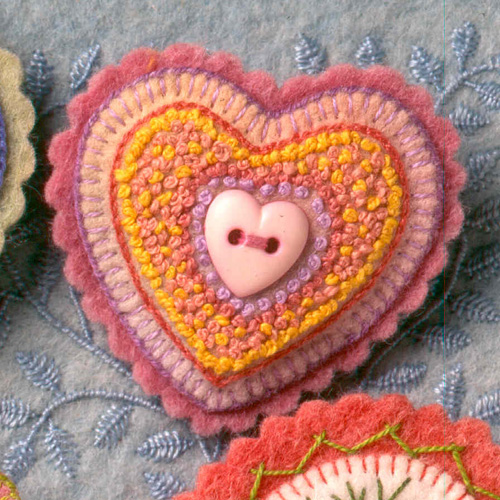
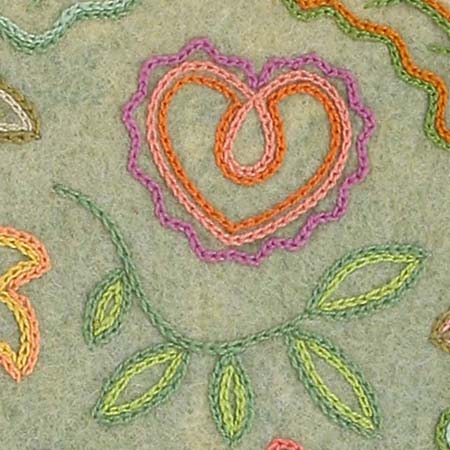
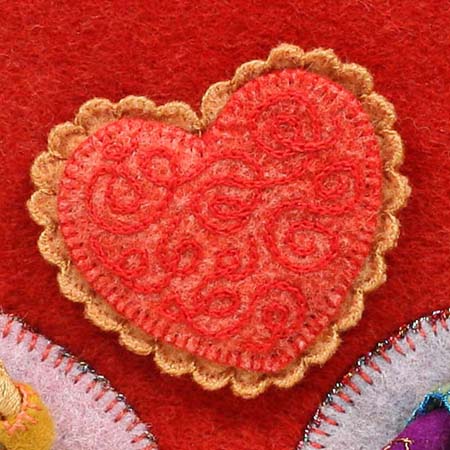
This selection of hearts begins with a sleeping cat on a heart covered bed spread from my book In the Heart. Then there is a felt balsam pillow and a heart pin covered in french knots, both projects from my how-to book, Felt Wee Folk. The last two are a chain stitched heart that’s part of the endpapers and a heart tart from “The Queen of Hearts” nursery rhyme (see in this post) from my upcoming book, Pocketful of Posies (Sept. 2010). The original illustrations will be shown in a traveling exhibition which you can find out about here.

detail from “In the Heart” 2001

balsam pillow from “Felt Wee Folk” 2003

pin from “Felt Wee Folk”

detail from “Pocketful of Posies” 2010

detail from “Pocketful of Posies” 2010

Note: See other posts in the Close-ups series archive here.

And the winners are…

I had the pleasure of judging the Felt Smack Down 2010 “Challenge Alert”, which was organized by Patty from My life under the bus.  You can see all the projects entered in the contest on her blog here. The premise of the challenge was to make something based on my Felt Wee Folk book. Here are the results! It was very rewarding to see such a variety of entries to the contest. Everyone’s felt project showed imagination and oozed enthusiasm, so it was fun to look at all the submissions, knowing that there was a lot of thought and labor invested in each one. 

I looked for what I thought was the best character development, color choices, workmanship and presentation. I also was interested in how the projects from my book could inspire someone to come up with their own ideas and interpretations. 

Prizes are for the following projects: 

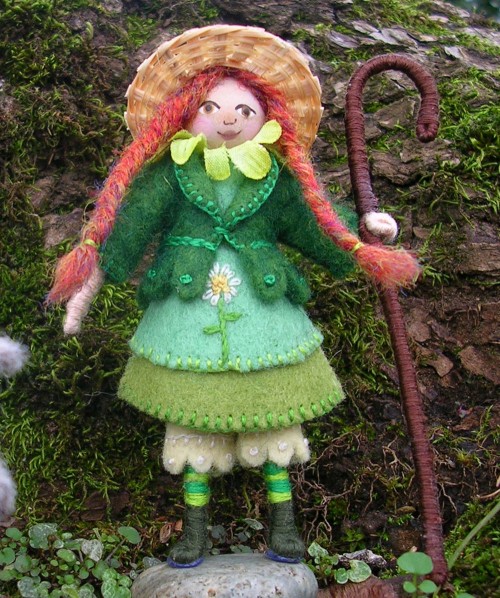
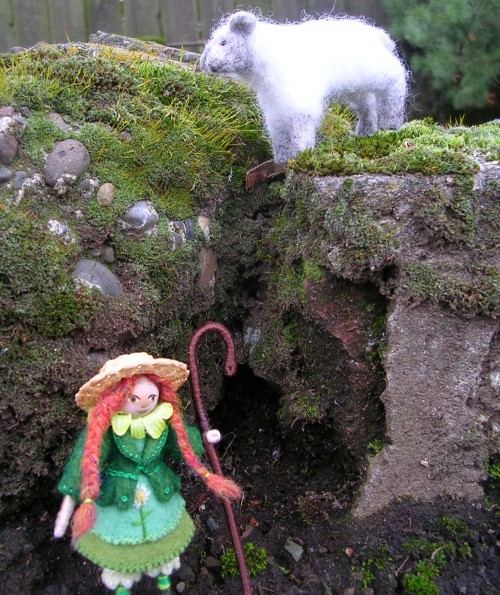
1st prize- Alison of Acorn Cottage for her Little Bo Peep. See her blog here

First Prize, Little Bo Peep made by Alison

Little Bo Peep with sheep made by Alison

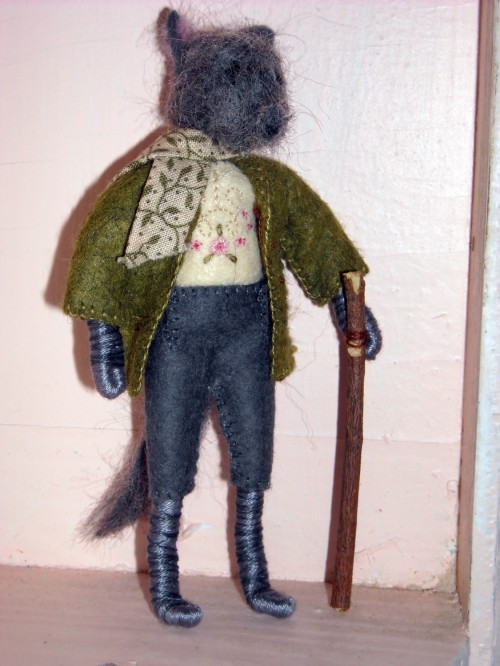
2nd prize- Caroline for her handsome fellow 

Second Prize, Handsome Fellow made by Caroline

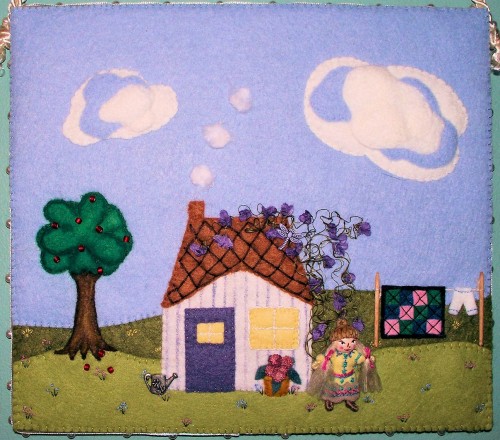
3rd prize- Loralynn’s Cottage  

Third Prize, Loralynn's Cottage

Thank you to Patty for organizing this contest and to all the folks who committed themselves and worked on projects over the last few weeks. That’s a lot of blanket stitches!

Favorites (Edward Lear)

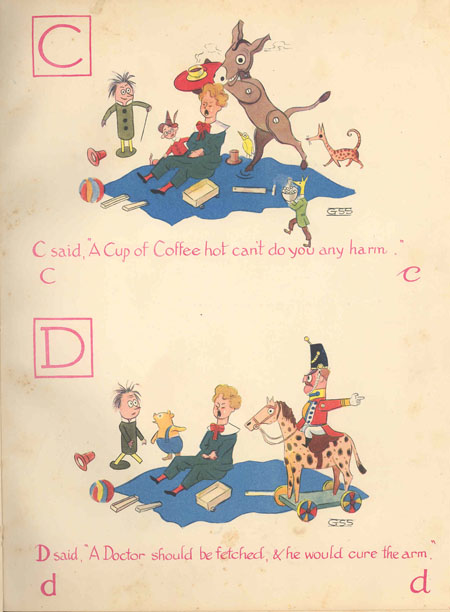
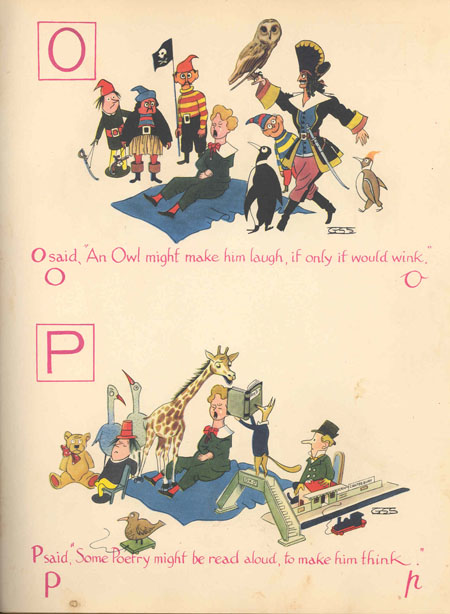
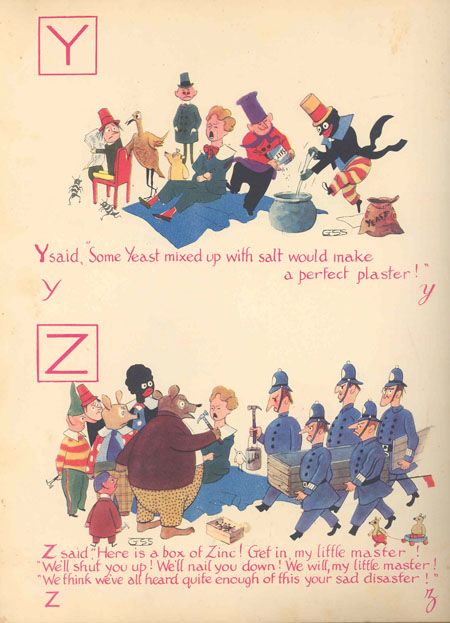
This alphabet book by the prince of nonsense verse, Edward Lear (1812-1888), seems timely, considering my broken arm, which is much improved, by the way. This 1944 edition was on a book shelf  in my parents’ house. Here’s the title page and some pages from the book, which was illustrated by G. S. Sherwood. Note the unsentimental ending, with the zinc-lined coffin! This was a different age of children’s literature. Read more about Lear here.

Close-ups (winter houses)

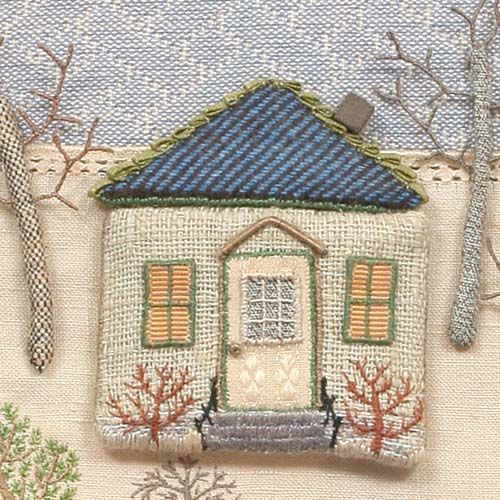
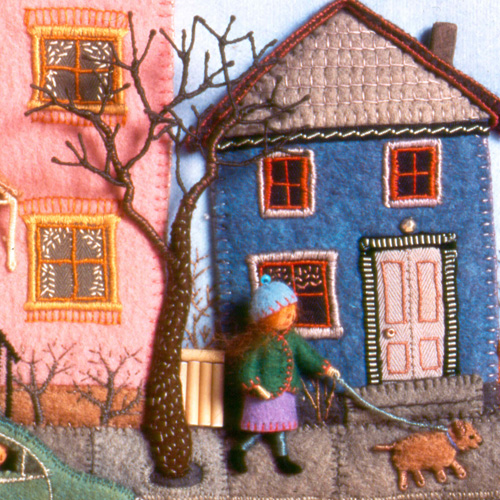
Houses appear so frequently in my artwork that I’ve divided them up into categories to show you in this Close-ups series. When you think about it, the shape is just a square with a triangle on top that can be depicted in any color and style to bring mood and stability. And houses are strong symbols of security that I seem to want in my pictures. This collection of winter houses starts with the winter section of a 4 seasons drawing I made at age 7. Then there’s a detail from a fabric relief piece called “Skating”. The next three are from the books, You and Me: Poems of Friendship, The Hollyhock Wall and Pocketful of Posies, which will be published in Sept., 2010.

by Salley at age 7

detail from “Skating” 1986

from “You and Me: Poems of Friendship” 1997

detail from “The Hollyhock Wall” 1999

from “Pocketful of Posies” 2010

Note: See other posts in the Close-ups series archive here.

Pins (part 3)

Continued from Pins (part 2).

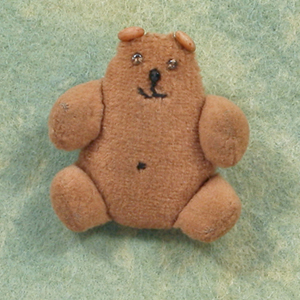
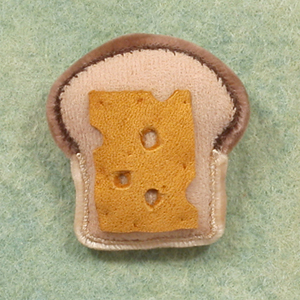
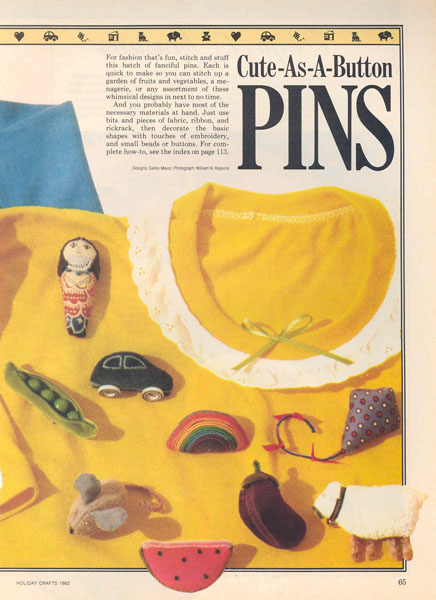
In an effort to meet people and to make more for my labor, I became a member of the Christmas Store, a seasonal cooperative in Cambridge and commuted from the Cape to do my work shifts. For a display, I built a fruit and vegetable stand with crates made out of popsicle sticks.  Later, I made patterns and wrote directions on how to make the pins for the 1982 Holiday Crafts issue of Better Homes and Gardens magazine.     

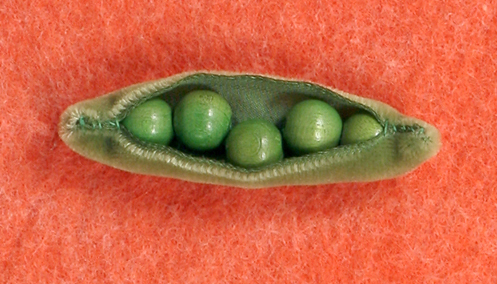
 After about 5 years of mass producing the pins, I moved on to other things, including motherhood.  Since then, I’ve had several business ventures, which inevitably reach a point when I’ve had to make a decision to grow or stop all together. I’ve always chosen freedom, never wanting to spend all of my time running a business, even though I see the promotional part as an important element of a creative project. And it’s not as if I walked away from a gold mine. At the wholesale price, I was making so little for my time. Being an artist means coming up with new ideas and making the same thing over and over has therapeutic, although limited appeal. Even the idea of hiring others to do the work made me nervous. I knew that I would be a miserable boss, having to hold others to a high standard of workmanship at low pay. And, I realized that I am happiest while making things myself! I have no exact record of how many pins I made, but it must have been well over a thousand. Throughout, the peapod was a best-seller, which was ironic because it was the simplest and fastest to make of all.   

To keep up with new posts, please subscribe to this blog. Your contact info will not be sold or shared. If you’d like to see more frequent photos tracking the projects in my studio, please follow me on Facebook and/or Instagram.