Unknown's avatar

About Salley Mavor

I make 3-dimensional fabric relief pictures that are photographed and used to illustrate children’s books. I sew together different materials to create fanciful scenes in relief, much like a miniature stage set, with figures imposed on an embellished fabric background. My work is decorative and detailed, full of patterns from nature and found objects, all sewn together by hand with a needle and thread.

Felt Cat Pin tutorial

This project is from the first edition of my how-to book, Felt Wee Folk: Enchanting Projects. I showed how to make the cat pin on HGTV’s The Carol Duvall Show soon after the book came out in 2003. Here are the same pieces we used in the step-by-step demonstration on the show.

Find out about books I’ve illustrated with fabric relief here. See more cats I made of felt in an earlier post here.

feltpinscatWM

Felt Cat Pin from “Felt Wee Folk”, 2″ x 2.5″

Living without TV, I was unaware of the numerous cable craft shows and was unfamiliar with this new term “tutorial” on the internet. I’m slowly crawling out of my peaceful sewing room, but question how a person can both do their creative work and keep in touch with the vast sewing/fibers network! I suppose, like everything, it’s a question of balance. I hope that you enjoy this cat pin project and use it as a launching pad for other ideas of your own. You can read and see earlier posts about my pin business here.

FELT CAT PIN: To complete the project, you’ll need to understand how to do a blanket stitch, chain stitch, satin stitch and fly stitch.

Materials: 1″ pin back, pinking shears, embroidery needles, 2 green glass beads (about 1/4″), embroidery floss: black, brown, orange, gold, light green, wool felt: 2-1/4″ x 2″ pink, 1-1/2″ x 1-3/4″ blue, 1-1/4 x 1-1/2″ orange

CPTsuppliesWM Step 1. Cut out shapes from wool felt: orange for cat, blue for the middle layer and pink for the bottom layer.

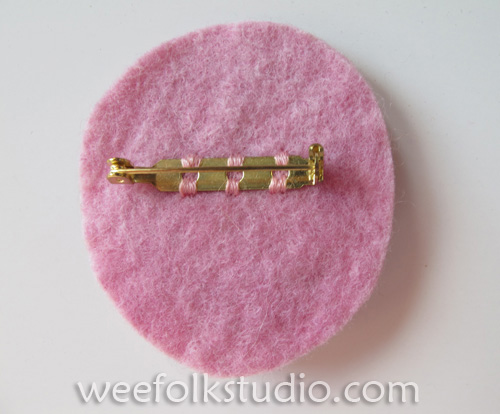
Step 2. Sew the pin back to the bottom layer with floss or sewing thread.
CPTpinbackWM

Step 2

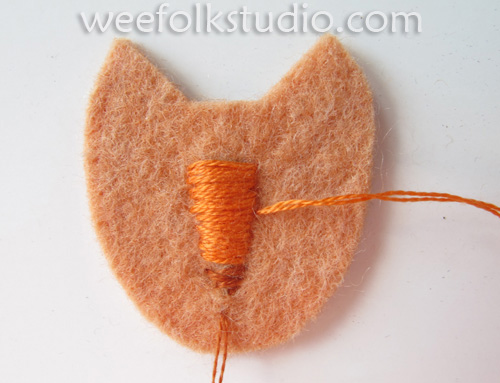
 Step 3. Satin stitch the cat’s nose with double strands of orange floss. With brown floss, stitch the bottom end the cat’s nose.
Step 3

Step 3

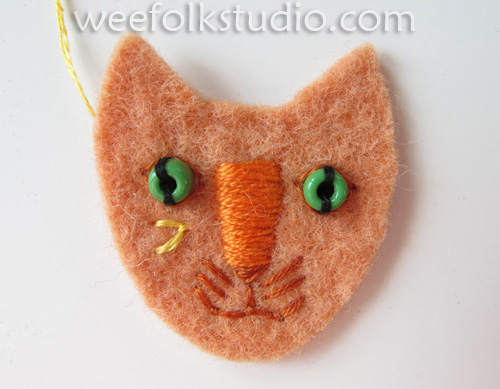
Step 4. Stitch the mouth and whiskers with double strands of brown floss. Sew the green bead eyes onto the cat face with black floss, stitching vertically to make the eye’s pupil. Stitch an outline around the bead eyes with a single strand of brown floss. With a double strand of gold floss, use a fly stitch to make cat’s stripes.
Step 4

Step 4

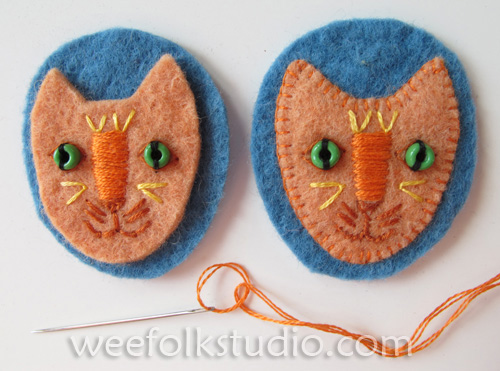
 Step 5: With double strands of orange floss, stitch the cat face to the blue middle piece, blanket stitching all around the outside edge of the cat face
Step 5

Step 5

Step 6. With a single strand of light green floss, chain stitch the curly queue on the blue felt, above the cat face. Then, with double strands of light green floss, blanket stitch the blue middle section onto the pink piece.

Step 7. With sharp picking shears, trim around the outside edge of the pink felt piece. You’re finished!
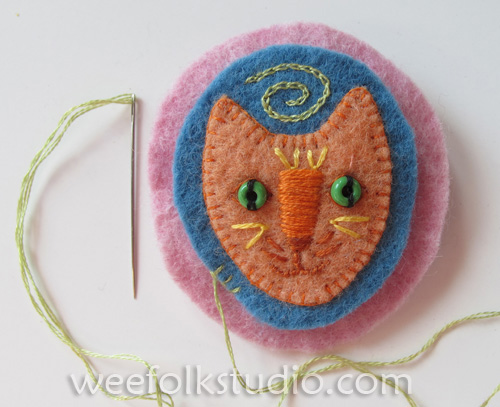
Step 6
Step 6

Treasures (1920’s doll house miniatures)

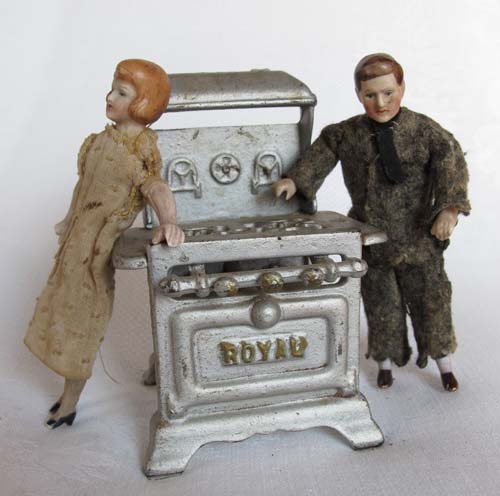
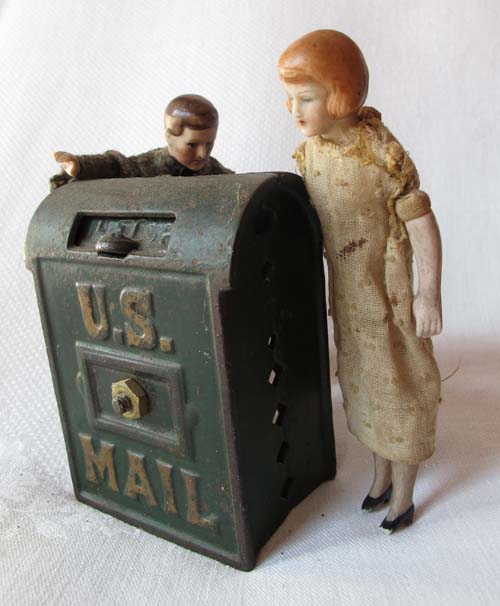
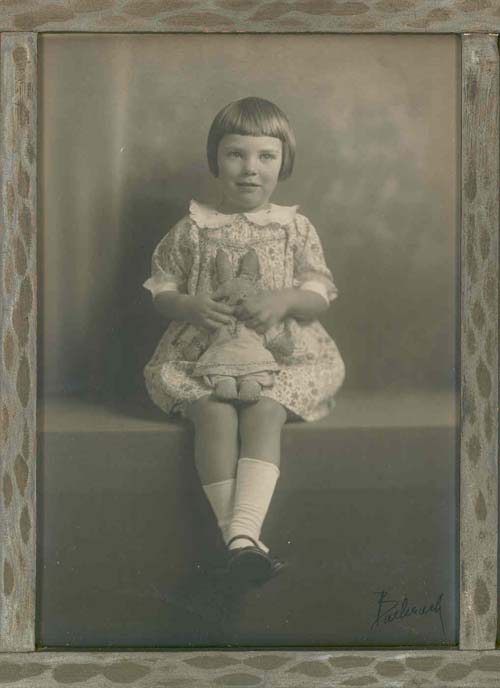
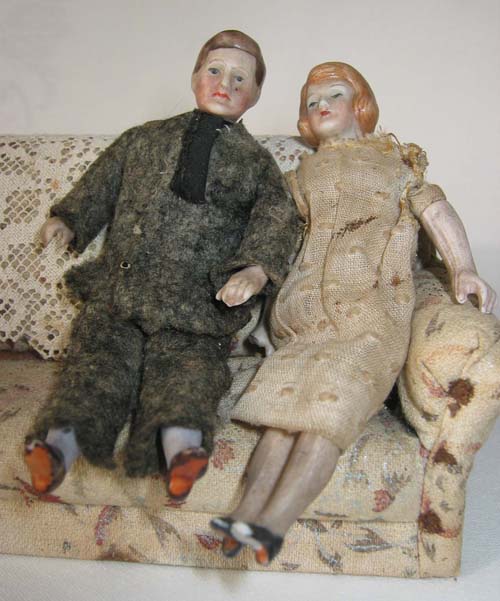
These doll house miniatures belonged to my mother, who was born in 1925 in Providence, RI.  In the photograph, she looks like the classic little girl from her era. My sister, brother and I played with the toys, too. The porcelain dolls have been well-loved and are showing wear, but the metal toys held up much better. The mail box is also a bank. I just noticed that the mower (or carpet sweeper?) is named SallyAnn, names my mother would give to my sister and me, only spelled with e’s.

my mother, Mary Hartwell (Mavor) 1928

Close-ups (mittens)

Mitten (n.) A covering for the hand, worn to defend it from cold or injury. It differs from a glove in not having a separate sheath for each finger. 

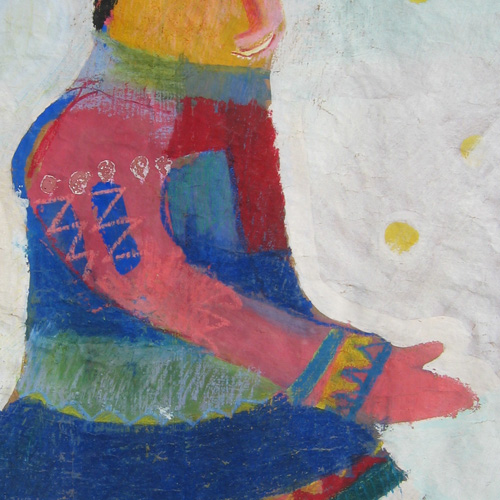
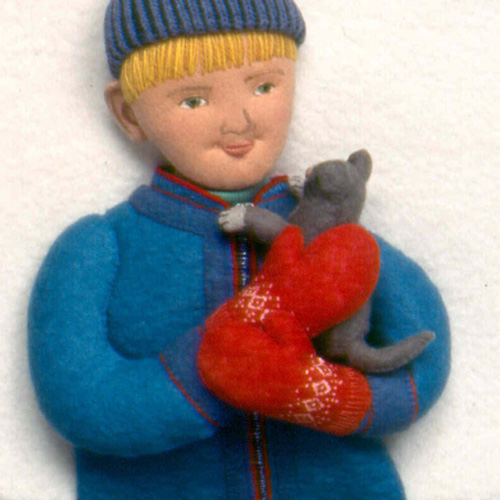
 Even though Spring is around the corner, we still have cold snowy weather. Here are some mittens that have appeared in some of my pictures, starting with a detail from the tempera painting “Laplander”, which you can see here. Then there’s a boy with red mittens holding a kitten from You and Me:Poems of Friendship. The cozy father and daughter scene is from In the Heart, where red mittens as well as hearts show up throughout the book. The balsam pillow and felt purse projects are from my how-to book, Felt Wee Folk: Enchanting Projects. Last is a boy dressed for winter from Pocketful of Posies: A Treasury of Nursery Rhymes, which will be published in September. 

detail from “Laplander” 1977

detail from “You and Me: Poems of Friendship” 1997

detail from “In the Heart” 2001

detail from the balsam pillow in “Felt Wee Folk” 2003

felt purse from “Felt Wee Folk” 2003

detail from “Pocketful of Posies” 2010

Note: See other posts in the Close-ups series archive here.

Costume Party!

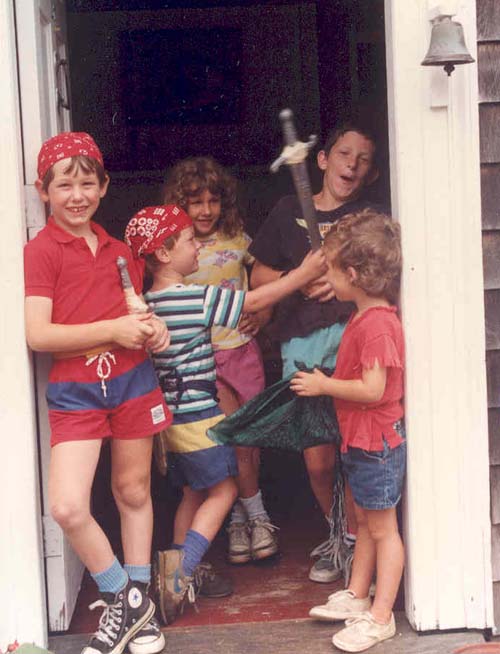
This story was first posted on Beth Curtin’s wonderful blog, Acorn Pies. She has some great project ideas for children. Beth asked me to be a guest contributor and write something on the subject of encouraging creativity in children. I decided to focus on play acting as a way for children to use their imaginations. Here, I share some memories and photographs of my sons’ pirate-themed birthday parties. Thank you, Beth, for the invitation to talk about children and creativity!

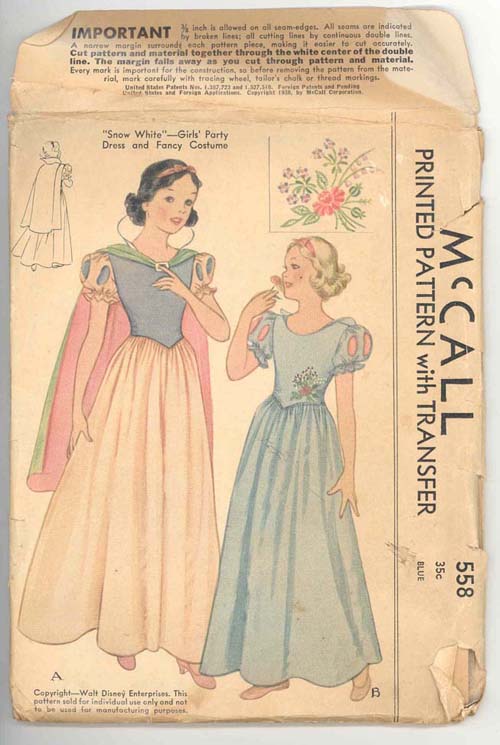
When I was a child in the 1950’s, we had a wooden chest full of “dress-ups” that included old clothes and costumes that my mother made. I remember different colored Snow White dresses that she made from this McCall’s pattern.


I continued this tradition with my own children and our dress-up box was a hit when friends came over to play. We had an eclectic pile of capes, belts, scarves and head-gear that would go together in any number of combinations. The children would spend a long time adorning themselves and then run around playing inside and out. When they were three years old, my son Ian and his friend Sam made monster masks. They would pull them down over their angelic faces, scream and growl, and then lift them up and laugh.

For the boys’ birthdays, we had our share of bowling parties and trips to the go-cart track, but the most memorable birthdays were the themed parties that were linked to a familiar story. In the late 80’s, we had several costume parties when the boys were ages 5 to 8, when kids are willing to dress up and engage in fantasy play.

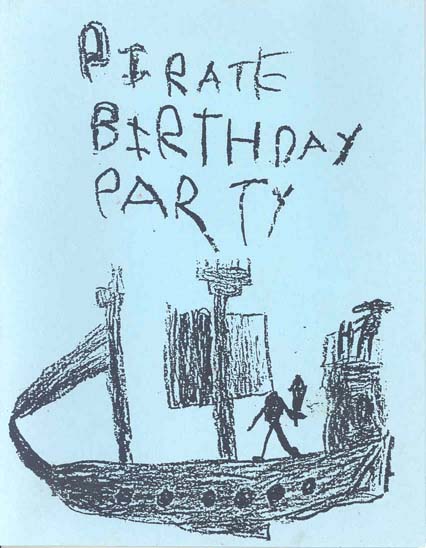
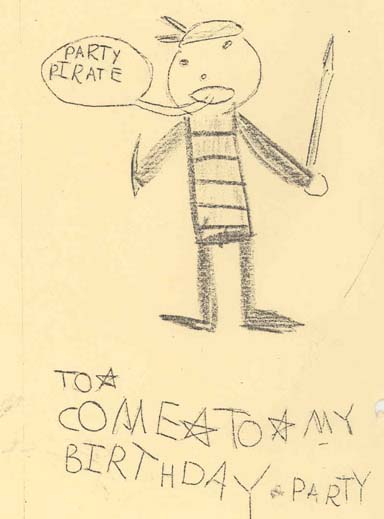
Legendary characters, like Pirates were the inspiration for our parties. The stories surrounding these compelling characters could easily be translated into party activities and their exciting outlaw image was an added attraction. The boys would draw and write out their own invitations, asking their friends to come in costume.

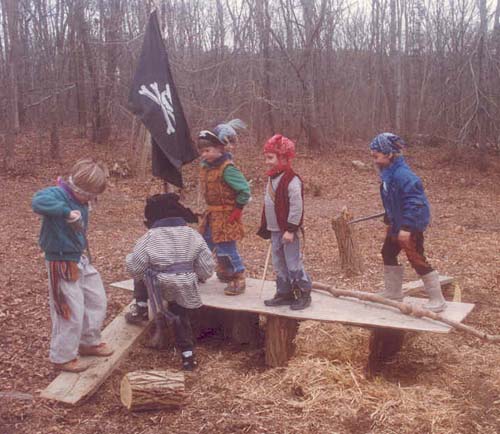
It is advantageous to have a warm weather birthday for these parties, although we did have a Pirate party in February, complete with a make-shift pirate ship in the yard. We devised a raised, plywood floor, propped up on tree logs and added a boarding ramp. All it needed was a mast to fly a pirate flag.

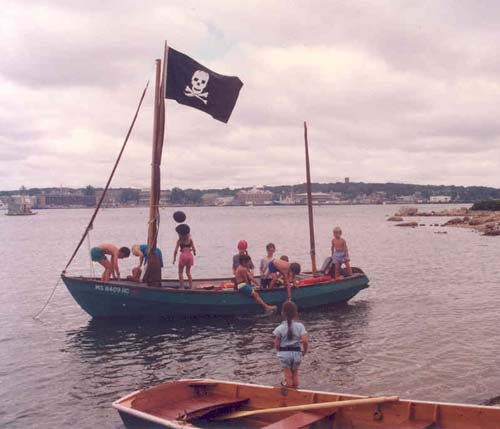
For another pirate party, this time in July, the children came ready to participate.


Here they are, waiting for the pirate ship, with their cardboard telescopes.

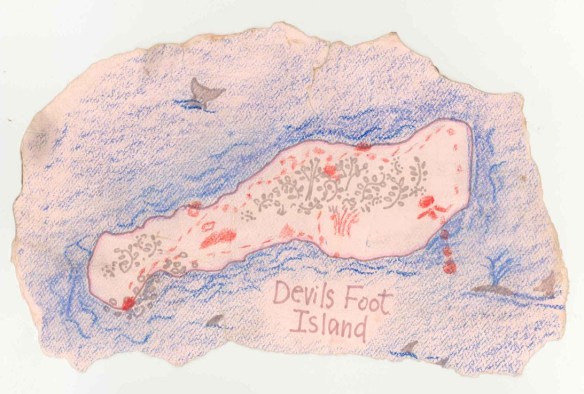
They arrived at the island, where a bottle washed up into the shallow water off the beach and inside was a treasure map!

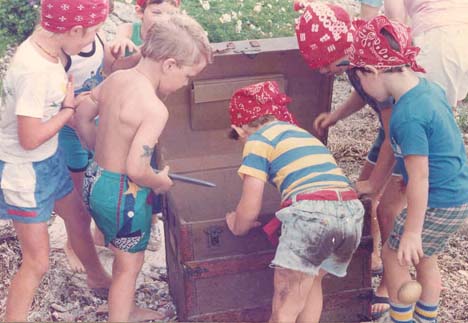
They followed the clues on the map and found the treasure chest full of goodies, including water pistols.

Looking back at the pictures, the life of our children looks so much simpler and not as commercial as today. We did work hard to keep our home life uncomplicated and creative. I’m sure that my mother would say the same thing about my childhood 30 years earlier. Young children are developing their imaginations and we as a society need to nurture this, but at the same time be aware of how impressionable they are. I think that being exposed to the same commercial images over and over, no matter how compelling or beautiful, stops children from seeing in their mind’s eye what something or someone looks and acts like. Even the McCall costume pattern, which was copyrighted 1938 by Disney, shows a clear connection to the animated movie that we have come to think of as the classic rendition of Snow White and the Seven Dwarves, even though the story is centuries old. As for pirates, the brilliant Johnny Depp has forever imprinted his depiction in our minds. I’m not sure how to keep a child’s imagination alive, but I think that giving them an opportunity to create characters of their own, whether through art or play acting can make a difference for some and help them imagine new possibilities in the future.

In an earlier post, I’ve shared pictures of our Robinhood Party, here.

Treasures (red hat couple)

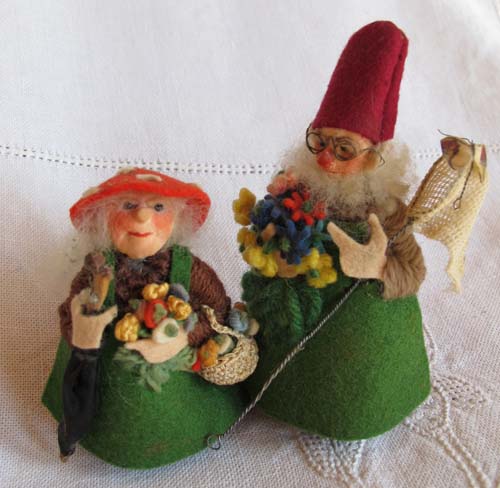
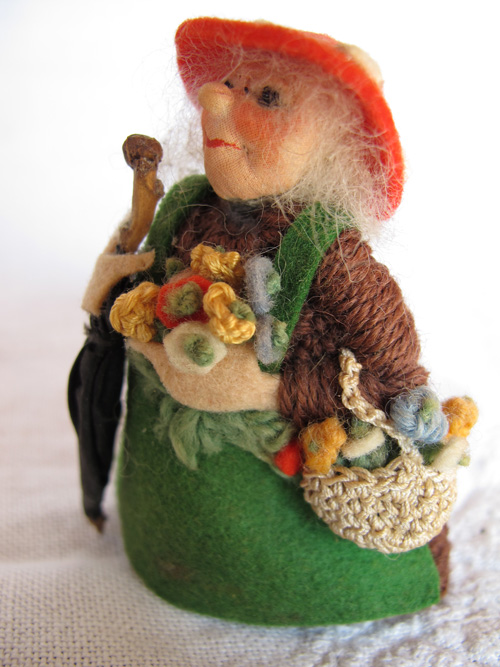
This eccentric pair belonged to my grandmother. The butterfly catcher and the lady with the mushroom hat are about 4″ tall, with hollow crocheted skirts to make them stand. I have no idea where they were made, but they look German or Scandinavian. His glasses and butterfly net and her wood-handled umbrella are remarkable details. I love their sculped fabric faces, even ears on the man!

Lithographs 1977

In art school, I took printmaking classes and especially liked lithography. I can’t remember all the details of how the process works, but this printing technique involves drawing with a greasy crayon or painting an oily black liquid on lime stone. Then the stone surface is treated somehow so that when ink is rolled on, it just sticks to the drawing. Then wet paper is placed on the stone, which is put through a press.    

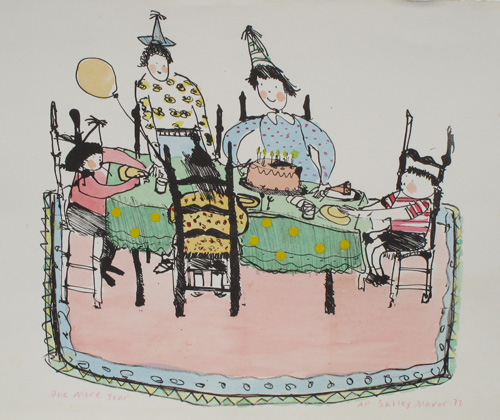
"One More Year" hand colored lithograph 1977

During this period, in 1977, I was experimenting with my drawing style and intentionally trying to move away from realism, toward a more spontaneous and playful way of working. I wanted to make images that were as fresh and uninhibited as a child’s drawing. This print of a birthday party was  drawn with my left hand so that I wouldn’t easily slip into “trained artist” mode. The lithograph was printed in black and then I hand painted each one. Unable to stop the urge to collage, I added dot stickers to the table-cloth.    

detail of "One More Year"

I made a series of play themed prints in black and white, enjoying the ability to make shades of gray on the lime stone. I didn’t continue with more advanced classes, where I would have learned about color printing and registration.   

"Playing" lithograph 1977

detail from "Playing" lithograph 1977

'Life Drawing" lithograph 1977

detail from "Life Drawing" lithograph 1977

I tried a new image transfer technique using xerox copies and incorporated some pictures of musical instruments. Looking at these prints, I can remember the feel of the cool, smooth lime stone and the satisfaction of peeling back the damp rag paper, revealing a mirror image of my work.  

detail from "Music Play" lithograph 1977

detail from "Music Play" lithograph 1977

Close-ups (Mary’s lamb)

It’s lambing season, so the closeups are all from my 1995 children’s book, Mary Had a Little Lamb.

MHALLcoverWMThe 32-page hardcover first edition is out of print, but Mary Had a Little Lamb has been re-released as a board book. (sorry, it too is out of print) Read further to learn how some of the illustrations were made.

MHALL23WM

The barn wall is made from an old weathered shingle and the straw bed is a mixture of real straw and embroidery floss.

MHALL45WM

The lamb is made of wool felt, then covered in wool french knots. Mary’s dress is made of a cotton sock and the furniture hinge is a hook and eye.

MHALLp67WM

The lamb’s ears are made from kid leather and the garden wall is beach stones glued in a circle

MHALLclimbtreeWM

The tree trunk is wool tweed and Mary’s toes are made of wire, wrapped in embroidery floss.  

MHALL1011WM

The leaves are cut out of artificial leaves and the wood pile next to the house is made of wooden beads.

MHALLschoolWM

 This scene inside the schoolhouse has desks sawed out of wood and a real slate black board.

Note: See other posts in the Close-ups series archive here.

Treasures (Foreign Paper Dolls)

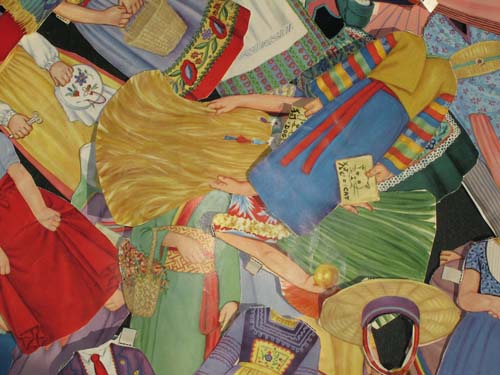
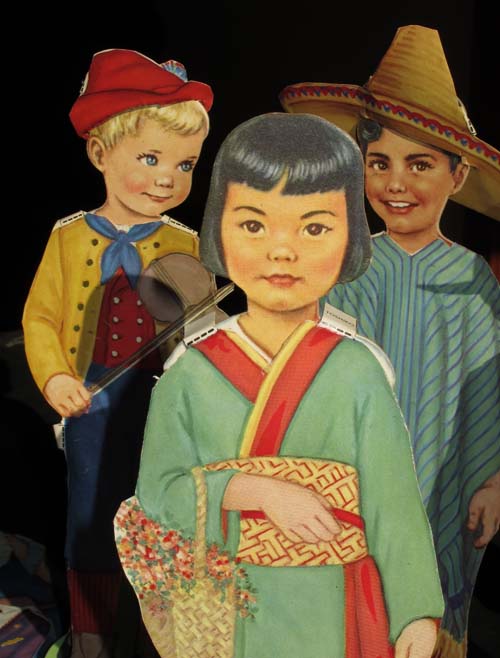
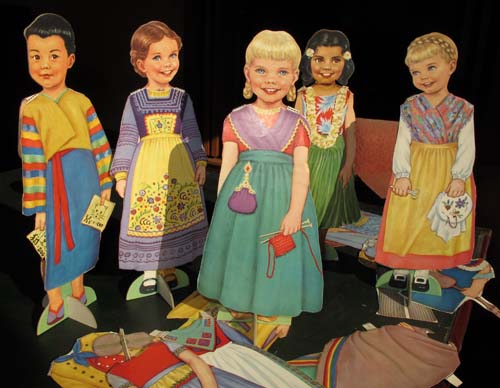
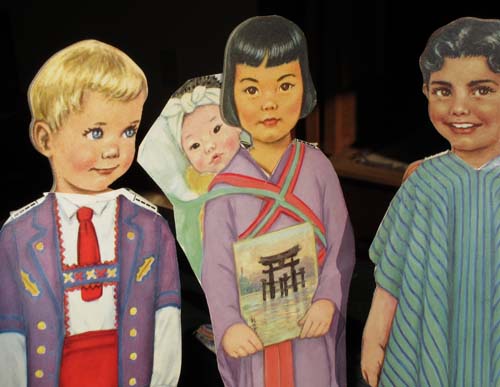
We had this set of Foreign Paper Dolls when we were children. It was one of the things I was rummaging for when I fell and broke my wrist, 6 weeks ago. The cast just came off and I’m starting physical therapy to get my frozen wrist moving again. This feels like great progress toward being able to sew again! The box of paper dolls says, “Copyright MCMLVII (1957) by The Platt & Co., Inc.”. I can remember cutting out the clothes and playing with them. The dolls include Toshiko (Japan), Ingrid (Sweden), Yongtu (Korea), Yvonne (France), Juan (Mexico), Hans (Germany), Juliane (Holland), Liat (Tahiti). They certainly had a lot of outfits to choose from! 


Here is picture of us about the time we would have cut out their paper clothes. We were driving our white station wagon with the wooden roof box across the country.

my mother, Anne, Salley and Jimmy 1960

Toshiko, Juliane, Yvonne, Yongtu, Juan, Ingrid. Liat, Hans

paper doll clothes

Hans (Germany), Toshiko (Japan), Juan (Mexico), Liat (Tahiti), Yvonne (France)

Hans (Germany), Toshiko (Japan), Juan (Mexico)

Yongtu (Korea), Yvonne (France), Juliane (Holland), Liat (Tahiti), Ingrid (Sweden)

Hans (Germany), Toshiko (Japan). Juan (Mexico)

Noah’s Ark

At 26″ x 30″, Noah’s Ark is the largest piece I’ve ever made.  Everyone has their own scale and mine tends to be small. Even if the outside dimensions of a piece are large, I will fill it with smaller items. Looking at this picture now, I see large areas that would not escape my present-day appetite for embellishment.  It’s tricky to keep the all over design working, so that it draws you in first and then you can appreciate the detail up close. At this time, in 1985, I had stopped making the pins, but was still designing small animals of the same size to use in my fabric relief pictures. You can read a 3 part story about my pins in earlier blog posts here. Showing the story of Noah was an opportunity to continue figuring out how to make a variety of animals. It was also a way to play around with arranging them together in a landscape.

“Noah’s Ark”, 26″ x 30″, fabric relief 1985

 The background fabric is cotton velveteen, which I dyed with a spray bottle, building up layers of  color, giving it a variegated, stippled appearance. The border is made from an upholstery fabric remnant that I remember finding in a bargain bin at a fabric store in Berkeley, California.   

dyed velveteen

Detail of "Noah's Ark", 9" x 12", 1985

sketch of Noah's Ark

During this time, I was hand embroidering the leaves on the trees and adding some leaf beads as well. The fabric is machine appliqued, something I would give up shortly after this in favor of hand stitching. I came to dislike the uniform, flat stitches and put my sewing machine away for years at a time. It’s fun to look at this piece and see early examples of human figures and animals that I will continue to rework and develop for another 25 years.  

Noah and his wife

Detail from "Noah's Ark"

detail from "Noah's Ark"

detail from "Noah's Ark"

Close-ups (snow)

In the bleak midwinter Frosty wind made moan,   

Earth stood hard as iron,   

Water like a stone;   

Snow had fallen, snow on snow,   

Snow on snow,   

In the bleak midwinter,   

Long ago.   

by Christina Rossetti, English poet (1830 – 1894)   

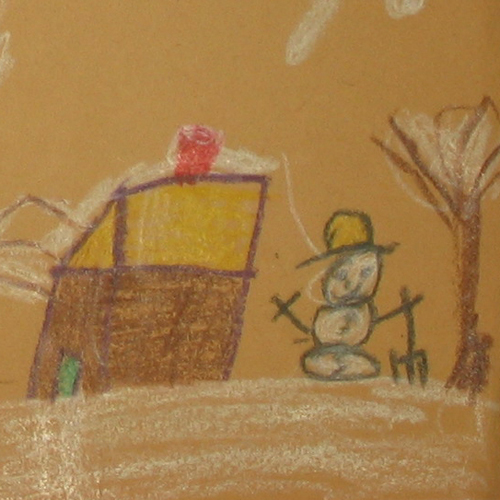
drawing by Salley. age 6

 With snow falling and lingering in many parts of the country this winter, I’ve found some  snow pictures to show you. First, here’s a crayon drawing saved from my childhood by my mother. Then we skip ahead to 1995, with a detail from the title page of the 32-page edition of Mary Had a Little Lamb. It’s the scene where Mary, her brother and her father are trudging through the snow to visit the lamb in the barn.  

detail from "Mary Had a Little Lamb" 1995

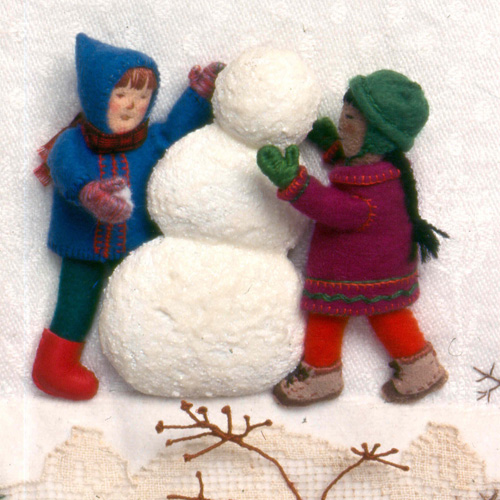
 The next scene is from the illustration for the poem “Snow”, which is in the poetry anthology, You and Me: Poems of Friendship. The snowman is made of felt, painted with an acrylic based bumpy liquid medium. In the background is an old linen tablecloth.  

detail from "You and Me: Poems of Friendship" 1997

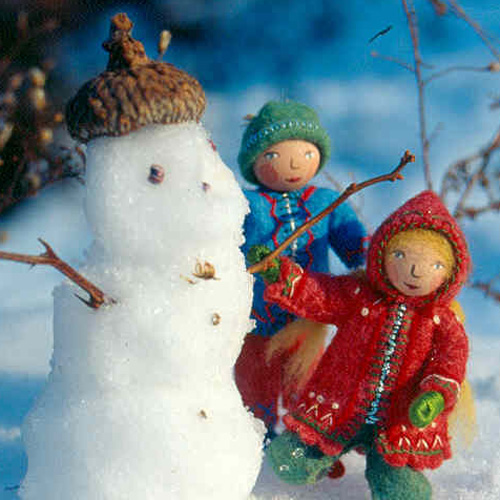
 Here are some wee folk dolls that were brought out to play in the snow. 

Wee Folk in the Snow 2002

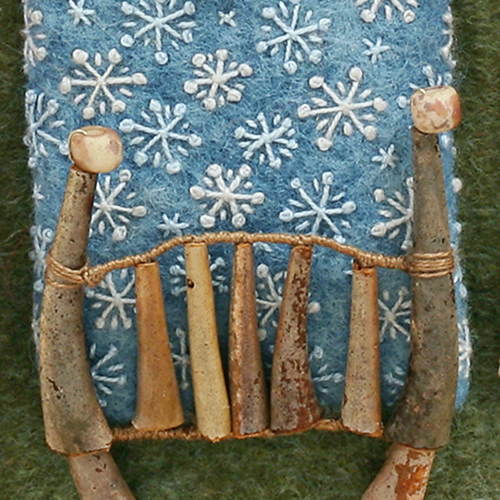
 This snowflake covered bed spread is part of an illustration from Pocketful of Posies: A Treasury of Nursery Rhymes. The bed frame is made from some hollow dried plant parts, maybe thorns, with the sharp points cut off. I bought them a long time ago in a bead store. The original illustrations will be shown in a traveling exhibit when the book is released next September. Find out about it here.  

detail from "Pocketful of Posies" 2010

Note: See other posts in the Close-ups series archive here.