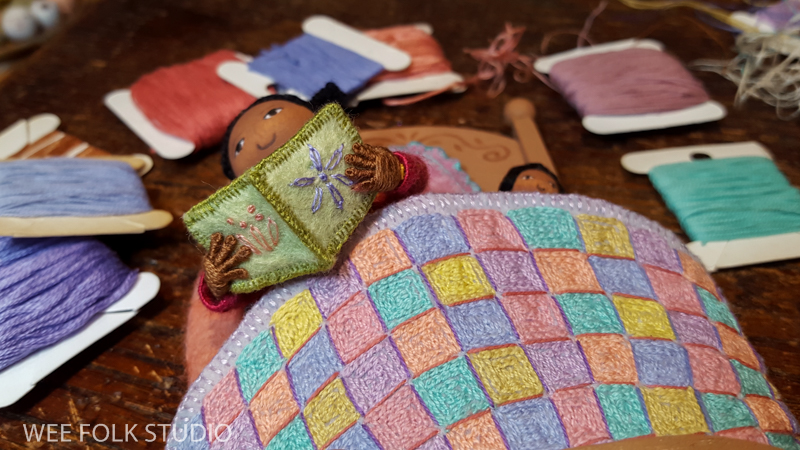
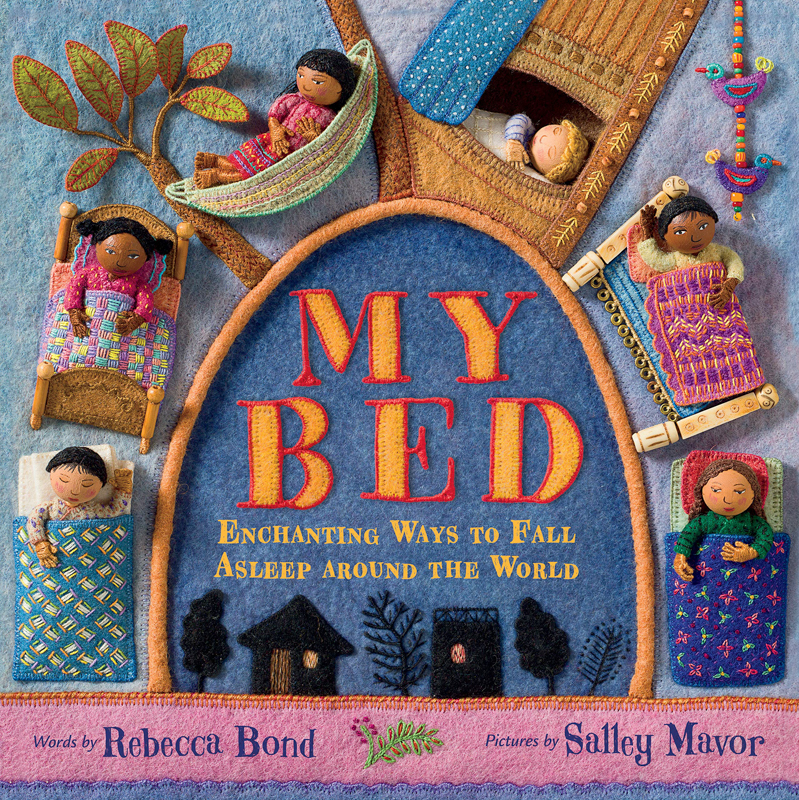
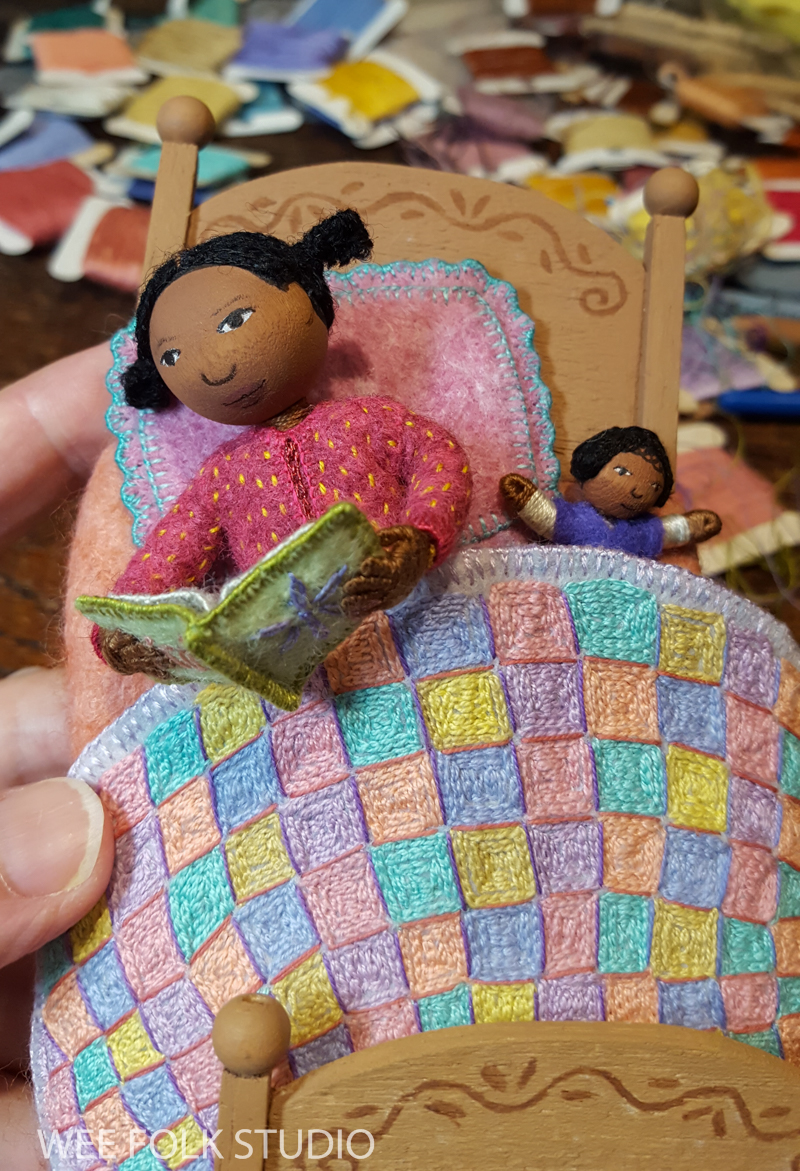
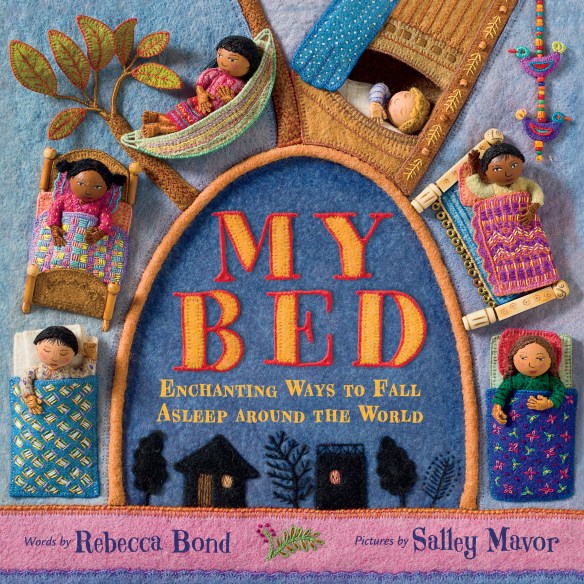
This illustration features a little girl and her doll, tucked in and cozy under a quilt. She’s looking at a book in bed, in her bedroom, someplace in North America. The scene will be included in MY BED, a book about where children sleep around the world, with each spread depicting a different culture and living environment.
Here are links to posts showing other finished illustrations for the book:
Holland, South America, Japan, India, Afghanistan, Russia, North Africa, Ghana and Iran. To see a list of all my books, click here.
I’m steadily making progress on the book, with the intention of meeting the deadline in a few months. This kind of work can’t be sped up and just takes the time it takes, kind of like children growing up. It’s important that my art have a handmade quality that shows that a real human being labored over it. If I can’t be in my studio, I stitch during every possible moment – in the car (in the passenger seat) and while waiting for appointments. Of course, I sleep, cook dinner, go to exercise class and even pay attention to my husband. Winter is speeding by too fast, but then I’ve come to the age where it seems like my life is going by in a blur. There’s no such thing as boredom.

The quilt is embroidered with pastel colored cotton flower thread on wool felt. I chain stitched the squares from the outside in, around and around, like a Greek key pattern.

I’ve been using the chain stitch a lot in this book, as a way to fill in areas. After the squares were finished, I noticed that they needed more definition, so I outlined them with a darker purple and rose color.

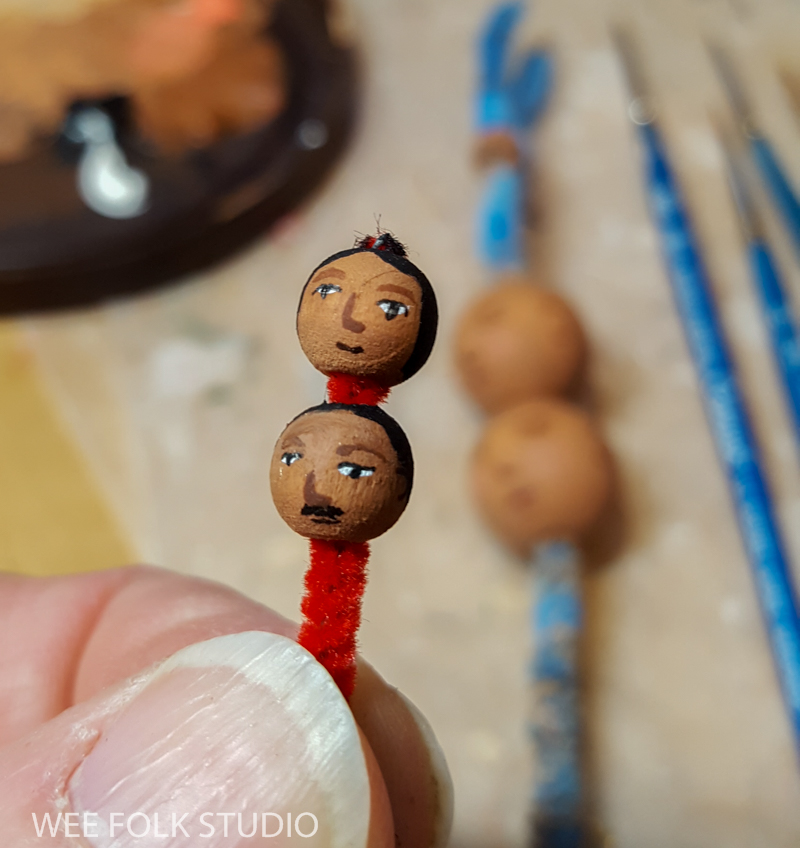
I made the girl’s body out of pipe cleaners and her head from a wooden bead, using the same basic doll-making techniques that are in my how-to book, Felt Wee Folk.

Her doll has the tiniest wood bead head that I could find.
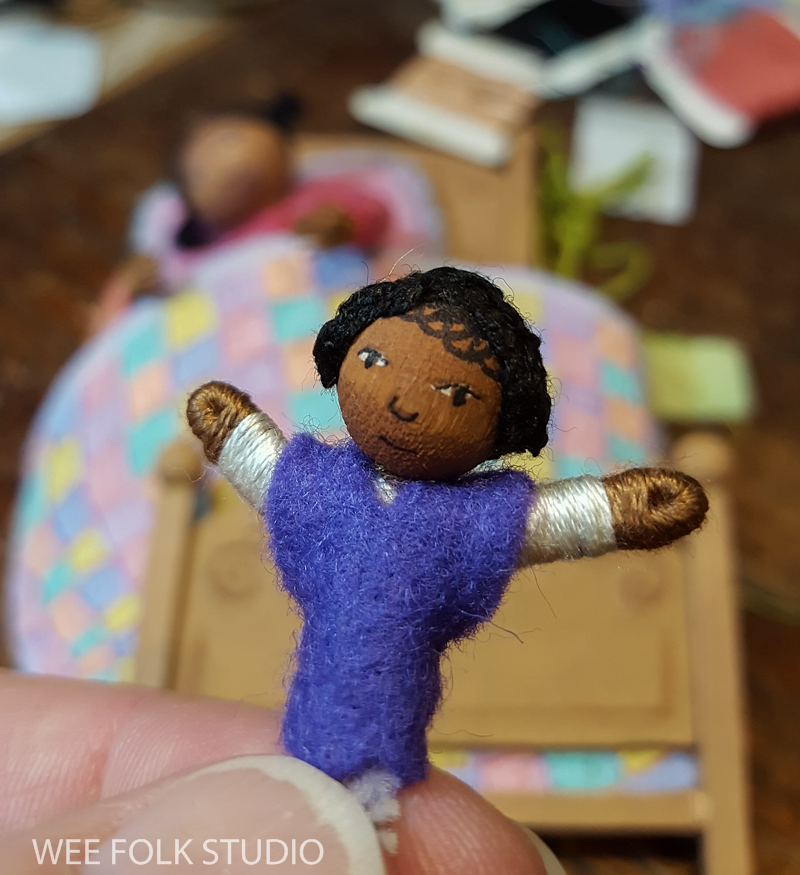
The book she’s holding is felt, edged with blanket stitch and wire to give it form. Otherwise it would be too floppy. I built the bed’s head and foot board of wood, gluing the parts together.
Her room has furnishings, too, such as this chest of drawers.

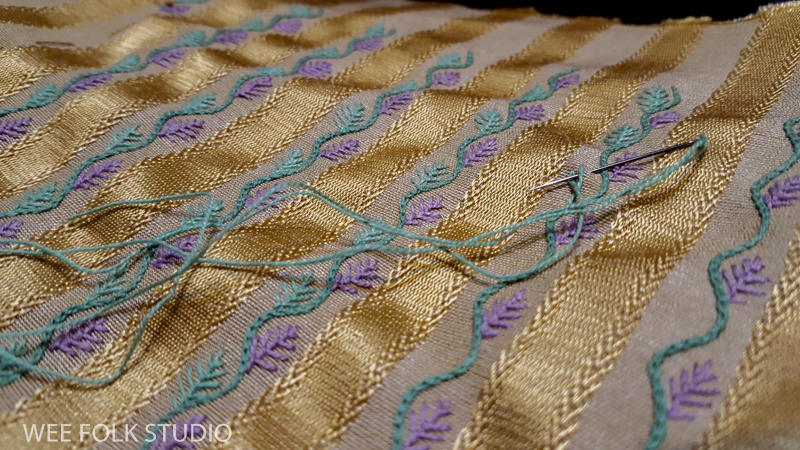
And there’s wall paper, which I decorated by stitching a vertical leafy vine on gold striped upholstery fabric.

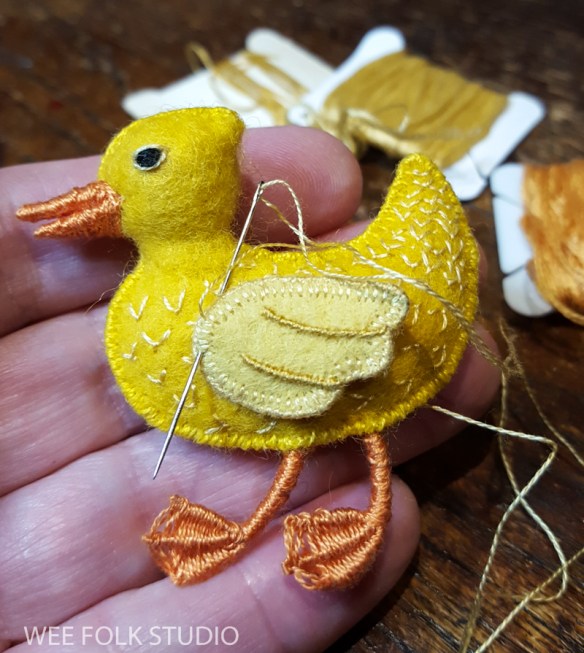
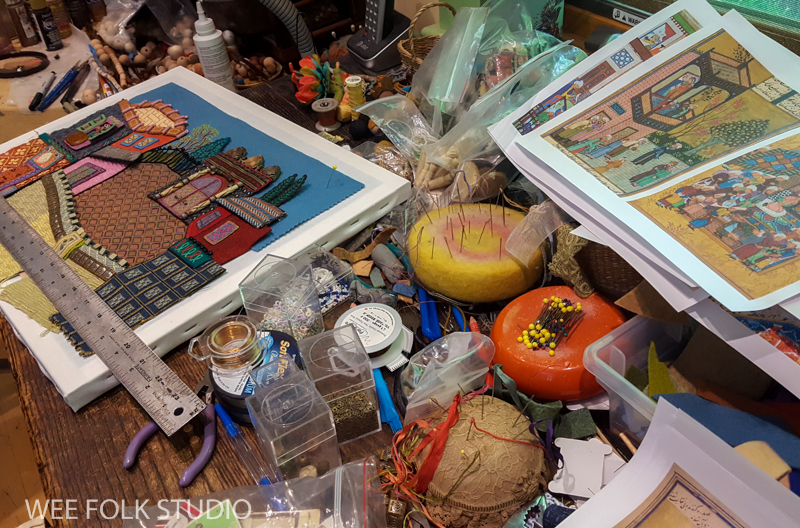
This is the first in a 3 part series about making the scene. There are many more elements to show, which you can get a glimpse of in the photo below. Please stay tuned for parts 2 and 3.

To keep up with new posts, please subscribe to this blog. Your contact info will not be sold or shared. If you’d like to see more frequent photos tracking the projects in my studio, please follow me on Facebook and/or Instagram,










































 SALLEY MAVOR