Evan’s baby jacket

I took some time this summer to make some children’s clothes for my friends who are having babies. This little chinese style padded jacket is for Evan, who is 8 months old. I found some batik fabric that looked like a grassy meadow, cut out the pattern and lined the pieces with cotton batting. Then I embroidered his name on a scrap of contrasting batik fabric.
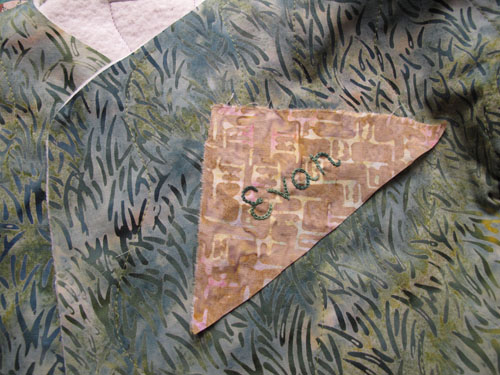
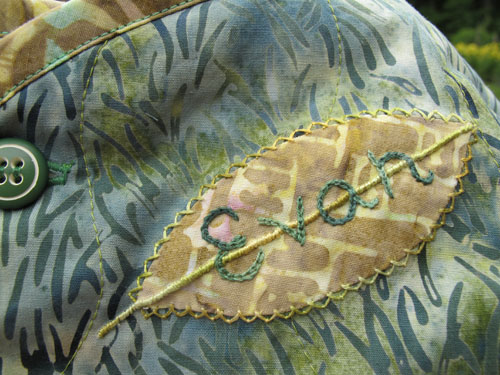
Then, I cut the scrap into a leaf shape, turned it under, and appliqued it to the jacket front piece. I added a stem and vein to the leaf and stitched a pointed tooth edging around the leaf.

I then sewed the pattern pieces together and made a lining out of a different cotton fabric.

I finished the outside edges with some bias tape I made from contrasting batik fabric.

I added buttons and button holes.
And sewed in a cloth label that I had left over from the days when I made felt purse kits.

It should fit the handsome little guy through the fall and winter. See another baby jacket here.

Picture Frame update

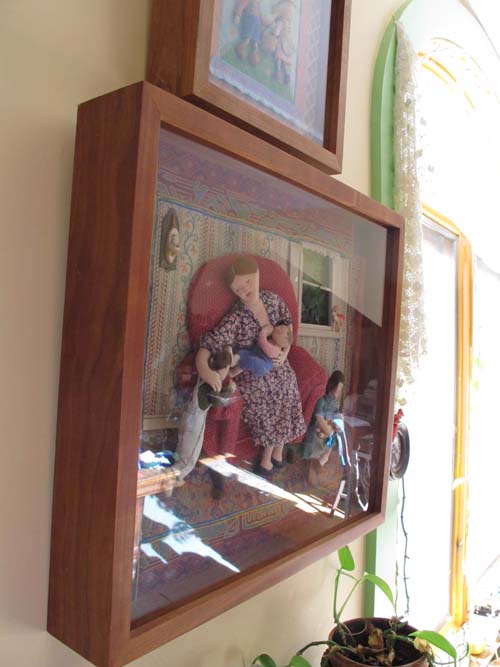
My husband Rob has been spending several weeks in his basement workshop making picture frames this summer. He has made frames for my fabric relief artwork for 30 years and this is the biggest job yet. The frames will look like this, cherry wood, shadow box style with glass.

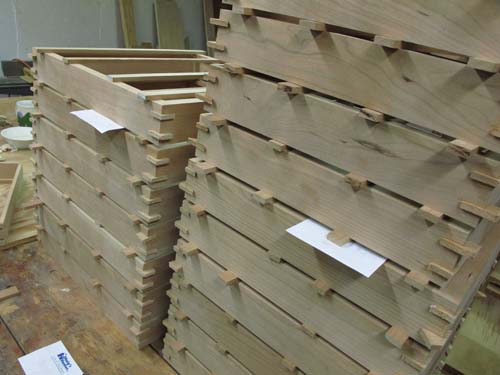
He is making 51 frames for my Pocketful of Posies exhibit this September and has made good progress. I thought I’d show you how far he’s come!

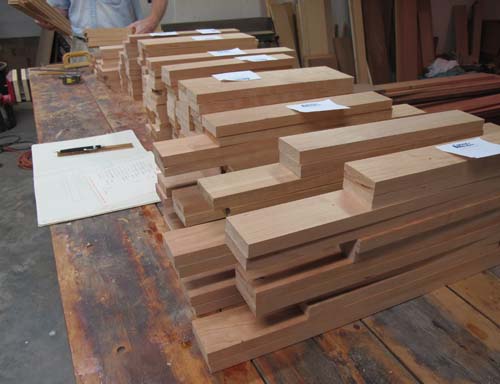
He first cuts the lengths from cherry boards.

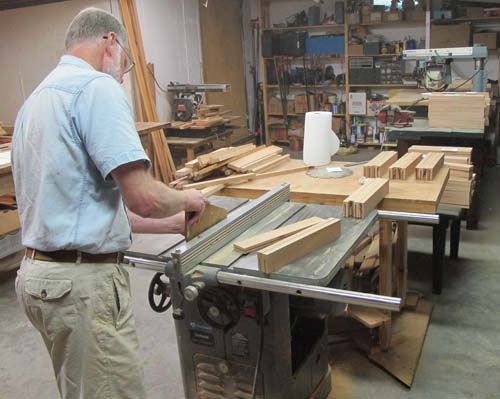
Then he rips the pieces on the table saw to get an L shape.

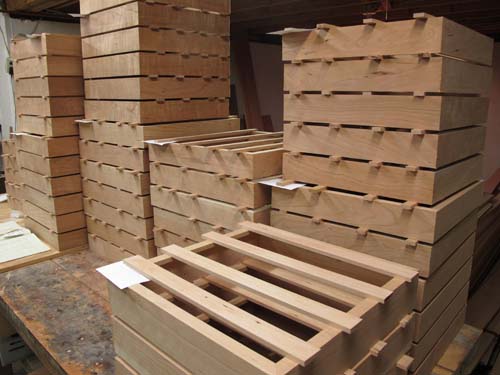
Then he cuts 45 degree angles and glues the corners together. 

He cuts 1/4 inch thick slats that will be placed inside the frame to keep the glass separate from the artwork.

This a special design that Rob figured out years ago to solve the problem of how to display  and protect my relief artwork.

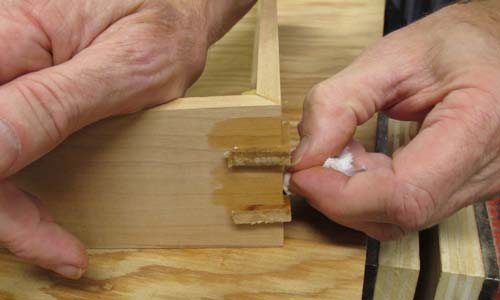
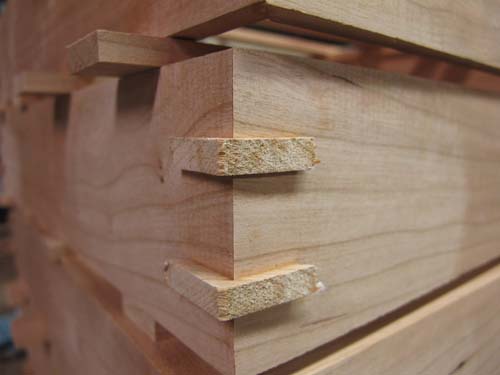
For extra strength in the corners, he cuts across the corners and adds slivers of wood.

Here he is wiping off excess glue.

He calculated that cutting and gluing the corners takes 1/2 hours per frame, so just that step took about 25 hours for all the frames. 

Now the corners need to be trimmed and sanded. I’ll show the final steps when they’re all done. Thanks, Honey!

Pocketful of Borders: Jack and Jill

detail from “Pocketful of Posies” 2010

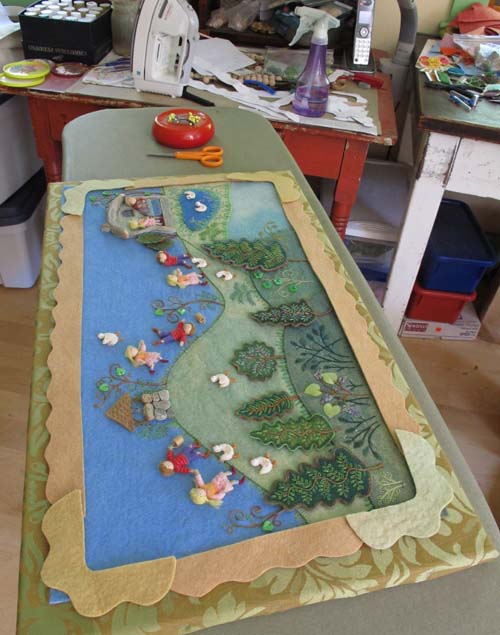
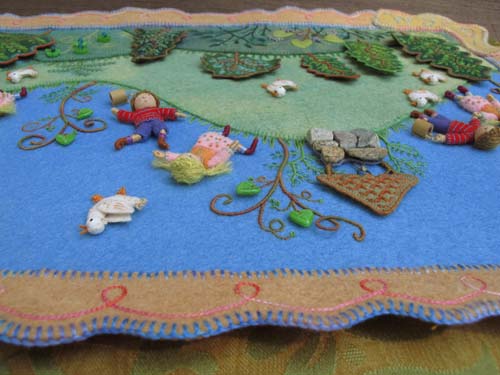
I’ve just finished adding a border to the double page illustration for Jack and Jill, which is part of my upcoming book, Pocketful of Posies. For those of you who are new to this blog, I am preparing 51 illustrations for framing, so that they can be displayed in a traveling show.

The artwork was previously mounted on foam core board for photography purposes. Now, it will be dressed up and given a new border and background. I stretched upholstery fabric and picked out felt colors that complimented and contrasted with the blue and green scene.

I looked through my basket of Watercolour pima cotton threads from the Caron Collection.

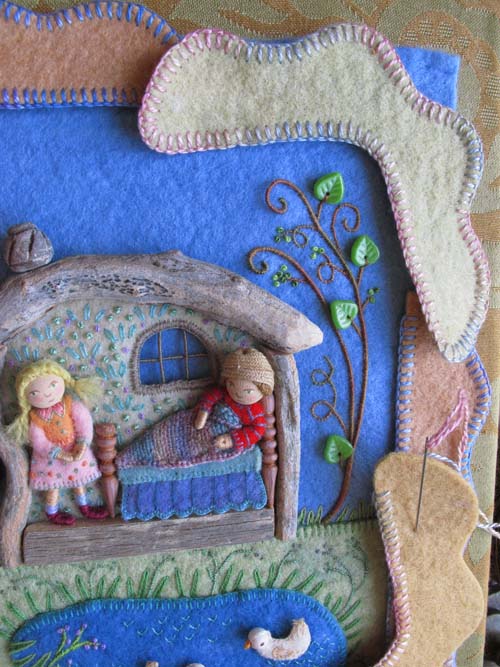
And used bright blue and variegated light pastel thread for the blanket stitch edging along the felt border pieces.

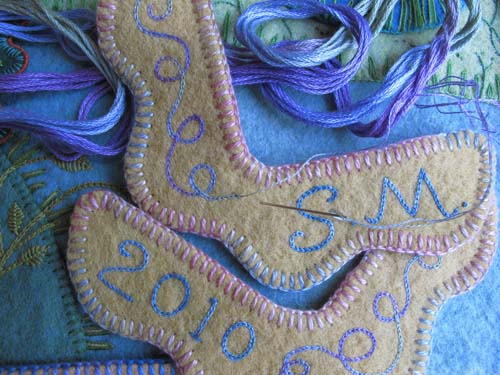
I then chain stitched my initials and the date on the bottom corner pieces with variegated embroidery floss. I’m enjoying the mindless doodling of the chain stitching.

The outside blanket stitch and the embroidery floss curls pick up colors from the illustration.

Then the border pieces are sewn to the inside artwork and onto the stretched back ground.

Now, it is ready for framing!

Note: See other posts from the Pocketful of Borders series here.

trip to Penikese Island

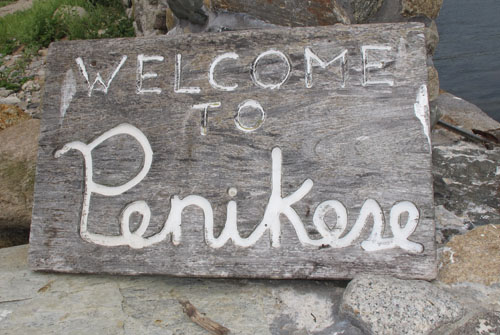
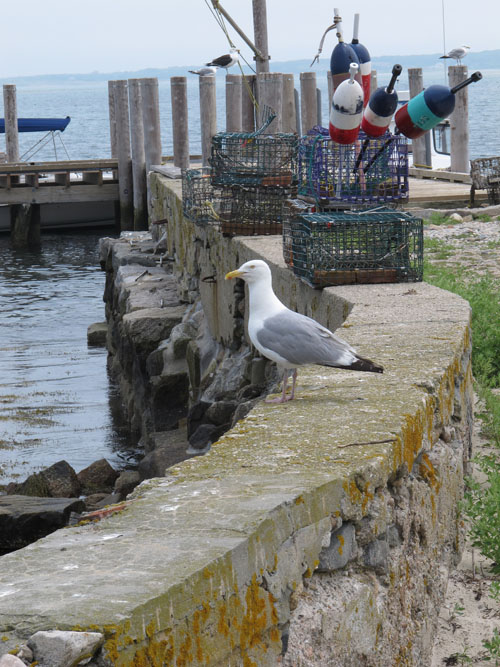
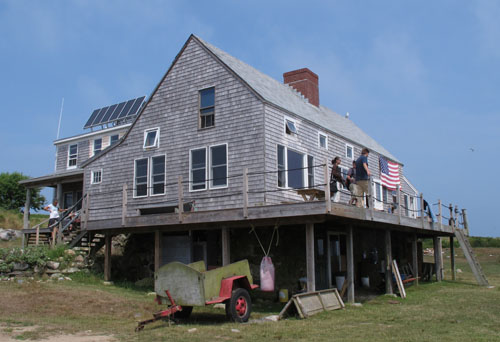
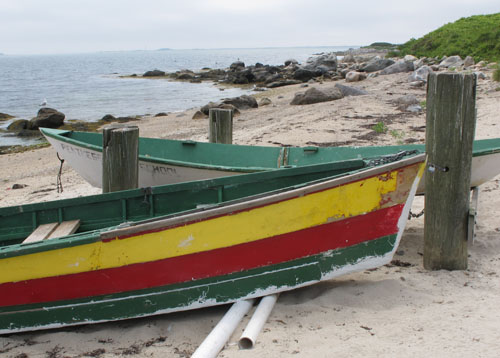
My husband and I took a day trip down to the Penikese Island School a few weeks ago. The school’s boat was out of service, so we volunteered to ferry some of the school’s teachers and visitors from the Mass. Dept. of Education in our boat. From Woods Hole, it took about 45 minutes to motor down Buzzard’s Bay along the chain of Elizabeth Islands to the very end, where the private island of Penikese lies.

Penikese Island School is a therapeutic boarding school for struggling teenage boys, located on this tiny island that also serves as a bird sanctuary.

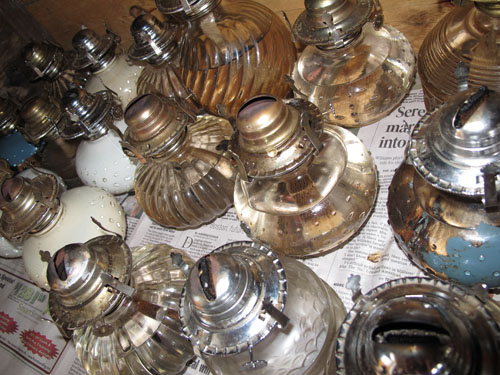
The school is modeled after 19th century family farm living and the main house has no electricity and a large supply of kerosene lamps…

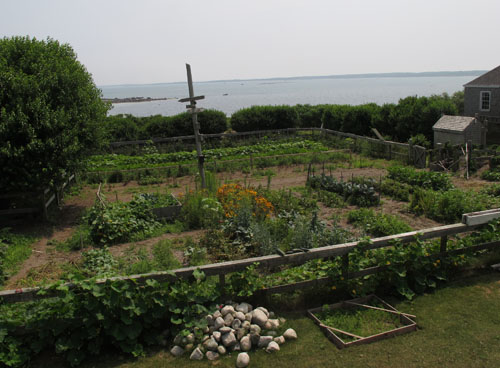
a vegetable garden…

and chickens.

Their environment is simple and natural, without the distractions of modern society and media.

We headed back that afternoon full of admiration for the dedicated and visionary staff at the school. It’s a truly remarkable place.