FREQUENTLY ASKED QUESTIONS
This is a list of the most frequently asked questions about my artwork. Several subjects come up again and again in the comments on my posts, so I thought I’d devote a whole page to answering them as best I can.
When did you start making fabric reliefs?
I named my work “fabric relief” in about 1980, when people kept asking what it was called. Before that, I made free standing dolls that were photographed in 3-dimensional scenes. In an effort to have my work recognized as art, I converted to a relief format that is displayed under glass, in shadow-box frames. The Way Home, the first of my 11 children’s books illustrated in fabric relief, was published in 1991.
How did you learn this technique?
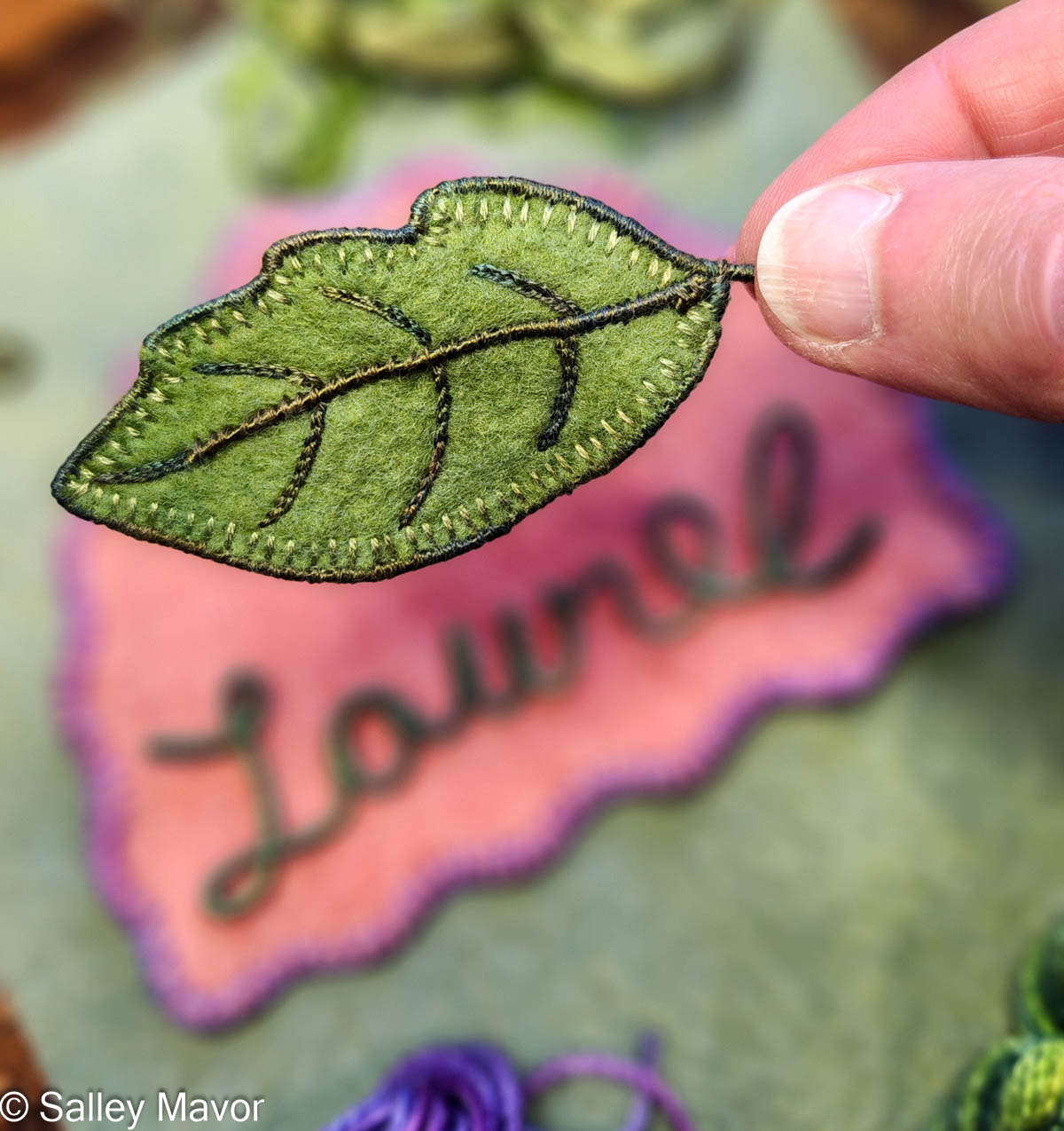
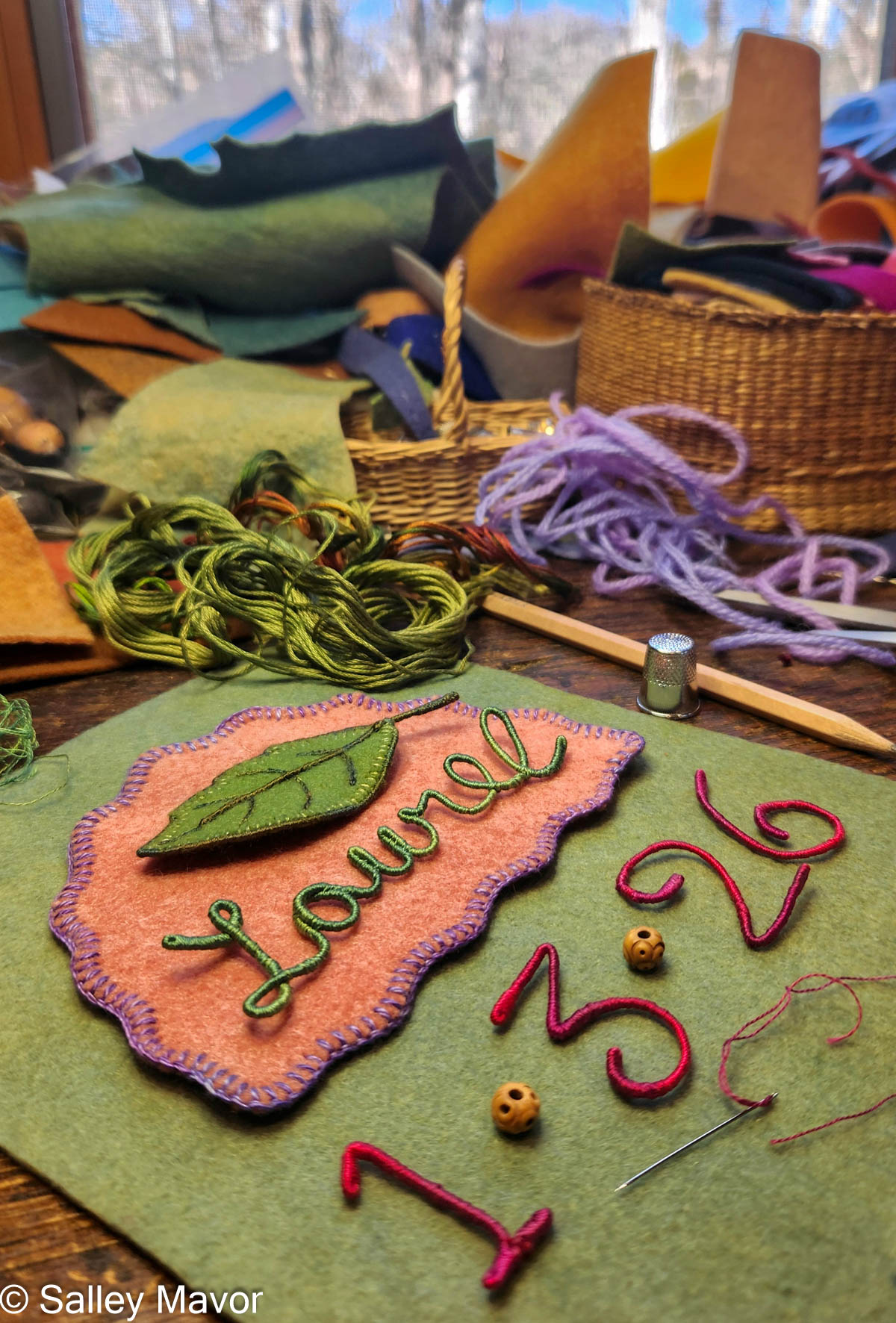
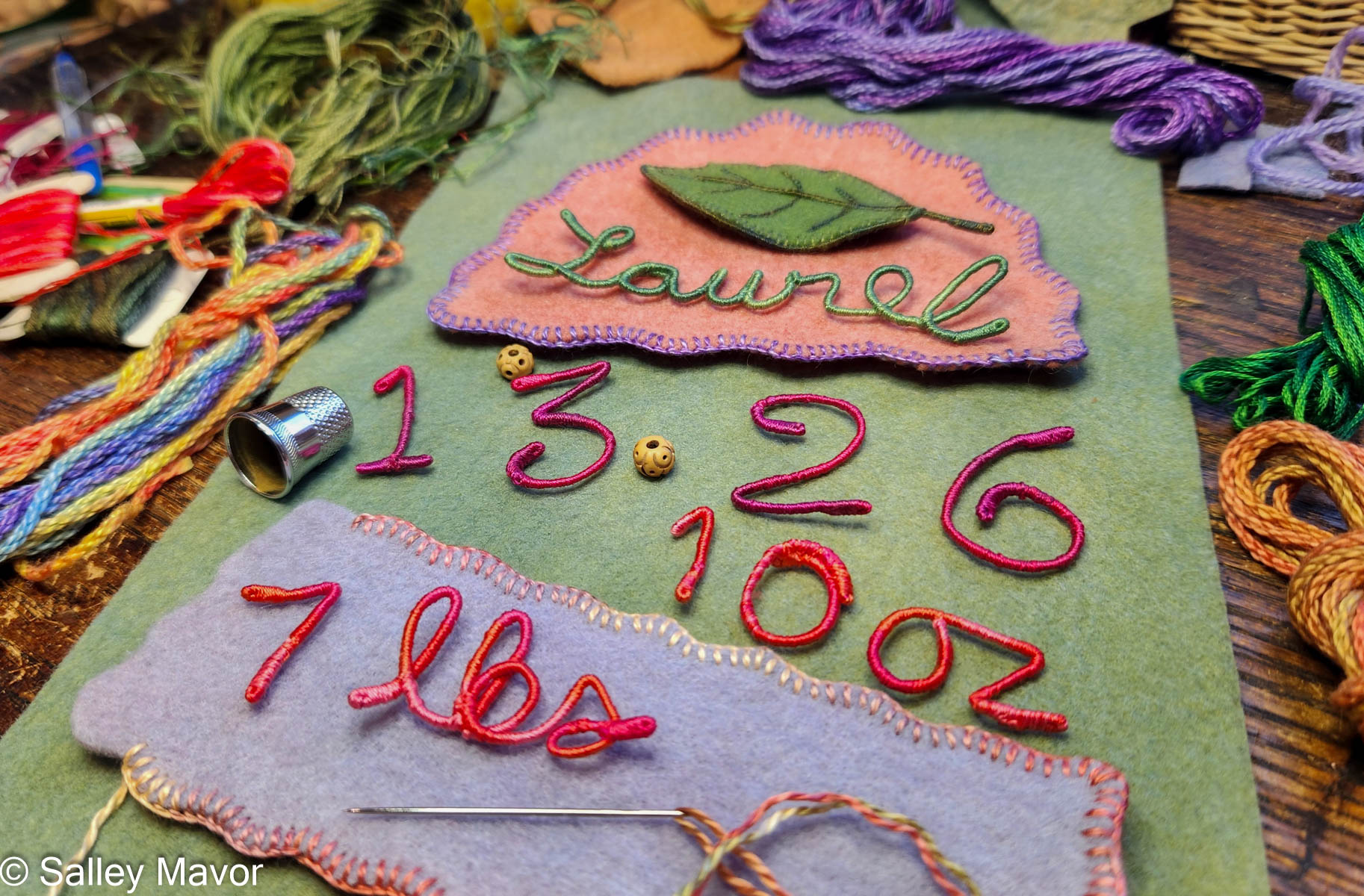
I am self-taught in embroidery and fiber art and have developed my style and working methods through 50 years of experimentation and repetitive practice. I am inspired by 17th century English “stumpwork” or raised embroidery and have devised my own way of achieving a 3-dimensional effect. I learned about visual communication, color, and design as an illustration student at the Rhode Island School of Design (IL 1978).
How long does it take to make a fabric relief piece?
It takes about a month or two to stitch the original fabric relief pictures for my children’s books, depending on the size and detail of the illustration. I construct one piece at a time, stitching until it is completed. The characters are made specifically for each scene and not reused multiple times. I spent 3 years making the illustrations for Pocketful of Posies and 2 years for my most recent book, My Bed. Larger pieces, such as Birds of Beebe Woods and Displaced take several months to stitch.
Do you teach classes?
No, I do not teach classes or give workshops. My schedule is full of making art and organizing exhibitions. My how-to book Felt Wee Folk provides step-by-step instructions for making wee folk dolls, with many examples and patterns. To learn my thoughts about sharing knowledge and artistic privacy, please read my post to teach or not to teach.
How many hours a day do you work?
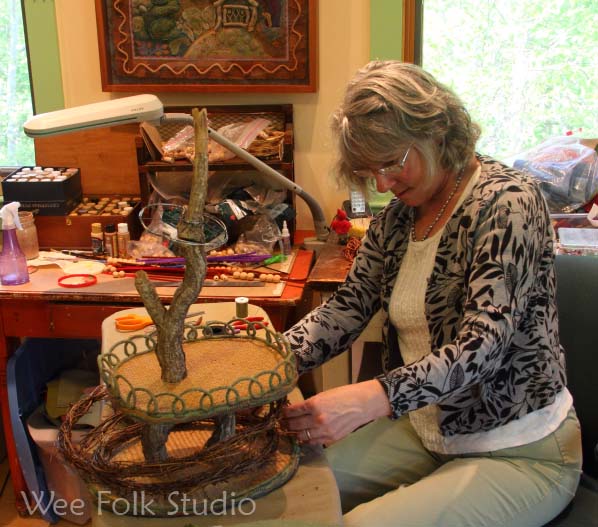
I don’t keep track of the hours, but I work in my studio as much as I can, just about every day. My husband Rob teases,”When Salley’s not sleeping or eating, she’s working in her studio.” Of course that’s not entirely true, I do get out to exercise, work in the garden, meet friends, cook dinner and pay attention to my family.
Are there videos of your stitching methods?
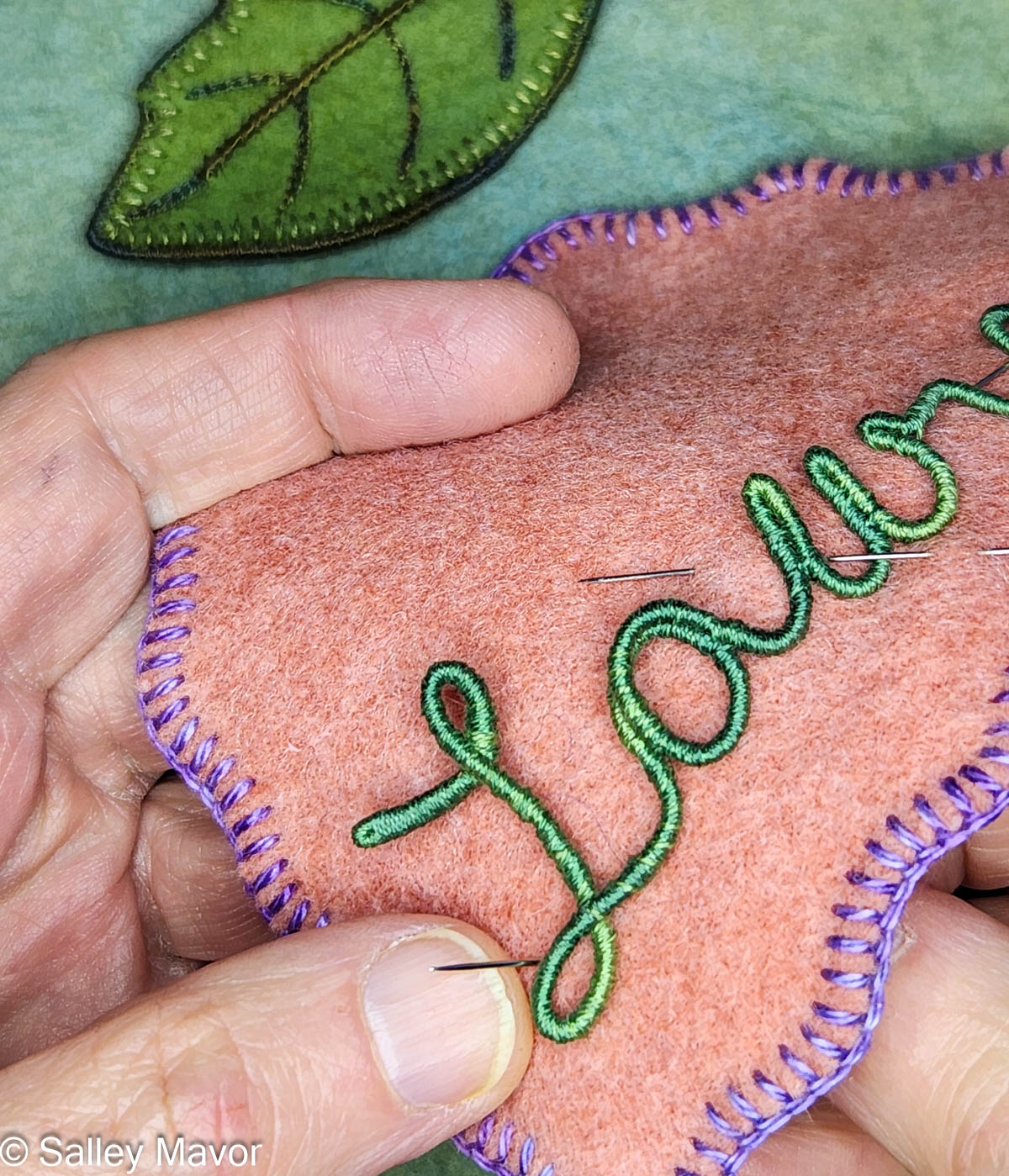
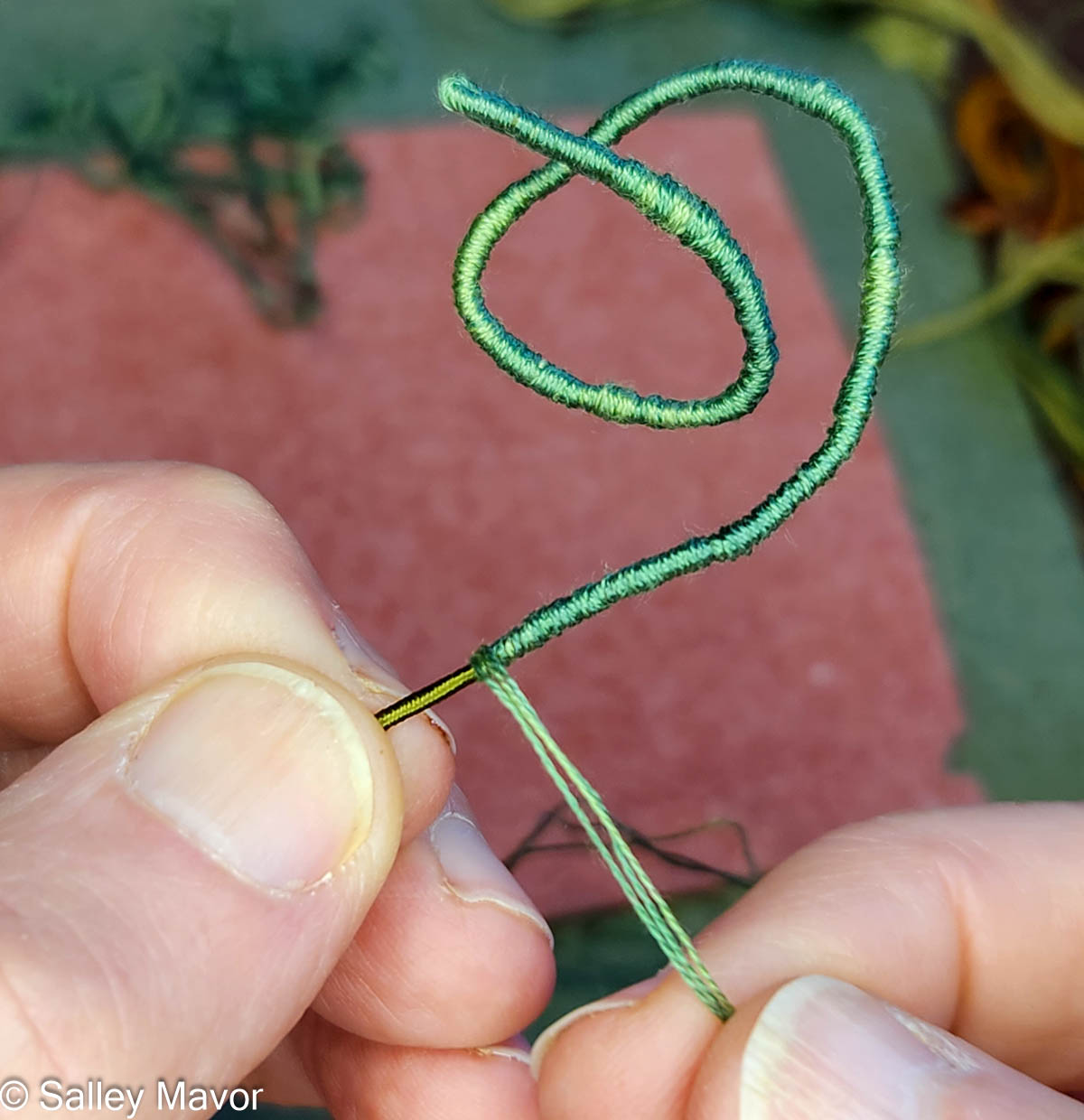
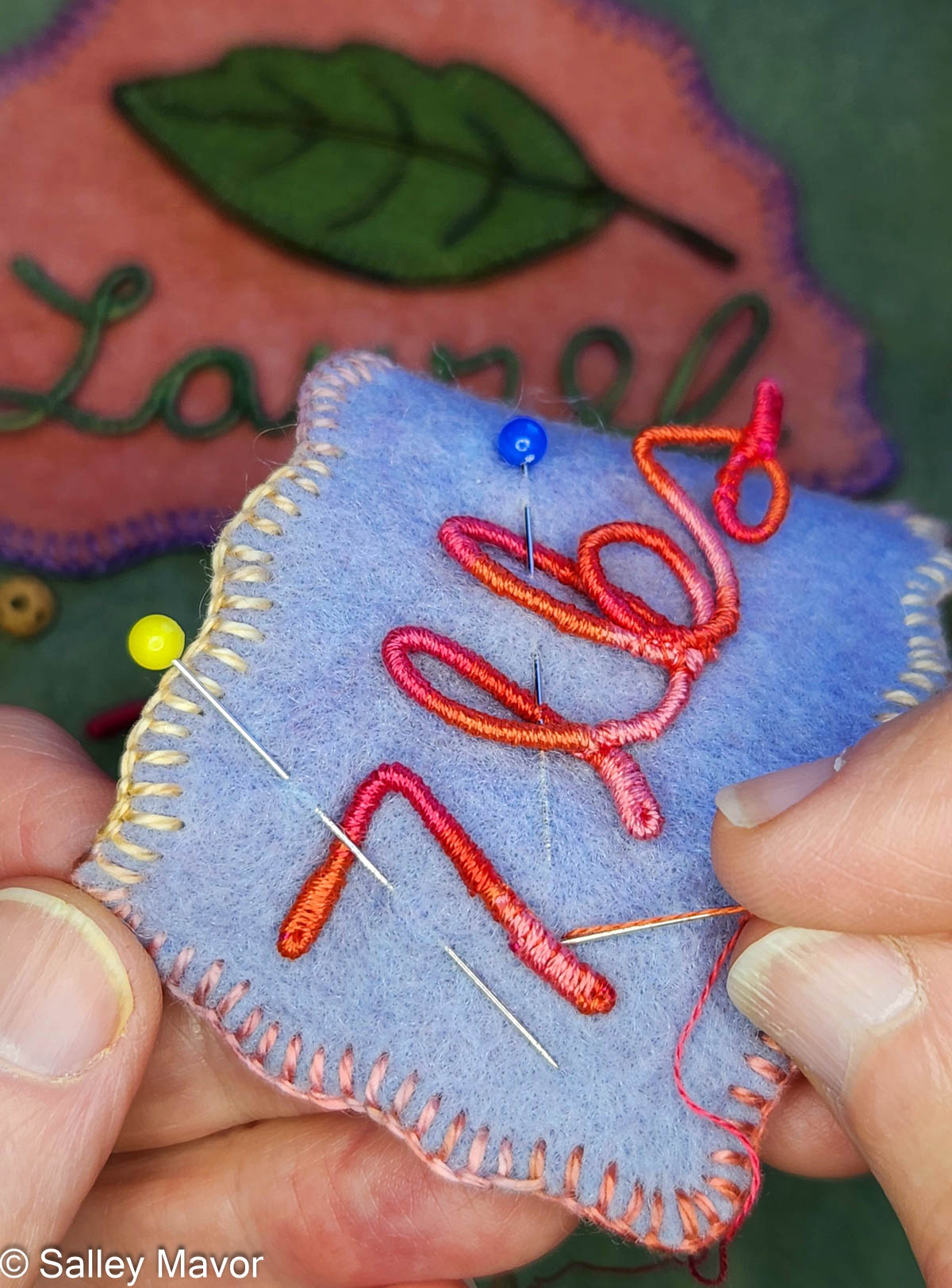
Yes, I’ve recently filmed Stitch Minutes (short demonstration videos) that show close up views of my hands stitching various parts of my artwork. They are meant to be inspirational more than instructional, like a peek over my shoulder while I work. You can view them in my posts and on the Videos Page.
What kind of felt do you use?
Most of the felt in my recent fabric relief pieces is plant-dyed wool felt produced by a now defunct cottage business. However, A Child’s Dream sells a nice selection of wool felt to make doll projects from my how-to book, Felt Wee Folk – New Adventures. Find information about wool felt suppliers here.
Do you have a shop?
Yes, I have an online Etsy Shop which offers printed reproductions of my work on note cards, puzzles, posters and (autographed) children’s books and how-to books. I do not do commissions and my original pieces are not for sale.
Do you sell your original fabric reliefs?
My original pieces are no longer available for sale. I have made the decision to retain all works currently in my possession. By holding on to these pieces, I am ensuring that there is a well-rounded and representative body of work ready for exhibition purposes. This way, I can maintain a collection that accurately reflects my artistic vision and creative journey. Printed reproductions of my work are available in my Esty Shop. Exhibitions and other events are listed here.
Will you write any more how-to books?
I have no plans to write any more how-to books. A revised edition of Felt Wee Folk, which was first published in 2003 was published in 2015. The popular fairies and other dolls remain and the non-doll felt projects are replaced with new varieties of wee folk characters and more doll-making tips. This all-doll version has a new cover and more pages than the first edition. It features many new projects for seasoned wee folk makers as well as new converts, who are just beginning to learn how to wrap pipe-cleaner limbs. The book is titled Felt Wee Folk – New Adventures: 120 Enchanting Dolls (C&T Publishing). Copies ordered from my Etsy Shop have extra goodies; an autograph, and faux flowers to make 2 fairies. Update: To read my thoughts about artistic privacy, go to this blog post: To teach or not to teach.
May I make and sell dolls from your how-to book?
Many people make fairies and dolls based on my designs. I cannot give permission to use my designs for personal profit, but individuals may sell the dolls on a limited basis, if the profits go to charity. Please give me credit on a tag or in the online description of the dolls.
A note about the new edition of Felt Wee Folk: New Adventures:
I aim to protect the copyright of new techniques and patterns that are included in this follow-up edition.
Do you sell your dolls?
I do not sell wee folk dolls, nor do I do commissions. I stopped making them so that I could devote my time and creative energies to making new art.
Will you exhibit your work in my area?
Seeing my embroidered pieces in person is a completely different experience than seeing them online or in printed form. Therefore, I would like to create more opportunities for the public to view them “in person”. This requires invitations directly from venues. You can help by encouraging your local museum to show my work. A national tour of the original illustrations from my new picture book, My Bed: Enchanting Ways to Fall Asleep around the World is underway. The exhibition, “Salley Mavor: Bedtime Stitches” began in 2020 and is booked into 2027 at museums across the country. Inquiries from museum directors and curators about showing my work are welcome. For information about hosting Bedtime Stitches or other exhibitions, please contact me via the from below. See my exhibition schedule here.
Is your studio open to the public?
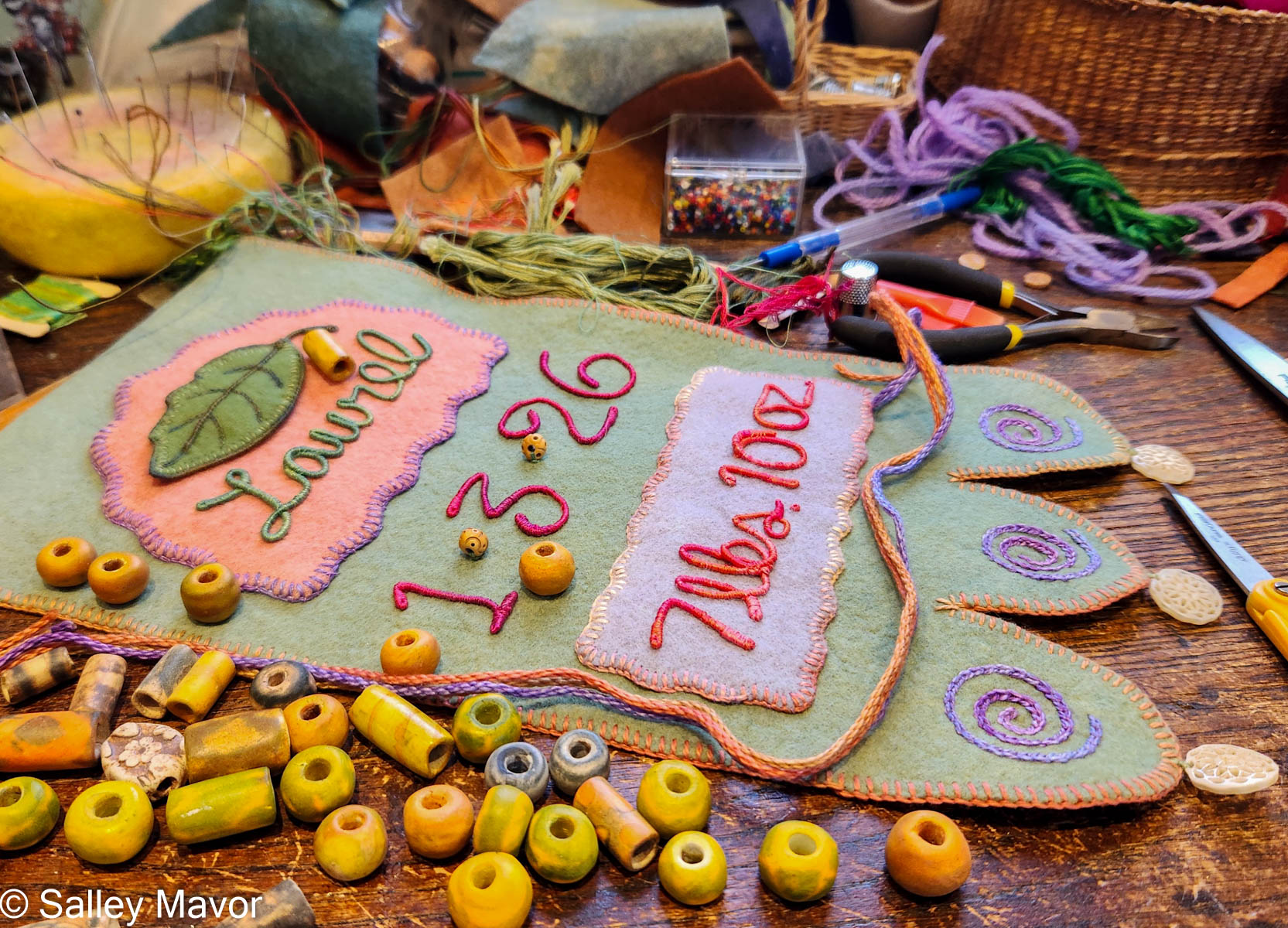
Not usually, but occasionally I host an Open Studio event. My studio is a private work space and an oasis where I spend most of my time working alone, surrounded by collections of treasures.
Do you use a sewing machine?
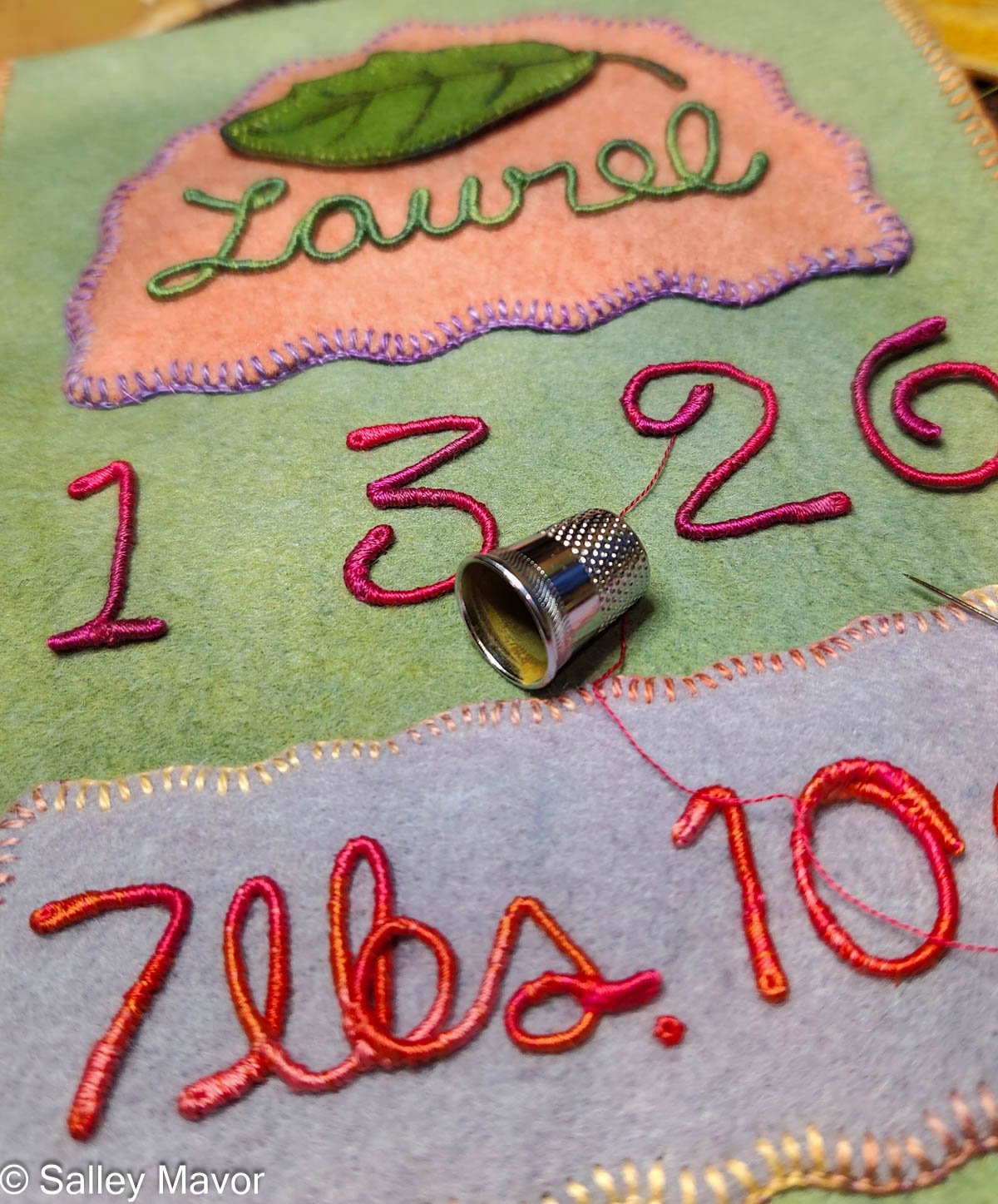
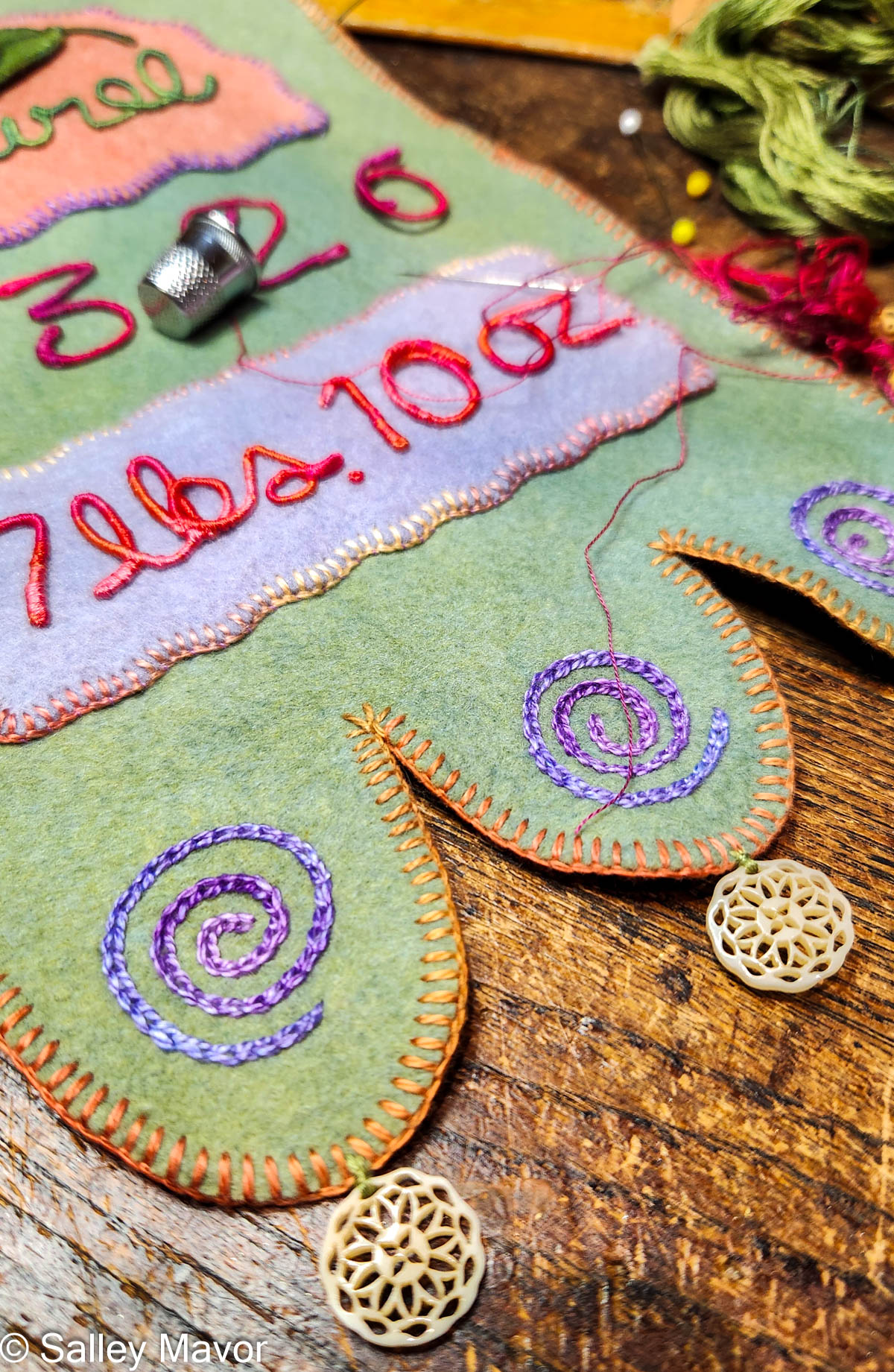
I only use a sewing machine to make clothes, curtains or pot holders–that kind of thing. My fabric relief pieces are all hand stitched.
Do you have any Blossom fairy kits for sale?
No, I’m sold out of kits, which I made and sold for 10 years, from 1998 – 2008. However, my how-to book Felt Wee Folk is available in my Etsy Shop.
Why have you delved into making political satire?
I am not by nature a political person, but I believe that exploring what is happening in America through art is important for the health of our democracy, especially since the 2016 presidential election. To read an interview about the Wee Folk Players (They’re a Stitch), go to this post. In this Interview on WGBH TV, I reflect on my foray into political satire, the abrupt cancellation of my exhibit, “Liberty and Justice” and describe how it has affected my work and life.


To keep up with new posts, please subscribe to this blog. Your contact info will not be sold or shared. If you’d like to see more frequent photos tracking the projects in my studio, please follow me on Facebook and/or Instagram

 SALLEY MAVOR