
Today, I’d like to revisit Birds of Beebe Woods (2012) and share thoughts about what inspired this collection of hand stitched birds, as well as give a behind the scenes peek at how I made it 13 years ago.
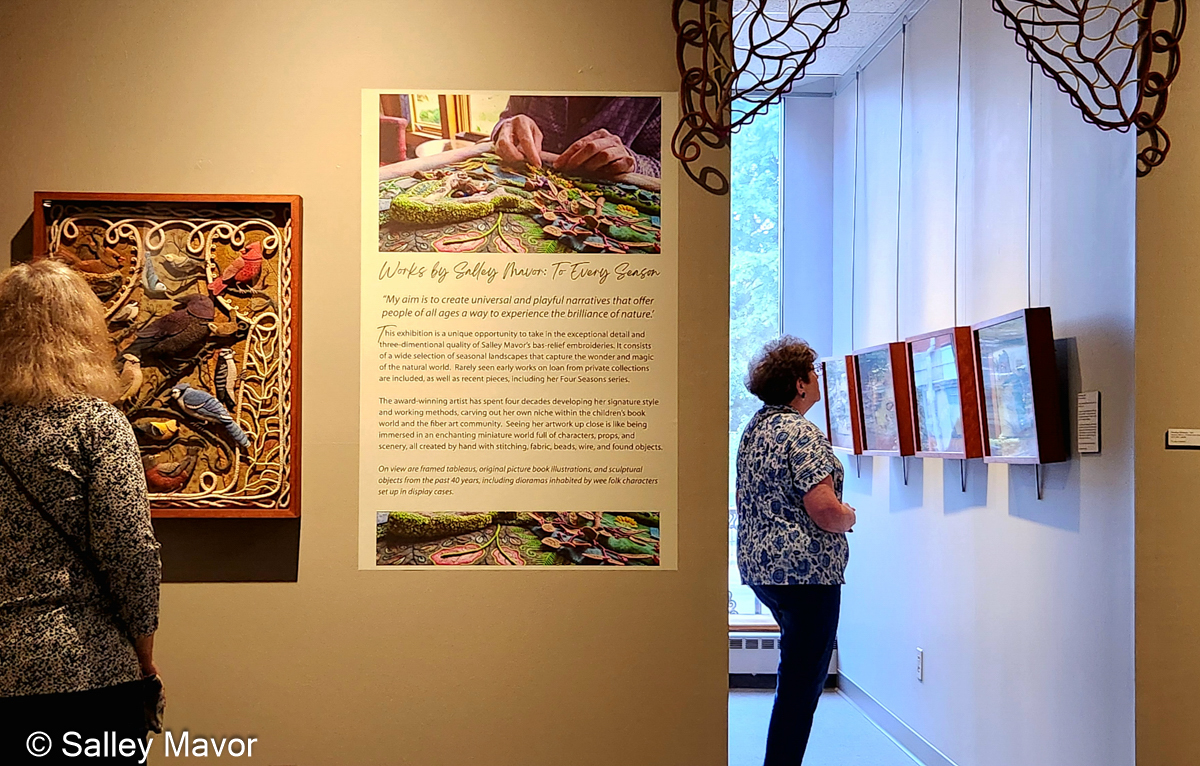
See Birds of Beebe Woods in person
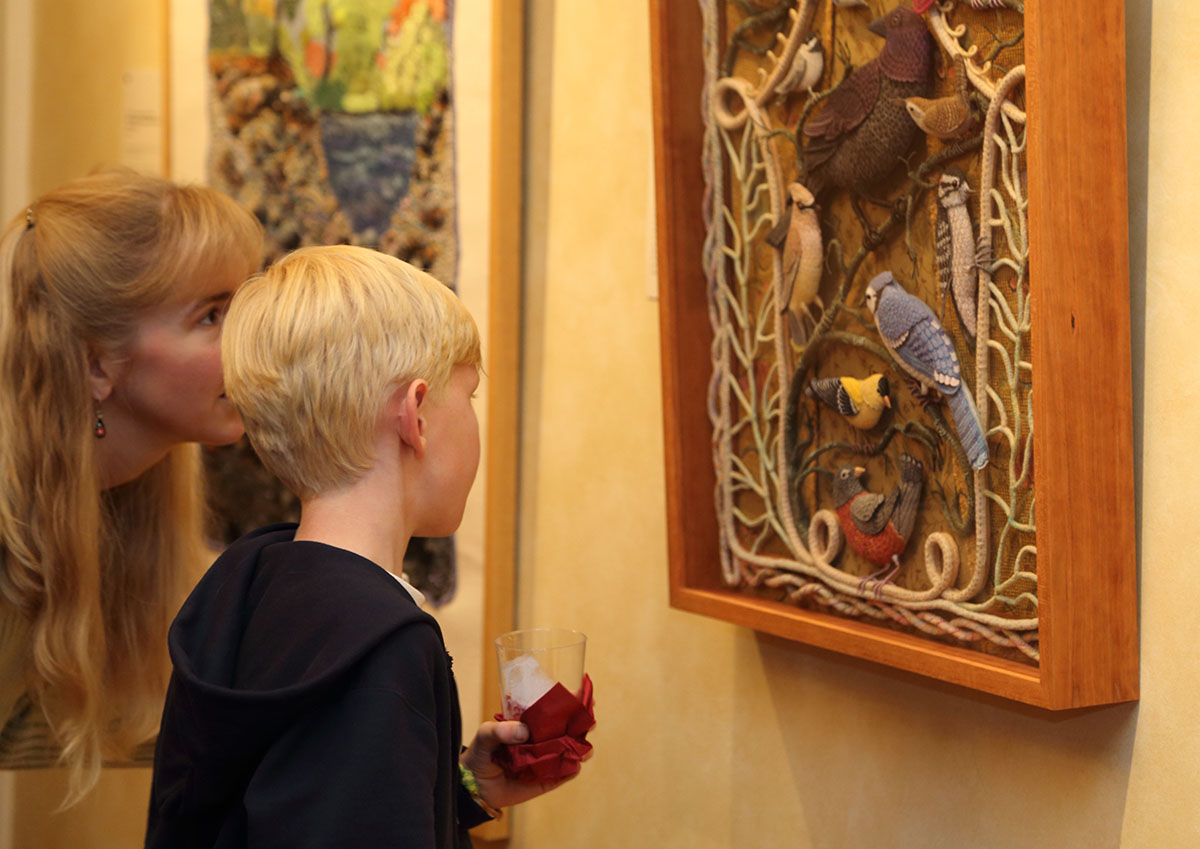
The framed bas-relief piece is currently on display at the New England Quilt Museum in Lowell, MA, in my exhibition, To Every Season: Works by Salley Mavor thru Dec. 31, 2025. In January, it will return for an extended stay at Eight Cousins Bookshop (199 Main St. location) in Falmouth, MA.


Origin Story
In the spring of 2012, I was invited to make a piece for a group fiber art show celebrating Beebe Woods, the beloved town forest in my hometown of Falmouth, MA. The exhibition, titled The Intimate Woods: A Celebration of Beebe Woods was shown at Highfield Hall in the fall of 2012.
The assignment was to use fiber techniques to make art inspired by Beebe Woods. All of the artists in the group where local and quite familiar with the numerous paths and stone walls crisscrossing the 388 acre wooded conservation land. Normally, I wouldn’t be able to fit in a months-long project like this on such short notice, but thankfully my schedule was open. It helped that I’d (temporarily) sworn off doing another children’s book after the recent 3-year marathon to complete Pocketful of Posies.
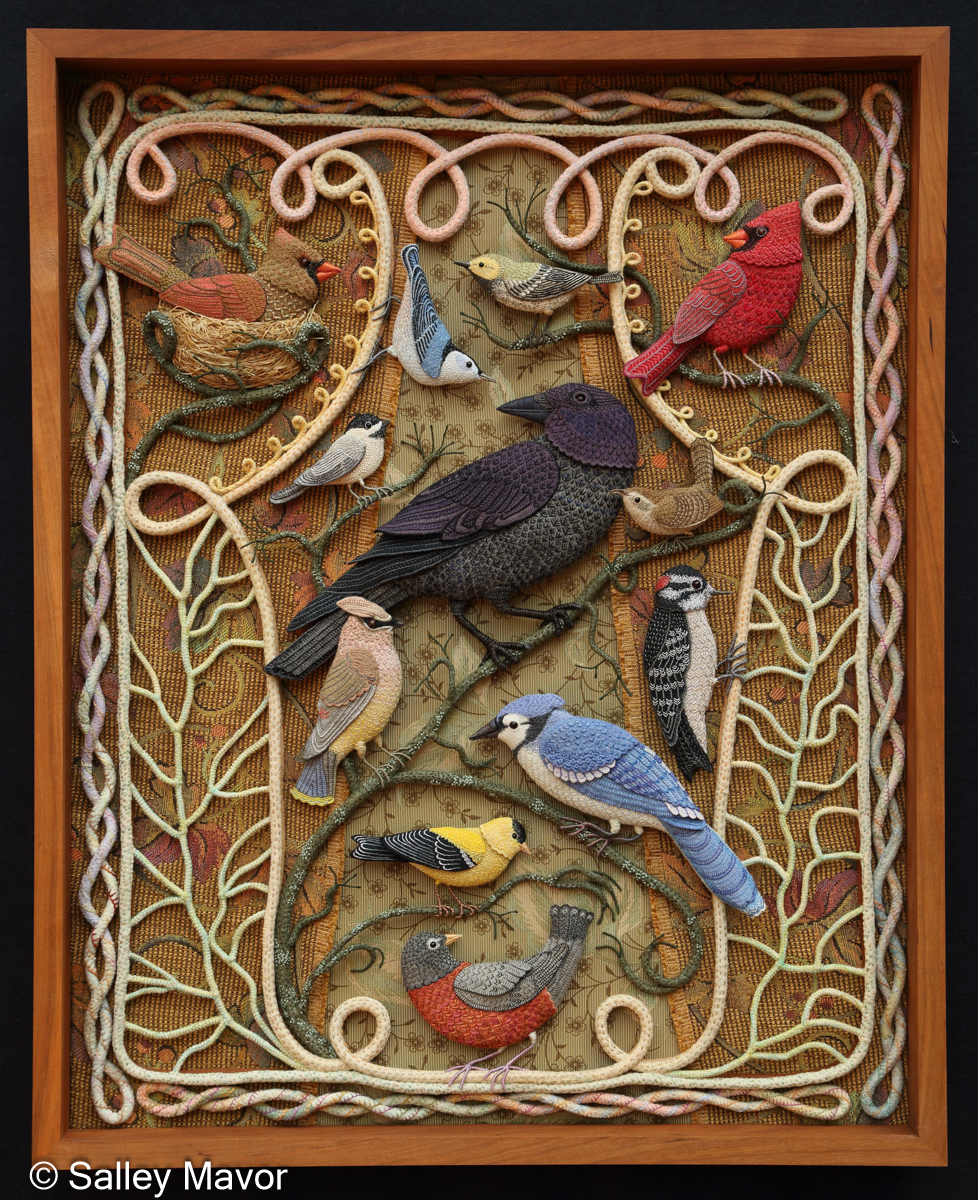
The 12 Birds
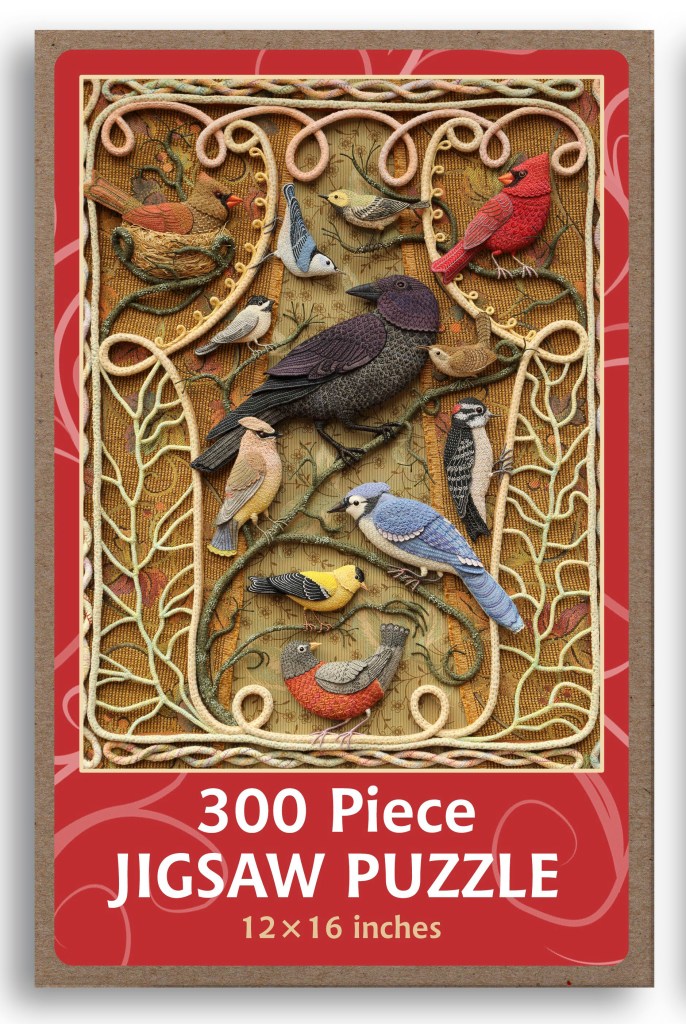
Listed clock-wise from the top, the birds are female cardinal, nuthatch, black-throated green warbler, male cardinal, wren, downy woodpecker, blue-jay, robin, goldfinch, cedar waxwing, American crow and chickadee.
Show and Tell
It was clear from the beginning that I wanted to do more than just convey the natural wooded environment in Beebe Woods. A landscape devoid of characters, whether they be human or animal, wouldn’t hold my attention for long – I need eyeballs to connect with! I chose to portray birds, making them realistic enough to be recognizable, but patterned and abstracted in a way that made them fun to stitch. I wouldn’t call myself an avid bird watcher, but after closely studying birds for this piece, I’ve become more in love with them.

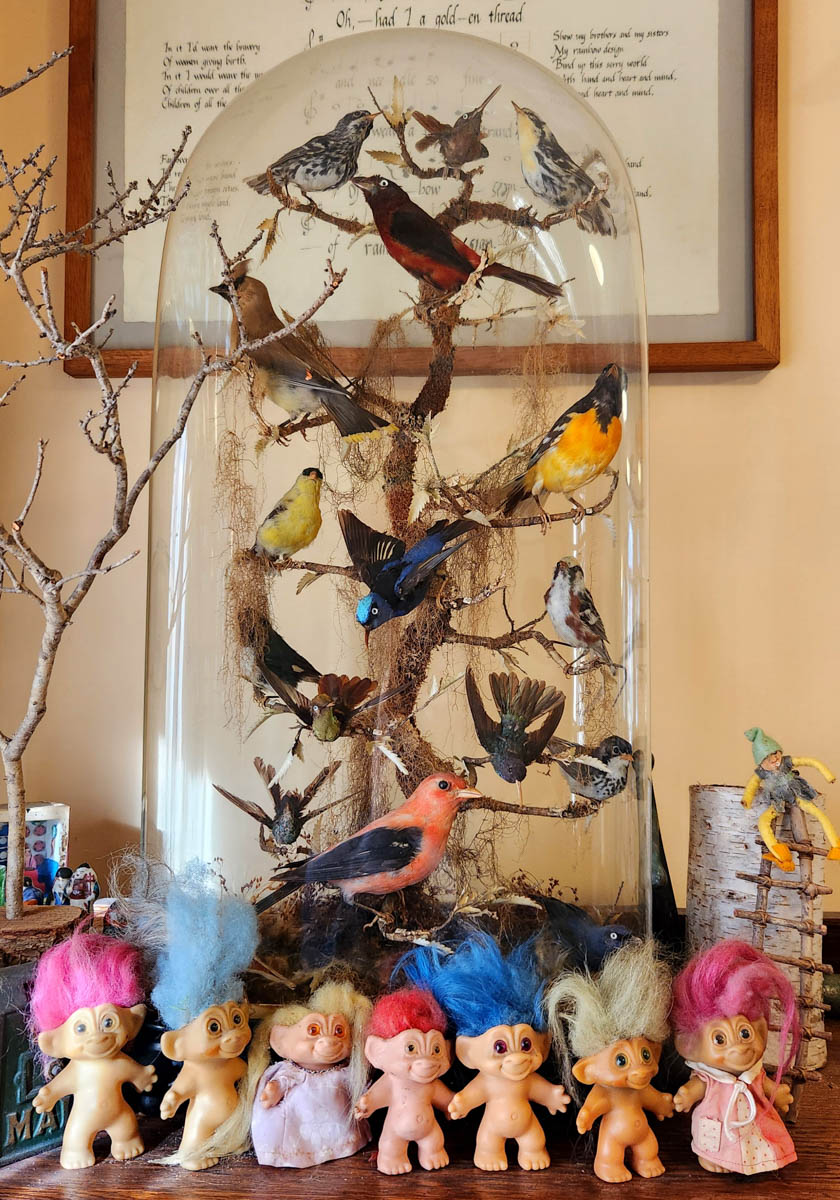
The first step was to jot down ideas in thumbnail sketches. The drawing I liked best was a group of birds perched on branches, framed by a woodsy border. At this point, the birds were pretty stylized and more like place holders. Looking back, I realize that I must have been influenced by my grandfather’s Victorian glass dome with taxidermy birds that sits in my studio.
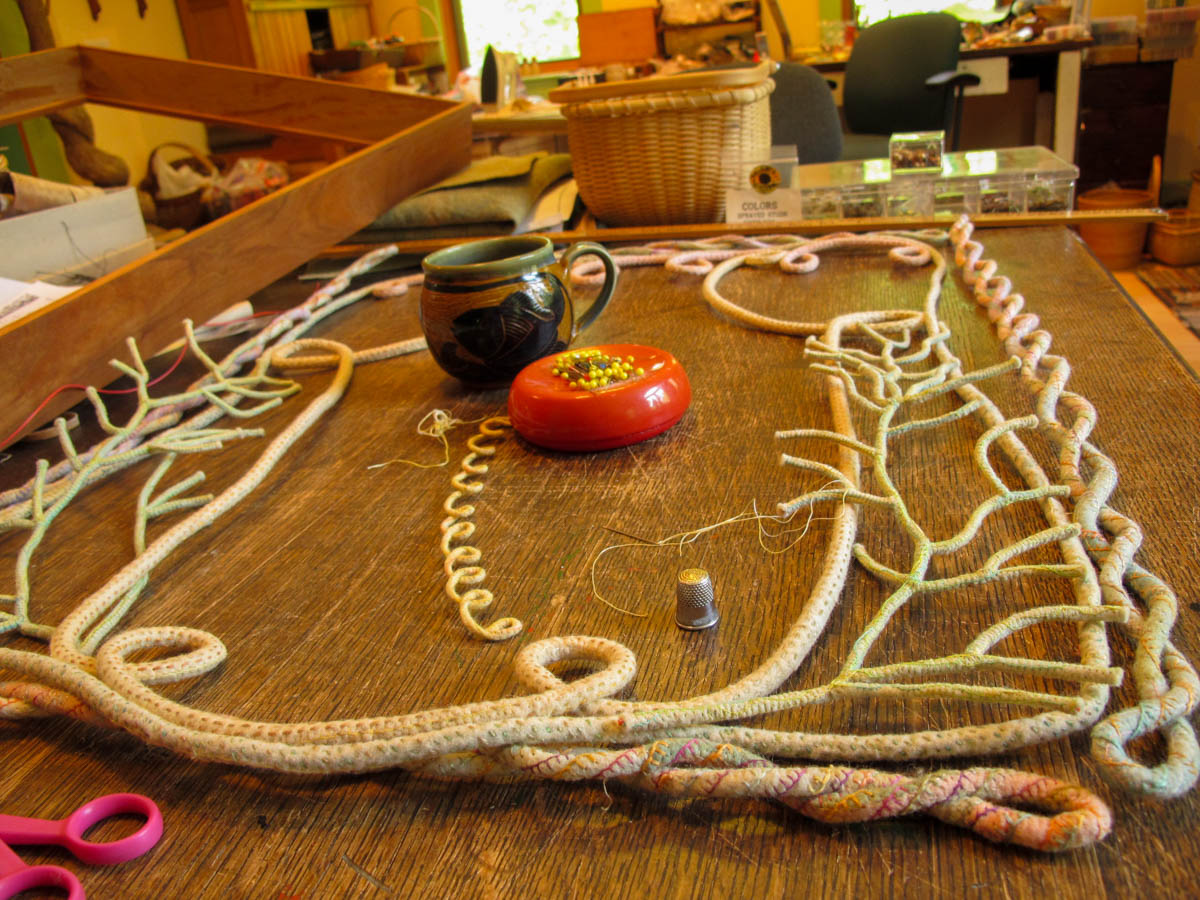
Next, I concentrated on the border, which set the stage for the collection of birds.

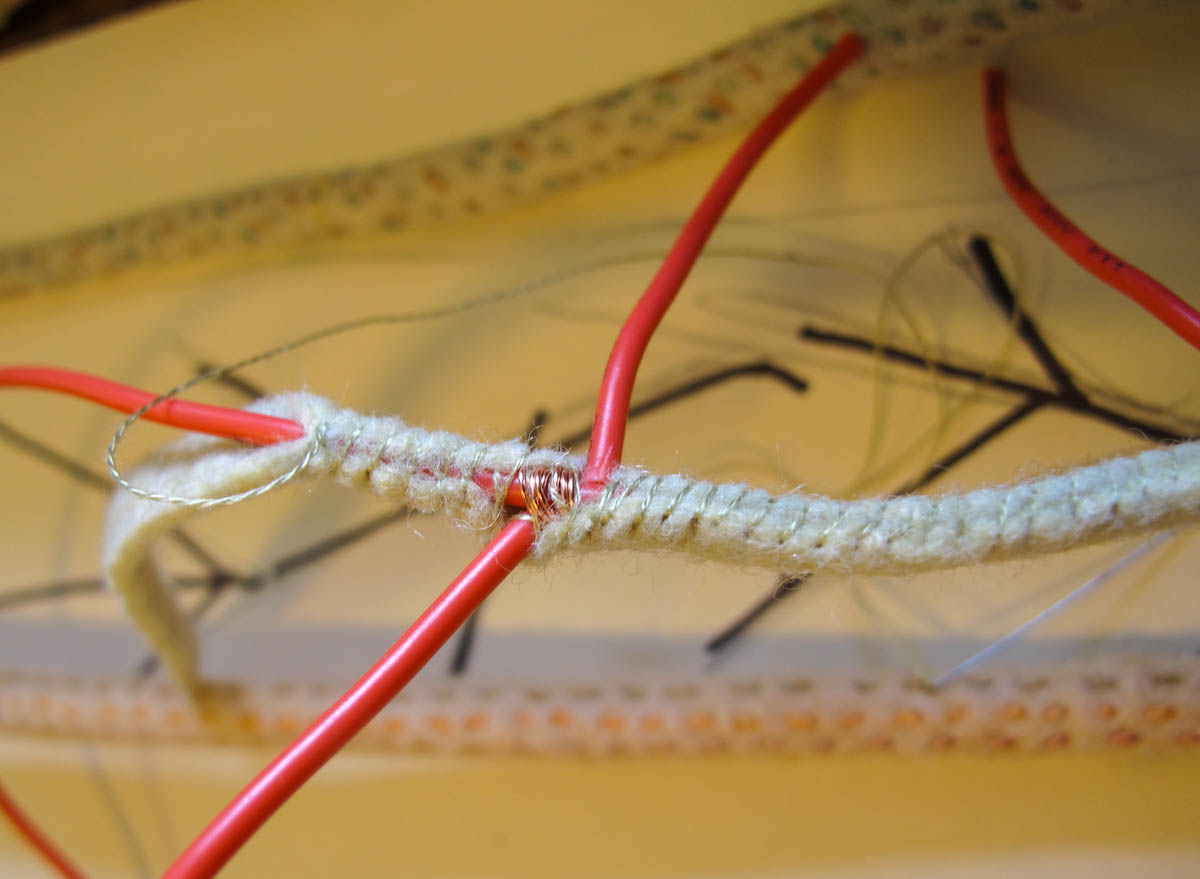
This may be my first example of making “felt filigree” sculpture, which involves covering wire with strips of felt to form intersecting lines. Felt covered wire has been a mainstay in my pieces for several years, including the recent collection of botanical sculptures hanging in the gallery entrances to my exhibition at the New England Quilt Museum.


After constructing the felt filigree border, I researched bird species that visit our corner of Cape Cod and picked out ones of a variety of sizes and plumage colors. I cut out paper birds and juggled them around. The finished composition wouldn’t be clear until the very end, after all of the birds were completed. I remember thinking that different birds would never mix together this way in real life. Then I reminded myself that I was making art, which didn’t have to conform to reality.

I printed out photos and illustrations of the birds to use as reference. The crow insisted on being made first and then I added the other birds one at a time.

I knew that the success of this piece was hinged on the dominant positioning of the crow and the strategic placement of the smaller birds around it.

My approach to rendering the birds changed during the 4 months that I worked on the piece. Toward the end, when I sewed the nuthatch, chickadee, wren, and warbler, I referred to photographs more closely and was caught up in making them identifiable and naturalistic.
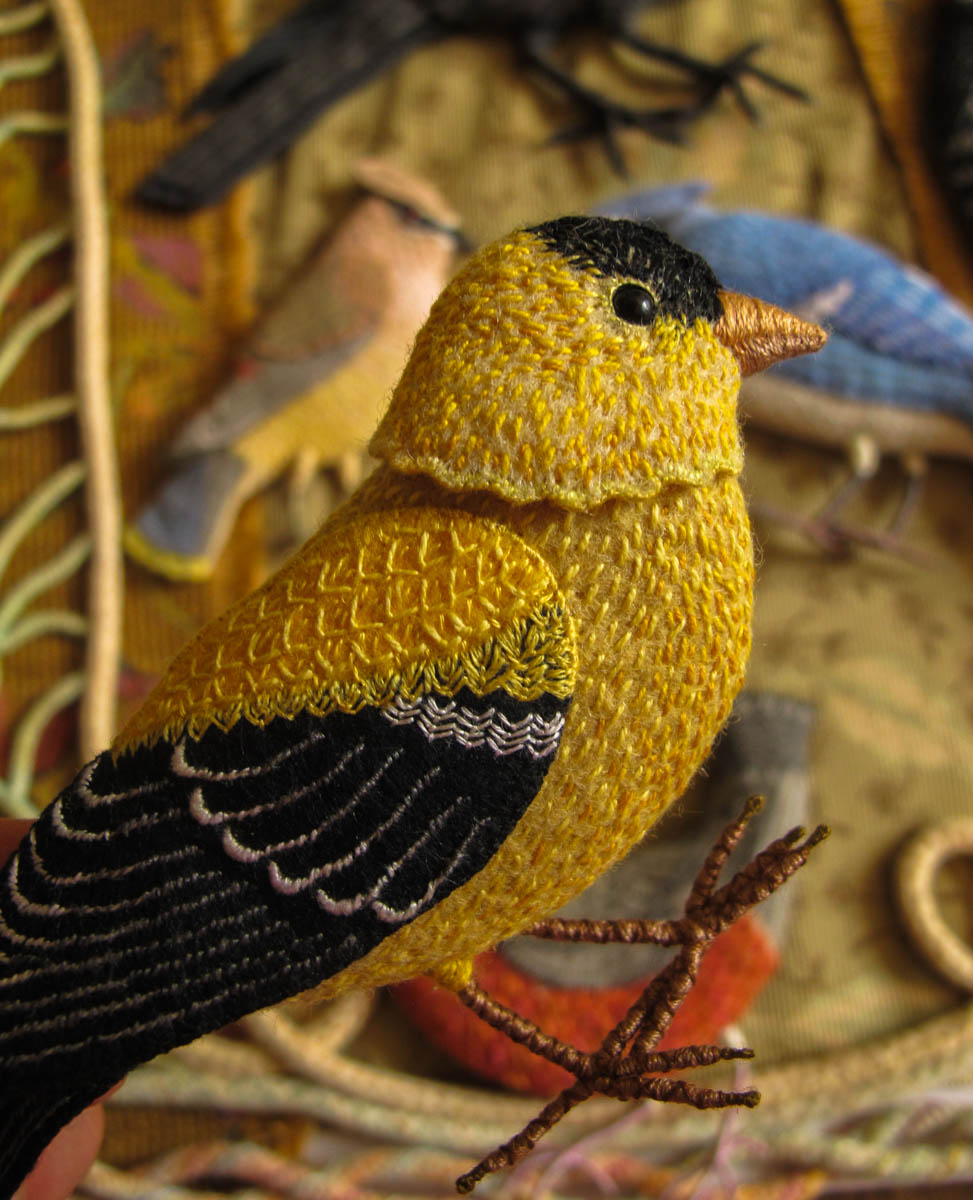
The birds aren’t exactly life size, but they are close. The little wren could stand on its own, so I took its picture before sewing it in place.

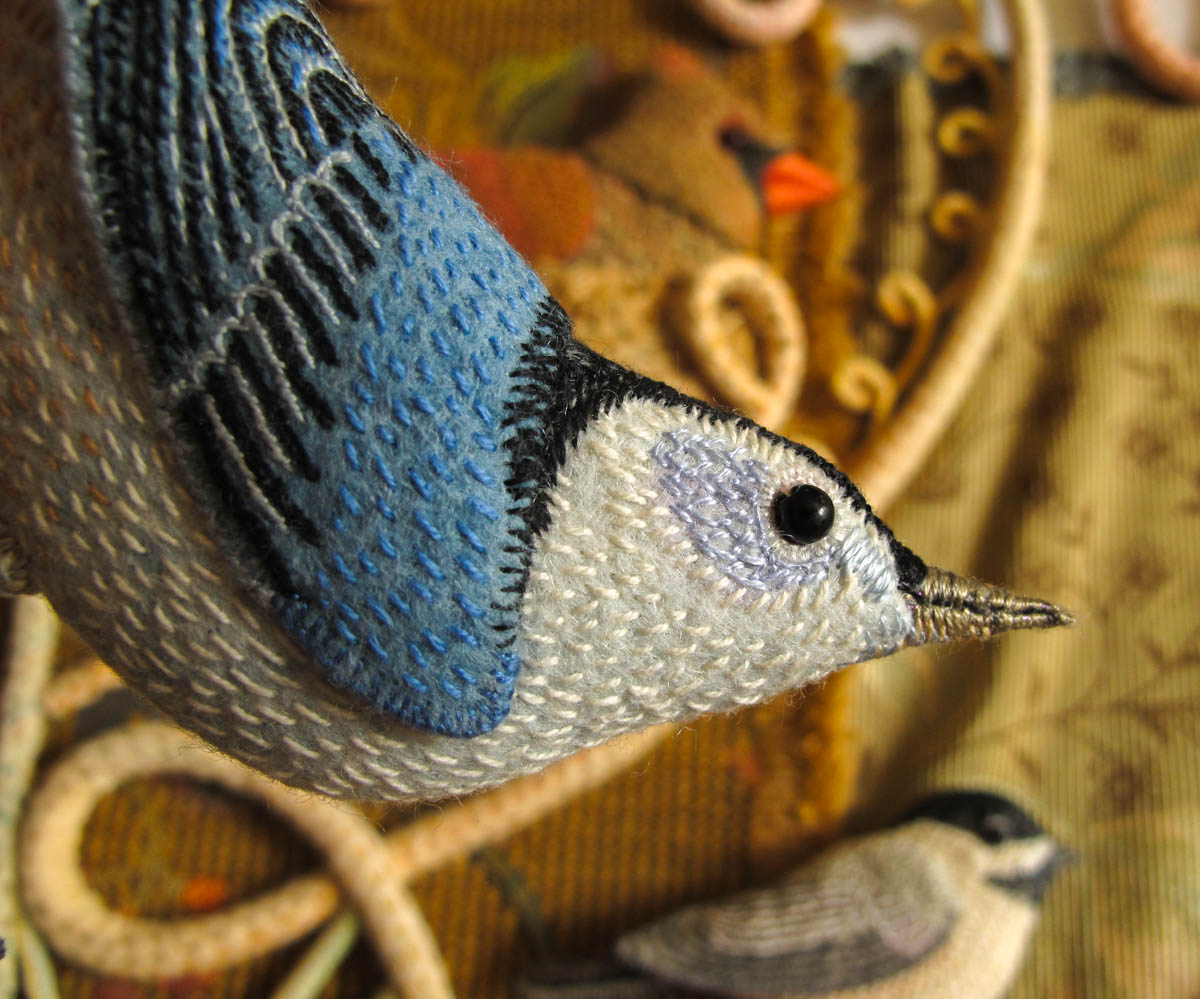
I cut the basic shapes of the birds out of wool felt and then embroidered their feather patterns.


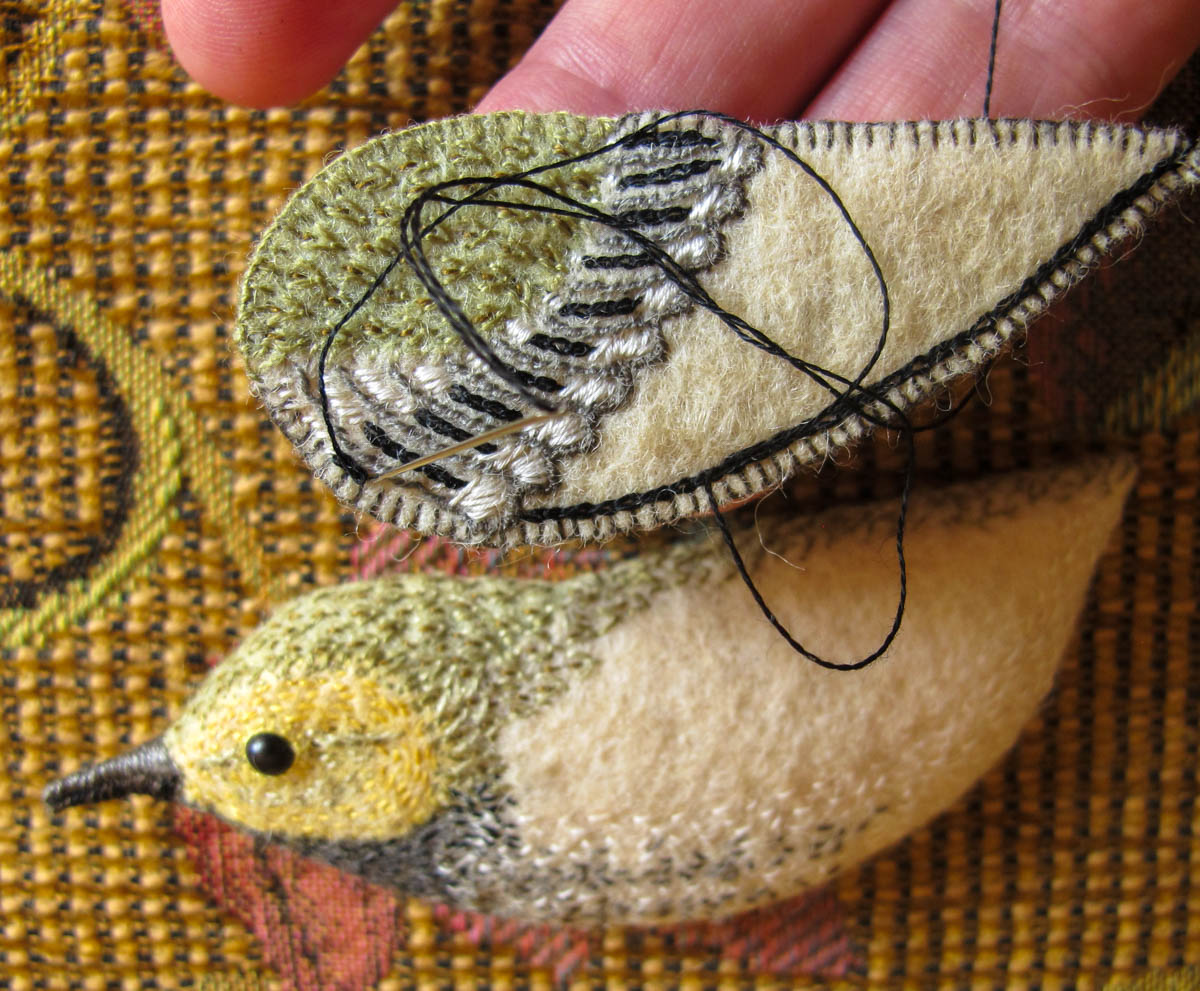
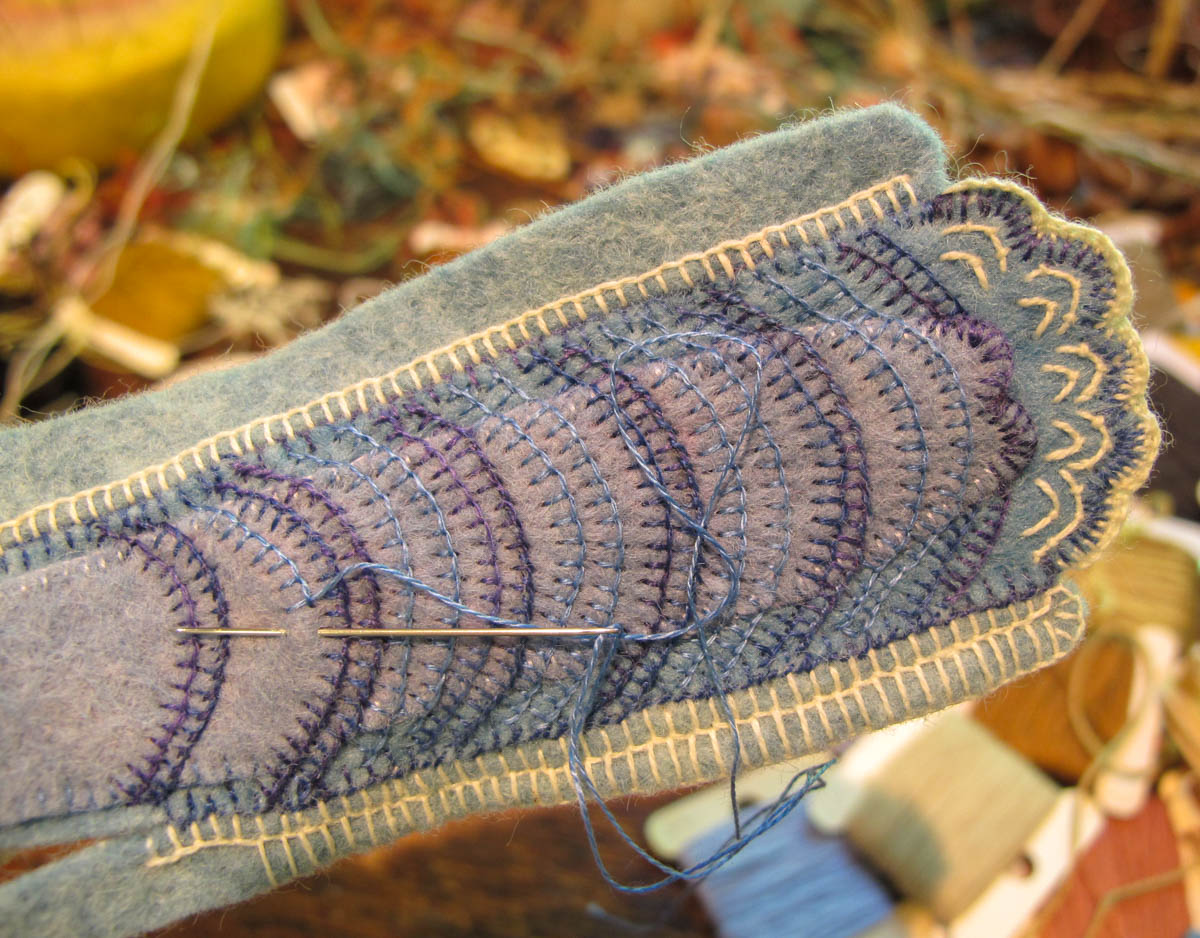

I’m glad that I made the decision back in 2012 to not sell Birds of Beebe Woods. Before that, I sold just about everything I made, except for my Self Portrait, which was too personal to let go. Now, I don’t sell any original work. By holding on to these pieces, I am ensuring that there is a well-rounded and representative body of work ready for exhibition purposes. This way, many more people can experience my work in person!

SHOP
Printed reproductions (puzzles, posters, note cards, and bookmarks) of Birds of Beebe Woods are available in my Esty Shop.



To keep up with new posts, please subscribe to this blog. Your contact info will not be sold or shared. If you’d like to see more frequent photos tracking the projects in my studio, please follow me on Facebook, Instagram and BlueSky.
 SALLEY MAVOR
This is one of my all-time favorite pieces of your work. It’s always nice to see it again. And I am so glad I got to meet you.
Hi Salley!Just wanted to let you know th
Also a Falmouth resident here. Highfield Hall is where I first saw your amazing work and immediately fell in love with it. No matter how often I look through your books, I see something new, but books are nothing like seeing it in person!
The birds are wonderful!