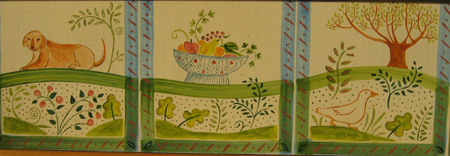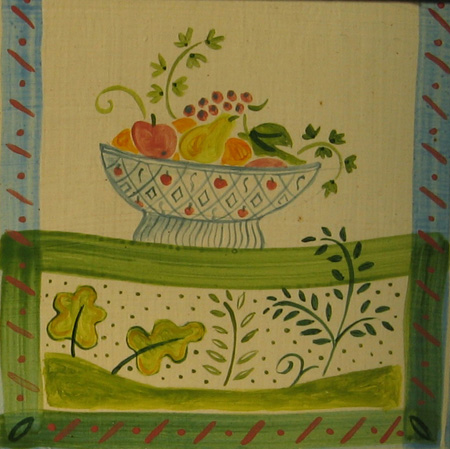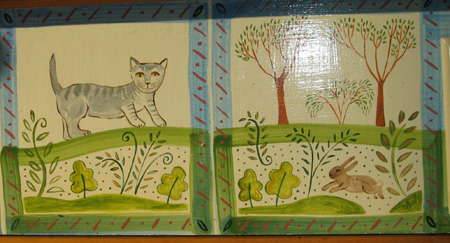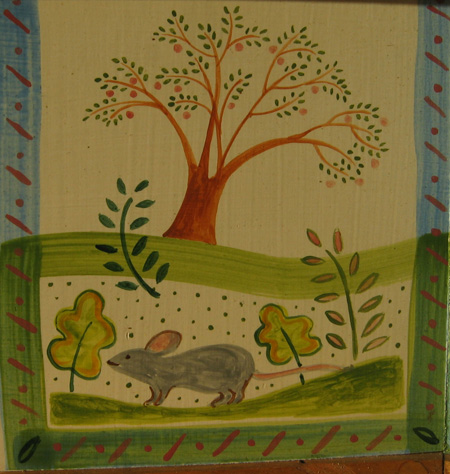
Faux Tiles

When we built our house almost 20 years ago, I wanted to have a tile splash board behind the kitchen counters. The plan was to make my own hand painted tiles.
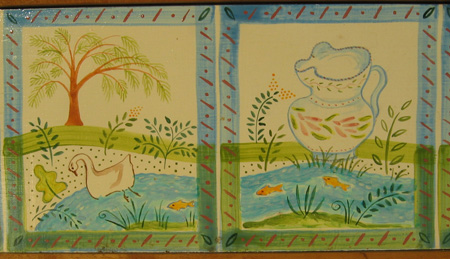
My friend Yvette showed me how to apply glazes onto unfired clay tiles. The tiles were fired in a kiln at the artisan tile business where she worked.

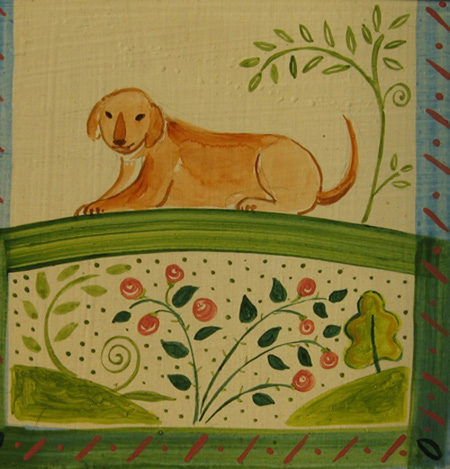
I made drawings and planned out a series of tiles that would create a panoramic landscape, decorated with animals and an occasional dish or basket of food. After a few test firings, I could see that the learning curve was too steep for me. The glazes were one color when you paint them and another when they are finished firing. The process was more involved than I had thought. The quality of my tests were not good and it would take a lot of practice to get the tiles to look the way I wanted.

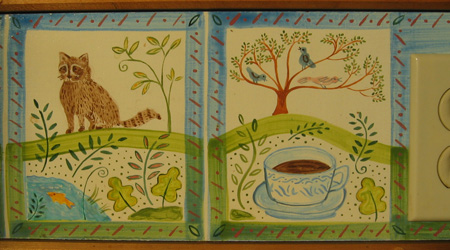
Even though I really wanted to use ceramic tiles, I decided to make “faux tiles” instead. I ended up painting Masonite with acrylic paint and coating it with polyurethane.

I had fun trying to make them look like tiles, adding blue borders, with space between each painted square. With a jig saw, I cut out openings for the electric outlets. When people see our kitchen, they see a row of tiles, not paint on Masonite. The panel has held up well over the years and can be easily washed. I plan in making more for another area in the kitchen when we do some renovations.
To keep up with new posts, please subscribe to this blog. Your contact info will not be sold or shared. If you’d like to see more frequent photos tracking the projects in my studio, please follow me on Facebook, Instagram and BlueSky.
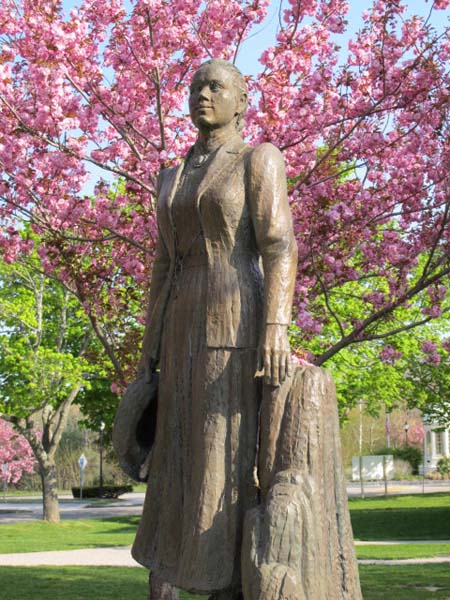
Katherine Lee Bates

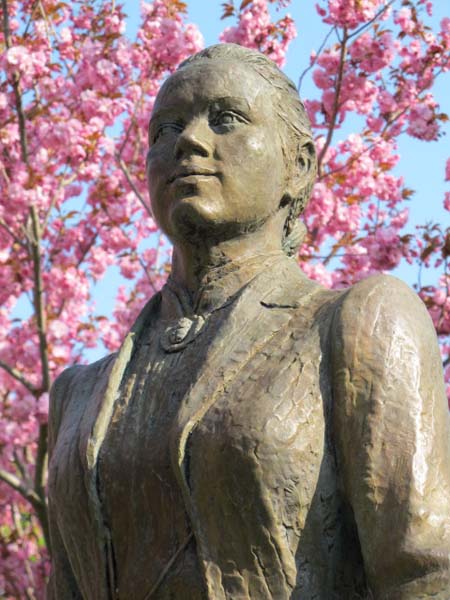
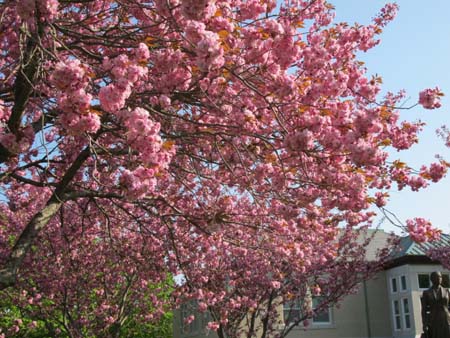
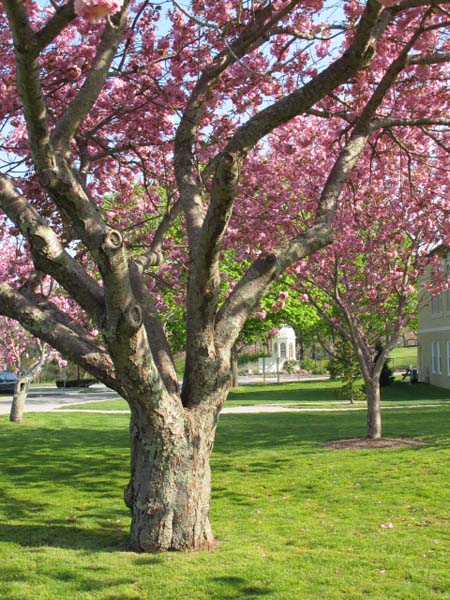
This year, my home town of Falmouth, Mass. will be celebrating Katherine Lee Bates’ 150th birthday. She was born in Falmouth and was best known for writing the words to “America the Beautiful”. There’s a street named after her, our health food store is called Amber Waves and the bike path is named the Shining Sea Bikeway. On a beautiful spring morning, I stopped by and took some pictures of her statue in front of the library, along with some very blossomy cherry trees.

Pocketful of borders (title page)

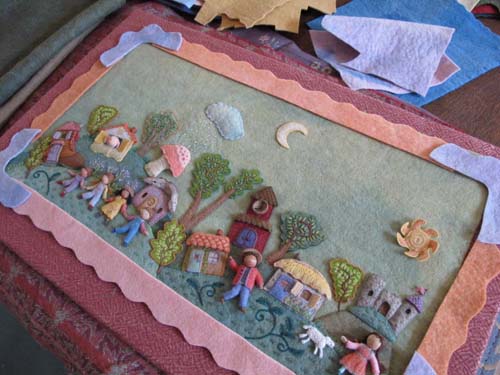
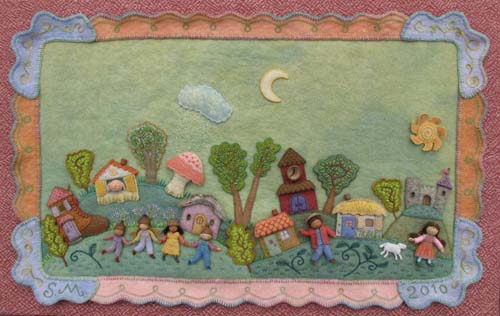
Last week, I made a border for the title page from “Pocketful of Posies”. As I mentioned before, all 50 original illustrations need to be mounted and framed for the traveling exhibit this fall. Because the title page artwork was designed to bleed to the page’s edge and is without any kind of border, it requires a similar but different treatment than “Mary Had a Little Lamb” .

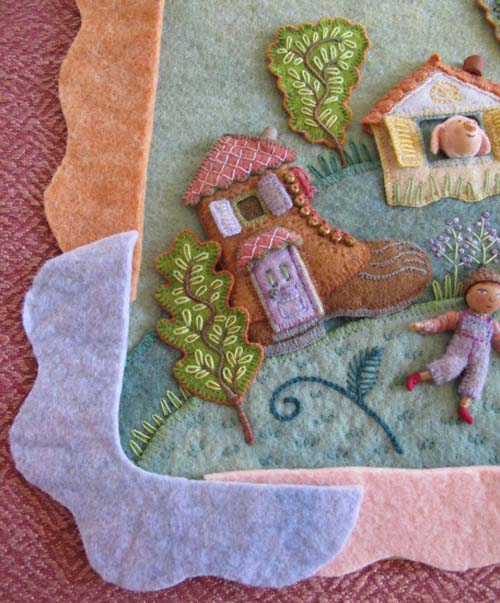
First, I picked  upholstery fabric from my stash to stretch for the background. Then I tried out different felt colors and chose ones that I thought complimented the artwork. This process can be tricky because I have to try many color combinations before I’m happy with the dynamics. For this one, I chose a contrasting pale violet for the corners to give the border a strong visual impact, without overpowering the artwork.

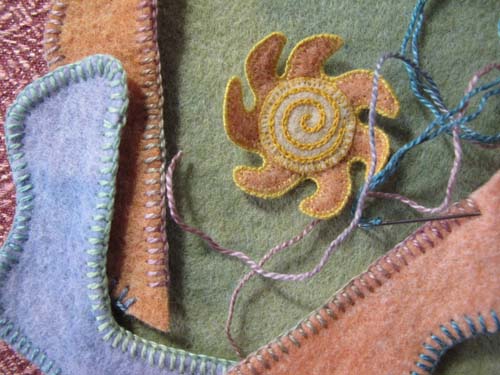
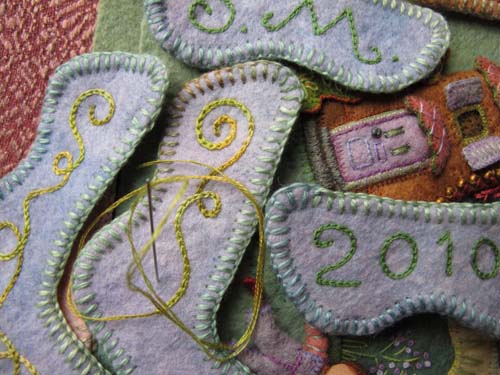
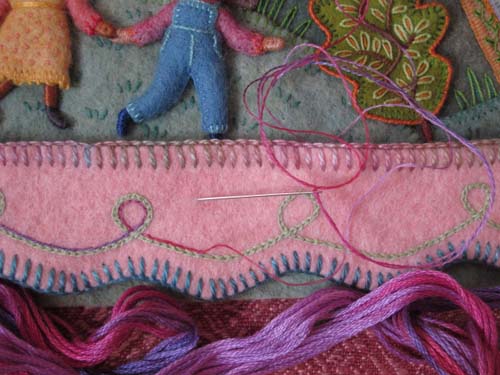
Each border section was blanket stitched with 3-ply pima cotton (Watercolours by Caron).

I then chain stitched the year and my initials on the bottom left and right corners. The corners needed something to set them apart, so I doodled a chain stitch with 2-ply variegated yellow/green embroidery floss.

Now, the sides, top and bottom pieces looked plain, so I decorated them with some chain stitched loops of flower thread. There wasn’t enough contrast, so I outlined the loops with stem stitches, using 1 ply variegated pink/purple embroidery floss.

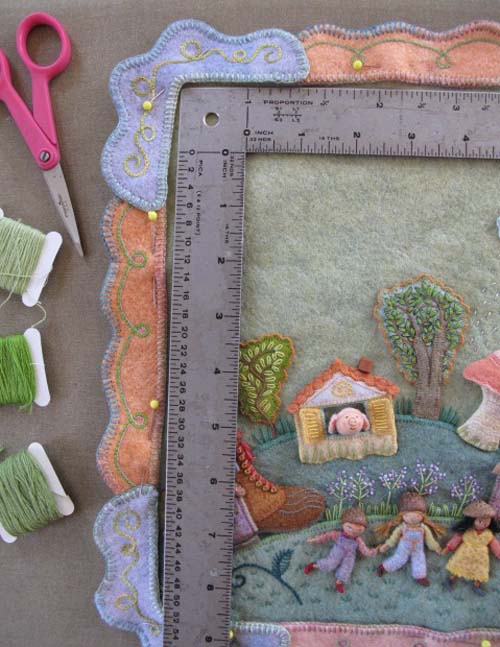
I sewed the corners to the side pieces, measuring to make sure they were even lengths. Then, using a corner ruler, I squared up the border and pinned it on top of the artwork.

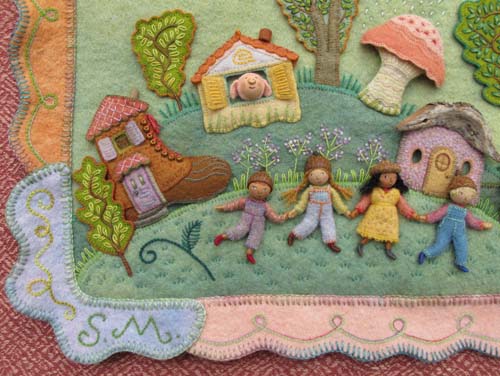
I then sewed the border in place and sewed it to the upholstery fabric background.

This title page shows a landscape filled with different characters and buildings from the rhymes in the book. The title and other information will be printed in the open areas in the sky.

Note: See other posts in the Pocketful of Borders series here.